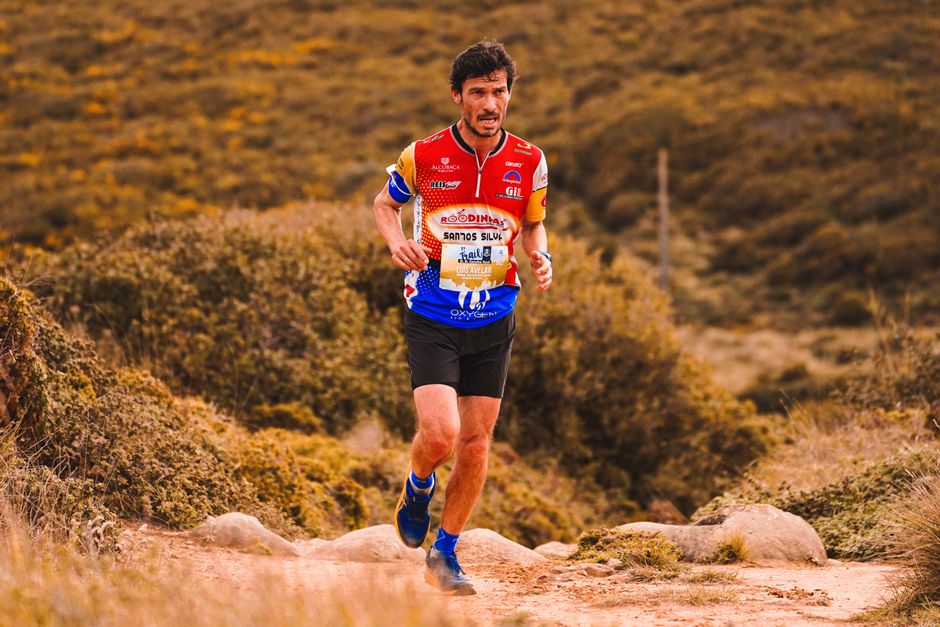
Mile eleven. The summit you could see at breakfast is still an hour of switchbacks away, your legs have gone quiet, and a voice in your head is making a very reasonable case for sitting down on this rock for good. Then the clouds start stacking over the far ridge, and a second voice asks the harder question: is it time to turn around? Mental training for hikers is the practice of motivation, attention, self-talk, decision rules and calm so you can keep going when it is safe and turn back when it is not. It makes trips more enjoyable and decisions cleaner; it cannot replace fitness, navigation skills or good judgment about weather.
Quick answer: Decide your turnaround time and your weather rules at the kitchen table, not on the ridge; break long days into small stages; and rehearse what you would do if you lost the trail. A 2026 network meta-analysis of 24 trials found that sport psychology methods such as relaxation, cognitive-behavioral techniques and mindfulness reduced anxiety in competitive athletes, though none of this guarantees a summit. See a doctor or a licensed mental health professional if worry, low mood or exhaustion are affecting daily life.
General information for hikers. Back to the hiking hub. The body side of a big trip is on training for a big hike, and the logistics (trip plan, Ten Essentials, water, food, weather) are on Hike Day. This page is about the thinking side and does not repeat them.
Mental performance is not the same as mental health
Two things get called “the mental game.” Mental performance is skill: how you hold attention, make choices and respond to pressure and discomfort. You can practice it the way you practice walking with a pack. Mental health is health: anxiety, depression, trauma, sleep problems, disordered eating, problem drinking or burnout. Those are matters for a doctor or a licensed mental health professional, not something to fix with a better routine. The International Olympic Committee consensus statement on mental health in elite athletes (Reardon and colleagues, 2019) treats mental health symptoms as health concerns that need proper assessment and care. There is a short section on this near the end.
Motivation and consistency before the trip
Most trips are won or lost in the weeks of training before them. Our training page notes that Appalachian Trail hikers who did not train were almost three times as likely to report a musculoskeletal injury, so showing up on a gray Tuesday for the stair session is worth something. We found no study of motivation in hikers specifically, so these are general habits, not hiking findings.
- Pick a reason you care about. A view, a trip with a friend, a Scout troop’s first peak. Write it on the permit folder or the first page of your training log.
- Make the plan small and visible. “Two short sessions and one hike this week” is easier to keep than “get fit.”
- Keep goals about what you control. “Finish my long hike this Saturday” is in your hands; “summit in perfect weather” is not.
For further reading on goal setting, see Swann and colleagues (2026) and Goddard and colleagues (2025) in the sources; we have not summarized their conclusions.
The long-day mindset
A long hike is mostly steady effort with a few hard stretches. No study we found looks at mindset across a hiking day, so the tools below borrow from sport psychology generally.
- Chunk the day. Think “to the next junction” or “to the creek,” not “eleven more miles.” Stages are a common coaching habit, not a tested hiking result.
- Use a short cue. A meta-analysis of 32 studies by Hatzigeorgiadis and colleagues (2011) found that self-talk improved performance, with larger benefits on tasks needing fine control or new to the performer than on mostly strength-and-endurance tasks. For a climb, a cue like “steady” is a modest tool, not a promise.
- Match effort to the talk test. The National Park Service says that if you can talk while you walk, you are at the right speed.
- Plan the low point. Almost every long day has one. Know your answer in advance: a snack, a sip, a two-minute sit, a song. Hunger and thirst quietly make everything feel worse (see hiking nutrition).
- Slow your breathing on hard climbs. A review of slow breathing (Zaccaro and colleagues, 2018) reported that breathing at fewer than 10 breaths a minute was linked to higher heart rate variability and feeling calmer and more alert.
Fear, exposure and turnaround decisions
The hardest mental skill on a trail is not pushing on; it is turning back. The summit and the miles already walked pull one way; the National Park Service calls for a firm turnaround time and keeping to it. It also advises planning for an uphill return to take at least double the time of the way down, and Grand Canyon rangers suggest using a third of your time to descend and two-thirds to climb out. The details of working back from your car are on Hike Day. Here is the mental side.
- Decide at the table. Choose the turnaround time, the weather triggers and the bail-out points before you leave, with the group. Deciding when you are calm beats deciding when you are tired and the summit is close. This is practical advice, not a research result.
- Make the rule about the clock, not the feeling. “We turn at 1 p.m. wherever we are” cannot be argued with at mile ten. The National Weather Service says mountain thunderstorms typically develop in the early afternoon and recommends being down the mountain by noon; build that into the plan.
- Give everyone a veto. Agree beforehand that anyone in the group can call a stop, and that nobody has to explain it. The National Park Service suggests the slowest hiker lead so the group stays together.
- Treat body warnings as warnings. A headache with nausea or fatigue above 8,000 feet may be acute mountain sickness (see hiking injuries); that is a health signal, not a motivation problem.
- Name your fear. Exposure, creek crossings and heights bring real fear. Fear is useful information about the risk; the skill is separating a rational “this is too dangerous” from a general nervousness that eases with practice on easier ground. Build up in steps, with a partner, and turn back if the risk is real.
Staying calm if you are lost
Almost every hiker will be momentarily unsure of the trail at some point. The National Park Service recommends having an emergency plan for what to do if you or a companion becomes lost or injured, and a trip plan left with someone who is not on the hike so search and rescue can use it. Beyond that, we did not confirm a current official wording for in-the-moment steps on any page we could open, so treat the next list as widely taught general practice and check your local park or search-and-rescue guidance.
- Stop and breathe. Panic makes people hurry in the wrong direction. Sit, drink some water, eat something.
- Think back. When did you last know where you were? Look at the map or the offline map on your phone, and check whether you can safely retrace your steps.
- If you are truly unsure, stay put when it is sensible. Many search-and-rescue teams teach this, particularly for children and when you have told someone your route. Make yourself easy to find: bright clothing and a light are among the Ten Essentials for that reason, and you can use them to signal for help.
- Keep warm and dry. Put on the extra layer before you are cold. The CDC notes hypothermia can happen above 40°F when you are wet.
- Call for help early. If you have signal or a satellite messenger or PLB, use it before dark rather than after.
Rehearsal helps. Navigation practice with a map, compass and app on easy trails, and one training hike in poor weather, make the real moment feel familiar (see the “mental side” note on the training page).
Nature and mental wellbeing: what the research says
Many hikers say time on the trail clears their head. The research is encouraging but mostly describes associations and short-term effects, and it is not a treatment for any condition.
- A 2025 systematic review and meta-analysis of 15 randomized trials in 980 adults (Hu and colleagues) found that urban green exercise, meaning exercise in natural settings, had a moderate positive effect on mental health outcomes (standardized mean difference -0.40). The strongest effects were seen with shorter programs, sessions of 20 minutes or less and low-to-moderate intensity. These were mostly urban parks, not mountain trails.
- A 2020 meta-analysis of experimental studies (Browning and colleagues) found positive mood increased after time in actual natural settings but not in simulated ones; it pooled only six studies.
- A 2025 meta-analysis of 78 studies (Bettmann and colleagues) of nature exposure in adults with mental illness or symptoms reported that short, repeated exposures in intervals appeared to have effects, even in urban nature; a very short visit is not a replacement for care.
None of these studies is specific to long-distance hiking, and enjoying the trail does not replace help for a health condition.
Mental health: when to see a professional
Symptoms that last or interfere with life, such as constant worry, low mood, loss of interest, trouble sleeping, panic attacks, flashbacks, heavy drinking, restricting food or feeling worn out by training, are health matters. Talk to your doctor or a licensed mental health professional. If you are in the United States and thinking about suicide or in emotional crisis, call or text 988 (the 988 Suicide and Crisis Lifeline), or call 911 in an emergency. Outside the US, use your local emergency number or crisis line. The Association for Applied Sport Psychology lists sport psychology resources for performance questions.
Preparing for a big trip
Put the mental work into the weeks before: practice your turnaround rule on ordinary hikes, run a training day in bad weather, rehearse a lost-trail plan on easy ground, and write your decisions down. Then leave the logistics (trip plan, Ten Essentials, water, food and weather) to Hike Day, and the physical base to training for a big hike.
Hiking mental training: FAQs
How do I stay motivated to train for a hike?
Use a clear reason, small weekly targets and a training partner or group. These are general habits; we found no hiking-specific study.
How do I keep going when I’m exhausted on a long hike?
Break the route into stages, eat and drink on schedule, and use a short cue. If the exhaustion comes with dizziness, confusion, chest pain or other warning signs, treat it as a health matter and stop.
When should I turn around?
Decide the time before you leave and keep to it. The National Park Service recommends a firm turnaround time, and the National Weather Service says mountain storms typically build in the early afternoon.
What should I do if I get lost?
Stop, stay calm, drink and eat, think back to the last place you were sure of, and call for help early if you can. Staying put is often taught if you have told someone your plan; check local search-and-rescue guidance.
Is hiking good for mental health?
Reviews link time in nature and green exercise with better mood and mental health outcomes, mostly short-term and in non-hiker populations. It is not a treatment; see a professional if you are struggling.
What if my nerves feel like more than nerves?
Persistent anxiety, low mood, sleep trouble, heavy drinking or burnout are health matters. Talk to your doctor or a licensed mental health professional, and in the US call or text 988 in a crisis.
Sources
- Chen Z et al. Comparative effects of different sport psychology interventions on anxiety in competitive athletes: a Bayesian network meta-analysis. Front Psychol 2026 (PMID 42656332)
- Hu G et al. Effects of urban green exercise on mental health: a systematic review and meta-analysis. Front Public Health 2025 (doi)
- Browning MHEM et al. An actual natural setting improves mood better than its virtual counterpart: a meta-analysis of experimental data. Front Psychol 2020 (doi)
- Bettmann JE et al. A systematic review and meta-analysis on the effect of nature exposure dose on adults with mental illness. Behav Sci 2025 (doi)
- Hatzigeorgiadis A et al. Self-talk and sports performance: a meta-analysis. Perspect Psychol Sci 2011 (PMID 26167788)
- Zaccaro A et al. How breath-control can change your life: slow breathing review. Front Hum Neurosci 2018 (PMID 30245619)
- Swann C et al. Goal setting in exercise and physical activity: an expert statement for Exercise and Sports Science Australia. Sports Med 2026 (doi)
- Goddard SG et al. Goal setting in youth sport: are we unintentionally contributing to dropout? Br J Sports Med 2025 (doi)
- Reardon CL et al. Mental health in elite athletes: IOC consensus statement (2019). Br J Sports Med 2019 (doi)
- National Park Service, Hike Smart (nps.gov)
- National Park Service, The Ten Essentials (nps.gov)
- Grand Canyon National Park, hiking tips (nps.gov)
- National Weather Service, Lightning Safety Outdoors (weather.gov)
- 988 Suicide and Crisis Lifeline (988lifeline.org)
- Association for Applied Sport Psychology resources (appliedsportpsych.org)
General information for education only, not medical advice. It does not replace a doctor, licensed mental health professional, qualified guide or local search-and-rescue guidance. See our editorial policy for how we research and write.