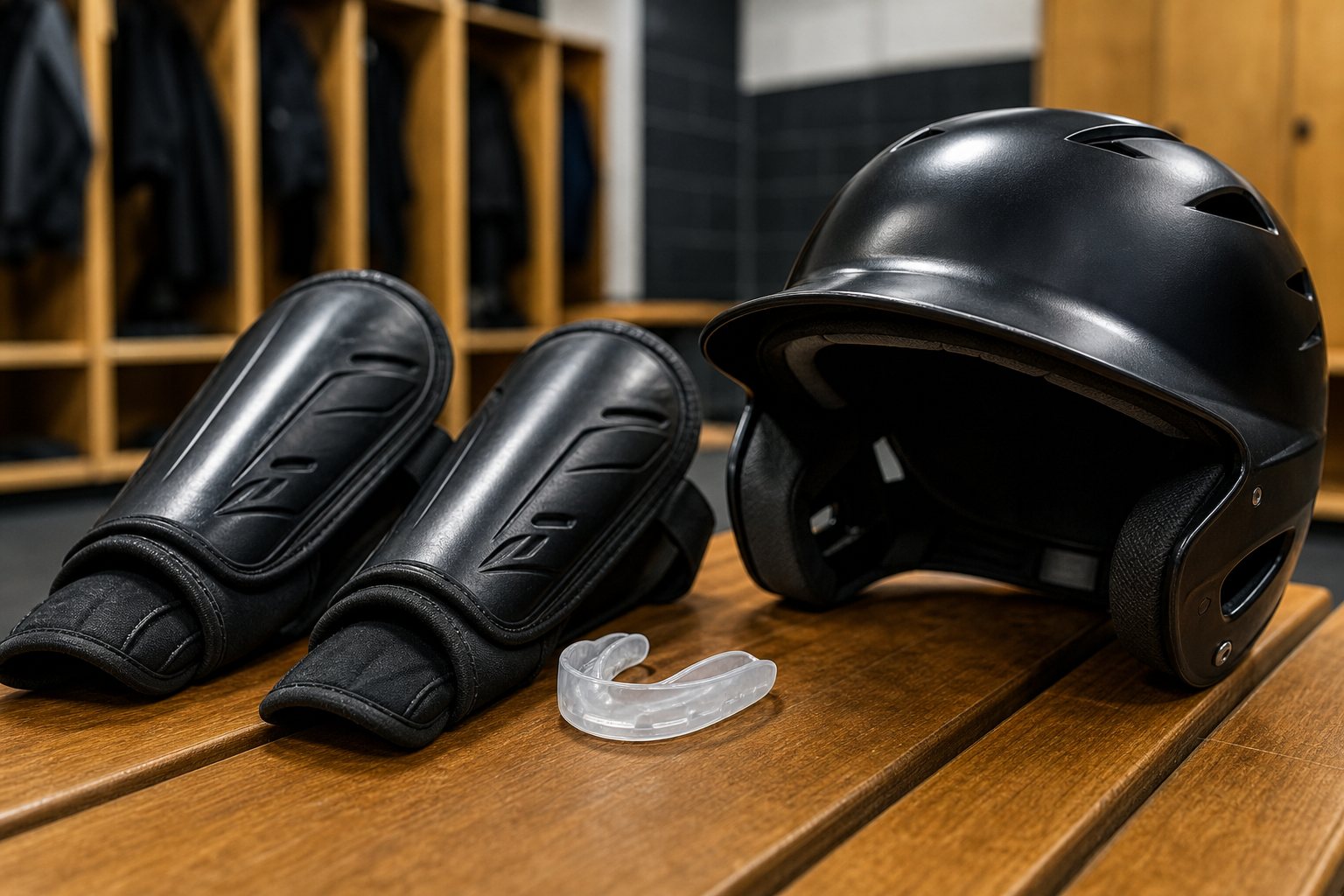
This guide is for athletes, parents and coaches who wear (or buy) helmets, pads, guards, braces and similar gear and want to know what it can and cannot do. It also helps adult beginners and returning players who are not sure whether the old kit in the garage is still safe to use.
Protective equipment is one layer of risk reduction. It works best next to good technique, sensible training loads and good supervision. It answers four questions: what is this gear for, does it fit, is it still in good condition, and does it meet the standard my sport expects?
What protective gear is for, and what it is not
Most protective gear is designed for one kind of force. A helmet is built to spread out and soften a hard impact to the head. A shin guard spreads a kick or stud over a wider area. A mouthguard cushions teeth and lips. A life jacket helps keep you afloat. Each one reduces a particular type of harm. None of them makes you safe from everything.
The most common mistake is expecting too much. A helmet does not make a concussion impossible, and a brace does not make a weak joint strong. Gear can also give a false sense of security, so a player takes bigger risks than they would without it. Treat gear as a back-up, not a licence to push harder.
For what to do after a head knock, see Concussion in Sports.
Fit comes first
Gear that does not fit does not protect properly. A helmet that slides, pads that sit off the joint, or a guard that shifts every time you move can fail exactly when you need it.
- Follow the maker’s fitting instructions. Sizing charts and fitting steps differ between brands, so read the ones that come with your piece.
- Try it moving, not just standing. Shake your head in a helmet, jump in your pads, and check that straps stay put.
- Check it does not block your sight, hearing or movement more than it has to. Gear you keep taking off is gear that is not protecting you.
- Re-check as bodies change. Children outgrow gear quickly, and hand-me-downs rarely fit a different head or frame.
Condition: check it before every season, and often during it
Materials wear out. Foam compresses, plastic gets brittle in sun and cold, straps fray and buckles loosen. A quick look takes a minute.
- Look for cracks, dents, loose or missing padding, frayed stitching and damaged fasteners.
- Clean gear according to the maker’s advice. Harsh chemicals can weaken some materials.
- Store it away from hot cars, direct sun and damp, which can shorten its life.
- Do not modify it. Drilling holes, adding stickers with strong adhesives or cutting padding can change how it performs.
Standards and certification
Many sports require gear that carries a recognised safety mark, for example from a national or international standards body or from the sport’s own governing body. The mark tells you the item passed a defined test for a defined sport. It does not mean it suits a different sport. A bike helmet is not built for the same impacts as a ski or horse-riding helmet.
Always check your league, club or governing body for what is required in your sport and age group, because rules and accepted standards vary by country and level. Look for the mark inside or on the item, and keep the manual.
When to replace
Replace gear when the maker says to, and when it has been damaged. After a serious impact, many makers advise replacing a helmet even if it looks fine, because the foam inside may have done its job and will not do it twice. Check your maker’s guidance for your item. Also replace anything that no longer fits, is visibly worn, or no longer meets the standard your sport now requires.
Second-hand gear is the hardest to judge. If you cannot tell its history, its age or what it has been through, the safer choice is usually new gear from a known source.
Braces, tape and supports
Braces and tape are sometimes used to support a joint during sport, often after an earlier injury. Whether one is right for you is a question for a doctor or physiotherapist, who can look at your joint and your sport. A support is not a substitute for rehabilitation or for getting a painful joint assessed. For specs, sizing and comparisons, see our protective gear section.
Guides to read next
- Protective Gear: Specifications and Comparisons
- Concussion in Sports
- Ankle Sprains in Athletes
- Best Bike Helmets
- Best Ski Helmets
- Best Kayak Life Jackets
- Environmental & Facility Safety
- Youth Sports Safety
- Football Injury Prevention
- Ice Hockey Gear
- Skiing Injury Prevention
- Cycling Injury Prevention
Frequently asked questions
Does a helmet prevent concussion?
No gear can promise that. Helmets are designed to reduce the risk of serious head injury such as skull fractures, but concussions can still happen. Anyone with a suspected concussion should stop playing and be assessed.
Can I use hand-me-down gear for my child?
Only if it fits properly, is undamaged, is within the maker’s age guidance and meets your sport’s current standard. If you are unsure of its history, new is safer.
How do I know if my gear meets the standard?
Look for the certification mark on the item and compare it with what your league or governing body requires. If the mark is missing or unreadable, treat it as unverified.
Do I need a brace if I have had an injury before?
That depends on the joint and the sport. A doctor or physiotherapist can advise you; gear alone is not a replacement for proper recovery.