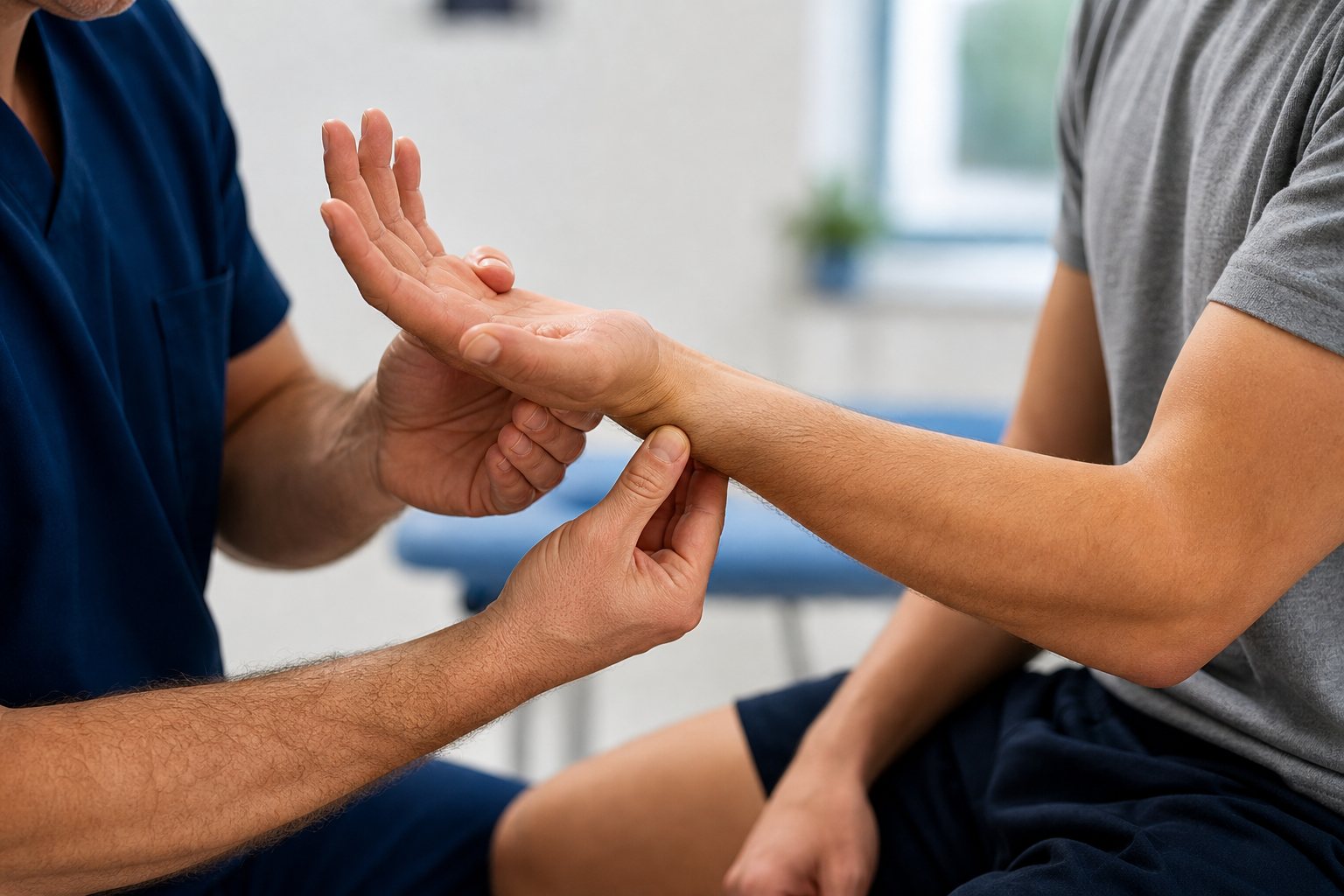
Knowing you are hurt is one thing. Knowing who to see, what they will do, and what to ask is another. This page walks through how a sports injury is usually assessed and cared for, so that an appointment feels less like a mystery and more like a conversation you can take part in.
It is for athletes, parents and coaches. It is general education: it does not diagnose, and it does not give treatment plans. Systems differ between countries and clinics, so use it as a map rather than a rulebook.
Types of professionals
Different professionals have different roles, and several may work together.
- Family doctor or primary care clinician: a common first stop who can assess, order tests and refer on.
- Sports medicine doctor: a physician with extra training in sport and exercise injuries and conditions.
- Physiotherapist (physical therapist): assesses movement and function, and guides rehabilitation.
- Athletic trainer: often works with teams, provides on-the-spot care, and helps coordinate return to sport.
- Orthopaedic surgeon: a specialist in bones, joints and related tissues, who may advise on surgical and non-surgical options.
- Emergency services: for urgent situations such as suspected head injury with worsening signs, severe deformity or loss of feeling.
Titles and regulation vary by country, so check that anyone treating you is properly qualified where you live.
What happens in an assessment
Most assessments begin with questions: how it happened, when, what you felt, what makes it worse, your sport and training, past injuries, and general health. The professional then looks at the area, compares it with the other side, checks movement, strength and joint stability, and may watch you walk, squat or perform a sport movement. Often this conversation and examination give most of the answer. Our page on understanding sports injury symptoms helps you prepare what to say.
Imaging and other investigations
Some injuries are looked at with tests. X-rays show bone well. Ultrasound can show some tendons, muscles and ligaments. MRI gives detailed pictures of soft tissue such as cartilage and ligaments. Blood tests or other checks may be used in some cases. A test is useful when it will change the plan. Scans also sometimes show changes that are common in people with no pain, so results are read alongside your symptoms and examination, not on their own.
How treatment decisions are made
Treatment depends on the injury, how serious it is, your goals, your sport and your circumstances. Options can include a period of relative rest, protection, guided exercise, other physical treatments, medication, and in some cases surgery. Many injuries do well without surgery, and some do not. A good decision is shared: the professional explains the choices, benefits and risks, and you say what matters to you. Rehabilitation and the step-by-step return to activity are covered in our hubs on rehabilitation and return to sport.
Questions worth asking
- What do you think is going on, and how sure are you?
- Do I need any tests, and how would the result change what we do?
- What are my options, and what are the risks of each?
- What can I do and not do in the meantime?
- What signs mean I should come back or seek urgent help?
- Who will guide my return to sport, and what will that look like?
Referral and follow-up
Some people are sent to a specialist, a scan or a rehabilitation programme. Follow-up appointments let the professional check progress and adjust the plan. If you are not improving as expected, or new symptoms appear, go back rather than wait. For young athletes, a parent or guardian should be involved in decisions. For head injuries, follow the guidance in concussion in sports and do not return to play without clearance from a qualified professional.
Guides to read next
- Sports Injury Types & Conditions
- Understanding Sports Injury Symptoms
- Joint Health for Active People
- Rehabilitation
- Return to Sport
- Concussion in Sports
- Ankle Sprains in Athletes
- Knee Injuries in Athletes
- Rugby Injuries
- Ice Hockey Injuries
- Baseball Recovery
Frequently asked questions
Who should I see first?
For most non-urgent injuries a family doctor, sports medicine doctor or physiotherapist is a reasonable start, depending on your local system. For urgent signs, go to emergency care.
Will I definitely get a scan?
No. Many injuries are assessed without one. A scan is used when it will help decide what to do.
Is surgery always the answer for a serious injury?
No. Some injuries need it and many do not. Ask about all the options and what to expect from each.
Can a coach or parent decide when it is safe to return?
Return should be guided by a qualified health professional who knows the injury, especially after head injuries or significant joint injuries.