This page is for anyone who trains or competes and wonders what to eat and when. It covers the time before, during and after activity, then looks at event days, travel and why familiar foods win.
It is general education. Needs vary by sport, body, age and health, so use this as a starting point and talk to a registered dietitian for a plan built around you. Daily eating is covered on Everyday Nutrition for Athletes.
Before: arrive fuelled and comfortable
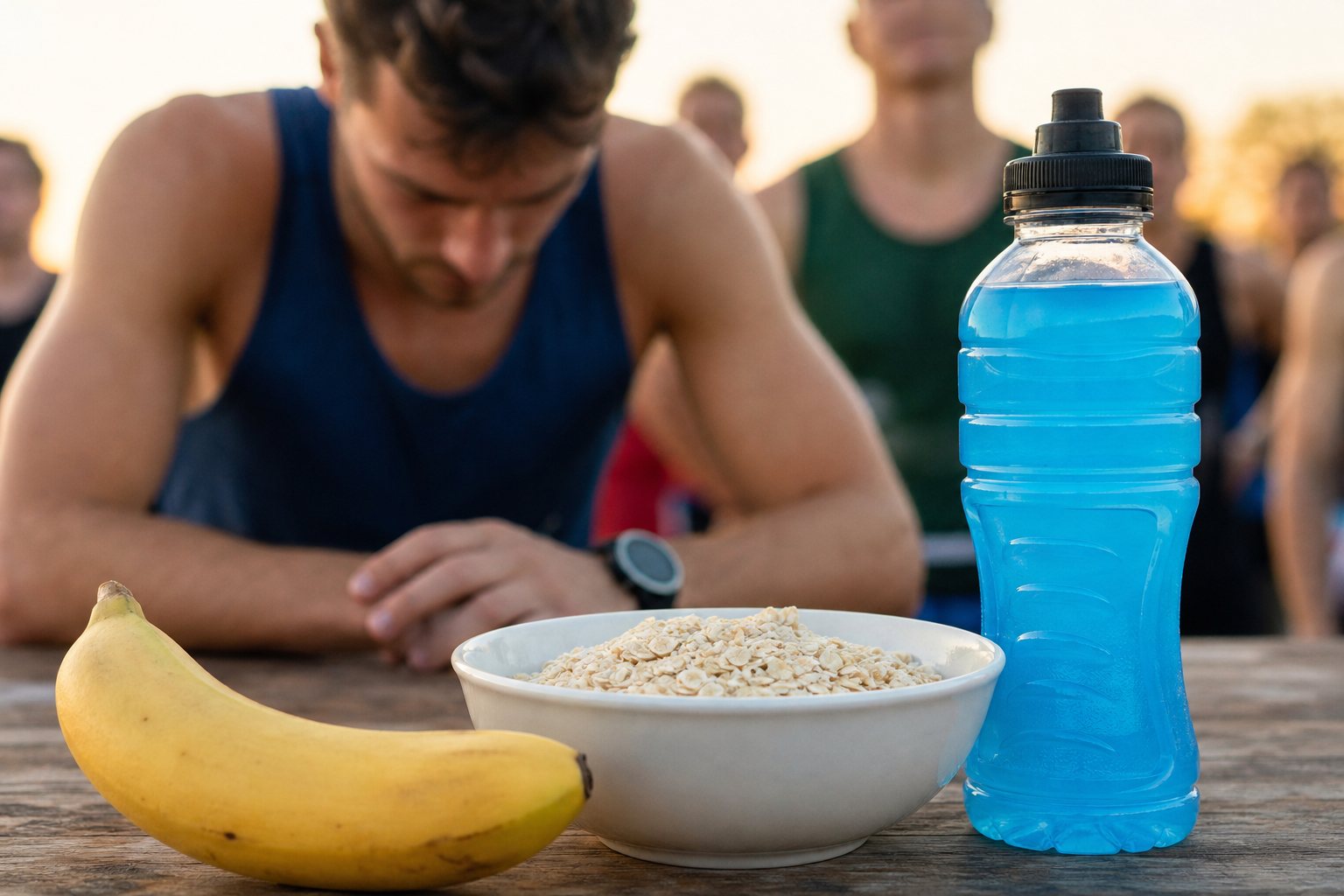
The goal before activity is to start with energy in the tank and a settled stomach. Most athletes do well with a meal built around carbohydrate, with moderate protein and not too much fat or fibre, eaten a few hours before. Closer to the start, a small, easy snack such as a banana or toast is often enough. Timing and size are personal: try different options in practice, never for the first time on game day.
During: only as needed
Short or easy sessions usually need only water. Long or hard efforts, such as a marathon, a long ride, a tournament day or a triathlon, are where in-session fuel helps. Options range from fruit and sandwiches to sports drinks and energy gels. Gels and drinks are convenient, but your stomach needs practice with them, so test them in training. For fluids, see Hydration & Electrolytes for Athletes and the main hydration guide.
After: recover with ordinary food
After hard training, a normal meal or snack with carbohydrate and protein, plus fluids, supports recovery. Do not worry about a perfect window. What matters is eating well across the day, especially if you train again soon. More on recovery is in How to Recover Faster After a Workout.
Event schedules and multi-game days
Tournaments, meets and multi-event days change the plan. With only short gaps, small, easy foods that digest quickly work better than big meals. Look at the schedule in advance, work out when you will realistically eat, and pack accordingly. Evening events and early starts each need their own plan, so rehearse them when you can.
Travel and unfamiliar places
Travel disrupts routines and limits choices. Pack reliable snacks, check what food will be available at the venue, and bring your own water bottle. Be careful with unfamiliar street food or local water if it could upset your stomach right before an event, and ask the team or event organisers for guidance when you are abroad.
Why familiar foods win
The best competition food is the one your body already knows. New foods, supplements or gels on event day risk stomach trouble and wasted performance. Build a short list of foods that work for you, and repeat them. Supplements, if used at all, should be checked first; see Supplement Safety for Athletes.
When to ask a professional
A doctor or registered dietitian can help if you have a medical condition such as diabetes, allergies, digestive problems, or a history of disordered eating, or if you are a young athlete. We do not give plans for medical conditions. Seek urgent help for fainting, confusion, or severe symptoms during exercise.
Sources: this page relies on widely established general sports nutrition principles. No numeric targets are given, and no individual plan is offered.
Guides to read next
- Everyday Nutrition for Athletes
- Hydration & Electrolytes for Athletes
- Hydration for Athletes
- Best Energy Gels
- Best Electrolyte Powder
- How to Recover Faster After a Workout
- How to Train for Your First Marathon
- Running Nutrition & Supplements
- Cycling Nutrition & Supplements
- Triathlon Nutrition & Supplements
- Soccer Nutrition & Supplements
- CrossFit Nutrition & Supplements
Frequently asked questions
What should I eat before a game?
A familiar, carbohydrate-based meal a few hours before, and a light snack if needed closer to the start, suits many athletes. Practise it first.
Do I need gels or sports drinks?
Only for longer or harder efforts, and only if you have tried them in training.
What if I feel sick when I eat before exercise?
Try smaller, simpler foods and eat earlier. If it keeps happening, speak to a doctor or dietitian.
How do I eat well at tournaments?
Plan around the schedule, pack easy snacks and drinks, and stick with foods you know.
Can I eat normally the day after a hard event?
Yes. Regular balanced meals and good fluids are the foundation of recovery.