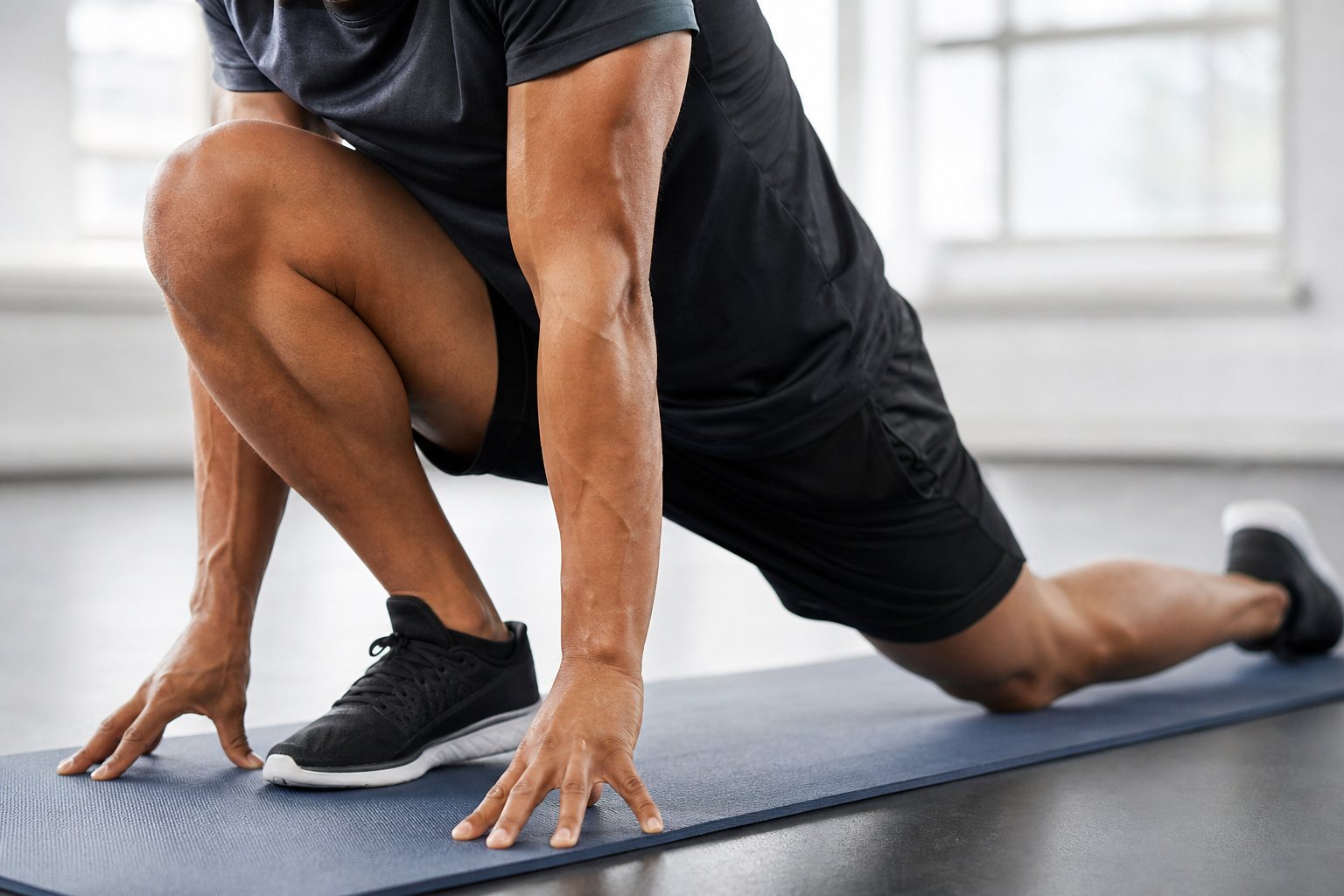
This page is for athletes, parents and coaches who keep hearing the words mobility, flexibility and stretching and are not sure how they differ. It explains the terms in plain language, why athletes bother with them, and how the needs change between sports. It is about mobility as part of everyday training and recovery, not about treating an injury.
If you have a painful or stiff joint after an injury, mobility work belongs in a plan from a health professional. See Rehabilitation. This page is general education only.
The words, explained
- Flexibility is how far a muscle can lengthen, or how far a joint can be moved with outside help, for example when someone else moves your leg or you ease into a stretch.
- Mobility is wider. It is how well you can move a joint through its range under your own control, which involves muscle strength, joint structure and coordination, not only muscle length.
- Range of motion is the distance a joint can travel.
- Stretching is one way of working on flexibility. Static stretching holds a position. Dynamic stretching moves the body through a range, as in leg swings.
Being flexible is not the same as being mobile. Someone can sit in the splits yet struggle to control that range during a movement. Both qualities matter, in different amounts for different sports.
Why athletes work on them
The main purposes are fairly simple:
- Performance. Some skills need a certain range, such as a deep squat, an overhead reach, a high kick or a swimmer’s shoulder position. Without enough range the body finds a workaround.
- Warming up. Moving joints through their range prepares the body for work. See Warm-Ups and Injury Prevention.
- Comfort and recovery. Many people feel looser and better after gentle stretching or movement, which is a common part of cool-downs.
- Healthy joints through life. Keeping a good range of movement helps with daily activity and supports long-term joint health, see Joint Health.
It is sometimes claimed that stretching prevents injuries or cures soreness. The picture is more mixed than that. Treat stretching as one useful habit among several, not as a guarantee.
Stretching before and after exercise
Coaches often prefer easy, moving warm-ups before a session and save longer holds for afterwards or for a separate session. Very long static stretches right before explosive efforts can leave some people feeling less sharp. Stretching should feel like a gentle pull, not pain. Pushing hard into a painful stretch, or bouncing, is not a better stretch, and it can irritate muscles and joints.
Strength and range go together
Mobility is not only about getting looser. A joint that can move far but cannot be controlled there may be vulnerable. Strength training through a full range is one of the ways athletes build usable mobility, which is why good coaches combine the two. For more, see Strength & Power.
How it differs between sports
There is no universal programme, because each sport asks something different of the body.
- Gymnastics, dance and martial arts demand extreme range in the hips, spine and shoulders. See Gymnastics Recovery.
- Swimming relies heavily on shoulder, chest and ankle range. See Swimming Recovery.
- Running and soccer lean on hips, hamstrings, calves and ankles. See Running Recovery and Soccer Recovery.
- Yoga uses mobility and flexibility as the practice itself. See Yoga Recovery.
- Throwing and racquet sports need controlled shoulder and trunk rotation more than extreme flexibility.
Some athletes, such as those who are naturally very flexible, may need more stability work than stretching. A coach can help work out which applies to you.
Tools: foam rollers and massage guns
Foam rollers and similar tools are popular as part of a mobility or recovery routine. Many people like how they feel, and the evidence for specific effects is limited, so keep expectations modest. If you want to compare, see Best Foam Rollers and Massage Gun vs Foam Roller.
When to ask for help
See a physiotherapist, doctor or athletic trainer if a joint feels stuck, catches or locks, if stretching causes sharp or lasting pain, if stiffness follows an injury, or if you have numbness or tingling. Do not stretch aggressively into pain to “get it loose”.
Guides to read next
- How to Recover Faster After a Workout
- Athlete Recovery Routine
- Recovery After Exercise
- Recovery Methods
- Warm-Ups and Injury Prevention
- Joint Health
- Gymnastics Recovery
- Yoga Recovery
- Swimming Recovery
- Running Recovery
- Best Foam Rollers
- Massage Gun vs Foam Roller
Frequently asked questions
Is mobility the same as flexibility?
Not quite. Flexibility is about how far muscles can lengthen. Mobility is how well you can control a joint through its range, which also depends on strength and coordination.
Should I stretch before or after a workout?
Many coaches suggest easy, moving preparation before and longer stretches after, or at a separate time. Your coach can tailor this to your sport.
Does stretching prevent injury?
It may help with range and comfort, but it is not a guarantee against injury. Warm-ups, strength, sensible load and rest all matter too.
Is it normal for stretching to hurt?
You may feel a mild pull. Sharp or lasting pain is not normal, so stop and ask a professional if it happens.