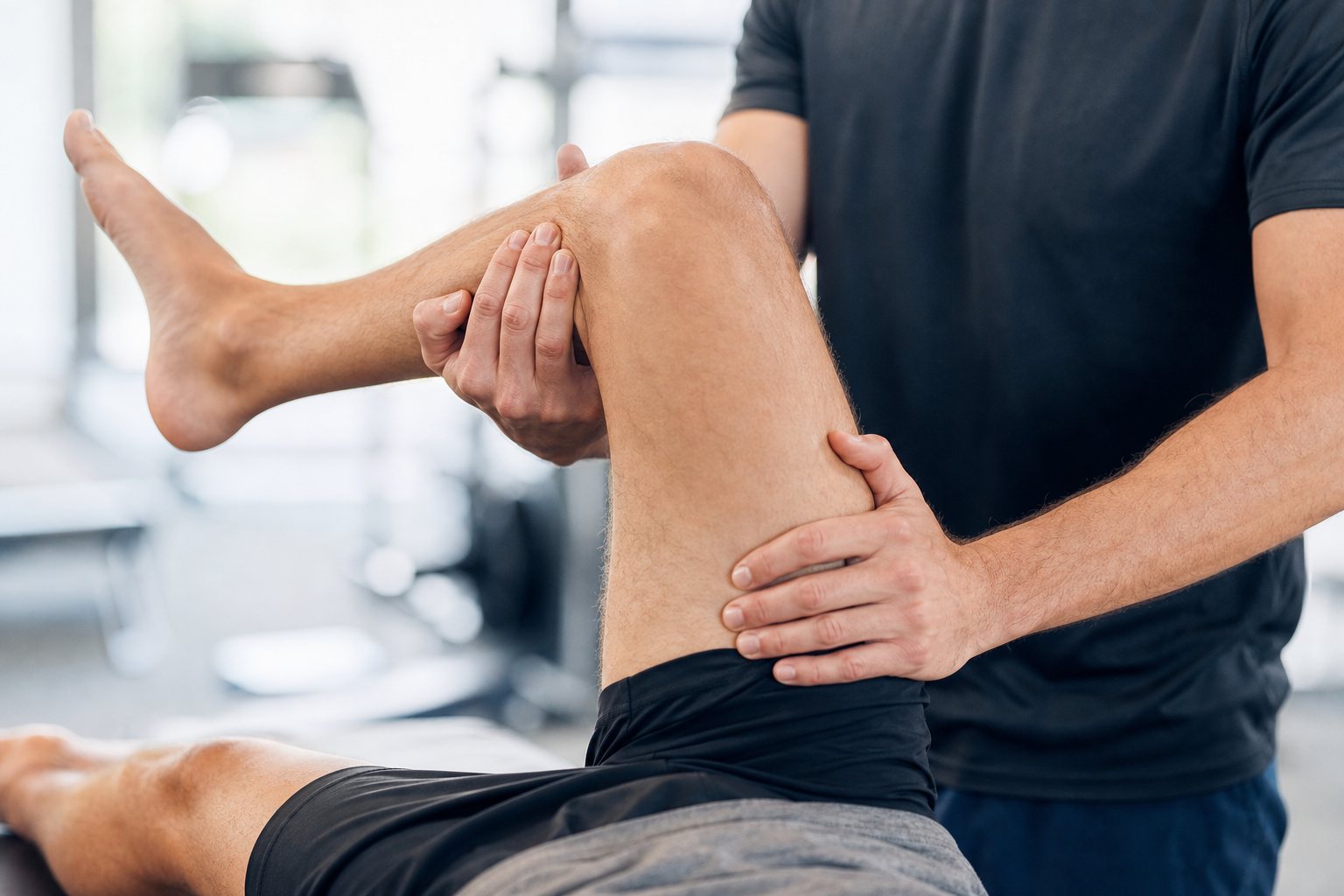
This page is for athletes, parents and coaches who want to understand what sports injury rehabilitation involves and who is usually part of it. It explains the general shape of rehab, not what any one person should do. Every injury and every athlete is different, so this is general education and is not a treatment plan or medical advice.
Rehabilitation is the process of helping someone recover after an injury so they can move, work and play again. It is not just resting until it stops hurting. Good rehab is guided, individual and checked along the way.
It starts with assessment
Before anything else, a qualified professional works out what has actually happened. That usually means asking about how the injury occurred, what hurts and when, and what the athlete needs to be able to do. It also means examining movement, strength, stability and swelling, and sometimes arranging scans or other tests when they are needed.
Assessment matters because similar-feeling pain can have very different causes, and the right approach depends on the cause. Guessing, or following a plan that worked for a friend, can delay recovery or make things worse. Our Assessment & Care page explains this stage in more depth, and Symptoms helps you recognise signs that deserve attention.
Goals that fit the person
A good rehabilitation plan has clear goals. Early goals are often about protecting the area, settling pain and swelling, and keeping the rest of the body active. Later goals are about restoring movement, strength and control, and finally getting ready for the specific demands of a sport or job.
Goals are agreed with the athlete. A recreational runner, a goalkeeper and a gymnast may all have a similar injury but very different targets, so their plans will not look the same.
Individual plans, not generic ones
Rehab plans are built around the person: the injury, their age, their health, their sport and their timeline for competition. This is why you will find no universal exercise list on this site. What suits one athlete’s sprained ankle may be wrong for another’s, and the order of steps matters.
Plans also change. A professional adjusts them as the athlete responds, so a plan on paper is a starting point rather than a script.
Monitoring progress
Rehab is checked as it goes. Professionals look at pain, swelling, movement, strength and how well the athlete performs simple tasks, and they use these to decide when to move on, hold steady or step back. A flare-up does not always mean failure, but it should be reported rather than ignored.
Athletes can help by being honest about symptoms, sleeping and eating well, and following the plan rather than doing extra. Rushing is one of the most common reasons injuries come back. See Overtraining & Overuse Injuries for how too much too soon can cause trouble.
Who is on the team
Different professionals have different roles, and titles vary by country.
- Doctors (including sports and family doctors) diagnose, rule out serious problems, and decide on tests or referrals.
- Physiotherapists or physical therapists assess movement and guide exercise-based rehabilitation.
- Athletic trainers often work with teams, provide first-line care and help manage the return to activity.
- Orthopaedic surgeons treat injuries that may need surgery and guide recovery after it.
- Coaches and strength professionals help rebuild fitness and skill once the medical team agrees the athlete is ready.
- Dietitians and mental health professionals can support healing, energy needs and the emotional side of being injured.
Parents of young athletes should be part of the conversation. Growing bodies can be injured in ways adults are not, so children and teens should be assessed by someone experienced with young athletes.
When to get help
Get an injury assessed if pain is severe, does not settle, keeps returning, or if there is obvious swelling, deformity, numbness, instability or difficulty bearing weight. Seek urgent care for a suspected head injury, a serious-looking break or dislocation, or a sudden change in feeling or strength. For head injuries, read Concussion in Sports. Do not rely on a website to decide what is safe for you.
Guides to read next
- Rebuilding Strength, Mobility & Function After Injury
- Returning to Training & Sport After Injury
- Injury Assessment & Care
- Injuries by Body Area
- Ankle Sprains
- Knee Injuries in Athletes
- Shoulder Injuries in Athletes
- Soccer Injuries
- Basketball Injuries
- Running Injuries
- Gymnastics Recovery
Frequently asked questions
Do all injuries need rehabilitation?
Not all, but many do. Even minor injuries can leave weakness or poor movement habits that raise the chance of another injury. A professional can tell you what is needed.
Can I follow an exercise program I found online?
Generic programs cannot account for your injury or health. They may be fine for some people and harmful for others, so it is better to get assessed first.
Is some pain during rehab normal?
Mild discomfort can be part of rehab, but what counts as acceptable depends on the injury. Ask your professional where the line is, and report sharp, worsening or unusual pain.
Who should a young athlete see?
Start with a doctor, who can refer on to a physiotherapist, athletic trainer or specialist experienced with young athletes.