This article contains affiliate links: if you buy through them we may earn a commission, at no extra cost to you. Read our affiliate disclosure.
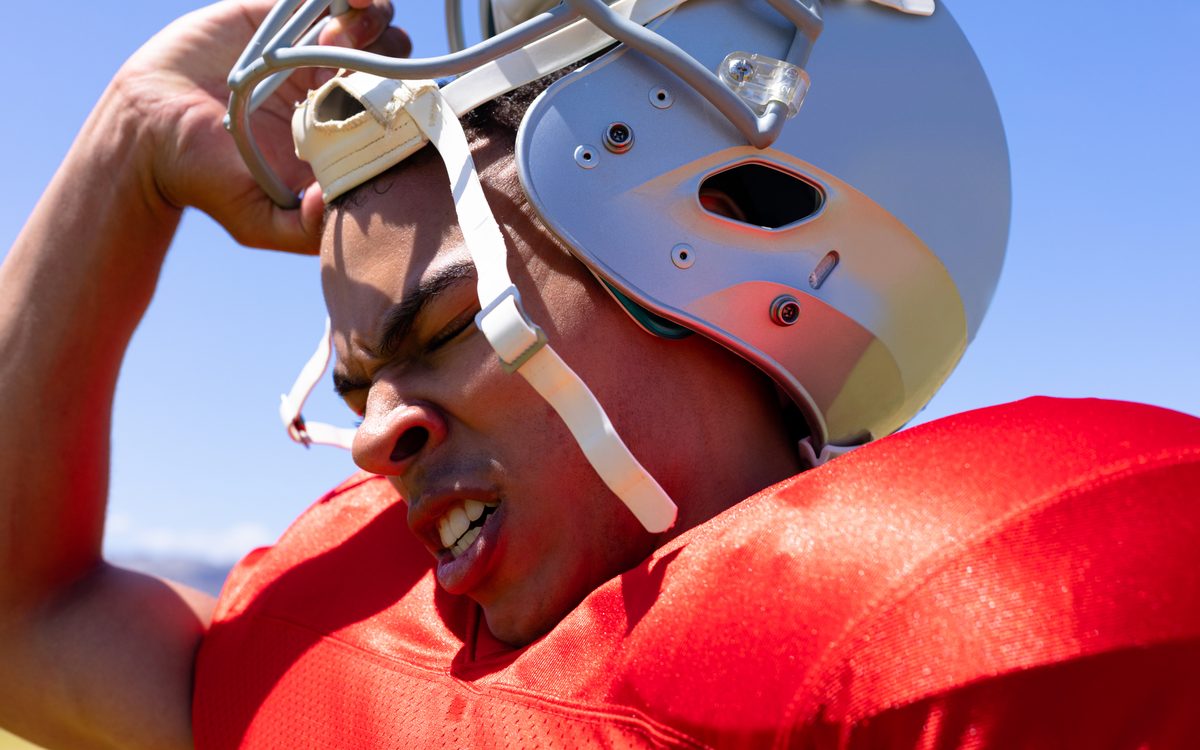
It is the second half of a Friday-night game. Two players go up for the same ball, heads clash, and one of them stands up a little slowly, smiling, saying “I’m fine.” The coach asks what the score is and gets a blank look. That moment, and what happens in the next few minutes, matters more than the rest of the game. A concussion is a brain injury caused by a bump, blow or jolt to the head, or by a hit to the body that makes the head and brain move rapidly back and forth, as the CDC describes it.
Quick answer: If a concussion is even suspected, the athlete comes out of the game right away and does not go back in that day. The CDC says only a health care provider can judge it, and a provider also decides when a return to sport is safe, after a step-by-step process. See a clinician if there is any head injury with symptoms, and call 911 for the danger signs listed below.
When to get urgent medical help
The CDC’s HEADS UP program says to call 911 or go to the nearest emergency department if, after a bump, blow or jolt to the head or body, the person has any of these danger signs:
- Convulsions or seizures (shaking or twitching).
- Not able to recognize people or places.
- Repeated nausea or vomiting.
- Unusual behavior, increased confusion, restlessness or agitation.
- Loss of consciousness with increasing drowsiness, inability to wake up or inability to stay awake.
- Slurred speech, weakness, numbness or decreased coordination.
- A headache that gets worse and does not go away.
- One pupil larger than the other, or double vision.
The CDC lists separate danger signs for infants and toddlers up to age 4; if the injured child is that young, check the CDC signs and symptoms page. Do not wait to see whether these signs pass.
What a concussion is and how it happens
According to the CDC, the sudden movement can make the brain bounce around or twist in the skull, which can cause chemical changes in the brain and can stretch or damage brain cells. Nobody has to be knocked out. The Amsterdam 2022 consensus statement, written by an international group of experts and published in the British Journal of Sports Medicine in 2023, defines sport-related concussion as a traumatic brain injury from a direct blow to the head, neck or body that sends force to the brain. Most people who have one never lose consciousness, which is why “I didn’t black out” is not proof of anything.
Concussions can happen to anyone who plays: children, teenagers, adults and para athletes. They come from collisions with other players, falls, contact with equipment, the ground or a ball.
Sports where it is most common
Contact and collision sports lead the lists, but falls and ball strikes count too. In a study of 20 US high school sports from 2013-14 to 2017-18 (Kerr and colleagues, Pediatrics 2019), football had the highest concussion rate, 10.40 per 10,000 athlete exposures. A study of US high school soccer (Comstock and colleagues, JAMA Pediatrics 2015) found rates of 4.50 per 10,000 exposures for girls and 2.78 for boys, with player-to-player contact the most common cause. Our injury guides cover the pattern sport by sport: football, soccer, rugby, ice hockey, lacrosse, boxing, MMA, wrestling, basketball, field hockey, cheerleading, skiing and snowboarding. Sport hubs: football, soccer and rugby.
Signs and symptoms
Symptoms can show up right away or hours later. The CDC groups what an athlete may report like this:
- Physical: headaches, dizziness or balance problems, nausea or vomiting early on, vision problems, being bothered by light or noise, feeling tired.
- Thinking and remembering: trouble concentrating or thinking clearly, memory problems, feeling slowed down, foggy or groggy.
- Mood: irritability, sadness, anxiety or feeling more emotional.
- Sleep: sleeping more or less than usual, or trouble falling asleep.
For school-age children and teens (5 to 17), the CDC also lists signs that coaches and parents can see: looking dazed, stunned or confused about recent events; answering questions more slowly; seeming clumsy or unsteady on their feet; vomiting right after the injury without another cause; slowed reaction times; and changes in mood, behavior or personality. The Amsterdam 2022 statement adds visible signs such as falling with no attempt to protect themselves, stiffening of the arms, a seizure just after impact, poor coordination and a blank or vacant look. Younger athletes are less likely to have trained medical staff on the sideline, so the statement strongly recommends that every adult supervising child and adolescent sport use its Concussion Recognition Tool 6 (CRT6).
What to do right away, and what usually happens in care
The CDC’s advice has three parts. First, remove the athlete from play right away if a concussion is suspected. Second, check for the danger signs above. Third, make sure the athlete is seen by a health care provider, and do not try to judge how serious it is yourself. HEADS UP also says an athlete should not return to sports the same day. The Amsterdam statement adds that a proper sideline check takes at least 10 to 15 minutes, away from the pressure of the game, and supports repeat checks later, for example at half-time and 24 to 48 hours after the injury.
After the first visit, care is individual. Both the Amsterdam statement and the American Academy of Pediatrics (2018 clinical report) moved away from long, complete rest. Amsterdam 2022 describes a short period of relative rest, roughly the first 24 to 48 hours, with light activity such as walking allowed if it does not more than mildly worsen symptoms, and reduced screen use over the first couple of days. The statement says that most students, 93% in the review it cites, are back to full school by 10 days with no extra academic support, but some need more help, such as a part-day schedule or extra rest breaks. A provider guides this. If symptoms last longer than four weeks, the statement calls for a fuller evaluation by clinicians who treat concussion.
Prevention and lowering the risk
Nothing makes a concussion impossible, and this page makes no promise that any step will prevent one. Here is what the Amsterdam 2022 consensus statement says the evidence supports:
- Rules and policies that reduce collisions, and limits on contact practice in American football, which the statement says should inform policies at all levels.
- Neuromuscular training warm-ups done at least three times a week, recommended in rugby based on research there. The statement says more research is needed for female athletes and other team sports.
- Mouthguards in ice hockey: associated with a 28% lower concussion rate across ages, so the statement says they should be required in child and adolescent ice hockey. It says headgear in sports without helmets needs more research before recommendations can be made.
- Good concussion management laws and protocols: mandatory removal from play, clearance from a health care provider before returning, and education for coaches, parents and athletes. The statement says these are associated with fewer repeat concussions.
The CDC also offers free online HEADS UP training for youth sports coaches. Sport-specific gear and rules vary, so ask your league what it requires.
Returning to play
A qualified health care provider decides when an athlete can go back, not the athlete, a parent or a coach. The CDC calls the return to sports a multi-step process that can take a week or more and says an athlete should be back to regular non-sports activities before finishing the steps. The AAP report says athletes should not return to full participation until symptoms and function are back to baseline and they have completed a full stepwise progression with no return of symptoms.
The Amsterdam 2022 return-to-sport strategy has six steps, and each step typically takes at least 24 hours:
- Symptom-limited daily activity, such as walking.
- Aerobic exercise, light and then moderate, such as stationary cycling or walking.
- Individual sport-specific exercise away from the team, with no risk of head impact.
- Non-contact training drills.
- Full-contact practice.
- Return to normal game play.
The statement says steps 4 to 6 begin only after the symptoms and any other findings from the concussion have cleared, including with and after exercise, and with a health care provider’s authorization. It gives a published range: at least one week for the full strategy, and typical unrestricted return can take up to one month after the injury, varying from person to person. If symptoms come back at a step, the athlete tells the provider rather than pushing through. Return to school runs alongside, on its own gradual steps.
Children and teens
The Amsterdam statement notes that young athletes are less likely to have trained medical staff at the sideline, and it recommends the Child SCAT6 for ages 8 to 12 and the SCAT6 for adolescents when used by health professionals. It also says baseline testing has limited use in younger athletes because their thinking skills are still developing. The CDC and AAP both stress return to school as part of recovery, with the provider working with the family and school.
Protective gear
Gear does not make an athlete concussion-proof, and a good mouthguard or helmet is never a reason to stay in after a hit. Their value is in the jobs they are made for: the consensus statement supports mouthguards in youth ice hockey, and a certified helmet protects against skull and facial injuries in riding and wheeled sports. Check what your sport and league require. The two examples below are standard, widely sold options; the maker, not us, states the certifications.

Shock Doctor Gel Max Mouthguard
- Youth and adult sizes
- Mouthguard for contact sports
- Ask your league what it requires
$11.99 at Amazon, as of Nov 17, 2026 00:07 UTC
Check price on Amazon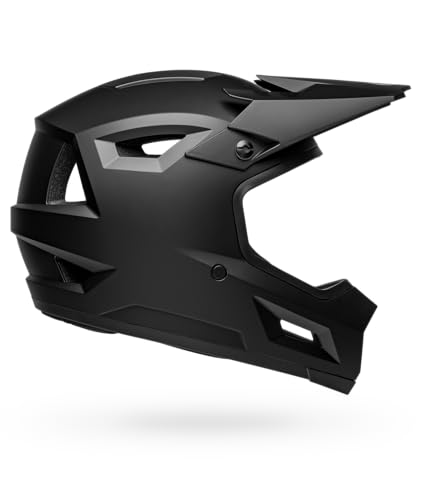
Bell Sanction 2 Full-Face Helmet
- CPSC + ASTM downhill and BMX (maker)
- 14 vents, removable cheek pads
- Sizes XXS 48 to XL 61 cm
$131.26 at Amazon, as of Nov 17, 2026 00:07 UTC
Check price on AmazonConcussion FAQs
Does a concussion mean you were knocked out?
No. Most concussions happen without loss of consciousness. The CDC lists many symptoms, such as headache, dizziness, confusion and feeling slowed down, and none of them requires a blackout.
Can an athlete keep playing if they feel fine after a few minutes?
No. The CDC says to remove an athlete from play right away when a concussion is suspected, and not to return to sports the same day. A health care provider must do the assessment.
How long does it take to return to sport?
It varies. The Amsterdam 2022 statement says the six-step strategy takes at least a week, and typical unrestricted return can take up to a month after the injury. The CDC says it can take a week or more. Your provider sets the pace for you.
Do I need to sit in a dark room until I feel better?
Not for long. The Amsterdam statement recommends relative rest for the first 24 to 48 hours, then a gradual return to light activity and school, and advises against complete rest and isolation. Follow your provider’s instructions.
Do mouthguards or helmets prevent concussions?
The evidence is sport-specific. The Amsterdam statement links mouthguards to a 28% lower concussion rate in ice hockey and says headgear in non-helmeted sports needs more research. Gear protects in other ways but does not make a concussion impossible.
When should I worry about symptoms that do not go away?
Tell your provider if symptoms are not improving. The Amsterdam statement says symptoms lasting more than four weeks call for a fuller evaluation, and recovery that is not progressing after 2 to 4 weeks may benefit from rehabilitation. A headache that keeps getting worse is a danger sign: get emergency care.
Sources
- CDC HEADS UP: Signs and symptoms
- CDC HEADS UP: What to do if a concussion is suspected
- CDC HEADS UP: About concussion
- Patricios et al., Consensus statement on concussion in sport (Amsterdam 2022), Br J Sports Med 2023
- Halstead et al., AAP clinical report: Sport-related concussion in children and adolescents, Pediatrics 2018
- Kerr et al., high school sports concussion rates, Pediatrics 2019
- Comstock et al., high school soccer concussion, JAMA Pediatrics 2015
General information for education only, not medical advice. It does not replace an exam by a doctor, physical therapist or athletic trainer, and it cannot clear anyone to return to sport. Read how we work in our editorial policy and find related guides in Injuries and Joint Health.