This article contains affiliate links: if you buy through them we may earn a commission, at no extra cost to you. Learn more.
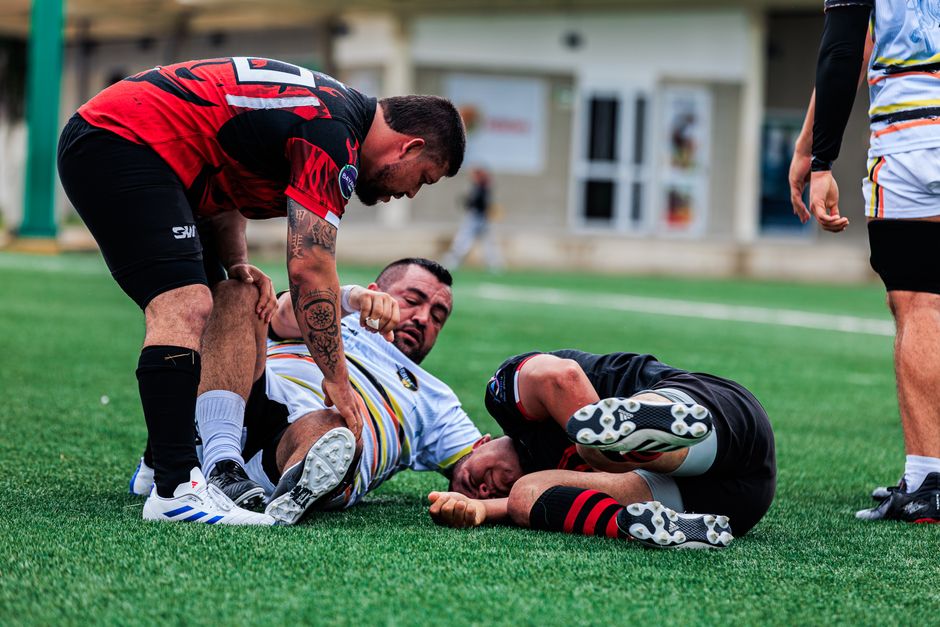
Twenty minutes into a Saturday club match, a flanker goes low on a charging number 8, gets the angle slightly wrong, and stays down a second too long. The referee stops play, the first-aider jogs on, and the whole touchline goes quiet. Rugby injuries are part of a collision sport played in 15s, sevens and league, from youth rugby and high school clubs to college, Major League Rugby, Test matches and the Olympics. What separates a scary moment from a bad outcome is usually what happens next: recognizing a concussion, removing the player and getting the right help.
Below: the injuries rugby players get most, how the game’s concussion rules work, what the tackle-height changes are about, and when to see a professional. It’s general information, not medical advice.
How often rugby players get hurt
Rugby has one of the highest match injury rates in team sport. A 2022 analysis of 11,620 injuries in elite men’s rugby union found 91 match injuries per 1,000 player-hours, with each injury costing about 27 days on average, and 12 concussions per 1,000 match hours. Training was far safer, at 2.8 injuries per 1,000 hours. Sevens is similar: a 2024 review put the match rate at about 108 per 1,000 player-hours for men and 76 for women, with more injuries in the second half and most of them from being tackled. At five women’s Rugby World Cups (2010 to 2025), concussion, knee ligament and ankle ligament injuries were the most common. Most of it happens in the tackle.
Concussion: recognize and remove
World Rugby’s rule for the community game is simple: any player with a suspected concussion is recognized and removed immediately and does not return to play or training that day. The CDC’s HEADS UP signs apply at every level: a player who looks dazed or confused, is slow to answer, stumbles or can’t remember the play, or who reports headache, dizziness, nausea, blurred vision or sensitivity to light or noise. Don’t try to judge how serious it is yourself.
- Community rugby (World Rugby guidance): a minimum stand-down of 21 days from playing, counting the day of injury as day 0, and a referral to a doctor or approved healthcare professional for diagnosis and the return-to-play decision. The graduated return has six stages, each usually taking at least 24 hours.
- US youth and high school rugby: USA Youth & High School Rugby requires players 18 and under to sit out for 14 full days and be symptom-free before starting a 5-day graduated return, plus evaluation by a physician trained in concussion. No exceptions for a player with symptoms during a match.
- Call 911 for danger signs: a seizure, loss of consciousness, a worsening headache, repeated vomiting, slurred speech, weakness or numbness, growing confusion, or neck pain after a hit. With neck pain, don’t move the player.
How the elite HIA process works
At the top level, World Rugby uses the Head Injury Assessment (HIA), which applies only in elite competitions it has approved, not in club or school rugby. It runs in three steps. HIA1 happens during the match: a player with obvious signs (World Rugby’s “Criteria 1”, such as a seizure, loss of consciousness, being clearly dazed, unsteadiness or confusion) is removed permanently, with no test needed. Others leave for a 12-minute off-field assessment while a temporary replacement comes on. HIA2 follows within three hours of the match, and HIA3 after two nights’ sleep (36 to 48 hours), because some concussions show up late. Since January 2024, smart mouthguards that alert the pitch-side doctor to big head accelerations have been part of the HIA in elite rugby. Since July 2022, elite players diagnosed with a concussion sit out at least 12 days, and those with a concussion history or obvious signs need an independent concussion consultant’s approval to return.
Tackle height: what changed and what the evidence says
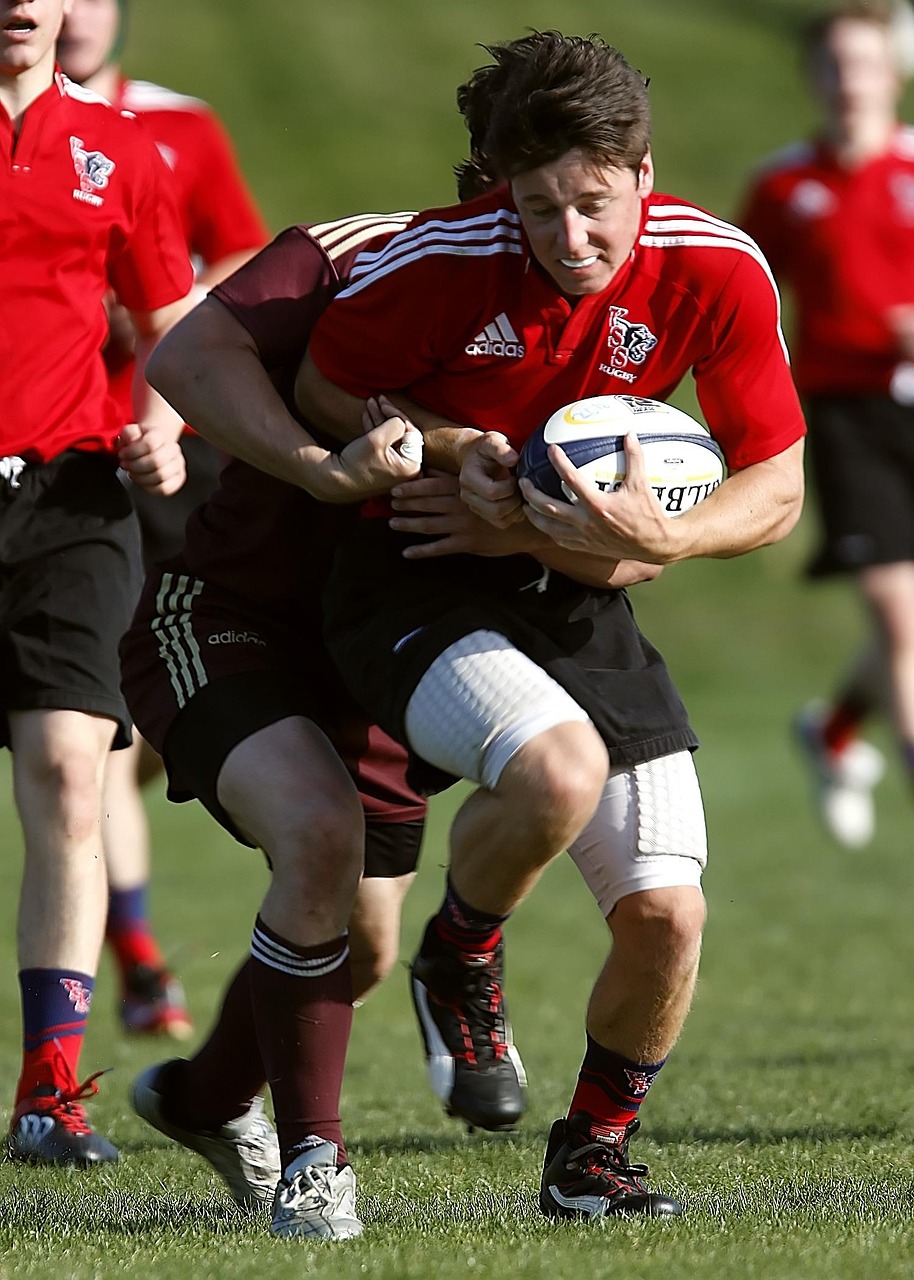
A study of 464 tackles that led to an HIA in professional rugby found head contact with the opponent’s head or shoulder was more than four times as likely to cause an HIA as contact lower down, and upright tacklers were about 1.5 times more likely to get hurt than tacklers bent at the waist. The tackler suffered 78% of the HIAs from head-to-head contact.
That led World Rugby to approve global trials in May 2023 lowering the legal tackle height in community rugby to the base of the sternum (the belly) or lower. England, Ireland, Scotland, Wales, Australia, Italy, Japan and South Africa opted in, joining France and New Zealand. The results so far are encouraging but not uniform:
- In Irish community rugby, two seasons under the lower height brought 38% fewer tackle-related concussions in adult men and 63% fewer in adult women, and overall match injuries fell 18%, 30% and 19% in men, women and schoolboys. Schoolboy concussions did not fall.
- In English schoolboy rugby, an earlier step down (shoulder to armpit) changed technique, with more tacklers bent at the waist, but did not change injury or concussion rates.
- Smart mouthguard data from elite men and women show high tackles are the biggest risk for ball carriers, while very low tackles raise head accelerations for the tackler. The researchers’ advice: aim for the torso.
For players, the takeaway is technique. Track the carrier, get your head to the side of the body (never in front of the knees or hips), stay bent at the waist and aim at the belly. Our rugby training page covers safe tackling drills.
Shoulder dislocations and other shoulder injuries
Shoulders take a beating in rugby. A 2026 review of 37 studies put shoulder injuries at about 11 per 1,000 match hours, higher in elite men and in high school and university players, with tackling the main cause and the tackler most often hurt. A dislocation (the ball of the upper arm comes out of the socket) causes deformity, swelling, numbness and severe pain. AAOS calls it an emergency: get medical care, and don’t try to put it back yourself. Young athletes have a higher risk of the shoulder dislocating again, and some choose surgery after a first dislocation to prevent chronic instability, a decision to make with an orthopedic surgeon. AC joint “separations” from landing on the point of the shoulder usually recover without surgery, AAOS says.
Knee injuries
Knee ligament injuries (ACL, MCL) cost rugby players more time than almost anything else. At women’s Rugby World Cups, knee ligament injuries caused about a third of all time lost for backs and 43% for forwards. The MCL is often hurt by a blow to the side of the knee in a ruck or tackle; the ACL usually tears without contact, when a player plants and cuts or lands awkwardly. See a professional for a “pop,” quick swelling, a knee that gives way or locks, or pain putting weight on it. A knee sleeve adds warmth and compression but isn’t a ligament brace.
Ankle sprains
Ankles roll when a player is tackled from the side or lands on another player’s foot, and at the Women’s Rugby World Cups ankle ligament injuries were among the three most common injuries. A high ankle sprain (the ligaments that hold the two lower-leg bones together) usually takes longer to heal than a normal sprain, AAOS says. Get pain above the ankle, a sprain that isn’t improving, or an ankle you can’t walk on checked. Lace-up braces cut acute ankle injuries by more than half in a high school football trial; many rugby players tape or brace after a sprain. See our ankle brace guide.
Neck injuries and the scrum
Catastrophic neck injuries are rare in rugby, but they’re the reason the scrum has so many safety rules. In France, they averaged 1.6 per 100,000 players a year from 2006 to 2013, and scrum injuries fell significantly after a national prevention program and the 2010 scrum law changes. In South Africa, serious injuries in junior players dropped after the BokSmart coach and referee education program launched in 2009.
- The engagement: the referee calls “crouch,” “bind,” “set.” Front-row players must keep their heads and shoulders no lower than their hips, and the referee blows the whistle immediately if a scrum collapses or a player is lifted.
- Trained front rows only: teams must make sure every prop and hooker, including replacements, is suitably trained and experienced; if not, scrums become uncontested.
- Under-19 variations: no pushing a scrum more than 1.5 meters, no intentional wheeling, and a reset if a scrum wheels past 45 degrees.
- Burners and stingers: a pinched or stretched nerve sends burning or electric pain down one arm. No return until it’s completely gone; symptoms in both arms, weakness or neck pain need a full exam before playing again.
Warm-ups that prevent injuries
World Rugby’s Activate warm-up (balance, strength, landing and cutting, and neck exercises) has the best evidence of anything in rugby prevention. In schoolboy rugby, teams that did it at least three times a week had 72% fewer match injuries and 59% fewer concussions. In adult club rugby, the intervention group had 40% fewer lower-limb injuries and 60% fewer concussions. It’s free from World Rugby in adult and age-grade versions.
Protective gear: what it does and doesn’t do
World Rugby recommends a mouthguard for players at all levels; the Shock Doctor Gel Max is a cheap boil-and-bite option in youth and adult sizes, though a dentist-made custom guard fits best. A scrum cap such as the Canterbury Raze Headguard (made to World Rugby’s specification) protects ears and scalp from cuts and cauliflower ear, but Canterbury itself says scrum caps are not meant to prevent concussions, and a study of Super Rugby players found no protective effect. For ankles, the ASO EVO is a low-profile lace-up brace that fits in boots; for knees, the Bauerfeind GenuTrain is a knit compression support.
Shock Doctor Gel Max Mouthguard
- Boil-and-bite gel fit
- Youth and adult sizes
- Under $15
Canterbury Raze Headguard
- Conforms to World Rugby spec
- EVA foam, ventilation holes
- Ears and scalp, not concussion
ASO EVO Ankle Stabilizer
- Lace-up with figure-8 straps
- Fits left or right foot
- Low profile, fits in boots
Bauerfeind GenuTrain
- Knit compression
- Omega+ pad around kneecap
- Not a ligament brace
When to see a doctor, physical therapist or athletic trainer
Don’t play through pain. A player with a joint injury should have no pain, no swelling, full motion and normal strength before returning, and every suspected concussion needs a medical assessment and a graduated return. A sports medicine physician manages most sports injuries without surgery, a physical therapist guides rehab, and an athletic trainer is often first on the field. At club level, know who your first-aider is.
Keep going: the rugby hub, training, recovery after contact, match day, and our football injuries page for another collision sport.
Rugby injury FAQs
How long do you sit out after a concussion in rugby?
In community rugby, World Rugby guidance sets a minimum of 21 days before playing, with the day of injury as day 0. US youth and high school players sit out 14 full days and must be symptom-free before a 5-day graduated return. Elite players have a minimum of 12 days. Every return needs medical clearance.
What is an HIA in rugby?
The Head Injury Assessment is World Rugby’s three-step concussion process for elite matches: a 12-minute off-field check during the game (or permanent removal for obvious signs), a second check within three hours, and a third after two nights’ sleep. It doesn’t apply in club or school rugby, where any suspected concussion means removal.
Does a scrum cap prevent concussion?
No. Scrum caps protect ears and scalp from cuts and cauliflower ear, and makers like Canterbury say they aren’t meant to prevent concussion. A Super Rugby study found no protective effect for head injuries.
Why did rugby lower the tackle height?
Most concussions happen in the tackle, and the risk is much higher when the tackler’s head meets the ball carrier’s head or shoulder. World Rugby approved community trials of a tackle height at the base of the sternum or lower in 2023. In Ireland, tackle-related concussions in adults dropped afterwards.
Is a dislocated shoulder likely to happen again?
Young athletes have a higher risk of repeat dislocations, AAOS says. Some choose surgery after a first dislocation; talk it through with an orthopedic surgeon and finish rehab with a physical therapist before going back to contact.