This article contains affiliate links: if you buy through them we may earn a commission, at no extra cost to you. Learn more.
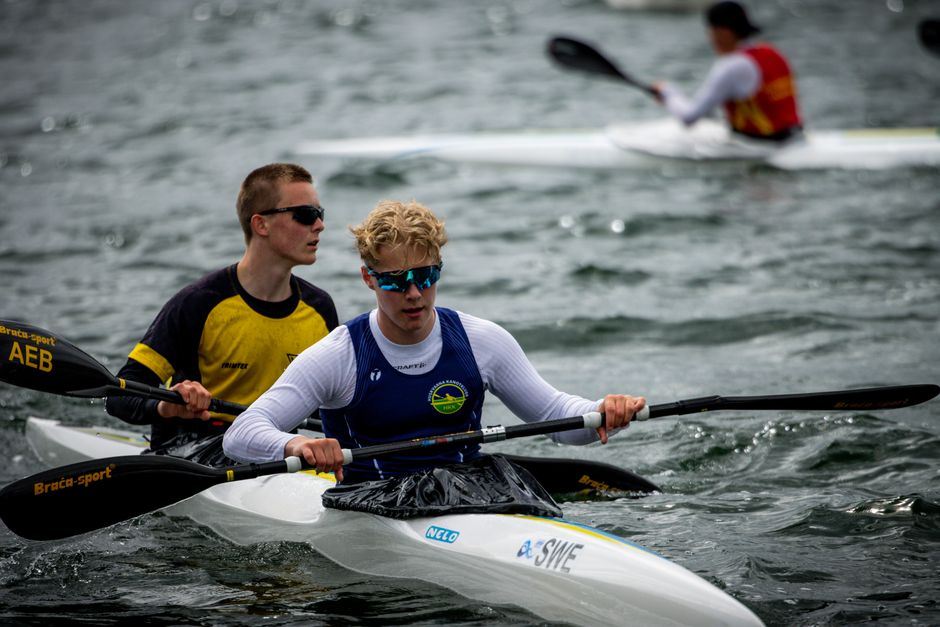
Early morning on a quiet lake: mist on the water, a loon somewhere out of sight, and the soft drip of a paddle as a sit-on-top kayak glides past the dock. A few states away, a group of friends in helmets bobs in an eddy above a Class III rapid, scouting the line. On a sea-kayaking trip, a pod of paddlers rounds a headland with dry bags strapped to their decks. On a lake in the evening, an angler in a sit-on-top drifts along a weed line with two rods in the holders. And on a racecourse, nine sprint kayaks explode off the start line at the “Go.” Kayaking is all of these: one of the easiest ways to get on the water, and a sport you can grow into for a lifetime.
Kayaking, page by page
- Rules: how the game works at every level
- Leagues & associations: pro, college, high school and youth
- Youth & high school: ages, safety and recruiting, for players and parents
- Injuries & sports health: prevention, concussion, when to see a pro
- Training & conditioning: before: off-season to in-season
- Game day: during: fueling, hydration, heat
- Recovery: after: games, tournaments, sleep
- Nutrition & supplements: what to eat, tested supplements
- Best wearables: trackers and watches for the sport
- Gear: the complete equipment list
Buying guide · Our Kayaking buying guide compares the gear we'd pick, with prices and sizing:
This page is kayaking for paddlers and the people who look after them: the kinds of kayaks and paddling, how races work, every level from a first rental to the Olympics, and, most of all, how to stay healthy doing it. Kayaking safety is the heart of it, because the Coast Guard’s numbers are clear: paddlers who drown are almost always not wearing a life jacket. Then shoulders and backs, cold water, training, recovery and the gear you really need.
Kayaking at a glance
| What makes it a kayak | In racing rules, a kayak is paddled with a double-bladed paddle. Kayakers sit low with legs forward, either inside a cockpit (sit-in) or on top of the hull (sit-on-top). |
|---|---|
| Kinds of kayaking | Recreational (lakes, slow rivers), touring and sea kayaking, whitewater (rivers rated Class I to VI), fishing kayaks, and racing: sprint (K1, K2, K4), slalom (K1), kayak cross, marathon and more. |
| Rules | Coast Guard rules apply to every kayak (a life jacket for each person, a sound signal, a white light at night). Whitewater runs by American Whitewater’s Safety Code; races by Paddle Worldwide (ICF) and ACA rulebooks. |
| Governing bodies | Paddle Worldwide (the International Canoe Federation’s new name) worldwide; the American Canoe Association (ACA) in the US, which is also the main instruction body; American Whitewater for river safety and access. |
| Olympics | 10 kayak events at LA28: six sprint kayak races in Long Beach (July 25–29, 2028) and four slalom K1 and kayak cross events in Oklahoma City (July 14–22, 2028). |
| Main physical demands | Shoulders, back and trunk rotation for every stroke, grip, balance, and aerobic fitness for long days; plus being able to swim and handle cold water. |
How kayaking works
The boat you choose decides most of the day. The American Canoe Association’s beginner guide describes the main families of kayaks:
- Recreational kayaks are usually 10 to 15 feet long and 24 to 30 inches wide, with flat bottoms and big cockpits, made for calm water. Sit-on-tops have no cockpit at all; if you tip over, you simply climb back on, which makes them a favorite for beginners and warm water.
- Touring and sea kayaks are longer (14 to 20 feet) and narrower (20 to 25 inches), so they’re faster. Sea kayaks add bulkheads for flotation and cockpits made for a spray skirt.
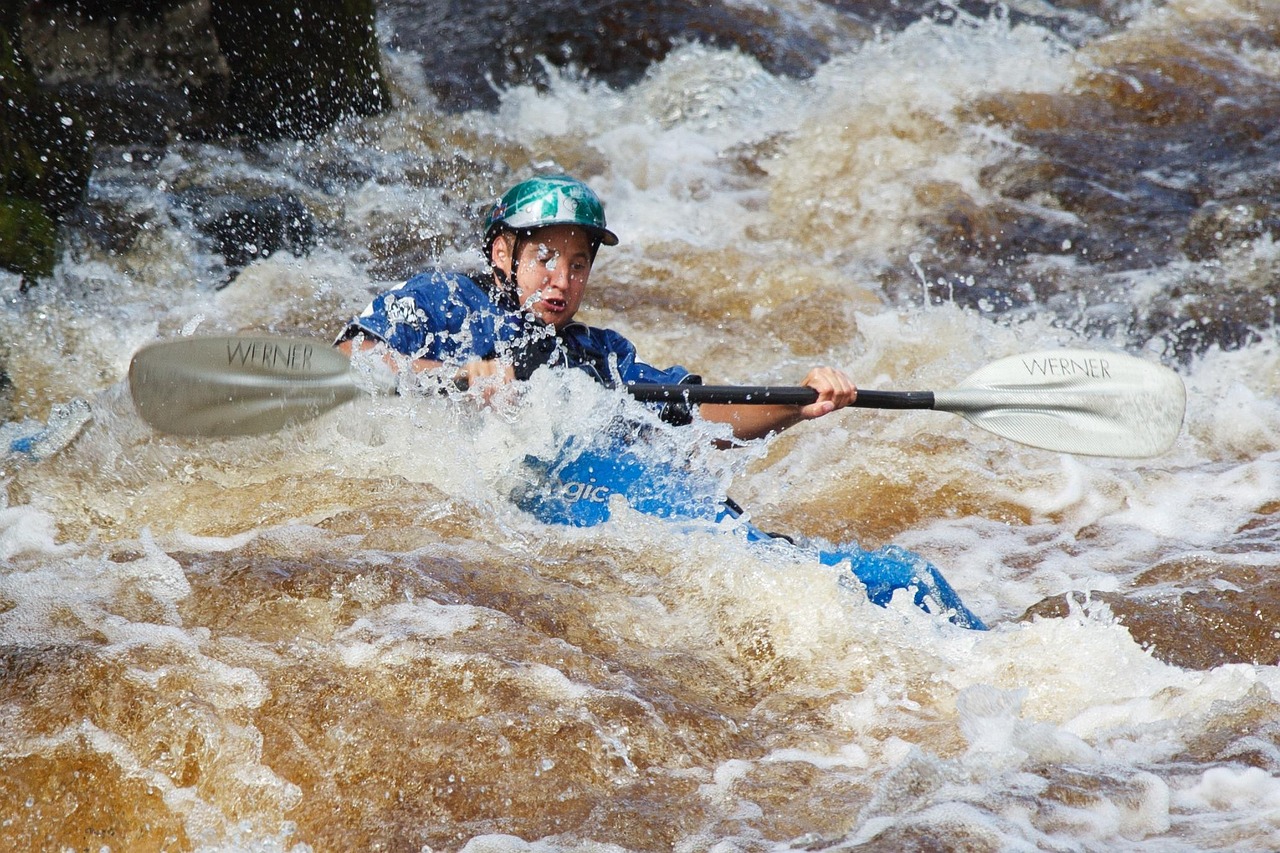
- Whitewater kayaks are short (6 to 9 feet), highly rockered and very maneuverable, always paddled with a spray skirt.
- Tandem kayaks seat two, which the ACA notes is useful on long trips or for paddling with a child.
Inflatable and folding kayaks fill the gap for people with no roof rack or storage. Whatever you paddle, the Coast Guard counts it as a vessel, so the federal equipment rules apply to you as much as to a motorboat. (Paddling an open boat with a single-bladed paddle? Our canoeing guide is for you.)
Sit-on-top or sit-inside?
It’s the first choice most new kayakers make. The ACA calls sit-on-tops especially suitable for beginners: if you tip over, you simply climb back on, and they’re great for swimming stops and warm water. Sit-inside kayaks keep you drier and warmer, take a spray skirt for waves and rapids, and are the base for touring, sea and whitewater paddling. The trade-off is that you need to practice a wet exit (getting out of a capsized kayak) and, for open water, a deep-water re-entry with a paddle float or a partner. On whitewater, paddlers also learn to roll the kayak back upright without getting out.
Rivers and the Class I to VI scale
Rivers are rated on the International Scale of River Difficulty, kept by American Whitewater: Class I (beginner, small regular waves) and Class II (novice, easy rapids) suit a wide variety of craft; Class III (intermediate) is for whitewater-specific boats and gear; Class IV (advanced) and Class V (expert, “near the limits of navigation”) are for skilled groups; Class VI is extreme and exploratory. The scale “is not exact”: cold water, high flows, downed trees or a remote canyon all call for an extra margin of safety. Our paddling rules and water safety page explains each class and the safety code.
Racing in one paragraph
Sprint kayak is a straight-line race in up to nine lanes over 200, 500 or 1,000 meters (5,000 meters is also recognized), in singles, doubles and fours: K1, K2 and K4. A K1 can be at most 5.2 meters long. A second false start disqualifies a boat, and a capsize ends your race. Slalom K1 is a timed run down a whitewater course of 18 to 25 gates: green gates are run downstream, red gates upstream, touching a pole costs 2 seconds and missing a gate costs 50. Kayak cross puts four paddlers on the course at once, launching off a ramp, with a mandatory roll along the way. Marathon, wildwater, freestyle, ocean racing and kayak polo (officially “canoe polo,” but played in kayaks) are other disciplines.
Kayaking at every level
First time and recreational paddling
Most people start with a rental or a friend’s boat on a calm lake. The best next step is a lesson. ACA kayak courses start at Level 1, Introduction to Kayaking, which covers the boat, life jacket, paddle choice, the forward, reverse and sweep strokes, turning, bracing and edging, and go up to Level 5 for advanced, rough-water paddlers. The ACA’s beginner guide is blunt: beginning kayakers “should never paddle alone.”
Kids and families
Federal rules require children under 13 to wear a Coast Guard-approved life jacket while the boat is underway, unless your state has its own rule. Kids’ life jackets are sized by weight, and fit matters more than anything. Youth sit-on-tops such as the Lifetime Dash 66 are made for ages 5 and up with an adult watching. Our kayaking with kids page covers sizing, lessons and parents’ questions.
Clubs, whitewater and touring
Paddling clubs are where most people find partners, trips and instruction. Touring kayakers move from sheltered bays to open coast through the ACA’s coastal kayaking levels; river kayakers step up one whitewater class at a time. American Whitewater, founded in 1954, has about 7,000 members and 85 affiliate clubs and works on river access, conservation and safety. Kayaking is not an NCAA championship sport, so college paddling mostly happens through club and outing programs.
National teams and the Olympics
Sprint racing has been on the Olympic program since Berlin 1936 (women’s K1 joined in 1948), slalom first appeared at Munich 1972, and kayak cross made its debut at Paris 2024. Worldwide the sport is run by the International Canoe Federation, founded in 1924, which relaunched in July 2026 as Paddle Worldwide. In the US, the American Canoe Association has been the national governing body for Olympic and Paralympic paddling since October 2017 and picks the national teams. At LA28 there are 10 kayak events: men’s K1 1000 m, K2 500 m and K4 500 m and women’s K1, K2 and K4 500 m at Marine Stadium in Long Beach, and men’s and women’s slalom K1 and kayak cross at the whitewater center in Oklahoma City, also a US Olympic and Paralympic Training Site. Paralympic paracanoe races include kayak classes KL1, KL2 and KL3. Our kayaking organizations page maps the whole pathway.
Kayaking safety and sports health
Paddling health has two halves: everyday strains in shoulders, wrists and backs, and rare emergencies where a life jacket and good judgment decide everything. This section is general information, not medical advice. If you’re hurt, see a sports medicine doctor, physical therapist or athletic trainer; in an emergency on the water, call 911 or use VHF channel 16 on the coast.
Life jackets: what the Coast Guard numbers show
The US Coast Guard’s 2024 Recreational Boating Statistics counted 556 boating deaths nationwide. Kayaks accounted for 89 of them, about 16% of deaths where the boat type was known, more than any other kind of paddlecraft. Of those 89 kayakers, 77 drowned, and of those 77, 60 were not wearing a life jacket (16 were, and one is unknown). In other words, the single most effective thing a kayaker can do is wear the life jacket, not just carry it.
- The law: one Coast Guard-approved wearable life jacket per person, the right size, in good condition and readily accessible. Kayaks don’t need a throwable cushion, even at 16 feet and longer. Some states go further: New Mexico requires every paddler to wear one, and Massachusetts requires it from September 15 to May 15.
- Foam or inflatable: the Coast Guard doesn’t recommend inflatables for anyone under 16 or for non-swimmers. On whitewater, American Whitewater recommends a snug, whitewater-specific foam vest.
- Bring a buddy: American Whitewater strongly discourages running rivers alone and recommends a group of three or more people in at least two boats.
Shoulders, wrists and backs
In a survey of 392 whitewater kayakers, 219 reported 282 injuries. Most (87%) happened while still in the boat; hitting an object was the most common cause (44%), followed by overuse and traumatic stress (25% each). The shoulder was the most commonly injured area, and 17% of injuries were dislocations; a review of whitewater injuries explains that acute kayaking injuries usually come from the force of the water on the arm, most often at the shoulder. A later review found that chronic problems, mostly shoulders and wrists, make up 25% to 40% of kayaking injuries. Racers show the same pattern: over three years in Australia’s national sprint kayak squad, 78% of athletes had at least one injury and the shoulder accounted for 27% of injuries, and a 2025 study of elite teenage flatwater kayakers found the lower back and shoulder were the most injured sites. Keep your elbows low and in front of you when you brace, build shoulder and trunk strength on land, and increase paddling time gradually. Details, with when to see a professional, are on our kayaking injuries page.
Head injuries on whitewater
Rocks are the danger when you flip in shallow rapids, which is why whitewater paddlers wear helmets made to survive several impacts. If someone takes a hit to the head, follow the CDC’s HEADS UP rule, “When in doubt, sit them out”: off the water for the day and until a health care provider clears them. A worsening headache, repeated vomiting, a seizure or unequal pupils mean emergency care now.
Cold water, strainers and low-head dams
The National Weather Service calls water of 70°F or lower “cold water,” and a sudden plunge triggers a gasp reflex that can make you breathe in water. Physiologist Gordon Giesbrecht’s 1-10-1 rule: about 1 minute to control your breathing, about 10 minutes of useful movement, and up to about an hour before hypothermia knocks you out, if you’re floating. American Whitewater says a wetsuit or drysuit is essential when the water is below 50°F, and the ACA’s beginner guide suggests specialized paddling wear whenever air plus water temperature adds up to less than 120°F. In a sit-inside kayak, practice pulling the spray skirt’s grab loop until it’s automatic. On rivers, two hazards kill even on easy water: strainers (trees and branches the current flows through but you don’t) and low-head dams, whose recirculating current can trap a swimmer. Avoid both, every time.
Sun, heat and lightning
UV reflects up off the water. The American Academy of Dermatology recommends a broad-spectrum, water-resistant sunscreen of SPF 30 or higher, reapplied every two hours and after swimming or sweating, plus a hat and a long-sleeve top. On hot days, confusion or collapse could be heat stroke: the National Athletic Trainers’ Association says to cool the person right away, ideally in cold water, and call for help. For storms, NATA’s rule holds on the water: “When thunder roars, go indoors.” Get off the water at the first rumble.
Training and conditioning for paddling
Time in the boat is the best training, but a good stroke starts on land. The power comes from rotating your trunk and pushing with your legs, not just pulling with your arms. A simple week has three parts:
- Pulling and shoulder care: rows, pull-ups or band pull-aparts, and rotator cuff work to balance all the pulling.
- Trunk and legs: rotational core work, planks and side planks, and squats or deadlifts for the push from the footrests.
- Engine and water skills: two or three easy aerobic sessions, a harder interval session, plus wet exits, paddle-float re-entries and, for whitewater, a reliable roll.
Resistance bands make shoulder work easy at home; see our resistance bands guide. Full routines are on our kayaking training page.
Fuel, hydration and recovery
A long day on the water is a long day of exercise in the sun, often far from a store. Pack water and snacks in a dry bag and eat something every hour or two on long trips. Our paddle day and race day page and kayaking nutrition page cover fueling, electrolytes and supplements with third-party testing.
After paddling, get warm and dry first, then eat and rehydrate. Many paddlers use a foam roller like the TriggerPoint GRID 1.0 (about $40) on upper back and lats, or a small massage gun such as the Theragun Mini (about $220); that’s for comfort, not treatment. More on our kayaking recovery page and in our athlete recovery routine.
Kayaking gear
Prices change often. The prices below are what we saw at the maker or a major retailer in October 2026; check the current price before you buy.
Start with the life jacket you’ll actually wear: a paddling vest with big arm openings and a high or mesh back that clears the seat, like the Onyx MoveVent Dynamic (about $69, Coast Guard and Transport Canada approved). For a first boat on calm water, a stable 10-foot sit-in such as the Pelican Argo 100X (about $510, 36 lb, 275 lb capacity) is easy to carry. Pair it with a paddle of the right length; the Bending Branches Whisper (about $80) is a light two-piece recreational paddle. If you paddle rivers, add a whitewater helmet like the NRS Havoc Livery (about $58, meets CE EN 1385) and a throw rope. Paddle sizing, spray skirts, dry bags and kids’ sizes are on our kayaking gear page, and GPS watches for paddlers on our kayaking wearables page.
Onyx MoveVent Dynamic Paddle Vest
- USCG and Transport Canada approved
- Mesh lower back for high seats
- SOLAS reflective trim
Pelican Argo 100X Recreational Kayak
- 10 ft sit-in, 36 lb
- 275 lb max capacity
- Foam flotation blocks
Bending Branches Whisper Kayak Paddle
- 2-piece aluminum shaft
- Polypropylene dihedral blades
- 0° or 60° feathering
NRS Havoc Livery Helmet
- Meets CE EN 1385
- DialFit adjustment
- Replaceable fit pads
Kayaking FAQs
Is kayaking dangerous?
Most kayaking injuries are strains, scrapes and shoulder problems. The serious risk is drowning: in 2024 the Coast Guard counted 89 kayak deaths, 77 of them drownings, and most of those paddlers weren’t wearing a life jacket. Wearing one, dressing for the water, paddling with others and staying within your skills cut that risk the most.
Do you have to wear a life jacket in a kayak?
Federal law requires a Coast Guard-approved life jacket for each person aboard, and children under 13 must wear one while underway unless your state sets its own rule. Some states require all paddlers to wear one, at least in cold months. Wear it anyway: a life jacket is very hard to put on after a capsize.
Is a sit-on-top or sit-inside kayak better for beginners?
Both work. The ACA calls sit-on-tops especially suitable for beginners because you simply climb back on after a tip, which also makes them great in warm water. Sit-insides keep you drier and warmer on cool days, but learn a wet exit before you go out, and a paddle-float re-entry before you go far from shore.
What does Class III whitewater mean?
On American Whitewater’s scale, Class III is intermediate: moderate difficulty with large waves and features that need skilled maneuvering, suitable only for whitewater-specific boats and gear. Ratings change with water level, temperature and fallen trees, so check current conditions and scout when in doubt.
Is kayaking good exercise?
Yes. Paddling works the shoulders, back, arms and trunk with every stroke, and the legs push through the footrests. An easy paddle is gentle exercise; a fast tour or a race is hard aerobic work. Build up gradually and add land strength work to protect your shoulders.
Kayaking gives back for a lifetime: a first solo paddle across the lake, a sea-kayak trip along the coast, a clean line through a rapid. Wear the life jacket, respect cold water and moving water, and look after your shoulders. Next: paddling rules and water safety, kayaking with kids, kayaking injuries, kayaking gear, or compare with our rowing and sailing sections.