This article contains affiliate links: if you buy through them we may earn a commission, at no extra cost to you. Learn more.
Glassy water at 5:30 in the morning, eight rowers carrying a 60-foot shell down to the dock on their shoulders while the coxswain calls “Up and over.” A high school crew sprinting the last 500 meters of a spring regatta with parents shouting from the bank. The Head of the Charles in October, three miles of bridges and bends with more than 11,000 athletes. A 70-year-old sculler alone on a lake, and a garage at 6 a.m. where someone is pulling a 2,000-meter test on an indoor rower and staring at the monitor. Rowing is one of the oldest organized sports in America and one of the few you can do, seriously, for your whole life.
Rowing, page by page
- Rules: how the game works at every level
- Leagues & associations: pro, college, high school and youth
- Youth & high school: ages, safety and recruiting, for players and parents
- Injuries & sports health: prevention, concussion, when to see a pro
- Training & conditioning: before: off-season to in-season
- Game day: during: fueling, hydration, heat
- Recovery: after: games, tournaments, sleep
- Nutrition & supplements: what to eat, tested supplements
- Best wearables: trackers and watches for the sport
- Gear: the complete equipment list
Buying guide · Our Rowing buying guide compares the gear we'd pick, with prices and sizing:
This page covers rowing for athletes and the people who look after them: how racing works, what the sport looks like from learn-to-row to the Olympics and masters, and, most of all, how to stay healthy doing it. Sports health is the heart of it: the low back and rib injuries that come with long hours on the erg, sore wrists and blistered hands, water safety and cold water, heat and sun. Then come training, recovery and the gear you really need.
Rowing at a glance
| Two disciplines | Sweep rowing (one oar per rower, held with both hands) and sculling (two oars, one in each hand). Plus indoor rowing on machines, and coastal rowing and beach sprints on the sea. |
|---|---|
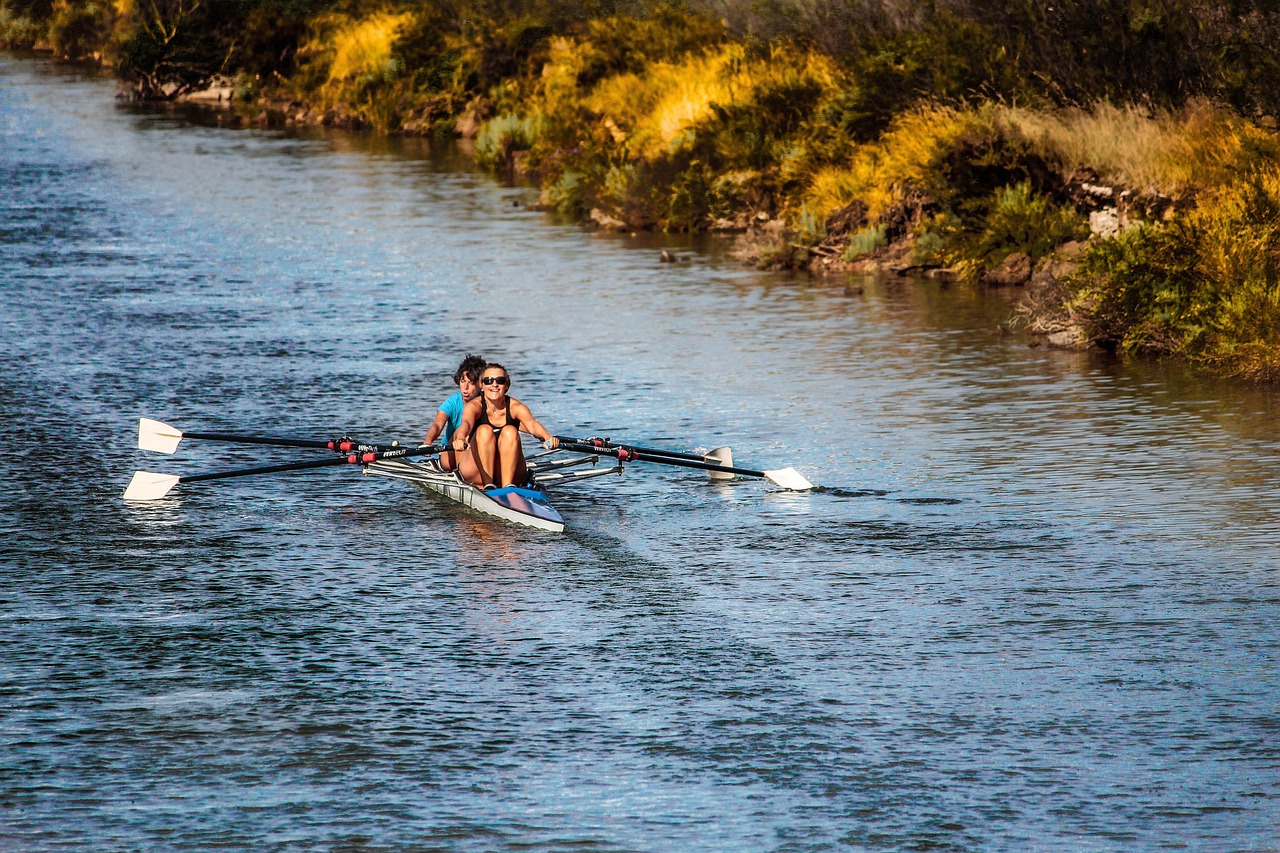
| Boats | Sculling: single (1x), double (2x), quad (4x). Sweep: pair (2-), four with or without a coxswain (4+, 4-) and eight (8+). Every eight has a coxswain. |
| Race distances | Sprint racing: 2,000 meters for national, college, world and Olympic events; often 1,500 m for juniors and scholastic crews and 1,000 m for masters (USRowing). Fall head races: about 2.5–3 miles against the clock. |
| Governing bodies | World Rowing internationally; USRowing in the US; the NCAA for college women; the Intercollegiate Rowing Association (IRA) for college men and lightweight women. |
| Main physical demands | A full-body endurance and power sport: legs, back and arms in every stroke, a few all-out minutes on race day, and long steady training sessions. |
| Most common injuries | Low back pain, rib stress fractures, wrist and forearm tendon problems, knee pain and hand blisters, mostly from overuse rather than impact. |
How rowing works
Rowers sit facing the stern on sliding seats with their feet fixed in shoes on a footboard. Concept2 describes the stroke in four parts: the catch (blade goes in, shins vertical, body leaned forward), the drive (legs push first, then the body swings back, then the arms pull), the finish and the recovery (arms, body, then slide back up to the catch). Legs, body, arms on the way out; arms, body, legs on the way back.
Seats are numbered from the bow: bow seat is 1, and the “stroke” sits nearest the stern and sets the rhythm. The coxswain, in the boats that carry one, steers and, as USRowing puts it, serves as the on-the-water coach; in coxless boats and sculling boats a rower steers. Speed is described in strokes per minute: USRowing says crews often start a race at 38–45 strokes a minute (eights even in the 50s), settle into the 30s and sprint at the end.
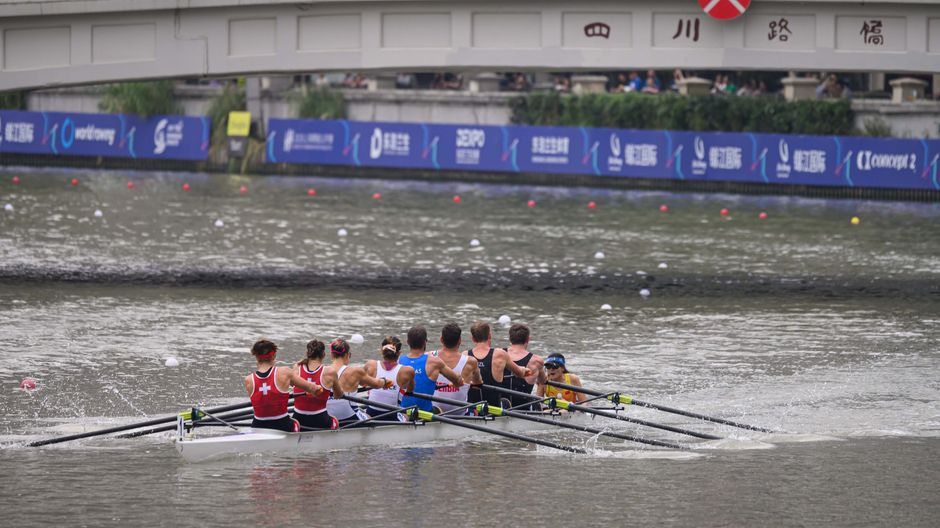
Spring and summer are sprint season: six to eight crews side by side in buoyed lanes over 2,000 meters. Fall is head-race season, when boats start one at a time 10–15 seconds apart and race the clock over a winding river course. The full rules, boat classes and safety rules are on our rowing rules page.
Rowing at every level
Kids and juniors
Most young rowers start through a club’s learn-to-row program or a school team, usually in their teens. USRowing asks every athlete to pass a swim test before going on the water, and its youth racing runs from regional championships to the Youth National Championships, held June 11–14, 2026 at Nathan Benderson Park in Sarasota, Florida, with nearly 4,000 athletes from 236 clubs. In 2021 USRowing dropped youth lightweight events at its own regattas because, it said, managing weight is a health risk for developing teens. Our youth rowing guide covers learn-to-row, swim tests, parents’ questions and recruiting.
High school and scholastic
Scholastic rowing has its own big days. The Stotesbury Cup Regatta on Philadelphia’s Schuylkill River, first held in 1927, calls itself the world’s oldest and largest high school rowing event; the 2026 edition drew about 4,000 rowers. The Scholastic Rowing Association of America (SRAA) holds its national championship over Memorial Day weekend.
College
Rowing is America’s oldest college sport: Harvard and Yale first raced in 1852. The NCAA has crowned a women’s rowing champion every year since 1997, and the 2026 Division I championship brought 22 teams to Lake Lanier in Georgia, each racing a first eight, a second eight and a four over 2,000 meters (Texas won). Men’s college rowing and women’s lightweight rowing are run by the IRA, whose 2026 national championship on Lake Natoma in California saw Washington win its 22nd title. More on our leagues and associations page.
Olympic and Paralympic
Rowing has been on the Olympic program since 1900 (the 1896 races were blown out by wind), and Olympic founder Pierre de Coubertin was a rower himself. At Paris 2024 the US men’s four won gold, the first in that event since 1960, and the men’s eight took bronze. Los Angeles 2028 changes things: no more lightweight events, 12 “classic” events, and three new coastal beach sprint events (men’s and women’s solo and a mixed double). Classic rowing will race at Long Beach’s Marine Stadium on a 1,500-meter course, the shortest in Olympic history. Para rowing has been Paralympic since Beijing 2008, with three classes (PR1, PR2, PR3) racing over 2,000 meters.
Masters and recreational
In USRowing’s rules you become a masters rower in the year you turn 21, and age categories run from AA (21–26) to K (85 and over), with age handicaps so different ages can race fairly. The World Rowing Masters Regatta, open to rowers 27 and older, was held in Bled, Slovenia, in September 2026. Many adults learn as beginners in a club’s adult learn-to-row, and many more row only indoors.
Indoor rowing
The indoor rower, or “erg,” is where rowers train in winter and where anyone can race. Concept2’s free online logbook keeps world rankings by distance, age and weight, and World Rowing runs indoor championships: a virtual edition each February and, in 2026, an in-person championship in Birmingham, England, on December 5–6 with 2,000 m, 500 m and relay races.
Sports health for rowers
Rowing has almost no collisions, so most injuries come from doing the same movement thousands of times, often too much, too soon, or with tired technique. This section is general information, not medical advice. If you’re hurt, see a professional.
The most common rowing injuries
- Low back pain: the American Orthopaedic Society for Sports Medicine (AOSSM) links it to long erg sessions (over 30 minutes) and heavy free-weight lifting. A 2025 meta-analysis of 10 studies and 2,082 rowers found the clearest risk factor was having had low back pain before (odds about 2.65 times higher).
- Rib stress fractures: AOSSM says they make up about 10% of rowing injuries and tend to appear in hard winter training with a lot of erg work. Pain along the side of the chest that gets worse with rowing or deep breaths is a reason to stop and get checked.
- Wrist and forearm: extensor tenosynovitis, with pain, swelling and sometimes a creaking feeling at the wrist, often in cold weather or with a tight grip on the oar.
- Knee pain: AOSSM names pain around the kneecap and iliotibial (IT) band friction.
- Hands: blisters and calluses are part of the sport. Keep them clean; World Rowing’s experts warn that infected hand wounds can turn serious, so redness, heat or swelling means a doctor’s visit.
AOSSM’s prevention basics: core strength, flexibility, a proper warm-up, and building up erg time and weights gradually. Coaches and athletic trainers can spot the technique faults (an early arm pull, a slumped back at the catch) that load the back and ribs. More on the rowing injuries page.
Water safety and cold water
The water is the biggest risk in rowing. USRowing’s Safety Guidelines say every athlete must pass a supervised swim test (at minimum, float or tread water for ten minutes and put on a life jacket while floating), that anyone who can’t swim must wear a life jacket in the boat at all times, and that minors should never be on the water without a safety launch. If a boat flips or swamps, stay with the boat; it floats, and swimming for shore cools the body much faster. USRowing calls water below 80°F potentially dangerous and below 50°F very dangerous, and asks for a launch within 100 yards of every shell when the air is below 40°F or the water below 50°F. Lightning or thunder means head for shore, get out and wait; don’t launch.
Heat, sun and hydration
Summer practices mean hours in the sun with the water reflecting it back. USRowing suggests avoiding midday rowing when it’s hot, drinking before you leave the dock and taking your own bottle in the boat, sunscreen and a hat or visor, and light, wicking clothes. The National Athletic Trainers’ Association (NATA) recommends easing into the heat over 7–14 days. Call 911 for confusion, collapse or a very high body temperature.
Weight, fueling and lightweights
Rowing burns a lot of energy, and lightweight rowers (and coxswains with minimum weights) can feel pressure to cut weight. USRowing cited Relative Energy Deficiency in Sport (RED-S), the condition that comes from not eating enough for the training you do, when it dropped youth lightweight racing. Eat enough to train, and talk to a sports dietitian before trying to make weight. Our rowing nutrition page goes further.
Head injuries
Concussions are rare in rowing but not impossible: an oar handle, a collision or a fall on a slick dock can do it. Use the CDC’s HEADS UP rule: anyone with signs such as headache, dizziness, confusion or sensitivity to light sits out for the rest of the day and until a healthcare provider clears them. Call 911 for danger signs like a worsening headache, repeated vomiting or seizures.
When to see a doctor, physical therapist or athletic trainer
Don’t row through pain. See a professional for back pain that runs down a leg or doesn’t settle in a few days, rib or chest-wall pain that hurts when you breathe deeply, a wrist that creaks and swells, a hand wound that looks infected, or any concussion signs. A sports medicine physician manages most sports injuries without surgery, a physical therapist guides rehab and the return to rowing, and an athletic trainer, if your school or college has one, is the best first stop.
Training and conditioning for rowing
Most rowing training is long and steady: many kilometers at a conversational effort on the water or the erg, with harder intervals and race-pace pieces added as the season goes on. The 2,000-meter erg test is the sport’s yardstick, and college coaches ask for it. Strength work for the legs, hips, back and core supports the stroke, and many coaches add running, cycling or swimming as cross-training, especially when an injury makes rowing painful.
Two habits protect your back and ribs: build volume gradually (big jumps in erg time are a classic setup for injury) and keep technique sharp when tired, legs first, then body, then arms. A heart rate strap helps keep easy sessions truly easy; Concept2 says its PM5 monitor pairs with Bluetooth and ANT+ chest straps. Many rowers also track sleep and readiness with a wearable (see Whoop vs Oura vs Garmin and HRV for athletes). The full plan is on our rowing training page, and regatta-day fueling on race day.
Recovery after training and regattas
Early practices and long days make sleep the first recovery tool. The CDC recommends 8–10 hours for teens and 7 or more for adults; a 5 a.m. alarm means an early bedtime. Eat a real meal after practice, refill your bottle, and on regatta days keep snacks and fluids at the trailer between races. The American College of Sports Medicine’s fueling statement recommends carbohydrate-rich, familiar foods before hard sessions.
A foam roller for hips, glutes and upper back, a massage gun for tight legs, compression boots after a long weekend and soft recovery shoes on the dock are comfort tools many rowers like. They’re not treatment; pain that lasts needs a professional. See our rowing recovery page and recovery tools guide.
Gear for rowing
- Boats and oars: clubs and schools own the shells and oars; beginners don’t buy them. The shoes are bolted into the boat too.
- Clothing: close-fitting layers that can’t catch in the slide or the oar handle; a unisuit for racing.
- Hands: athletic tape for hot spots, and pogies (oar mitts) for cold mornings.
- Indoor rower: the Concept2 RowErg is the machine used for rankings and indoor championships; Concept2 lists it at $990 with standard legs, with a 500 lb maximum user weight.
Four picks for a rower: the Concept2 RowErg; the Polar H10 chest strap (about $105 at Polar), which Concept2 sells for the PM5; the TriggerPoint GRID foam roller (about $40); and OOFOS OOahh slides (about $60) for the dock and after the erg. Everything else is on our rowing gear page.
Concept2 RowErg (PM5)
- PM5 monitor included
- 500 lb max user (maker)
- Splits in two for storage
Polar H10 Heart Rate Sensor
- Bluetooth and ANT+
- Pairs with the Concept2 PM5
- Chest strap, M-XXL
TriggerPoint GRID 1.0 Foam Roller
- 13 x 5 in
- Multi-density surface
- Hollow core keeps its shape
OOFOS OOahh Slide
- OOfoam slide
- APMA Seal of Acceptance
- Machine washable
For more, browse Recovery & Regeneration and Training & Performance, or compare trackers on our best rowing wearables page.
Rowing FAQs
What’s the difference between sweep rowing and sculling?
In sweep rowing each rower holds one oar with both hands (pairs, fours and eights). In sculling each rower has two oars, one in each hand (singles, doubles and quads). Many rowers learn both.
How long is a rowing race?
Sprint races are 2,000 meters at the national, college, world and Olympic level, often 1,500 m for juniors and 1,000 m for masters. Fall head races are about 2.5–3 miles. LA 2028’s Olympic course will be 1,500 m because of the venue.
Do you need to know how to swim to row?
USRowing’s safety guidelines ask every athlete to pass a supervised swim test: at least floating or treading water for ten minutes and putting on a life jacket in the water. Anyone who can’t swim must wear a life jacket in the boat at all times.
Is rowing hard on your back?
Low back pain is the most commonly reported problem in rowing, and AOSSM links it to long erg sessions and heavy lifting. Good technique, core strength and gradual increases in training help; pain that lasts or runs down a leg needs a sports medicine doctor or physical therapist.
Is an indoor rower good training for rowing on the water?
Yes. It’s how crews train in winter and how college coaches compare athletes (the 2,000 m test). It doesn’t teach balance or blade work, so it’s a partner to water time, not a replacement.
What does a coxswain do?
The coxswain steers, runs the race plan and acts as the coach in the boat, calling the stroke rate, pushes and safety commands like “Weigh enough! Hold water!” to stop the boat. Coxswains in races must meet minimum weights (World Rowing: 55 kg; USRowing: 120 lb for men’s events, 110 lb for women’s), carrying extra weight if needed.
Rowing rewards patience: the rowers who last build up gradually, keep their technique honest when tired, respect the water and sleep. Keep exploring: our recovery tools guide, electrolytes and Nutrition & Supplements for summer practices, and the other sports on our sports hub, from swimming to soccer.