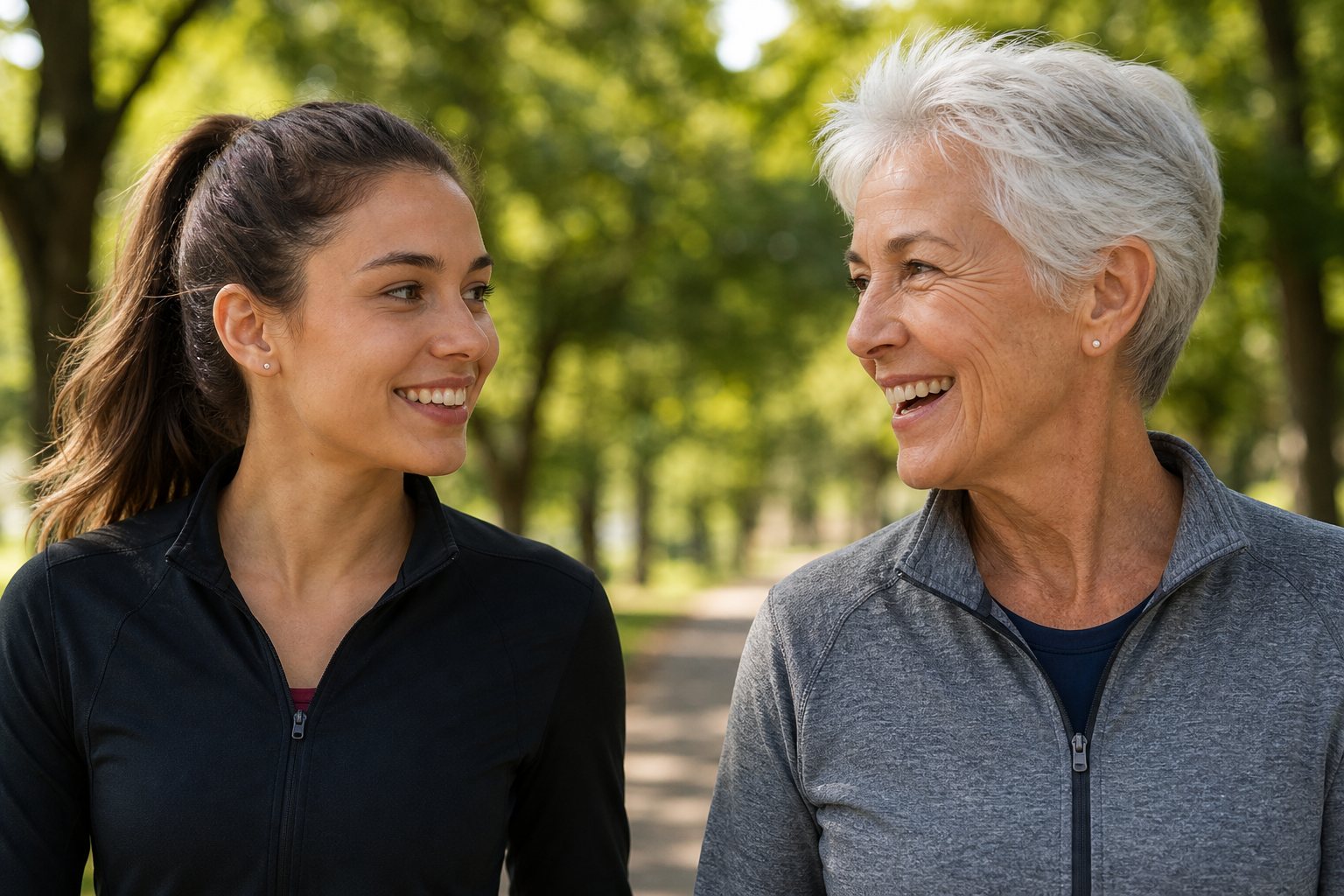
This page is for athletes of every age, and for parents, coaches and partners who want to understand how health needs change across a sporting life. Teenagers, adults and older athletes share many basics, but their bodies, risks and priorities differ.
It is general education. It does not tell anyone how to manage a medical condition. If you have a health condition, take regular medicines, or are unsure whether it is safe to start or return to a sport, a doctor who knows you is the right person to guide you.
Everyone: the shared foundations
Whatever your age, the same basics apply: a gradual build-up in activity, regular meals with enough variety, drinking enough fluids, sleep, rest days, and warming up before hard efforts. Pain that is sharp, worsening or does not settle is a reason to get checked and not something to push through. Our central guides on overtraining and overuse injuries and hydration cover two of the most common problems.
A check-up before a big change, such as starting an intense programme after years of inactivity, is sensible at any age. Many sports and schools also ask for a pre-participation health check, so ask what your team or governing body requires.
Youth athletes
Children and teenagers are growing, and growth affects sport. Growth areas in the bones are softer than adult bone, and rapid growth can leave a young athlete feeling clumsy or more prone to overuse problems. Parents can help by watching for fatigue, pain that comes back, or a child who suddenly loses interest.
- Variety matters. Playing several sports and having regular breaks away from one sport are generally encouraged by paediatric groups over year-round specialisation at a young age.
- Food should fuel growth and activity. Restrictive diets, pressure about weight and supplements aimed at “bulking up” are things to discuss with a paediatrician.
- Head injuries need to be taken seriously and assessed by a professional. See concussion in sports.
- Sleep needs are higher for young people, and early training plus school can squeeze it. See sleep and athlete wellbeing.
Our youth safety hub has more on keeping young athletes safe.
Adult athletes
Adults often fit sport around work, family and stress, which makes recovery, sleep and consistency the usual challenges. Many adults return to sport after a long gap and try to do what they did at twenty. Tendons and joints often need more time to adapt than fitness does, so building up gradually helps avoid early setbacks.
Women athletes can have health considerations tied to the menstrual cycle, pregnancy, postpartum recovery and menopause. Changes in periods, bone health concerns or unusual fatigue are reasons to talk with a doctor, because they can be signs that the body is not getting enough energy for its training load. Men and women alike should speak up about low energy, changes in mood, or unexplained weight change.
Older athletes
Staying active is widely encouraged at every age, and many people keep competing well into later life. Changes that often come with age include slower recovery, stiffer joints, less muscle mass and, for some, long-term conditions or medicines that affect exercise. Strength work and balance work are commonly recommended by health organisations to help keep people independent and steady on their feet.
Older athletes may also feel the heat and cold differently and may need more time between hard sessions. Read our guides on protein for older athletes and recovery for runners over 50 for everyday approaches.
Chest pain, unusual shortness of breath, dizziness, fainting or a racing or irregular heartbeat during or after exercise should be taken seriously. Stop and seek medical care, and do not wait to see whether it passes.
Individual health considerations
No two athletes are the same. Long-term conditions such as asthma, diabetes, heart conditions, bone and joint problems, and conditions affecting blood pressure or the nerves can all change how someone should train and eat. Some medicines affect hydration, heart rate, heat tolerance or anti-doping status.
This page does not offer advice for specific conditions because the right approach depends on the person. What helps is a plan made with your doctor or specialist: what is safe, what warning signs to watch for, which medicines to carry, and who to call. Tell your coach about anything they need to know in an emergency.
Pregnancy, disability and recovering from surgery or illness also mean an individual plan from a professional. Many athletes with health conditions and disabilities compete at the highest levels, with the right support.
Choosing the right professional
A family doctor is a good first stop. Sports medicine doctors, physiotherapists, athletic trainers, registered dietitians and mental-health professionals each cover different things. Ask what the professional’s training is, and be wary of anyone who promises a quick fix or sells their own supplements as part of the advice. For supplement questions, see sports supplements: evidence and safety.
Guides to read next
- Best Protein for Older Athletes
- Recovery for Runners Over 50
- Overtraining and Overuse Injuries
- Hydration for Athletes
- Heat Illness in Athletes
- Concussion in Sports
- Youth Sports Safety
- Sleep & Athlete Wellbeing
- Sports Supplements: Evidence & Safety
- Running Injury Prevention
- Swimming Training
- Pickleball Injury Prevention
Frequently asked questions
Do I need a doctor’s check before starting a sport?
Many people can start gently without one, but a check is wise if you have a health condition, take medicines, have been inactive for a long time, or have symptoms like chest pain or dizziness. Ask your doctor if you are unsure.
Is it too late to start training seriously as an older adult?
No. Many people begin later in life. Starting gradually and getting advice about any conditions you have is the usual approach.
Should my child specialise in one sport early?
Paediatric groups generally encourage variety and rest breaks for young athletes. Ask your child’s doctor if you are worried about training load.
Where can I find advice for my own health condition?
From your doctor or specialist, who can adapt advice to you. General web pages, including this one, cannot do that.