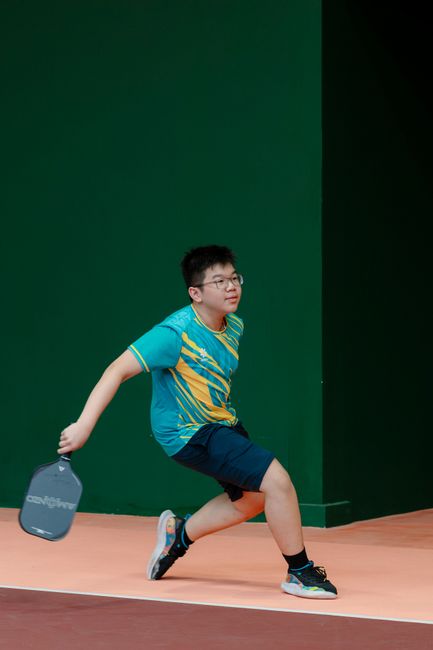
It is a cool Thursday morning, and the 9 a.m. open-play group has already filled the courts. A player who took up the game three weeks ago steps in without stretching, backpedals for a high lob and feels something snap behind his calf. Nothing about the game looked dangerous. Pickleball injury prevention is the set of habits around that moment: how you warm up, how fast you add playing time, how you move on the court, what you wear on your feet and face, and how you plan for heat. They can lower the odds of getting hurt. They cannot remove the risk.
Quick answer: The steps best matched to how pickleball players actually get hurt are to ease in during your first weeks, take rest days between sessions, warm up the calves and shoulders, avoid backpedaling, train balance and leg strength, wear court shoes and tested eye protection, and plan for heat. See a doctor, physical therapist or athletic trainer if you feel a pop in the calf, a joint swells or gives way, pain wakes you at night, or you have any change in vision.
General information, not medical advice. This page is about lowering risk. For what each injury is and what the studies count, see our pickleball injuries guide. For the sport as a whole, start at the pickleball hub.
Warm up before the first point
The American Academy of Orthopaedic Surgeons (AAOS) lists a warm-up among its pickleball injury prevention tips: light calisthenics and stretches first, then easy hitting before you play at full effort. Treat the calves, hips and shoulders as the parts to wake up, because those are the areas where older players often get hurt (see the injuries guide). No published study we found shows that a particular pickleball warm-up cuts injuries, so think of it as sensible preparation, not a guarantee. Our pickleball training guide has a routine you can copy.
Technique and movement
- Skip the backpedal. Falls cause about two in three emergency-room injuries (Yu et al., Orthopaedic Journal of Sports Medicine, 2025), and many start with a player moving backward. Turning and moving back with crossover steps, or letting a deep lob go, is common coaching advice. It is not backed by a trial that we found.
- Keep your grip loose. In a survey of 253 recreational players, a tight grip on baseline shots went with about 2.7 times the risk of an acute arm injury (Hanks and Myers, 2025).
- Take lessons. AAOS puts lessons on its short list of prevention tips, for stroke technique and for how to move on the court.
Build playing time slowly
The clearest load signal in the research is about newcomers. In one group of 28 pickleball Achilles tendon ruptures (mean age about 64), 68% happened in the first month of play and 32% on a player’s first day (Lencer et al., Journal of the American Academy of Orthopaedic Surgeons, 2025). In the survey of 253 recreational players, playing on consecutive days went with about five times the risk of an acute arm injury, and sessions longer than two hours with about 2.4 times (Hanks and Myers, 2025). In a national survey of 1,758 regular players, those who played more times a week reported more injuries (Owoeye et al., Sports Medicine – Open, 2025). These are associations, not proof of cause, and none of them gives a safe number of hours. Practical reading: start with short sessions, add time over weeks, and put a rest day between hard play days. AAOS adds that people with arthritic knees may find that shorter sessions help.
Strength, balance and the older player
The CDC’s physical activity guidelines for older adults call for 150 minutes of moderate activity a week, muscle-strengthening on at least 2 days, and balance activities. Pickleball covers part of that, not all of it. Among players aged 55 and older who had fallen or feared falling, a 10-week program of strength, balance and footwork reduced fear of falling, and five months later 25% of the trained group had fallen while playing compared with 44% of the comparison group (Myers and Hanks, Healthcare, 2025). The study was small, with 12 and 17 players, so treat it as encouraging, not settled.
- Falls and bones. The CDC says about 1 in 4 adults 65 and older reports a fall each year. AAOS notes that in people over 60 a fall from standing height can break a wrist, especially with osteoporosis. If you have osteoporosis or have broken a bone in a small fall, ask your doctor about your fracture risk before you play.
- Achilles and calf. AAOS says ruptures usually come when the calf is stretched quickly, such as pushing off or landing. Pickleball ruptures are concentrated in older players, with 82.5% of cases in patients over 50 in one 2026 comparison with tennis (Padley et al.). Warming up the calves and building up gradually are the steps that fit the evidence; a calf-strength routine from a physical therapist (PT) is a reasonable addition, though we found no trial specific to pickleball.
- Ankles. The National Athletic Trainers’ Association (NATA) says the strongest risk factor for a sprain is a previous sprain. Its position statement recommends a balance program of at least three months, and bracing or taping for people who have sprained before.
- Shoulders. AAOS says most rotator cuff tears come from gradual wear and are more common after age 40. For pain that is worse at night, see a clinician instead of playing through it. About one in three players in the 1,758-player survey kept playing despite pain.
- Heart. In a 2004 to 2023 analysis of emergency-room cases, about 14% were exertional heart events rather than injuries, with chest pain most common in players 60 and up (Lee et al., 2025). If you have heart disease, ask your doctor what level of effort suits you.
For a progression you can follow, see our training guide. Rest days and sleep are on the recovery page.
Heat and the outdoor court
The CDC explains that older adults adjust less well to sudden temperature changes, are more likely to have health conditions that affect the body’s response to heat, and often take medicines that change temperature control or sweating. NATA’s exertional heat illness statement says it takes roughly 7 to 14 days of training in the heat to acclimatize, and that for suspected exertional heat stroke the priority is to cool first (cold-water immersion is the most effective method) and call 911. The CDC says to seek medical help for cramps, headache, nausea or vomiting in the heat. Checking the CDC HeatRisk forecast before an outdoor session is one simple step. Our tournament-day page covers hydration and heat at events. We did not find a pickleball-specific source on court surface injury rates, so this page makes no claim about concrete versus other surfaces.
Shoes and eye protection
Shoes. AAOS recommends shoes made for pickleball or tennis, with side support and traction suited to the court, instead of shoes built for running forward. Its fit tips include trying shoes on late in the day, wearing the socks you play in and leaving about half an inch of toe room. Shoe fit cannot make up for a poor warm-up or a fast build-up in play, and no study we found shows that a shoe type lowers pickleball injuries.
Eyes. The American Academy of Ophthalmology (AAO) notes that a served ball can reach up to 40 mph and cross the court in under half a second, and that doubles partners stand close together. A JAMA Ophthalmology analysis estimated about 1,262 pickleball eye injuries in U.S. emergency rooms in 2024, rising since 2021 and more common at 50 and older (Lacher et al., 2025). A 2026 study found 20% of pros and about 45% of amateurs wore eye protection (Henick et al.). The AAO recommends polycarbonate goggles with front and side coverage. The published standard for racket-sport eye protectors is ASTM F3164-24, which names pickleball. A maker saying a product meets a standard is not the same as independent testing, so read the listing and look for the standard by name.
What prevention cannot do
Most of the research above is observational: it counts who gets hurt, not whether a habit stopped an injury. A warm-up, goggles and a balance program lower risk on paper, but falls, collisions and sudden tendon ruptures still happen to careful players. Prevention also works only if you keep doing it. If you have a medical condition or take regular medicines, adapt this page with your own doctor, not by yourself.
When to see a professional
- Call 911: chest pain or pressure, fainting, severe shortness of breath, confusion or collapse in the heat, or concussion danger signs such as worsening headache, repeated vomiting or slurred speech (CDC).
- Same day: a wrist or ankle that looks out of shape, numb or pale fingers or toes, a pop in the calf with trouble standing on your toes (AAOS), or any change or loss of vision, substantial eye pain, bleeding or bruising (AAO).
- Soon: shoulder pain at night, elbow pain with a weaker grip, a joint that swells or gives way, or pain that keeps returning after play.
A sports medicine physician diagnoses, a PT guides rehab and an athletic trainer is often the medical person at larger events. Details on each injury are on our pickleball injuries page.
Pickleball injury prevention: FAQs
How can seniors avoid injuries playing pickleball?
Start with short sessions, warm up, rest between play days, and add balance and leg-strength work. Ask your doctor first if you have osteoporosis, a heart condition or balance problems. The 10-week balance program study in players 55 and older suggests training can help, but it was small.
How do I avoid an Achilles injury in pickleball?
Warm up the calves and build playing time over weeks, because most ruptures in one group happened in the first month. A pop in the back of the leg with trouble rising onto your toes needs a doctor soon.
Is it safe to play pickleball every day?
No study gives a safe number. Playing on consecutive days went with about five times the risk of an acute arm injury in one survey, so rest days are a sensible choice, especially when you are new or have sore joints.
Do I need goggles for pickleball?
The AAO recommends polycarbonate goggles with front and side coverage. Eyewear is not required in casual or pro play, but eye injuries are rising. Look for ASTM F3164 on the product.
How can I stay safe from heat on an outdoor court?
Check the local heat forecast, get used to the heat over 1 to 2 weeks, drink at breaks and rest in the shade. Confusion or collapse is an emergency: cool the person and call 911.
Sources
- AAOS OrthoInfo, 5 Pickleball Injury Prevention Tips
- AAOS OrthoInfo, Athletic Shoes
- AAOS OrthoInfo, Distal Radius Fractures
- AAOS OrthoInfo, Rotator Cuff Tears
- AAOS OrthoInfo, Achilles Tendon Rupture
- Yu et al., pickleball injuries in U.S. emergency departments, 2013 to 2022 (2025)
- Lencer et al., Achilles ruptures in pickleball, J Am Acad Orthop Surg 2025
- Padley et al., Achilles ruptures in pickleball and tennis, Foot Ankle Orthop 2026
- Hanks and Myers, risk factors for upper-extremity injury in pickleball, 2025
- Owoeye et al., injury and complaints in 1,758 players, Sports Med Open 2025
- Myers and Hanks, strength, balance and footwork program for older players, Healthcare 2025
- Lee et al., exertional cardiovascular events in pickleball, 2025
- NATA position statement, ankle sprains, 2013
- NATA position statement, exertional heat illnesses, 2015
- CDC, Heat and Older Adults
- CDC, Physical Activity Guidelines for Older Adults
- CDC, Older Adult Falls Data
- CDC HEADS UP, concussion signs and symptoms
- American Academy of Ophthalmology, Wear Eye Protection When Playing Pickleball
- Lacher et al., pickleball eye injuries, JAMA Ophthalmology 2025
- Henick et al., eyewear use among pickleball players, JAMA Ophthalmology 2026
- ASTM F3164-24, Eye Protectors for Racket Sports
Gear fit matters too: see our pickleball gear guide for shoes, eyewear and paddles.
General information for education only, not medical advice. It does not replace a visit with a doctor, physical therapist or athletic trainer. See how we write and check our pages in our editorial policy.