This article contains affiliate links: if you buy through them we may earn a commission, at no extra cost to you. Learn more.
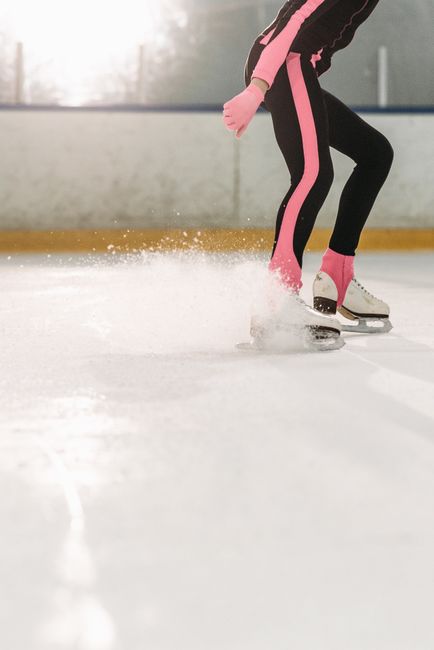
A five-year-old in a puffy jacket and mittens, taking her first wobbly glides across a public rink while a coach shouts “Snowplow!” A 6 a.m. freestyle session, the ice still wet from the Zamboni, a teenager running her Axel again and again before school. A packed arena going silent before the last group of the Olympic free skate. Figure skating is one of the most beautiful sports on earth and one of the hardest: jumps with three and four rotations, spins faster than most rides at the fair, and all of it on a blade about the width of a pencil line.
Figure Skating, page by page
- Rules: how the game works at every level
- Leagues & associations: pro, college, high school and youth
- Youth & high school: ages, safety and recruiting, for players and parents
- Injuries & sports health: prevention, concussion, when to see a pro
- Training & conditioning: before: off-season to in-season
- Game day: during: fueling, hydration, heat
- Recovery: after: games, tournaments, sleep
- Nutrition & supplements: what to eat, tested supplements
- Best wearables: trackers and watches for the sport
- Gear: the complete equipment list
Buying guide · Our Figure Skating buying guide compares the gear we'd pick, with prices and sizing:
This page is figure skating for skaters and the people who look after them: the four disciplines (singles, pairs, ice dance and synchronized skating), how the judging works, the path from Learn to Skate to the Olympics, and above all how to stay healthy doing it. Sports health is the heart of it: the figure skating injuries that show up most, why boots, ankles, knees and backs take the load, concussion, training hours for kids, fueling, athlete safety, and when to see a professional. Then training, recovery and the gear you really need.
Figure skating at a glance
| Disciplines | Singles (men and women), pairs, ice dance and synchronized skating. Singles, pairs and ice dance are on the Olympic program, plus a team event. |
|---|---|
| Programs | Singles and pairs: a short program (2 minutes 40 seconds) and a free skate (4 minutes for seniors, 3½ for juniors). Ice dance: a rhythm dance and a free dance. |
| Scoring | The ISU Judging System: a technical score (base value of each element plus Grade of Execution from −5 to +5) plus program components (composition, presentation, skating skills), minus deductions such as falls. |
| Governing bodies | The International Skating Union (ISU, founded 1892) worldwide; U.S. Figure Skating (founded 1921) in the US; Learn to Skate USA for beginners. |
| Main physical demands | Explosive jumping power, landing control on one foot, balance and core strength for spins, flexibility, and endurance to finish a four-minute program. |
| Most common injuries | Ankle sprains, foot and ankle tendon pain, knee pain around the kneecap, low back pain and bone stress injuries, boot problems such as “lace bite,” and concussions from falls and lifts. |
How figure skating works
- Singles is the discipline most people picture: one skater, jumps, spins, step sequences and choreography to music. Under the ISU’s 2026–27 rules, a senior free skate can include up to six jump elements, three spins (including a new choreographic spin), a step sequence and a choreographic sequence.
- Pairs adds overhead lifts, twist lifts (the man throws his partner up, she rotates and he catches her), throw jumps and death spirals, plus side-by-side jumps and spins.
- Ice dance has no big jumps. Couples are judged on rhythm, precise footwork, twizzles, dance lifts and spins, skated to a rhythm or theme the ISU sets each season for the rhythm dance.
- Synchronized skating is a team sport on ice: 8 to 16 skaters moving in unison through circles, lines, blocks, wheels and intersections. It isn’t in the Olympics yet, but a new nine-skater format, Synchro 9, is set to debut at the 2028 Winter Youth Olympic Games.
Scoring. A technical panel identifies each element and its level, and a panel of up to nine judges grades it. Every element has a base value: a triple Axel is worth 8.00 points, a quadruple Lutz 11.50 and a quadruple Axel 12.50 in the 2026–27 Scale of Values. Judges add or subtract Grade of Execution (GOE) in steps of 10% of that value, from −5 to +5, and the highest and lowest marks are dropped. The program components (composition, presentation and skating skills) are marked from 0.25 to 10 and multiplied by a factor. A fall costs a deduction and caps how much credit the element and the components can earn. Our figure skating rules page explains it all, from toe loops to the new quint jumps.
Figure skating at every level
Kids and beginners
Almost every skater starts in group lessons. Learn to Skate USA, launched in 2016 and endorsed by U.S. Figure Skating, USA Hockey and US Speedskating, runs classes at nearly 1,000 rinks. Its Snowplow Sam curriculum is designed for children under 6, and Basic Skills teaches the fundamentals of forward and backward skating, stops, edges and turns. From there, skaters can move into Free Skate, ice dance, synchro, pairs, hockey or speed skating classes. Membership costs $20 a season (July 1 to June 30), on top of the rink’s class fees. Our youth figure skating guide covers ages, tests, costs and choosing a safe club.
Club skaters and tests
Skaters who want more join a U.S. Figure Skating member club and start taking tests in front of a panel of officials. Tests come in skating skills, singles, pairs and ice dance, and they’re the ladder to competition: the standard track runs from Pre-Preliminary and Preliminary through Bronze, Silver and Gold, and a skater who passes the final test in a pathway becomes a U.S. Figure Skating Gold Medalist. There’s a separate adult track for skaters 21 and older. High school skaters usually train and compete through their club; U.S. Figure Skating also runs a high school program.
College
Figure skating isn’t an NCAA championship sport, but college skating is lively. In U.S. Figure Skating’s intercollegiate team program, schools compete in four conferences, and the top 16 teams meet at the National Intercollegiate Final. In April 2026, more than 300 skaters competed in Salt Lake City, and Boston University won its ninth title, the most of any school. College students can also enter the U.S. Collegiate Championships each summer.
Elite, Grand Prix and Olympic
The best skaters climb from juvenile, intermediate and novice to junior and senior, qualify for the U.S. Championships and get named to international events. The ISU Grand Prix runs six events each fall (Skate America is in Everett, Washington, on November 13–15, 2026), and the top six in each discipline go to the Grand Prix Final, set for December 10–13, 2026, in Chongqing, China. Since the 2024–25 season, skaters must be at least 17 to compete as seniors at ISU championships and the Olympics.
Figure skating was first in the Olympics in London in 1908 and has been part of every Winter Games since 1924; ice dance joined in 1976 and the team event in 2014. At Milano Cortina 2026, Alysa Liu of the US won women’s gold, Mikhail Shaidorov won Kazakhstan’s first figure skating gold, Riku Miura and Ryuichi Kihara of Japan won pairs, Laurence Fournier Beaudry and Guillaume Cizeron of France won ice dance, and the US won the team event. A month later in Prague, Ilia Malinin won his third straight world title and Kaori Sakamoto her fourth. See figure skating leagues and associations for the full map.
Adult and recreational
Plenty of skaters start, or come back, as adults. Learn to Skate USA has an adult curriculum, U.S. Figure Skating has adult tests and competitions, and there are adult synchro and theatre-on-ice teams. Take jumps slowly, wear padded shorts while you learn, and build leg and core strength off the ice.
Sports health for figure skaters
Figure skating looks graceful, but it’s repetitive, high-impact and often trained hard by kids who are still growing. This section is general information, not medical advice; our figure skating injuries page goes deeper. If you’re hurt, see a professional.
The most common figure skating injuries
- How often: a 2024 review in Current Sports Medicine Reports estimated that 79.5% of skaters are injured at some point, most often in the spine and lower body.
- Singles vs. partners: a Boston Children’s Hospital review found ankle sprains are the most common skating injury and patellar tendinitis the most common overuse injury across disciplines. Overuse injuries dominate in singles; acute injuries are more common in pairs, ice dance and synchro, and pairs skaters account for most arm and shoulder injuries because of lifts and throws.
- Young skaters: in 864 injuries among skaters aged 9 to 19 seen at Boston Children’s from 2003 to 2017, 68.9% were overuse injuries. In girls the foot and ankle (29.6%), knee (19.3%) and back (15.8%) were hurt most. About 1 in 10 injuries was a bone stress injury, and nearly 1 in 3 skaters with back pain had a stress injury in the spine.
- The boot: stiff boots cause their own problems: blisters, “lace bite” at the front of the ankle, bumps on the heel and bunions. The American Academy of Pediatrics (AAP) stresses boots that fit properly and are broken in, not too big, too stiff or too narrow. A 2025 systematic review listed a mismatch between boot and foot length among possible risk factors.
Training hours, rest and overuse
The AAP names figure skating, with gymnastics and diving, among sports where peak performance often comes before full physical maturity, which pushes kids to specialize early, and it notes that girls in these sports have a higher risk of overuse injuries and of the female athlete triad. Its guidance for young athletes: at least 1 to 2 days off a week from the sport, 2 to 3 months a year away from it (which can be split into one-month blocks), and gradual increases in training. The AAP’s figure skating advice adds: limit repetitions of new moves and raise training less than 10% a week. The 2025 review found that training more than 12 sessions a week and skipping meals were among the risk factors reported in studies.
Concussion: recognize and remove
Falls on hard ice, collisions on crowded sessions and lifts in pairs can all lead to a hit to the head. The CDC’s HEADS UP program asks coaches and parents to watch for a skater who looks dazed, confused or slow to react, and to listen for headache, dizziness, balance problems, sensitivity to light or noise, or trouble concentrating. U.S. Figure Skating’s concussion guidance says a skater should be removed from the ice right away if a concussion is suspected, and not return until a licensed health care professional trained in concussion gives written clearance, then come back step by step. Call 911 for danger signs such as seizures, passing out, a headache that keeps getting worse or one pupil larger than the other. If a fall involves neck pain, numbness or tingling, don’t move the skater; call for help.
Fueling, body image and energy
Skaters need enough food to train and to grow. In a 2026 study of 57 skaters aged 13 to 25, 35.1% screened positive for an eating disorder or disordered eating, and fewer than 16% had heard of relative energy deficiency in sport (REDs) or the female athlete triad. No skater should be pushed to diet for the sport. Missed periods, frequent stress injuries or constant tiredness are reasons to see a sports medicine doctor or registered dietitian. More on our figure skating nutrition page.
Athlete safety and SkateSafe
Figure skating has a lot of one-on-one coaching, so safety policies matter. U.S. Figure Skating’s SkateSafe program requires adults who work with minor athletes to complete U.S. Center for SafeSport training every year, and coaches need a background check and liability insurance, among other requirements. Its “two-deep leadership” rule means an adult member and an unrelated minor athlete should not be alone together where they can’t be observed or interrupted, and a parent or another adult must be copied on electronic messages. Concerns can be reported to the U.S. Center for SafeSport at uscenterforsafesport.org; if a child is in immediate danger, call 911.
When to see a doctor, physical therapist or athletic trainer
Don’t skate through pain that doesn’t settle, pain in one spot on a bone, back pain that gets worse with laybacks or arching, a knee or ankle that swells or gives way, or any concussion signs. A sports medicine physician manages most sports injuries without surgery, a physical therapist guides rehab and the return to jumps, and athletic trainers are licensed or regulated health care professionals in all 50 states. A good skate technician can fix many boot problems too.
Training and conditioning for figure skating
Off-ice work is a big part of a skater’s week: jump drills and rotations on the floor, plyometrics, leg and hip strength for take-offs and landings, core strength for spins, balance work on one leg, and flexibility for spirals and laybacks. Many skaters practice spins on an off-ice spinner. Programs are four minutes of near-maximal effort, so conditioning matters as much as technique. Our figure skating training page has the details, and many skaters add resistance bands for hips and ankles.
Competition day: the sports-nutrition position statement from the American College of Sports Medicine and two dietitians’ groups recommends a familiar pre-exercise meal, mostly carbohydrate, moderate in protein and low in fat and fiber, eaten about 1–4 hours before. Competitions involve long waits and early warm-ups, so pack snacks and water. More on our figure skating competition day page.
Recovery for figure skaters
Early-morning ice and evening off-ice classes eat into sleep. The CDC, citing the American Academy of Sleep Medicine, recommends 9–12 hours a night for children 6–12, 8–10 hours for teens and 7 or more for adults. Then real food after training, rest days and time away from the rink. Simple tools help many skaters feel better: a foam roller for calves, quads and hips, a small massage gun for older athletes, and soft recovery shoes for feet that spend hours in stiff boots. They’re about comfort, not treatment. See our figure skating recovery page.
Gear for figure skating
- Skates: a boot and blade that fit your foot and your level. Skate makers such as Riedell say figure skates are often smaller than street shoes and should fit now, not be bought big to grow into.
- Guards and soakers: hard guards for walking off the ice, soft soakers for storage. Riedell’s advice: wipe blades dry and never store them in hard guards, which hold moisture.
- Gloves and padded shorts: cheap protection for the falls everyone takes while learning.
- Off-ice: a spinner, a jump rope and a foam roller cover most home training.
Four simple picks: the Jackson Ultima Excel, a women’s and girls’ figure skate at about $190 for skaters moving past rental skates; the CRS Cross guards, soakers and towel set at about $29; CRS Cross padded figure skating shorts with ¾-inch pads over the hips and tailbone, about $45; and the OOFOS OOahh Slide from our recovery shoes guide for after practice. Our figure skating gear guide covers fitting, blades, sharpening and more.
Jackson Ultima Excel Figure Skate
- Women's and girls' sizes
- Medium width listed
- About $190
CRS Cross Skate Guards, Soakers and Towel Set
- Hard guards for walking
- Soakers for storage
- Drying towel, about $29
CRS Cross Padded Figure Skating Shorts
- 3/4 in pads
- Hips, butt and tailbone
- About $45
OOFOS OOahh Slide
- OOfoam slide
- APMA Seal of Acceptance
- Machine washable
For more after training, browse Recovery & Regeneration and Training & Performance.
Figure skating FAQs
What age should kids start figure skating?
Learn to Skate USA’s Snowplow Sam classes are built for children under 6, and Basic Skills follows. Many kids start around 3 to 6, but adults start too. There’s no rush: fun, balance and basic skills come first.
How is figure skating scored?
Each element has a base value, and judges add or subtract Grade of Execution from −5 to +5. Program components for composition, presentation and skating skills are added, and deductions such as falls are taken off. The total of the short program and free skate decides the winner.
What are the most common figure skating injuries?
Ankle sprains, foot and ankle tendon pain, knee pain around the kneecap, low back pain including stress injuries, boot-related problems and concussions. Most injuries in young singles skaters are overuse injuries. Pain that lasts is a reason to see a sports medicine doctor, PT or athletic trainer.
How old do you have to be to skate in the Olympics?
Since the 2024–25 season, the ISU’s minimum age for senior competition, including the Olympics, is 17. The ISU voted to raise it from 15 in steps to protect skaters’ physical and mental health.
Is synchronized skating in the Olympics?
Not yet. Synchronized skating has its own ISU World Championships, held since 2000, and a nine-skater format called Synchro 9 is set to debut at the 2028 Winter Youth Olympic Games.
How often should figure skates be sharpened?
Riedell says blades usually need sharpening after about 20 to 30 hours of skating, depending on how often and how hard you skate, and that new blades need sharpening before first use. The AAP adds a caution: not too sharp, because overly sharp blades tend to grab rather than glide for new skaters.
Figure skating builds strong, brave, artistic athletes, and the ones who last are the ones whose boots fit, who eat enough, rest, and speak up about pain. Keep exploring: our recovery tools guide, Nutrition & Supplements, gymnastics and ice hockey for comparison, and every other sport on our sports hub.