This article contains affiliate links: if you buy through them we may earn a commission, at no extra cost to you. Learn more.
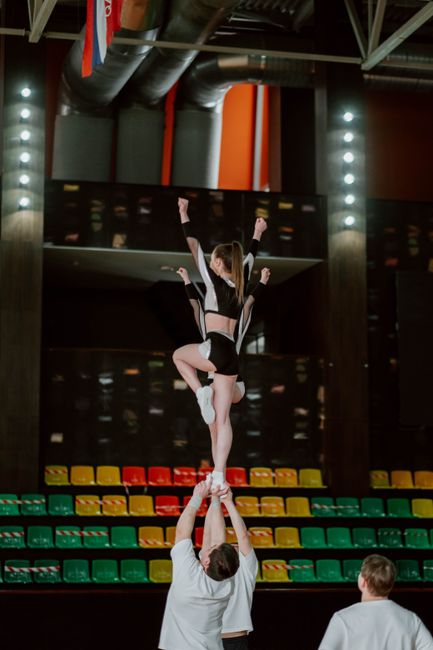
Friday night under the stadium lights, a squad on the track leads the crowd through a fight song while a flyer is held up high, smiling, with four teammates locked in underneath her. In April, a gym team from Ohio waits backstage in Orlando, bows tight and shoes laced, for two and a half minutes that a whole season built toward. On a spring afternoon, a college STUNT team goes head to head with a rival, quarter by quarter. Cheerleading has become one of the most athletic things a young person can do, and the American Academy of Pediatrics (AAP) says more than 3.5 million US youth take part, most of them girls between 6 and 17.
Cheerleading, page by page
- Rules: how the game works at every level
- Leagues & associations: pro, college, high school and youth
- Youth & high school: ages, safety and recruiting, for players and parents
- Injuries & sports health: prevention, concussion, when to see a pro
- Training & conditioning: before: off-season to in-season
- Game day: during: fueling, hydration, heat
- Recovery: after: games, tournaments, sleep
- Nutrition & supplements: what to eat, tested supplements
- Best wearables: trackers and watches for the sport
- Gear: the complete equipment list
Buying guide · Our Cheerleading buying guide compares the gear we'd pick, with prices and sizing:
This page is cheer for athletes and the people who look after them: how the sport works, what it looks like from rec squads to the world championships, and, most of all, how to stay healthy doing it. Sports health is the heart of it. Cheerleading injuries are less common than in many sports, but they can be serious when they happen, so we cover spotting, safe surfaces, concussion, wrists and ankles, and when to see a professional. Then training, recovery and the gear that matters.
Cheerleading at a glance
| Three main forms | School (sideline) cheer that supports other teams and may also compete; all-star (club) cheer, which exists to compete; and STUNT, a head-to-head game format for school and college teams. |
|---|---|
| Skills | Partner stunts, pyramids, tosses, standing and running tumbling, jumps, dance and crowd-leading cheers. |
| Routine length | All-star routines: up to 2 minutes 30 seconds under USASF rules (shorter for prep, novice and non-tumbling teams). |
| Levels | All-star: Levels 1–7, from basic skills to the most difficult tumbling and stunts. School and college follow their own safety rules (NFHS, USA Cheer). |
| Governing bodies | USA Cheer (US national governing body), NFHS (high school spirit rules), USASF (US all-star), the International Cheer Union (ICU, world body, fully recognized by the IOC in 2021) and IASF (international all-star). |
| Most common injuries | Concussions, ankle and wrist sprains, back pain, strains and fractures. Most injuries happen during stunts. |
How cheerleading works
Every stunt has jobs. Bases stand on the floor and lift, hold or toss the top person (the flyer). A spotter watches and protects the flyer’s head, neck and shoulders, and is ready to catch. Bases, spotter and flyer together form a stunt group. Stunts are measured by height: waist level, prep level (about shoulder height) and extended (arms fully up). Connect stunts and you get pyramids; release the flyer into the air and catch her in a cradle and you have a toss, like the basket toss.
On the sidelines, a school squad leads cheers and chants, performs at timeouts and halftime, and keeps the energy up for the team on the field or court. In competition, a team performs one timed routine on a spring floor or mats, and judges score the difficulty and execution of building skills, tumbling and jumps, plus the overall routine; falls and safety violations cost points. STUNT is different again: two teams compete against each other in four quarters of set routines, with points for each skill done cleanly. Our cheerleading rules guide explains the safety rules by level and how scoring works.
Cheerleading at every level
Kids and youth
Many kids start on a recreational squad tied to a youth football league such as Pop Warner, at a park district program or in a gym’s beginner class. All-star gyms put kids on competitive teams by age and skill: in the 2025–26 USASF age grid, the youngest “Tiny” division is for children about 6–7 years old, followed by Mini, Youth, Junior and Senior. A child’s level depends on skills, not just age, and every team should start with basics, conditioning and safe spotting. More in youth cheerleading.
High school
High school cheer is the classic version: football and basketball games, pep rallies, and, at many schools, a competition season too. The NFHS reports 181,023 high school spirit participants at 7,827 schools, the eighth most popular sport for girls. The NFHS writes the Spirit Rules Book that many state associations use, and USA Cheer also publishes school safety rules; your state association decides which apply, and in some states competitive cheer is a sanctioned sport with state championships.
All-star
All-star (club) cheer is competition only: teams train in private gyms and compete at events across the season, and Level 1–7 rules from the U.S. All Star Federation (USASF) set which skills are allowed. The top teams earn bids to The Cheerleading Worlds in Orlando, held each spring by USASF with the International All Star Federation (IASF), where Level 5, 6 and 7 teams from many countries compete.
College and STUNT
College squads cheer at games and many compete at the NCA College Nationals in Daytona Beach (April 9–11 in 2026) or the UCA College Nationals at Walt Disney World (January 16–18 in 2026). USA Cheer’s college rules allow more than high school rules do, such as pyramids up to two and a half body lengths high on approved surfaces. STUNT, created by USA Cheer, joined the NCAA’s Emerging Sports for Women program in 2023 (Divisions I and II) and 2024 (Division III), and at the 2026 NCAA Convention all three divisions voted to make it a championship sport, with the first NCAA championship projected for spring 2027. See leagues and associations.
International and the Olympic question
The International Cheer Union (ICU) is the world governing body, with 126 member national federations. The International Olympic Committee granted it provisional recognition in 2016 and full recognition on July 20, 2021, which makes cheer eligible to be proposed for the Olympic program, though it is not an Olympic sport yet. Cheer made its debut at the World Games in Chengdu, China, in August 2025, and the 2026 ICU World Championships in Florida drew more than 5,000 athletes from 50 countries, with Team USA winning both premier divisions.
Adults
Cheer doesn’t have to end at graduation. USASF has Open divisions for athletes 18 and older, and many gyms run adult teams. Coming back after years away? Rebuild strength, flexibility and tumbling basics before stunting again.
Sports health for cheerleaders
Here’s the honest picture. In a national study of US high school sports from 2009–10 to 2013–14, cheerleading ranked 18th of 22 sports for overall injury rate (0.71 injuries per 1,000 athlete-exposures). The AAP notes the overall rate is fairly low but time away after an injury is often long, which suggests injuries can be severe. This section is general information, not medical advice. If you’re hurt, see a professional.
The most common cheerleading injuries
- Concussions: the most common single injury in that high school study, 31.1% of all cheer injuries, although the concussion rate was lower than in other sports combined. A study of emergency visits from 2010 to 2019 found cheer injuries overall fell, but concussions and closed head injuries rose by 44%.
- Stunting injuries: more than half of high school cheer injuries (53.2%) happened during stunts, to bases and spotters as well as flyers.
- Ankles, back and wrists: in a survey of high school cheerleaders, the ankle (24.4%), back (16.1%) and wrist or hand (15.6%) were the most often injured areas. Tumbling and landing stress ankles; tumbling and basing load the wrists.
- Catastrophic injuries: rare but real. From 2002 to 2017 there were 54 catastrophic injuries in high school and college cheer, mostly to the head and neck, most of them in practice; basket tosses caused the largest share. After a 2006–07 rule banned basket tosses on hard surfaces, the basket toss injury rate dropped from 1.55 to 0.40 per million cheerleaders.
More on each, and how to lower the risk, in cheerleading injuries.
Safety basics: coaching, spotting and surfaces
The AAP’s 2024 policy statement on cheer safety asks for a yearly preparticipation physical, coaches certified in training and spotting techniques, qualified spotters for stunts, basket tosses only on grass, mats or a rubberized track (never on a gym floor or other hard surface), pyramids no higher than two people, a written emergency action plan at every facility, and concussion education for athletes, coaches and parents. The USA Cheer and USASF rules agree on the fundamentals: no stunts, tosses or tumbling on concrete, asphalt, wet or uneven surfaces; coaches require mastery before moving a skill up; and spotters are trained in proper spotting. Parents can ask about all of this, and should.
Concussion: recognize and remove
The CDC’s HEADS UP program asks coaches and parents to watch for an athlete who looks dazed or confused or is suddenly slow to react, and to listen for headache, dizziness or balance problems, sensitivity to light or noise, feeling slowed down, trouble concentrating, irritability or sleep changes. In cheer, a flyer’s head can hit a base, a base can be struck by an elbow or a falling flyer, and a tumbler can land short.
- Remove the athlete from practice or competition right away if you see signs after a blow to the head or body.
- Keep them out for the rest of that day and until a healthcare provider clears them.
- Return slowly: going back to stunting and tumbling happens in steps, usually over a week or more.
- Call 911 for danger signs: seizures, passing out or growing drowsiness, a headache that gets worse and won’t go away, or one pupil larger than the other. A suspected neck injury: don’t move the athlete.
Heat on the sideline
School cheer starts in summer: camps, two-a-day practices on hot turf, then August football games in uniform. The National Athletic Trainers’ Association (NATA) recommends easing athletes into the heat over 7–14 days. Bring a big water bottle, take breaks in the shade, and call 911 for confusion, collapse or a very high body temperature. Our game day and competition day guide covers fueling and long competition weekends.
When to see a doctor, physical therapist or athletic trainer
Don’t stunt or tumble through pain. See a professional for pain that doesn’t settle, swelling, a wrist that hurts every time it takes weight, an ankle that keeps rolling, low-back pain that gets worse with arching (common with back walkovers and handsprings), or any concussion signs. A sports medicine physician manages most sports injuries without surgery, a physical therapist guides rehab and the return to cheer, and athletic trainers, licensed or regulated in all 50 states, are often the first stop at school. The AAP has long urged that cheer programs get the same level of qualified coaching and medical care as other sports.
Training and conditioning for cheer
USA Cheer’s rules say every squad should have a full conditioning and strength program and warm up before every practice. Cheer needs it all: leg and hip strength to base and jump, a strong core and shoulders to hold a flyer steady, balance and body control for flyers, and wrists and ankles strong enough for tumbling. A good season plan builds conditioning in summer, and practices skills in safe progressions with spotters. Many flyers do daily flexibility work with a simple strap like the OPTP Stretch Out Strap, a 6-foot nylon strap with ten loops. Many athletes add bands for hips and shoulders (see our resistance bands guide). More in cheerleading training.
Competition day: the sports-nutrition position statement from the American College of Sports Medicine and two dietitians’ groups recommends a pre-exercise meal that is mostly carbohydrate, with some protein, low in fat and fiber, made of familiar foods and eaten roughly 1–4 hours before. On a long competition day, pack snacks and water for the hours between warm-up and awards, and see cheer nutrition for more.
Recovery after practice and competitions
Recovery starts with sleep: the CDC, citing the American Academy of Sleep Medicine, recommends 9–12 hours a night for children 6–12, 8–10 for teens and 7 or more for adults. Then real food and fluids after practice. Cheer is often year-round, and the AAP’s overuse guidance suggests at least one or two days off a week and a few months a year away from the same sport, in one-month blocks, to rest and recover.
Simple tools help many cheerleaders feel better between practices: a foam roller for calves, quads and upper back, a massage gun for older athletes, and soft recovery slides once the cheer shoes come off. They’re comfort tools, not treatment. Our cheer recovery page and the recovery tools guide cover more.
Gear for cheerleading
- Cheer shoes: USASF requires soft-soled shoes with a solid sole in competition, not dance shoes or gymnastics slippers. Cheer shoes are light, with grip pads for stunting; the Nfinity Vengeance is a classic.
- No jewelry: USASF bans jewelry of any kind (medical ID tags excepted), and it can’t be taped over. Hair goes up and off the face.
- Bows and uniforms: chosen by the team; bows must be secured and must not fall into the eyes.
- Braces: unaltered braces and supports are allowed; athletes with a hard cast or walking boot can’t stunt, tumble or toss. Athletes with a past ankle sprain often brace; see our ankle brace guide.
Three picks for a cheer bag: Nfinity Vengeance cheer shoes, the ASO EVO ankle stabilizer for athletes who brace, and the OOFOS OOahh Slide for after practice. Full list in cheerleading gear.
Nfinity Vengeance Cheer Shoe
- Open mesh upper
- 3 rubber wear pads
- Runs small: size up
ASO EVO Ankle Stabilizer
- Ankle stabilizer by Med Spec ASO
- Sold by size
- About $42
OOFOS OOahh Slide
- OOfoam slide
- APMA Seal of Acceptance
- Machine washable
For more after practice, browse Recovery & Regeneration and Training & Performance.
Cheerleading FAQs
Is cheerleading a sport?
Athletically, yes, and the AAP has long urged that it be treated as one so cheerleaders get the same coaching standards, medical care and injury tracking as other athletes. Whether school cheer is an official sport depends on your state association. In college, STUNT is now an NCAA championship sport, and the ICU is fully recognized by the IOC.
Is cheerleading dangerous?
Its overall injury rate is lower than most high school sports, but injuries can be serious, especially head and neck injuries from stunts and tosses. Qualified coaches, trained spotters, proper surfaces and skill progressions make the biggest difference.
What’s the difference between school cheer and all-star cheer?
School cheer supports the school’s teams at games and pep rallies, and may also compete. All-star cheer happens at private gyms, exists only to compete, and follows USASF’s Level 1–7 rules.
What is STUNT?
A competitive, cheer-based sport created by USA Cheer in which two teams go head to head over four quarters of partner stunts, pyramids and tosses, jumps and tumbling. NCAA members voted in 2026 to make it a championship sport, with the first championship projected for spring 2027.
Will cheerleading be in the Olympics?
Not yet. The ICU has had full IOC recognition since 2021, which makes cheer eligible to be considered, and cheer debuted at the 2025 World Games. It is not on the program for Los Angeles 2028.
What should a cheerleader do after hitting her head?
Stop for the day. If there are any signs of a concussion, she should be checked by a healthcare provider and not stunt or tumble again until cleared, returning in gradual steps. Call 911 for danger signs or a possible neck injury.
Cheer asks a lot: strength, trust and nerve, often all year long. The athletes who last are the ones with good coaching, trained spotters, real rest and a habit of speaking up when something hurts. Keep exploring: ankle braces, electrolytes for hot sideline days, gymnastics for tumblers, and the other sports on our sports hub.