This article contains affiliate links: if you buy through them we may earn a commission, at no extra cost to you. Learn more.
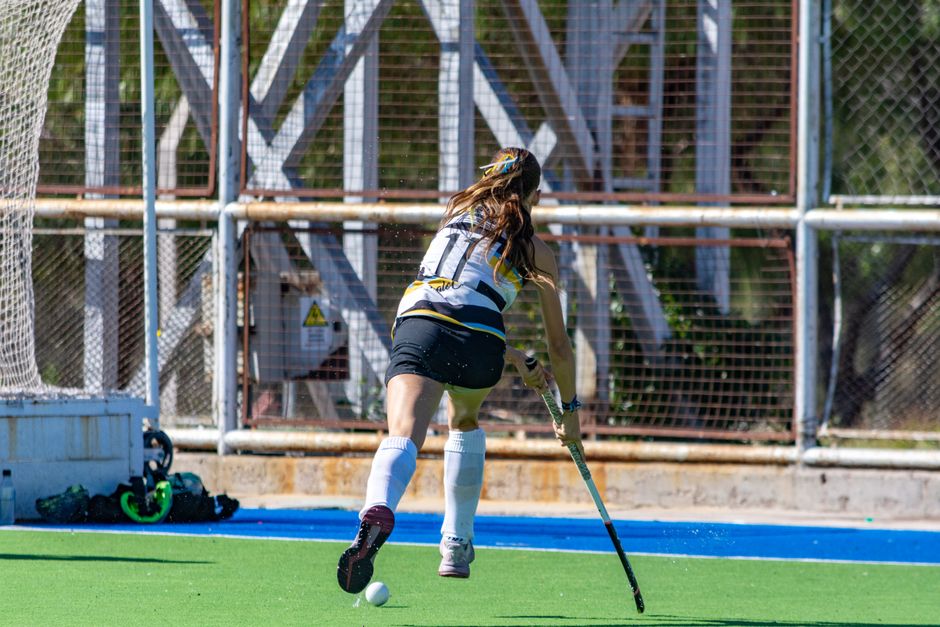
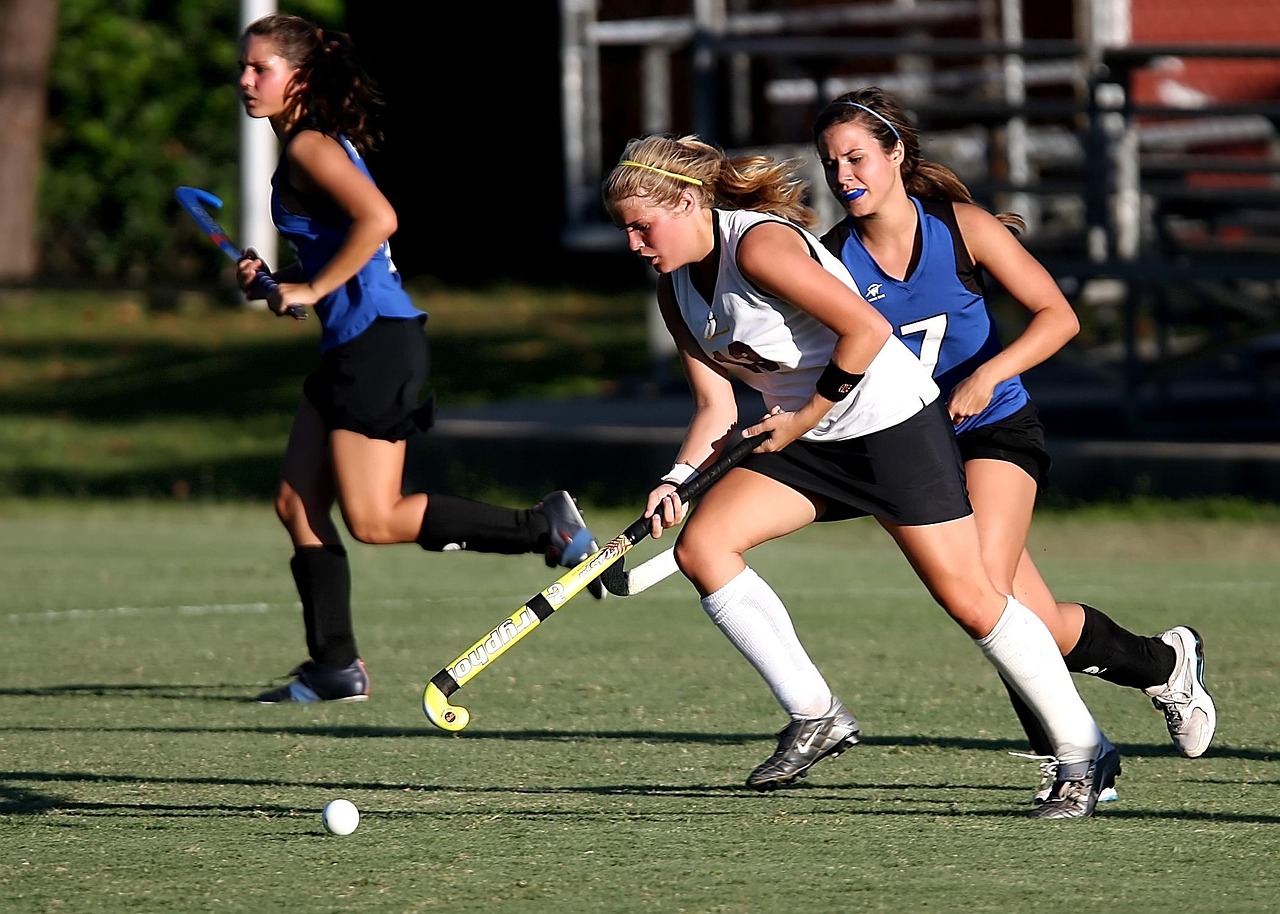
A humid August morning, the first day of preseason. The turf is already warm, sticks clatter in a pile by the bench, and the sound of the day is a hard white ball cracking off a backboard over and over as the team practices penalty corners. By November the same players might be in a state final, and by summer 2028 the best of them could be on the US team at the Los Angeles Olympics, playing at home. Field hockey is fast, skillful and, in the US, mostly a fall sport for girls and women: 50,764 girls played it for 1,768 high schools in 2024-25, according to the National Federation of State High School Associations (NFHS). Around the world it is just “hockey”, played by men and women from the Netherlands to India to Argentina.
Field Hockey, page by page
- Rules: how the game works at every level
- Leagues & associations: pro, college, high school and youth
- Youth & high school: ages, safety and recruiting, for players and parents
- Injuries & sports health: prevention, concussion, when to see a pro
- Training & conditioning: before: off-season to in-season
- Game day: during: fueling, hydration, heat
- Recovery: after: games, tournaments, sleep
- Nutrition & supplements: what to eat, tested supplements
- Best wearables: trackers and watches for the sport
- Gear: the complete equipment list
Buying guide · Our Field Hockey buying guide compares the gear we'd pick, with prices and sizing:
This page is field hockey for players, parents and coaches: how the game works, every level from a first clinic to the Olympics, and above all how to stay healthy playing it. Sports health is the heart of it: the field hockey injuries players get most, the stick and the ball, eyes and faces, concussion, the low-back strain that comes from playing bent over, and when to see a professional. Then training, recovery and the gear you really need.
Field hockey at a glance
| Players per side | 11 on the field, normally 10 field players and a goalkeeper; up to five substitutes under the international rules, with unlimited rolling substitutions. Youth teams often play 7v7 on half a field. |
|---|---|
| Game length | Four 15-minute quarters in international play (FIH), college (NCAA) and high school (NFHS), with 2-minute breaks after the first and third quarters and a 10-minute halftime. |
| Field | 91.40 × 55 meters (about 100 × 60 yards), usually artificial turf. Goals are 3.66 m wide and 2.14 m high (12 × 7 feet), and a goal only counts if the attacker plays the ball inside the shooting circle. |
| Governing bodies | FIH (International Hockey Federation) worldwide; USA Field Hockey in the US; NFHS for high school; NCAA Divisions I, II and III for college. |
| Required protection | Varies by level: high school requires shin guards and a colored mouthguard (goggles are optional since 2020 and must meet ASTM F2713); NCAA requires mouthguards; goalkeepers wear full protective kit at every level. |
| Most common injuries | Muscle and tendon strains and bruises, mostly to the legs and the head and face; concussions; and low-back pain from the crouched playing position. |
How field hockey works
Two teams of 11 move a small, hard ball with hooked sticks and try to score in the other team’s goal. Players may only use the flat side of the stick, and may not stop, kick or carry the ball with the body. Only the goalkeeper may use the body to save, inside the circle they defend. Obstructing an opponent, hacking at sticks and dangerous play, such as raising the ball into players, are fouls too.
A goal only counts when an attacker plays the ball inside the semicircle in front of the goal, called the circle or the D, which reaches 14.63 meters (16 yards) out. Fouls by defenders in their own circle bring the game’s signature set play, the penalty corner: the ball is pushed in from the back line, up to five defenders rush out from behind the goal line, and attackers try a hit, flick or “drag flick” at goal. A foul that stops a probable goal gives a penalty stroke, a one-on-one from the spot 6.40 meters out. Umpires show green (2-minute suspension), yellow (at least 5 minutes) and red (out for the game) cards, and the team plays short meanwhile. Our field hockey rules guide explains it all, including how high school rules differ.
Field hockey at every level
Kids and youth
Many kids start with USA Field Hockey’s Play & Learn clinics, for boys and girls aged 5 to 14, which come with a stick, two balls, shin guards and a stick bag. The youngest play small-sided games such as GAME ON on any flat surface; then comes 7v7 on half a field, which USA Field Hockey calls the common outdoor format for players under 14 and a bridge to the full 11v11 game. In 2026 USA Field Hockey dropped the five-a-side Hockey5s format at its national events in favor of 7v7 and indoor hockey. Our youth field hockey guide covers ages, gear and parents’ questions.
High school
High school field hockey is played under NFHS rules in the fall. Since 2020 games have four 15-minute quarters instead of two halves, with no timeouts. NFHS rules keep some US touches: distances in yards (a 25-yard line and 16-yard hits), required shin guards and a mouthguard in a visible color other than white or clear, and goggles that are optional but, when worn, must be permanently labeled for the ASTM F2713 field hockey standard. State associations run the seasons and playoffs.
College
More than 280 college teams play NCAA field hockey every fall in Divisions I, II and III, according to USA Field Hockey, and 66 Division I teams opened the 2025 season. The NCAA plays the international FIH rules with its own changes: every field player must wear a mouthguard, video referrals are used, and tied games go to sudden-victory overtime, then a shootout of eight-second one-on-ones. The 2025 champions were Northwestern (Division I), Shippensburg (Division II) and Tufts (Division III). Many colleges also have club teams. See field hockey leagues and associations for recruiting rules and scholarships.
International, pro and the Olympics
The FIH, founded in Paris in 1924 and based in Lausanne, runs the World Cup and the FIH Hockey Pro League, the top national-team league. Belgium won the men’s 2025-26 Pro League and the Netherlands the women’s, and each earned a place at LA28. In August 2026 Belgium and the Netherlands co-hosted the first joint men’s and women’s World Cup: Germany won the men’s title and Argentina the women’s, and the US women finished 10th. At Paris 2024, the Netherlands became the first country to win men’s and women’s Olympic hockey gold at the same Games.
Los Angeles 2028 brings the Olympics home: 12 men’s and 12 women’s teams will play at a temporary venue in Carson, California, starting July 15, 2028, and the US men and women are in as hosts. The US women’s team won Olympic bronze at Los Angeles 1984, still the country’s only Olympic field hockey medal.
Adult, indoor and recreational
Field hockey doesn’t end after college. USA Field Hockey’s National Indoor Tournament includes men’s and women’s divisions next to the youth ones, and its 2026 indoor season drew a record 954 teams. Indoor hockey, played on a court in the winter, is a good off-season option for players of every age.
Sports health for field hockey players
Sprints, cuts, a low stance, a hard ball and swinging sticks mean injuries come with the game. The good news: the American Medical Society for Sports Medicine (AMSSM) says about 90% of sports injuries are non-surgical, and good gear and habits lower the risk. This section is general information, not medical advice. If you’re hurt, see a professional. Our field hockey injuries guide goes deeper.
The most common field hockey injuries
The largest US study of the sport, published in the Journal of Athletic Training in 2018, used athletic trainers’ reports from high school girls’ and NCAA women’s teams. Its findings:
- Where: most injuries hit the lower body and the head and face.
- What: mostly muscle and tendon strains and contusions (bruises).
- Who: college players were hurt about twice as often as high school players (3.25 vs 1.73 injuries per 1,000 athlete-exposures), and games were about twice as risky as practices at both levels.
In an NCAA study of head, face and eye injuries, most were caused by contact with the stick or ball, and an elevated ball alone caused almost half. For sprained ankles and sore knees, see our ankle brace guide and knee sleeves guide, and get anything that doesn’t settle checked.
Eyes, faces and teeth
From 2011 to 2019, US high school rules required ASTM-certified goggles for every field player, which made a natural experiment. Researchers writing in Pediatrics (2015) found eye and orbital injuries were about three times more common where goggles weren’t mandated, and after the national mandate, severe eye injuries fell by 67% while concussion rates didn’t change. NFHS made goggles optional again in 2020, noting that the standard isn’t tested against a direct ball to the eye and that players with glasses had few certified options. States, schools and parents may still require them. Mouthguards are required in high school and the NCAA, and defenders at penalty corners wear face masks.
Concussion: recognize and remove
Field hockey isn’t a collision sport, but a stick, a ball or a teammate’s head can cause a concussion; in the Pediatrics study, field hockey ranked third for concussion rates among the girls’ sports tracked. The CDC’s HEADS UP program asks coaches and parents to watch for a player who looks dazed or confused or is slow to react, and to listen for headache, dizziness, balance problems, sensitivity to light or noise, trouble concentrating or feeling “off”.
- Remove the player from play right away if you see signs after a knock to the head or body.
- Keep them out for the rest of the day and until a healthcare provider clears them. Don’t judge how serious it is yourself.
- Return slowly: going back to sport happens in steps and usually takes a week or more.
- Call 911 for danger signs: seizures, passing out, growing drowsiness, a headache that gets worse and won’t go away, or one pupil larger than the other.
The low back
Field hockey is played bent forward and twisting, and that shows up in the back. In a 2024 survey of 194 top-level UK club players, 44% reported non-specific low-back pain, and performing drag flicks was among the factors linked to it. A lab study found the drag flick puts more bend, side-bend and rotation through the lumbar spine than a regular hit. Core and hip strength, a good warm-up and sensible limits on repetitive drag-flick practice are the usual advice; back pain that lasts, spreads into a leg or wakes you at night is a reason to see a sports medicine doctor or physical therapist.
Heat and hydration
The season starts in August heat. The EPA notes that about 9,000 US high school athletes are treated for heat-related illness each year, and the National Athletic Trainers’ Association (NATA) recommends easing athletes into the heat over 7–14 days. Drink before practice and at every break. Call 911 for confusion, collapse, or hot skin with a racing pulse; for exertional heat stroke, NATA recommends fast cold-water immersion by trained staff on site.
When to see a doctor, physical therapist or athletic trainer
Don’t play through pain. See a professional for pain that doesn’t settle, swelling, a joint that gives way or that you can’t put weight on, any blow to the eye that affects vision, a knocked-out or broken tooth, or any concussion signs. A sports medicine physician manages most sports injuries without surgery; a physical therapist guides rehab and the return to play; and athletic trainers, licensed or regulated health care professionals in every state, are often already at the field. If your school has one, start there.
Training and conditioning for field hockey
Preseason: field hockey fitness means repeated sprints with short recoveries, plus the leg and trunk strength to stay low for a whole game. Build running volume over the summer instead of in the first week of practice, and add agility and speed work (see our speed training equipment guide) and band work for hips and core (resistance bands for athletes).
In season: keep some strength work, warm up properly before every practice and game, and watch total load, especially for players on school and club teams at once. Many teams track running load with GPS (see our GPS trackers for team sports), and many players track sleep and strain with a wearable (Whoop vs Oura vs Garmin). Our field hockey training page has the full plan.
Game day: the sports-nutrition position statement from the American College of Sports Medicine and two dietitians’ groups recommends a pre-exercise meal high in carbohydrate, moderate in protein and low in fat and fiber, from familiar foods, about 1–4 hours before. Arrive hydrated and drink at every quarter break; on hot days many players add electrolytes (see our electrolyte powder guide). More on the field hockey game day page.
Recovery after field hockey games
Recovery starts with the basics. Sleep comes first: the CDC, citing the American Academy of Sleep Medicine, recommends 8–10 hours a night for teens and 7 or more for adults. Then real food and fluids; many players use a protein shake when a meal is hours away (see our protein powder guide).
Many players like a foam roller or massage gun for tight hamstrings, hips and low back after a day spent crouched over a stick, and soft recovery shoes once the turf shoes come off. These are about comfort, not treatment; our recovery tools guide compares them all, and the field hockey recovery page covers tournament weekends.
Gear for field hockey
- Stick: sized so the top reaches about 2 inches below the hip bone (STX’s guide). Beginners do best with wood or fiberglass; carbon makes a stick stiffer and more powerful. Every stick must pass through a 51 mm ring and have a bow of no more than 25 mm.
- Shin guards and mouthguard: required in high school (and the mouthguard in college), and recommended by the international rules at every level. Add ankle protection if you like.
- Goggles: optional in NFHS play since 2020, but must carry the ASTM F2713 label if worn; some states and schools still require them.
- Turf shoes: most games are on artificial turf, so field hockey or turf shoes with small rubber studs.
- Goalkeepers: helmet with full face cage, throat protector, chest protector, padded gloves, leg guards and kickers.
Four picks for a field hockey bag: the Grays GX1000 (about $100), a forgiving composite stick of carbon, aramid and fiberglass for newer players; Grays G600 shin guards (about $30), with a raised center ridge and ankle padding; the Shock Doctor Gel Max boil-and-bite mouthguard (pick a bright color for high school); and the OOFOS OOahh Slide from our recovery shoes guide, for after the final whistle. More in our field hockey gear guide.
Grays GX1000 Field Hockey Stick
- Carbon, aramid and fiberglass
- For newer players
- Chamois grip included
Grays G600 Shin Guards
- Polymer shell, raised spine
- Ankle padding
- Left and right fit
Shock Doctor Gel Max Mouthguard
- Boil-and-bite fit
- Youth and adult sizes
- Choose a bright color for NFHS
OOFOS OOahh Slide
- OOfoam slide
- APMA Seal of Acceptance
- Machine washable
For more after the game, browse Recovery & Regeneration and Training & Performance.
Field hockey FAQs
How long is a field hockey game?
Sixty minutes of playing time: four 15-minute quarters, with 2-minute breaks after the first and third quarters and a 10-minute halftime. That is the format in international play, NCAA college games and, since 2020, NFHS high school games. Youth games are often shorter.
What age can kids start field hockey?
USA Field Hockey’s Play & Learn clinics take boys and girls from age 5, and small-sided games like GAME ON can be played on any flat surface. Most kids then move to 7v7 and, around their early teens, to the full 11v11 game.
Do field hockey players have to wear goggles?
Not under national high school rules since 2020: goggles are optional, but any worn must be labeled for ASTM F2713. Some states, schools and clubs still require them, so check locally. A 2015 study found eye injuries fell sharply while goggles were mandatory.
Is field hockey a dangerous sport?
Most injuries are strains, sprains and bruises. The stick and the hard ball cause most head, face and eye injuries, which is why shin guards, mouthguards, goggles where required and good stick discipline matter. Concussions happen; remove any player with signs and get them checked.
Why does field hockey hurt my back?
The game is played bent forward and twisting, and studies link low-back pain to things like drag flicking. Core and hip strength and a proper stick length help many players; pain that lasts or spreads into a leg needs a sports medicine doctor or physical therapist.
Is field hockey in the 2028 Olympics?
Yes. Twelve men’s and twelve women’s teams will play in Carson, California, from July 15, 2028, and the US men and women qualify automatically as hosts.
Keep exploring: the rules, youth and gear guides for this sport, the lacrosse and soccer hubs if you play more than one sport, and all the others on our sports hub.