This article contains affiliate links: if you buy through them we may earn a commission, at no extra cost to you. Learn more.
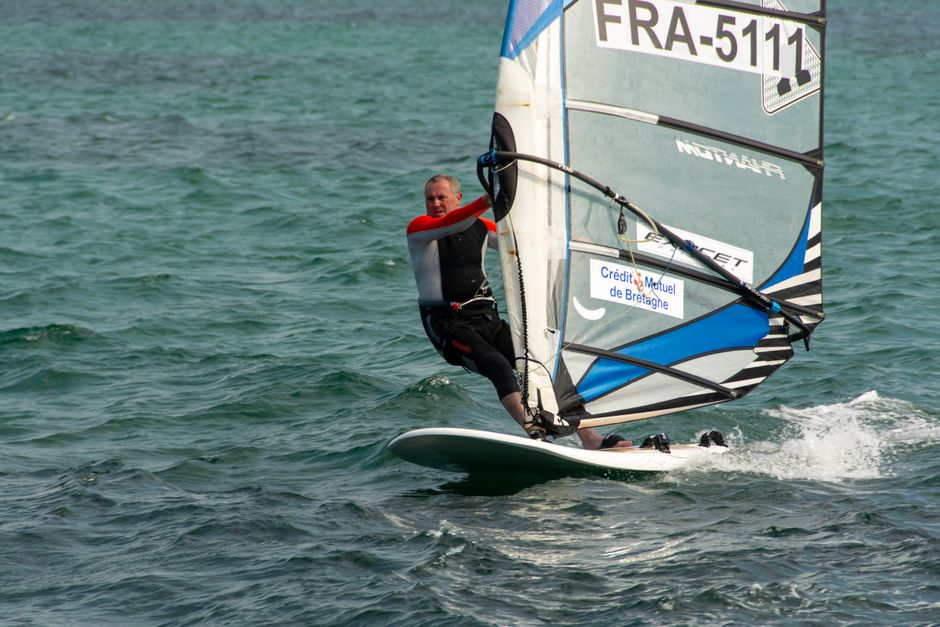
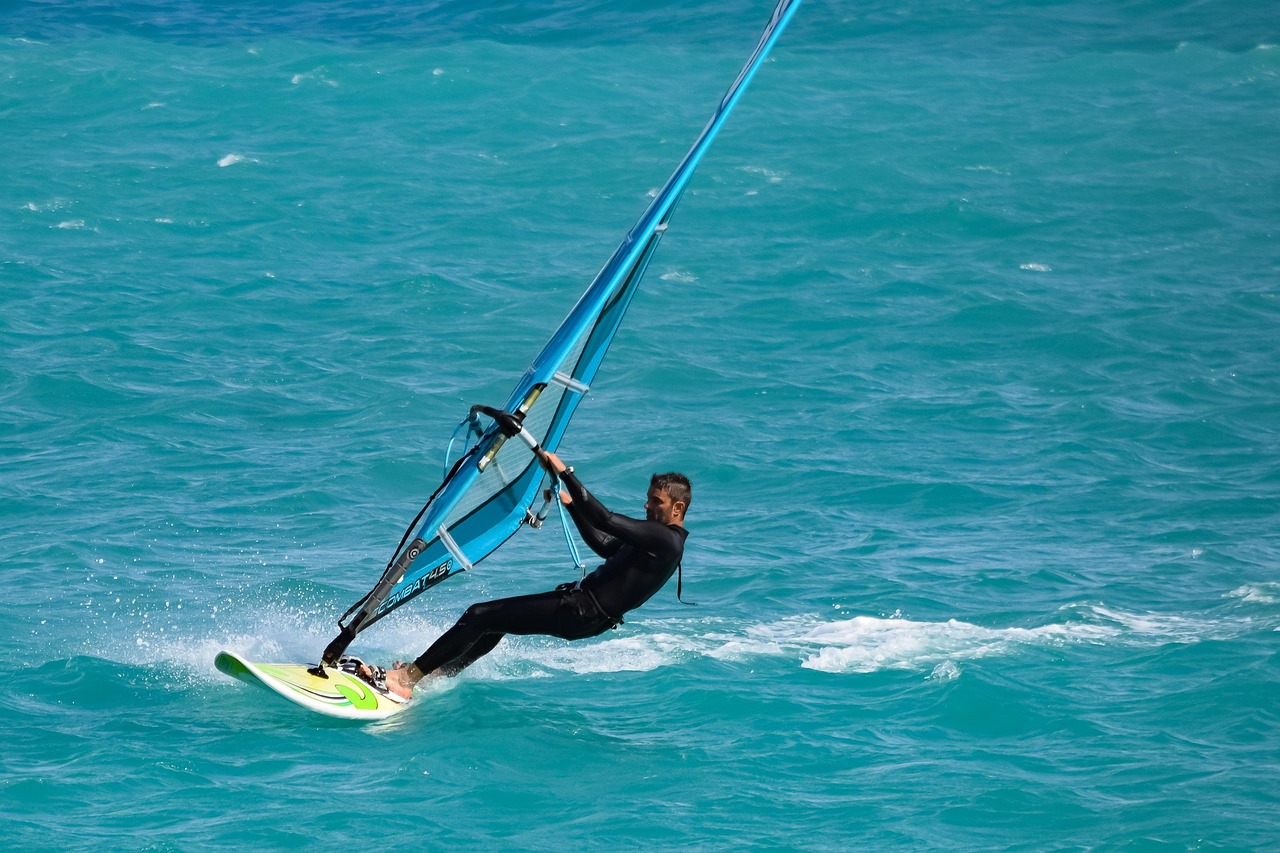
A late-summer afternoon on the Columbia River Gorge or off a Maui beach: the wind fills in, sails go up on the grass, and one by one riders carry their boards to the water, step on, sheet in and shoot off across the chop. Somewhere a ten-year-old is pulling up a tiny sail for the first time on a calm lake, wobbling, falling in, laughing, and trying again. And in July 2028, the best in the world will race foiling windsurfers off Long Beach for Olympic gold. Windsurfing has room for all of them.
Windsurfing, page by page
- Rules: how the game works at every level
- Leagues & associations: pro, college, high school and youth
- Youth & high school: ages, safety and recruiting, for players and parents
- Injuries & sports health: prevention, concussion, when to see a pro
- Training & conditioning: before: off-season to in-season
- Game day: during: fueling, hydration, heat
- Recovery: after: games, tournaments, sleep
- Nutrition & supplements: what to eat, tested supplements
- Best wearables: trackers and watches for the sport
- Gear: the complete equipment list
Buying guide · Our Windsurfing buying guide compares the gear we'd pick, with prices and sizing:
This guide covers the sport from first lesson to the Olympics: how windsurfing works, the different disciplines, the path for kids and teens, the pro tour, and, most of all, how to stay healthy doing it. Windsurfing safety runs through all of it: the injuries windsurfers get, foil safety, concussion, cold water and sun, and when to see a professional. Then training, recovery and the gear that matters. Kitesurfing has its own guide at /sports/kitesurfing/; if you sail boats too, see our sailing section.
Windsurfing at a glance
| What it is | A board with a sail attached by a mast foot that swivels in every direction. You hold a wishbone boom and steer by tilting the rig and shifting your weight. |
|---|---|
| Disciplines | Recreational freeride, slalom racing (on fins or foils), wave riding, freestyle tricks, course racing (Olympic iQFOiL, Formula, Raceboard) and long-distance marathon races. |
| Olympics | Olympic for men since 1984 and women since 1992. The iQFOiL foiling windsurfer is the class for Paris 2024 and LA 2028. |
| Governing bodies | World Sailing worldwide (windsurfing is a sailing discipline, raced under the Racing Rules of Sailing, Appendix B). In the US, US Sailing is the national governing body and US Windsurfing supports recreational and competitive windsurfing. |
| Pro tour | PWA World Windsurfing Tour (wave, slalom, freestyle), with a unified wave tour run with the IWT. |
| Youth classes | Techno 293 (Under 13, 15 and 17 divisions) and iQFOiL Junior (under 17) and Youth (under 19). |
| Most common injuries | Lower-limb injuries (feet, ankles, knees) lead, then the head and neck; low back strain is the classic overuse complaint. Studies of recreational and competitive sailors report up to about 5 injuries per 1,000 hours. |
How windsurfing works
The modern windsurfer came out of California in the late 1960s: Jim Drake and Hoyle Schweitzer patented the rig in 1970, with a free-sail system on a universal joint and a wishbone boom. That design is still the heart of the sport. The sail, mast and boom (together, the rig) connect to the board through the mast foot, so you can tip the rig forward to turn away from the wind and back to turn toward it. Nothing holds the sail up but you.
Beginners start on a big, wide board with a daggerboard and a small sail in light wind. You stand up, pull the rig out of the water with the uphaul rope, find your balance and sail back and forth. As you improve, you learn to beach start and water start (letting the wind lift you out of the water), hook a harness onto lines on the boom so your body weight, not your arms, holds the sail, slide your feet into the footstraps and plane: the board rises onto the surface and accelerates. From there, the sport splits:
- Freeride: blasting back and forth and carving gybes for fun. This is what most windsurfers do.
- Slalom: short, fast downwind races around marks, on fins or on foils.
- Wave: jumping off waves on the way out and riding them on the way in, in heats scored by judges.
- Freestyle: spins, loops and slides on flat water, also judged.
- Foiling: a hydrofoil under the board lifts it clear of the water, so you fly in lighter wind. The Olympic iQFOiL is a foiling windsurfer.
Our windsurfing rules page explains the right-of-way rules and how races work.
Windsurfing at every level
Kids and first lessons
Windsurfing is one of the gentler wind sports to start, because a beginner on a stable board in light wind can simply let go of the sail and sit down. Kids can learn on small sails sized for them at summer camps, sailing centers and yacht clubs. US Windsurfing lists schools, camps and certified instructors, and its windsurfing instructor programs focus on safety, risk management and the basic skills. Our windsurfing for kids page answers parents’ questions.
Youth racing and high school age
Young racers have a clear ladder. The Techno 293, a strict one-design board, is the internationally recognized feeder class to the Olympics, with world championships for Under 13, Under 15 and Under 17; US Sailing notes that most Olympic windsurfers started in it. The iQFOiL class runs a Junior category for under-17s with smaller sails and a Youth category for under-19s. US Sailing’s Youth Team includes iQFOiL, and the 2026 U.S. Youth Championship, October 9 to 12 at Alamitos Bay Yacht Club in Long Beach, includes iQFOiL Youth and Junior. On the pro side, the PWA runs youth slalom events.
College
Windsurfing isn’t a college varsity sport in the US. College sailing, run by the Inter-Collegiate Sailing Association (ICSA), races dinghies, so young windsurfers usually keep training through clubs, regattas, US Windsurfing events and US Sailing’s programs while at school.
Pro tour
The PWA World Windsurfing Tour crowns world champions in wave, slalom and freestyle. Its 2026 calendar runs from Australia in January to a Grand Final in Chile in November, with stops that include Maui, Gran Canaria, Fuerteventura, Tenerife and Sylt, plus youth slalom events and the tour’s first foil freestyle event. In 2026 the PWA and the Hawaii-based International Windsurfing Tour (IWT) run wave riding together as a unified wave tour, with the Aloha Classic in Hawaii as a highlight. See our leagues and associations page for the full map.
The Olympics
Windsurfing joined the Olympics at Los Angeles in 1984 for men, and women followed in 1992. The equipment has changed several times, from the Windglider and Lechner to the Mistral and the RS:X, and since Paris 2024 the class is the foiling iQFOiL. At Paris 2024, Israel’s Tom Reuveny and Italy’s Marta Maggetti won the first iQFOiL gold medals. At LA28, World Sailing’s schedule has the windsurfing finals on July 20, 2028, at Belmont Shore in Long Beach, one day after the kite finals.
Adult and recreational windsurfers
Most windsurfers never race. They chase wind on weekends and holidays, sail local lakes and bays, and keep going for decades. Many come back to the sport after years away, often on modern, lighter boards or foils. Clubs and local race series are where you find people to sail with; US Windsurfing has regional tours from the Bay Area to Hood River to Miami. Take a refresher lesson if you’ve been away, ride within your level and build hours steadily.
Sports health for windsurfers
Windsurfing mixes speed, jumps, a heavy rig and a board that can hit you. Most windsurfers go years without a serious injury, but the risks are real, and they grow with wind, waves and foils. This section is general information, not medical advice. If you’re hurt, see a professional.
What the research shows
- Injury rates: a two-year study at a North Sea hospital found 5.2 injuries per 1,000 hours of windsurfing (and 7.0 for kitesurfing), with similar severity. At the 2021 iQFOiL European Championships, elite foil racers reported 1.61 injuries per 1,000 hours of sailing.
- Where: in a 2021 German survey of 626 surf, windsurf and kite athletes (435 of them windsurfers), the lower extremity was hurt most, and skin wounds on the feet were the most common windsurfing injury. In the iQFOiL study, the lower back (26%) and the feet (13%) led.
- Why: in that German survey, windsurfers most often blamed their own mistakes (34.5%), then skidding falls (28.8%), and over half of injuries happened in 5 to 9 Beaufort, strong wind. In the iQFOiL study, a third of injuries came from hitting equipment, and the foil was the most damaging single piece.
- Overuse: low back pain, elbow pain and forearm problems are the classic overuse complaints, from long hours hanging on the boom and in the harness.
Windsurfing safety: the basics
- Take lessons from a certified instructor and learn in light, onshore or side-shore wind.
- Choose a sail size that fits the wind and your weight; being overpowered is a common path to a crash.
- If anything goes wrong, stay with your board. It floats, and it’s much easier to spot than a swimmer.
- Avoid offshore wind, sail with others and tell someone where you’re going.
- Wear a helmet and impact vest when you’re jumping, sailing waves or foiling; on a foil, fall away from the board and foil, never toward them.
Foil racers take this seriously: the iQFOiL Youth and Junior class rules require a helmet, a whistle and an impact vest that also meets a flotation standard, worn at all times. Our windsurfing injuries page goes deeper.
Concussion: recognize and remove
A catapult fall over the front of the board, a crash from a jump or a hit from the boom or foil can cause a concussion. The CDC’s HEADS UP program lists signs to watch for: looking dazed or confused, being slow to react, headache, dizziness or balance problems, sensitivity to light or noise, and trouble concentrating. Stop sailing for the day, don’t go back out until a healthcare provider clears you, and call 911 for danger signs such as seizures, passing out, a headache that gets worse or one pupil larger than the other. On the water, a sailor who seems confused needs help back to shore.
Cold water and sun
Windy days are cold days on the water, and you spend a lot of time in it while learning. The National Weather Service advises dressing for the water temperature, not the air, and the US Coast Guard warns that cold shock hits in the first minute and that cold water can weaken your arms and legs within about 10 minutes. A wetsuit of the right thickness matters more than any other gear. The other constant is sun: the American Academy of Dermatology recommends a broad-spectrum, water-resistant sunscreen of SPF 30 or higher, reapplied every two hours and after swimming or sweating.
When to see a doctor, physical therapist or athletic trainer
See a professional for a knee or ankle that twisted in a footstrap and swelled, a cut from a fin or foil that is deep or gaping, back pain that lingers or runs down a leg, elbow or forearm pain that keeps coming back, or any concussion signs. A sports medicine physician manages most sports injuries without surgery, a physical therapist guides rehab and the return to sailing, and an athletic trainer works with athletes on prevention and care.
Training and conditioning for windsurfing
Windsurfing asks for grip and forearm endurance to hold the boom, a strong back and core to hang in the harness, legs to absorb chop and landings, and balance for foiling. In the iQFOiL study, long training sessions were behind 30% of injuries and only 30% of sailors warmed up regularly, so a short warm-up and sensible session length are easy wins. Time on the water comes first, with off-water strength, mobility and balance work to support it. Our windsurfing training page lays out a plan, and our mental training tools guide helps with nerves before a race.
Session day: eat a familiar, carbohydrate-based meal a few hours before, bring water and a snack, and drink between runs. Hours in the wind and sun dry you out faster than you notice; many sailors carry an electrolyte drink. See our session day and race day page and windsurfing nutrition page.
Recovery after a big session
After three hours of planing, your forearms, shoulders and lower back let you know. Recovery starts with sleep: the CDC, citing the American Academy of Sleep Medicine, recommends 8 to 10 hours for teens and 7 or more for adults. Then food and fluids, a warm shower and some easy mobility. Many sailors roll out their back and legs with a foam roller or massage gun, and slip into soft recovery shoes after a day barefoot on the beach. These are for comfort, not treatment. Our recovery page has a full routine, and our best wearables for windsurfing page covers GPS watches that log your speed and distance.
Windsurfing gear
Boards and sails are best chosen with an instructor or a local shop once you’ve had lessons, because the right volume and sail size depend on your weight, your level and your local wind. For learning on a lake or calm bay, inflatable windsurf sets have made the sport easier to store and carry: the Spatium inflatable windsurf board and sail set (about $1,149) pairs an inflatable board with a 5-square-meter sail that the seller pitches for beginners in 11 to 15 knots, with a stated capacity of 340 pounds. Once you’re planing, a harness changes everything: the Epic Gear Viper waist harness (about $157) has a removable rear handle for windsurfing or kiteboarding and a pocket for a safety knife. For protection, the Pro-Tec Ace Water helmet (about $66) meets the CE EN 1385 water-sports helmet standard, and the Ride Engine Defender HF impact vest (about $164) is made for foiling, including windsurf. Impact vests like it are not life jackets; the maker says so plainly. Our full windsurfing gear guide covers rigs, harnesses, wetsuits and boots.
Spatium Inflatable Windsurf Board and Sail Set
- Inflatable board + 5 m² sail
- Seller: for 11–15 knots
- Stated capacity 340 lb
Epic Gear Viper Waist Harness
- Removable windsurf rear handle
- Thermo-formed lower back support
- Safety knife pocket
Pro-Tec Ace Water Helmet
- CE EN 1385 water-sports standard
- 15 vents for drainage
- Sizes XS to XL
Ride Engine Defender HF Impact Vest
- Made for foiling incl. windsurf
- Impact shells in high-risk areas
- Not a life jacket
OOFOS OOahh Slide
- OOfoam slide
- APMA Seal of Acceptance
- Machine washable
For more after the session, browse Recovery & Regeneration and Training & Performance.
Windsurfing FAQs
Is windsurfing hard to learn?
The first steps are friendlier than most people expect. With a big, stable board, a small sail and light wind, many beginners are sailing back and forth within their first lessons. Planing in a harness and footstraps takes longer, and that’s where the sport really opens up. Lessons speed up every stage.
Is windsurfing dangerous?
It carries real risk, mostly in strong wind, waves, jumps and on foils. Studies report up to about 5 injuries per 1,000 hours, mostly to the feet, ankles and knees, with head injuries next. Lessons, the right sail size, staying with your board, and a helmet and impact vest for jumping and foiling lower the risk.
Is windsurfing in the Olympics?
Yes, since 1984 for men and 1992 for women. Since Paris 2024 the Olympic board is the iQFOiL, a foiling windsurfer. At LA28 the windsurfing finals are scheduled for July 20, 2028, at Belmont Shore in Long Beach.
Windsurfing or kitesurfing: which should I try?
Many people find windsurfing easier to start on their own, because you can learn in light wind and simply let go of the sail. Kitesurfing needs lessons before you go out alone, because the kite pulls from the first minute. Both are great; our kitesurfing guide covers the other side.
What age can kids start windsurfing?
There’s no single official minimum age. Kids who swim well often start at camps and sailing centers on small sails sized for them, and youth racing classes start with Under 13 divisions in the Techno 293. A life jacket, a calm, shallow spot and a qualified instructor matter most.
Do windsurfers need a life jacket?
Federal US rules exempt sailboards from carrying one, but state and local rules can differ, and flotation is wise for beginners, kids and cold or open water. Many races require one: the iQFOiL Youth and Junior classes require a flotation-rated impact vest.
Windsurfing gives back what you put in: more hours on the water, faster runs and sunsets you’ll remember for years. Learn properly, respect the wind and look after your body. Next: rules and right of way, windsurfing for kids, gear, or our kitesurfing and sailing sections.