This article contains affiliate links: if you buy through them we may earn a commission, at no extra cost to you. Learn more.
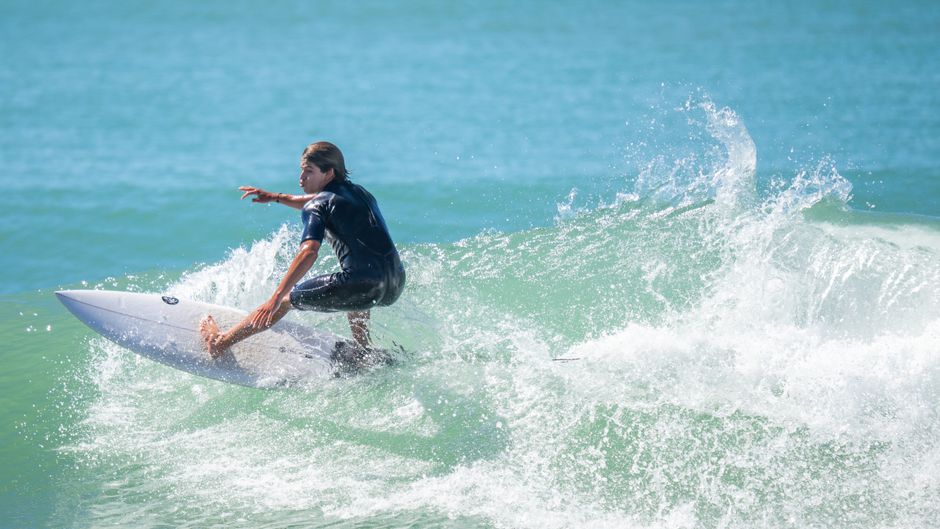
Dawn patrol: the parking lot is still half dark, someone is wriggling into a damp wetsuit behind a car door, and the first set rolls in glassy and gold. Or the warm-water version: board shorts, a rash guard, water so clear you can see the reef, and that first wave where you pop up, find your feet and glide all the way to the sand grinning like a kid. Surfing is part sport, part ocean ritual, and it hooks people for life, from little groms in foam boards to the best surfers in the world at Pipeline.
Surfing, page by page
- Rules: how the game works at every level
- Leagues & associations: pro, college, high school and youth
- Youth & high school: ages, safety and recruiting, for players and parents
- Injuries & sports health: prevention, concussion, when to see a pro
- Training & conditioning: before: off-season to in-season
- Game day: during: fueling, hydration, heat
- Recovery: after: games, tournaments, sleep
- Nutrition & supplements: what to eat, tested supplements
- Best wearables: trackers and watches for the sport
- Gear: the complete equipment list
Buying guide · Our Surfing buying guide compares the gear we'd pick, with prices and sizing:
This page is surfing for athletes and the people who look after them: how the sport works, what it looks like at every level from surf camp to the Olympics, and, most of all, how to stay healthy doing it. Sports health is the heart of it: the surfing injuries that happen most (hint: your own board is the usual culprit), surfer’s ear, concussion, rip currents and sun. Then training, recovery and the gear you really need.
Surfing at a glance
| What you need | A board, a leash, wax or a traction pad, and the right layer for the water: a rash guard and sunscreen in warm water, a wetsuit in cool water. |
|---|---|
| How contests work | Surfers compete in heats. Five judges score each wave from 0 to 10; the highest and lowest scores are dropped and the other three averaged. Your best two waves count, so a perfect heat is 20 points. |
| Governing bodies | ISA (International Surfing Association) worldwide and for the Olympics; USA Surfing in the US; the World Surf League (WSL) runs the pro tours; the NSSA runs scholastic and college surfing. |
| Olympics | An Olympic sport since Tokyo 2020. At Los Angeles 2028, 48 surfers (24 men, 24 women) will compete at Lower Trestles, San Clemente, California. |
| Main physical demands | Long stretches of paddling (shoulders and upper back), quick pop-ups, balance, leg drive through turns, and breath control when a wave holds you down. |
| Most common injuries | Cuts and other skin injuries, being hit by your own board, head, face and neck injuries, knee and ankle sprains, shoulder overuse from paddling, and surfer’s ear in cold water. |
How surfing works
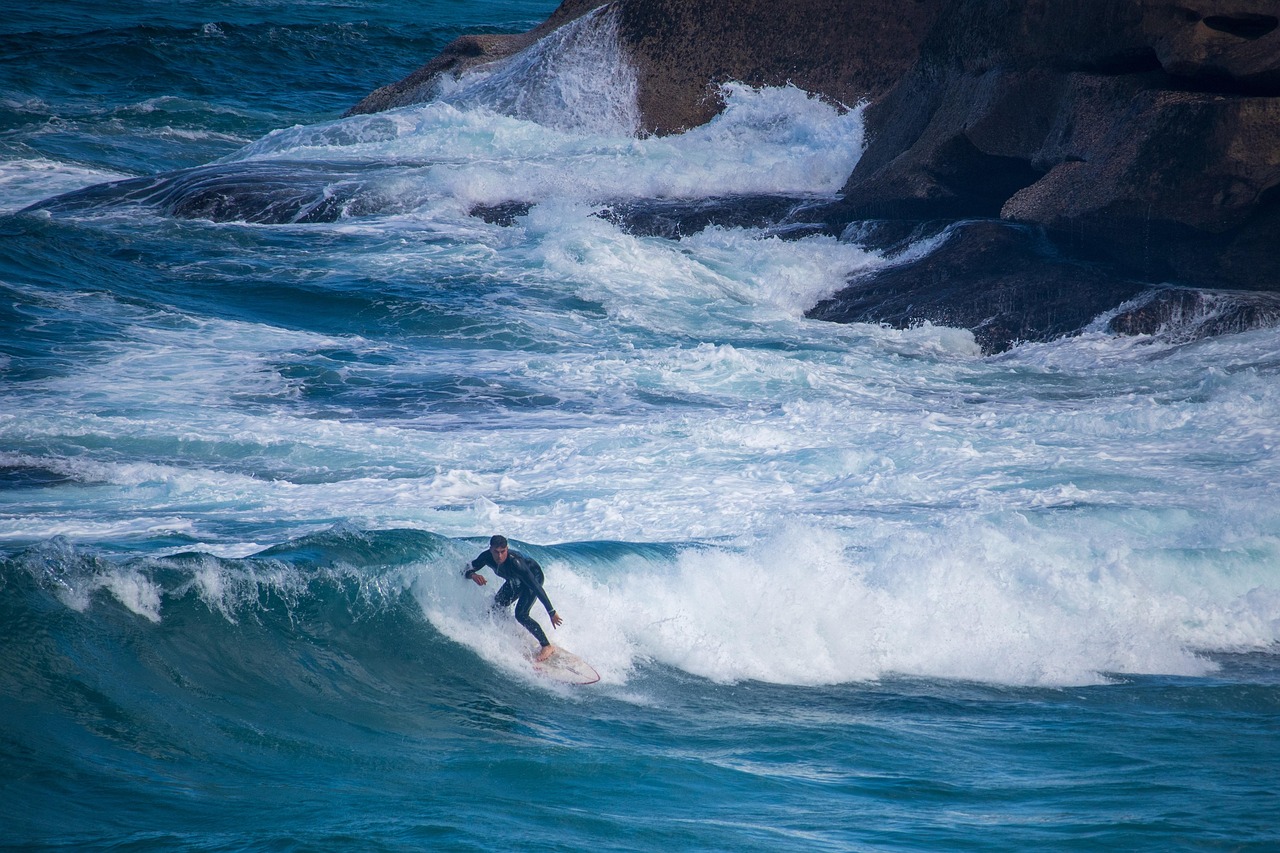
You paddle out past where the waves break (the “lineup”), wait for a wave, turn and paddle hard to match its speed, then pop up to your feet and ride along the face of the wave toward the shoulder, where it hasn’t broken yet. Beginners ride the whitewater straight toward the beach; better surfers go “down the line,” linking turns, cutbacks, airs and, on the right day, a tube ride inside the curl.
In free surfing there are no referees, so the lineup runs on etiquette: the surfer closest to the peak (where the wave breaks first) has the right of way, you don’t “drop in” on someone already riding, and you paddle out around the break, not through it. In contests, judges score each wave on commitment and degree of difficulty, innovative and progressive maneuvers, combination and variety of major maneuvers, and speed, power and flow. A priority system decides who gets which wave, and interfering with the surfer who has priority costs you. Our surfing rules page explains judging and etiquette in plain words.
Surfing at every level
Kids and beginners
Most people start with a lesson or a surf camp on a soft, wide foam board in small, gentle waves near a lifeguard. Before any of that, a child (or adult) should be a comfortable swimmer: the CDC notes that formal swimming lessons can reduce the risk of drowning, and that oceans have hidden hazards such as dangerous currents and waves. Kids who catch the bug can enter contests young: the National Scholastic Surfing Association (NSSA) has a Mini Groms division for 10 and under. Our youth surfing page covers surf camps, swimming ability, ocean safety and parents’ questions.
Middle school, high school and college
The NSSA, founded in 1978 and often called the “little league of surfing,” runs more than 80 events a year and asks its competitors to keep up academic standards. Besides individual Open and Explorer divisions, it has team seasons for middle school, high school and college surf teams, and its National Championships each June in California are the biggest youth surfing event in the country. Surfing isn’t an NCAA championship sport, so college surfers usually compete as club teams; the University of North Florida’s surf team, for example, went to the NSSA Nationals in Huntington Beach in 2025.
Pro surfing
The World Surf League runs the pro tours: the elite Championship Tour (CT), plus the Challenger Series, regional Qualifying Series, Junior Tour and Longboard Tour. As of the 2026 season, the CT has 12 events from Bells Beach in April to the Pipe Masters in Hawaii in December, with 36 men and 24 women for the first nine stops and a cut to 24 men and 16 women for two postseason events. The full fields return for a Pipe Masters finale, and world titles go to the best nine of 12 results.
Olympic and international
The ISA, founded in 1964 and recognized by the International Olympic Committee, is the world governing body. Surfing debuted at Tokyo 2020 at Tsurigasaki Beach, where Carissa Moore of the US won the first women’s gold. At Paris 2024 the contest moved to the reef at Teahupo’o in Tahiti, where Caroline Marks of the US won women’s gold and Kauli Vaast of France took the men’s. For LA28, the surfing competition is scheduled for July 15 to 18, 2028 at Lower Trestles, with up to three surfers per country per gender. In the US, USA Surfing is the national governing body, certified again by the US Olympic and Paralympic Committee from June 1, 2026. More on our leagues and associations page.
Adult and recreational
Most surfers never enter a contest. They surf before work, on weekends and on trips, and it’s a sport you can keep for life: the NSSA’s Explorer divisions run all the way to “Duke” (55 and up), and USA Surfing has longboard and adaptive divisions. If you’re starting as an adult or coming back after years away, take a lesson, pick small days and a beach with lifeguards, and ride a big foam board until you can catch and ride waves comfortably.
Sports health for surfers
Surfing is safer than its reputation, but the ocean deserves respect. A 2022 review in the British Journal of Sports Medicine put the injury rate at about 0.74 to 1.79 injuries per 1,000 hours of surfing. In a US study of emergency room visits from 2002 to 2013, 95.7% of injured surfers were treated and sent home. This section is general information, not medical advice. If you’re hurt, see a sports medicine doctor, physical therapist or athletic trainer.
The most common surfing injuries
- Cuts and skin injuries: the most common type of surfing injury across studies. Lacerations were 40.7% of surfing injuries seen in US emergency rooms. Fins, the board’s nose and tail, and reef or rocks do most of the damage.
- Your own board: a 2020 systematic review found that being struck by your own surfboard was the most common way surfers get hurt (38.6% of injuries overall).
- Head, face and neck: in 20 years of US emergency room data, 53% of these injuries came from impact with the board and 10% from hitting the ocean floor. Concussions were 5% of head and neck injuries, and 8% in surfers under 20.
- Knees, ankles and lower body: lower-body injuries were the most common in surveys of surfers, and the same review notes that non-contact ligament injuries have become more frequent as maneuvers get more acrobatic.
- Shoulders and back from paddling: overuse injuries in surfers are closely linked to paddling, which is most of the time you spend in the water.
- Surfer’s ear: bony growths in the ear canal linked to repeated cold-water and wind exposure. In a study of 202 avid surfers, 38% had them, and surfing mostly in colder water raised the odds about 5.8 times.
Who gets hurt more? A 2022 review found that 31% to 35% of recreational surfers had at least one injury in the past year, versus 42% to 49% of competitors. Competing, having less experience, being older and having had surgery before were all linked to a higher risk.
Prevention that makes sense
- Learn on foam. Researchers suggest foam boards and protective gear in crowded or dangerous spots to lower injury risk. A soft-top like the Wavestorm 8 ft Classic is the default first board for good reason.
- Protect your head when you fall. Fall away from your board, flat and shallow, and come up with your arms over your head, especially over reef or in a crowd.
- Surf your level. Pick waves and spots you can handle, and know the bottom: sand, reef or rock.
- Plug your ears in cold water. Many cold-water surfers wear ear plugs such as SurfEars 4.0 and a hood in winter. Our sources don’t prove plugs prevent surfer’s ear, but they keep cold water and wind out of the canal.
- Build paddling strength gradually and add shoulder, upper-back and core work on land (see training below).
Concussion: recognize and remove
A board to the head or a slam on a sandbar can cause a concussion, and young surfers are most at risk. The CDC’s HEADS UP program lists the signs: looking dazed or confused, headache, dizziness or balance problems, sensitivity to light or noise, feeling slowed down, trouble concentrating. In the water, a dazed surfer is also at risk of drowning, so get them to shore right away and keep them out of the water that day. Return only after a health care provider clears them. Call 911 for danger signs such as a worsening headache, repeated vomiting, a seizure, unequal pupils, or if they can’t be woken. Our surfing injuries page goes deeper.
Rip currents, cold water and sun
Surfers use rip currents to paddle out, but they can pull a tired swimmer or a beginner who has lost their board out to sea. The National Weather Service says channel rips usually flow at 1 to 2 feet per second and can reach 8 feet per second, faster than an Olympic swimmer. NOAA counted 97 rip current and surf zone deaths in the US in 2023. If you’re caught without your board: stay calm, don’t fight it, swim parallel to the beach or float, and wave and yell for help. Stay on your board; it floats. Surf near lifeguards and never surf alone.
Cold water drains strength fast, so dress for the water temperature (our surfing gear page has a wetsuit chart). And sun on the water is relentless: the American Academy of Dermatology recommends a broad-spectrum, water-resistant sunscreen of SPF 30 or higher, reapplied every two hours and after swimming. A long-sleeve rash guard does a lot of the work for you.
Training and conditioning for surfing
The best training for surfing is surfing, but most of us can’t surf every day, and paddling fitness fades fast. A good week of land training for a surfer has three parts:
- Paddle engine: swimming (freestyle is the closest match), pulling exercises such as rows and pull-downs, and work for the muscles around the shoulder blades.
- Pop-up power and legs: push-ups, squats, lunges and jumping drills, plus practicing pop-ups on the floor until they’re automatic.
- Mobility and balance: hips, thoracic spine and ankles, and balance work. Many surfers add yoga or a balance board.
Warm up on the sand before you paddle out (a few minutes of arm circles, hip openers and pop-ups), especially on cold mornings. Build your time in the water up gradually after a break. Our surf training page has full routines, and the best resistance bands for athletes make paddling work easy at home.
Recovery after surfing
Two hours of paddling is a big upper-body workout, often on an empty stomach at dawn. Rinse your ears and skin, drink and eat soon after, and warm up properly after a cold session. Shoulders and upper back take the load, so many surfers use a foam roller or a small massage gun such as the Theragun Mini (about $220) on the lats, traps and chest. These are comfort tools, not treatment. Sleep is the big one. More on our surfing recovery page, our athlete recovery routine and the best massage guns. Long session in the heat? See session day for fueling and hydration.
Gear for surfing
Prices change often. The prices below are what we saw at the maker or a major retailer in October 2026; check the current price before you buy.
A beginner needs a big foam board with a leash, sunscreen and a rash guard or wetsuit; that’s it. The Wavestorm 8 ft Classic (about $300 on Amazon) is 8 ft long, 22.5 in wide and 3.25 in thick, with 86 liters of volume, and comes with fins, a leash and a traction pad. For sun, a zinc oxide sunscreen like Badger Sport Mineral SPF 40 (about $18) is water resistant for 80 minutes and, the maker says, contains no oxybenzone or octinoxate, the two ingredients Hawaii banned in 2021. Boards by level, wetsuits by water temperature, leashes and the rest are on our surfing gear page.
Wavestorm 8 ft Classic Soft Top
- 8 ft, 86 L foam board
- Fins, leash, traction pad included
- 11.5 lb
Badger Sport Mineral Sunscreen SPF 40
- Non-nano zinc oxide
- 80 min water resistant
- No oxybenzone or octinoxate
SurfEars 4.0
- Keeps water out, lets sound in
- 4 tip sizes
- Storage case
Theragun Mini (3rd gen)
- Pocket-size massage gun
- 3 speeds
- 3 attachments
Surfing FAQs
What are the most common surfing injuries?
Cuts and other skin injuries are the most common, and being hit by your own board is the most common cause. Head, face and neck injuries and lower-body sprains follow, and shoulder overuse from paddling is common in regular surfers.
Is surfing dangerous?
Studies put surfing’s injury rate at about 0.74 to 1.79 injuries per 1,000 hours, and most surfers treated in US emergency rooms go home the same day. The bigger risks are the ocean itself: rip currents, big surf, cold water and shallow reef. Surf your level, near lifeguards and with a buddy.
Do you need to be a good swimmer to surf?
Yes. Your leash can break and you’ll have to swim in, sometimes through waves and currents. Be comfortable swimming in open water before you start, and take a lesson your first time.
What is surfer’s ear?
Surfer’s ear (external auditory exostosis) is bony growth in the ear canal linked to repeated cold-water and wind exposure. It’s more common in surfers who surf mostly in cold water. If you notice water trapped in your ears or repeated ear infections, see an ear, nose and throat doctor.
Where will Olympic surfing be held in 2028?
At Lower Trestles in San Clemente, California, part of San Onofre State Beach. The competition is scheduled for July 15 to 18, 2028, with 24 men and 24 women.
What board should a beginner surfer use?
A long, wide, thick foam board, usually around 8 ft for adults. It floats you, catches waves easily and hurts less when it hits you. Move to a smaller board once you can catch and ride green waves on your own.
Surfing gives back what you put in: more time in the water, better waves, and mornings you’ll remember for years. Respect the ocean, look after your shoulders and skin, and keep paddling out. Next: rules and etiquette, surfing injuries, gear, or compare with our soccer section.