This article contains affiliate links: if you buy through them we may earn a commission, at no extra cost to you. Learn more.
A row of six-year-olds in white uniforms bowing onto the mat on a Saturday morning, belts tied a little crooked. A high school gym turned into a taekwondo tournament, eight rings going at once and the electronic scoreboards beeping every time a kick lands on a chest protector. A judo final at the Olympics, decided by one clean throw. A Tuesday-night open mat at the local jiu-jitsu academy, where an accountant and a college wrestler roll for six minutes and then laugh about it. Martial arts are some of the most popular activities for kids and adults alike: according to the American Academy of Pediatrics (AAP), more than 6.5 million children in the US take part in some form of martial arts.
Martial Arts, page by page
- Rules: how the game works at every level
- Leagues & associations: pro, college, high school and youth
- Youth & high school: ages, safety and recruiting, for players and parents
- Injuries & sports health: prevention, concussion, when to see a pro
- Training & conditioning: before: off-season to in-season
- Game day: during: fueling, hydration, heat
- Recovery: after: games, tournaments, sleep
- Nutrition & supplements: what to eat, tested supplements
- Best wearables: trackers and watches for the sport
- Gear: the complete equipment list
Buying guide · Our Martial Arts buying guide compares the gear we'd pick, with prices and sizing:
This page covers the four martial arts most people mean when they sign up for classes: karate, taekwondo, judo and Brazilian jiu-jitsu (BJJ), with a short note on the others. You’ll find how each one works and is scored, the path from a kids’ class to the Olympics, and, most of all, the sports health side: the martial arts injuries that happen most, concussion, chokes and joint locks, skin infections and when to see a professional. It’s general information, not medical advice. Fight sports have their own sections: MMA, boxing and wrestling.
Martial arts at a glance
| The big four | Karate and taekwondo (striking: punches and kicks), judo and Brazilian jiu-jitsu (grappling: throws, pins, chokes and joint locks). |
|---|---|
| World governing bodies | World Karate Federation (WKF), World Taekwondo (WT), International Judo Federation (IJF), International Brazilian Jiu-Jitsu Federation (IBJJF). |
| In the US | USA Karate, USA Taekwondo and USA Judo are the national governing bodies in the Olympic movement. BJJ has no Olympic governing body; the IBJJF runs the best-known tournaments. |
| Olympic status | Judo: Olympic since 1964 for men and 1992 for women. Taekwondo: medal sport since Sydney 2000. Karate: only at Tokyo 2020, not in Paris 2024 or LA28. BJJ: not an Olympic sport. |
| Match length | Karate kumite: 3 minutes for seniors. Taekwondo: three 2-minute rounds. Judo: 4 minutes. BJJ (IBJJF adults): 5 minutes at white belt up to 10 minutes at black belt. |
| Ranks | Colored belts up to black belt. In BJJ, adults go white, blue, purple, brown and black; kids under 16 have their own grey, yellow, orange and green belts. |
| Most common injuries | Sprains and strains, bruises and fractures; knees in BJJ; shoulders, hands and fingers in judo; feet, legs and the head in taekwondo and karate; concussions in every art with throws or head kicks. |
How martial arts work
Every martial art has two sides: the training (forms, drills, partner work, belt tests) that most people do for fitness, confidence and self-defense, and a sport side with rules, referees and points. Here’s the short version of each sport; our martial arts rules page has the details.
Karate
Karate comes from Okinawa and Japan and is mostly punches, strikes and kicks. It has two competition events. In kumite (sparring), techniques are controlled: under WKF rules a punch to a scoring area is worth 1 point (yuko), a kick to the body 2 (waza-ari) and a kick to the head, or a technique on an opponent who’s down, 3 (ippon). A senior bout lasts 3 minutes, and an 8-point lead ends it early. In kata (forms), athletes perform one of the 102 forms the WKF approves, and a panel of seven judges scores them, 70% on technical performance and 30% on athletic performance.
Taekwondo
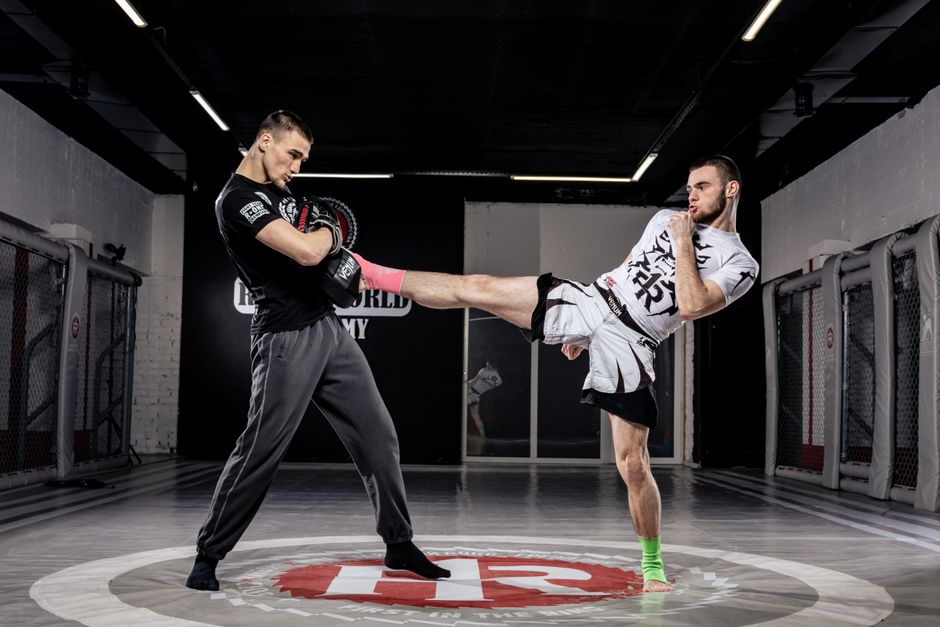
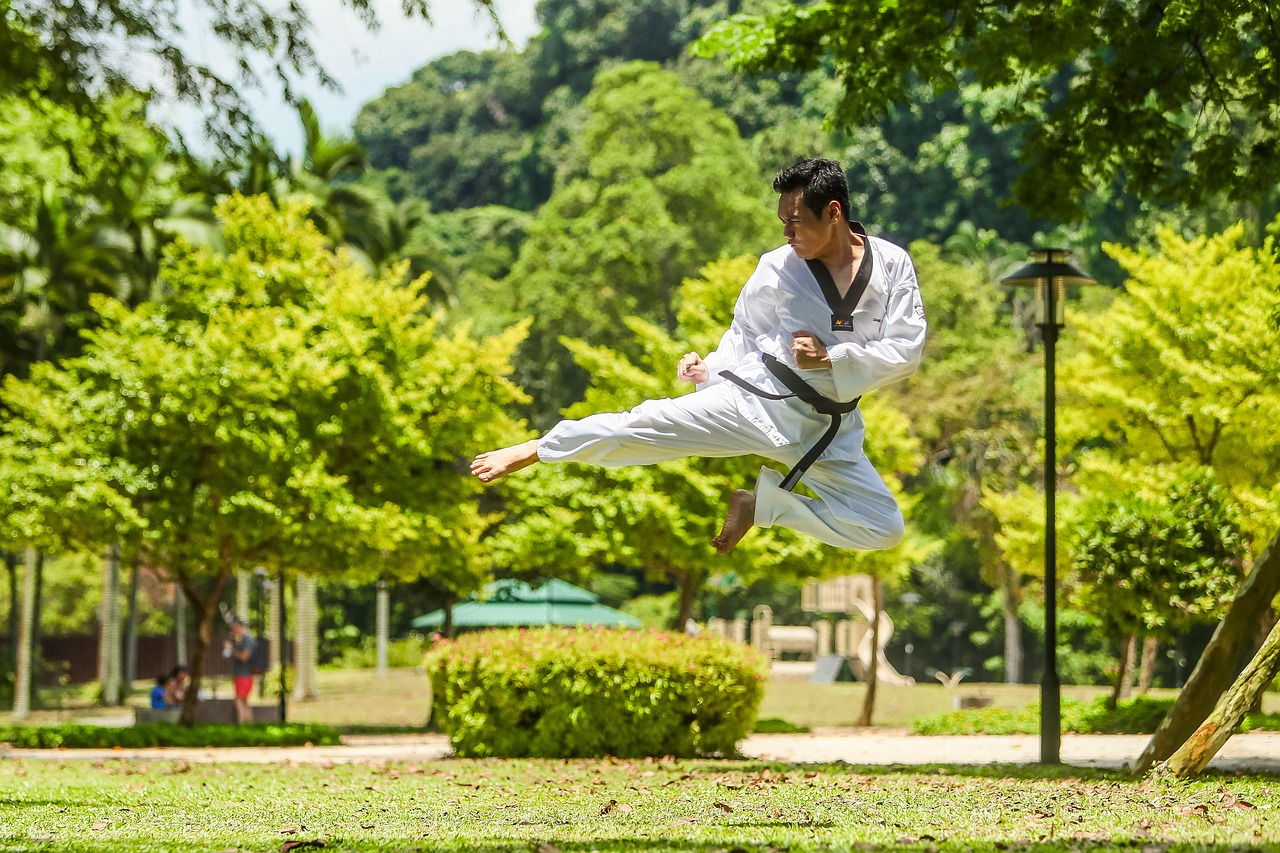
Taekwondo comes from Korea and is famous for its kicks. In Olympic-style sparring (kyorugi), athletes wear electronic sensors in the chest protector, headgear and socks, and the system registers valid kicks. Under World Taekwondo’s rules in force from June 1, 2026, a punch to the chest protector scores 1 point, a kick to it 2 and a kick to the head 3; turning kicks are worth double. Matches are three rounds of two minutes. Taekwondo also has poomsae (forms) competitions, which aren’t on the Olympic program.
Judo
Judo was founded in Japan by Jigoro Kano, who opened the Kodokan in 1882. Players grip each other’s jackets and try to throw, then pin, choke or arm-lock. A clean throw onto the back with speed, force and control is ippon and wins the match, as does a 20-second pin or a submission. Smaller scores are waza-ari and, since the 2025 rules, yuko again. Contests last 4 minutes for seniors, juniors and cadets, with a golden score period if it’s tied. Leg grabs, diving head-first into a throw and arm locks on any joint but the elbow are against the rules.
Brazilian jiu-jitsu
BJJ grew out of judo in Brazil and is fought mostly on the ground, with or without the gi. You win by submission (a choke or joint lock that makes your opponent tap) or on points: under IBJJF rules, 2 points for a takedown, sweep or knee on belly, 3 for a guard pass and 4 for mount or back control, each held for three seconds. Ties go to advantages, then penalties, then the referee. What’s legal depends on age and belt: kids can’t do neck cranks, wrist locks or most leg locks, and heel hooks are allowed only for adult brown and black belts in no-gi.
Kung fu, aikido, Muay Thai and the rest
There are many more arts. Kung fu is a broad name for Chinese martial arts, from traditional styles to modern wushu forms and sanda sparring. Aikido is a Japanese art of throws, joint locks and falls practiced cooperatively, usually without competition. Muay Thai, “the art of eight limbs,” adds elbows and knees to kickboxing and is a full-contact sport; for that side of training, our MMA and boxing sections cover the gear, the head-contact risks and the recovery. The health advice on this page applies to all of them: the more contact, the more care.
Martial arts at every level
Kids
Most kids start in a local school (a dojo in karate and judo, a dojang in taekwondo, an academy in BJJ). The AAP says martial arts can give children vigorous exercise and better fitness, and recommends instructors trained to teach kids, with competition and contact sparring delayed until a child has shown the maturity and skill to handle it in non-contact training. Rules for kids are softer: in WKF karate, competitors under 14 must wear a helmet and chest protector, and techniques to the head score when stopped short of the target. IBJJF kids’ divisions start at age 4. See our youth martial arts guide for starting ages, belt systems and how to choose a school.
Teens, high school and college
Unlike wrestling, martial arts aren’t high school or NCAA sports in most of the US, so teens compete through their school or club in national-governing-body and federation events. World Taekwondo’s age groups are a good example: cadets are 12 to 14, juniors 15 to 17 and seniors 17 and up. In judo, cadets are under 18 and juniors under 21. Many colleges have martial arts clubs, and BJJ teens (13 to 17) have their own IBJJF divisions before joining the adults.
Olympic and elite
Judo and taekwondo are both on the program for the Los Angeles 2028 Olympics. Judo will have 14 events (seven weight classes each for men and women, plus the mixed team) and taekwondo 8 (four weight classes each). Karate made its debut at Tokyo 2020 but wasn’t kept for Paris 2024 or LA28. In BJJ, the biggest titles are IBJJF events such as its World Championship. The leagues and associations page explains who runs what.
Adults and masters
It’s never too late to start, and many arts have masters divisions: the IBJJF runs master categories from age 30 up to 61 and older. If you’re new or coming back, ease in: learn to fall and tap before you spar hard, skip competition rounds for the first months, and tell your instructor about old injuries.
Sports health for martial artists
Most martial arts injuries aren’t life-threatening. The AAP lists abrasions, bruises, sprains and strains as the usual ones, but fractures, neck injuries, dental injuries and concussions do happen. One study it cites estimated that 128,400 children and teens were treated in US emergency departments for martial arts injuries from 1990 to 2003, most of them in karate. Non-contact training carries much less risk than sparring. This section is general information; if you’re hurt, see a professional. More on our martial arts injuries page.
Common martial arts injuries, art by art
- Karate: sprains and strains, bruises and fractures, often to the legs from being kicked. Because so much karate in the US is non-contact, the AAP notes its injury rates are lower and usually less severe than in other arts.
- Taekwondo: about 80% kicks, so more leg and foot injuries, plus head injuries from head kicks. One study the AAP cites found a threefold higher injury risk in taekwondo than in karate. A systematic review found heavier weight classes, teenage athletes and weak blocking skills were linked to more injuries.
- Judo: more upper-body injuries (shoulder, wrist, hand and fingers) because of throws and falls. In the AAP’s data, young judo athletes had a higher share of shoulder and neck injuries than karate or taekwondo athletes, and more concussions than in karate.
- BJJ: the knee is hurt most often. In a survey of 1,140 athletes, knees made up 27% of injuries (meniscus, ACL and MCL tears), and 78% of injuries happened during sparring. A study of IBJJF tournaments found knee injuries were about 12 times more common among competitors exposed to the heel hook.
Concussion: recognize and remove
Concussions come from head kicks and punches, and from being thrown or slammed. The CDC’s HEADS UP program asks coaches and parents to watch for an athlete who looks dazed, moves clumsily or is slow to answer, and to listen for headache, dizziness, nausea, light or noise sensitivity, confusion or “just not feeling right.” Take anyone with signs off the mat right away, keep them out that day and until a healthcare provider clears them, and bring them back step by step. Call 911 for danger signs such as a headache that keeps getting worse, repeated vomiting, seizures, slurred speech, unusual drowsiness or one pupil larger than the other.
Headgear is a common question. The AAP says soft headgear probably helps with cuts and bruises, but there’s no evidence it lowers the risk of concussion, and families shouldn’t let it encourage more aggressive sparring. What helps: good blocking skills, light contact to the head in training and rules that keep head blows out of kids’ competition.
Chokes, joint locks and tapping
In judo and BJJ, chokes and arm locks are part of the game, and the AAP notes that judo chokes can cause loss of consciousness. That’s why the first lesson in any grappling class is to tap early (with a hand, a foot or by saying “tap”) and to let go the moment your partner taps. Apply submissions slowly in training, and respect the age rules: the IBJJF bans most leg locks for everyone below brown belt and slams for everyone.
Skin infections on shared mats
Grappling arts share a problem with wrestling: ringworm, impetigo, staph and herpes spread by skin contact and on mats. The National Athletic Trainers’ Association recommends showering right after training, not sharing towels, bar soap or gear, washing training clothes and towels every day and cleaning mats on a set schedule with an EPA-registered disinfectant. Anyone with a suspicious rash should stay off the mat until a doctor clears it, and a gi should never be worn twice without washing.
When to see a doctor, physical therapist or athletic trainer
Don’t train through pain that doesn’t settle. See a professional for a joint that pops, gives way or swells, a finger or toe that looks crooked, numbness or tingling after a neck crank or slam, a rash that spreads, or any concussion signs. A sports medicine physician manages most sports injuries without surgery; a physical therapist guides rehab and the return to sparring; an athletic trainer, if your club or event has one, is the first call on the day.
Training and conditioning for martial arts
Technique comes first, but a stronger, fitter body takes falls and kicks better. Add leg, hip, back and shoulder strength (see our resistance bands guide), mobility for kicks and guard work, and conditioning that matches your rounds. Build sparring up slowly. The AAP notes some evidence that training more than 3 hours a week may raise injury risk, so watch the total load, especially for kids training at more than one school. Many athletes track their readiness with a wearable (see HRV for athletes), and the mental side matters too: mental training tools. Our martial arts training page goes deeper.
On tournament days, eat a familiar, mostly carbohydrate meal a few hours before your first match, bring water and snacks for long waits between rounds, and warm up again before each one. If your art has weight classes, make weight the slow way; crash dieting and dehydration hurt performance and health.
Recovery after training and tournaments
Shower first, then food, fluids and sleep. The CDC, citing the American Academy of Sleep Medicine, recommends 9 to 12 hours a night for children 6 to 12, 8 to 10 for teens and 7 or more for adults. Simple tools help many athletes feel better between hard sessions: a foam roller or massage gun for tight hips, legs and forearms, and soft recovery shoes after a day barefoot on the mats. They’re about comfort, not treatment. Grapplers can find more in jiu-jitsu recovery, and our martial arts recovery page covers the whole week.
Gear for martial arts
- Uniform: a karate gi, taekwondo dobok, judo gi or BJJ gi. They aren’t interchangeable: a judo or BJJ gi is much heavier, so it can be gripped and pulled. No-gi BJJ uses a rash guard and shorts.
- Belt: your school gives it to you at each promotion; beginners usually get a white belt with the uniform.
- Sparring gear: for karate and taekwondo, a mouthguard plus hand, shin and foot guards, headgear and a chest protector as your school or event requires. Taekwondo’s electronic gear is usually supplied at events.
- Mouthguard: wear one whenever there’s sparring. The AAP notes mouthguards cut dental and mouth injuries.
- Hygiene kit: your own towel, soap and sandals for walking off the mat.
Three good starting points: the FUJI Single Weave Judo Gi, a cotton-blend judo uniform that comes with a white belt in kids’ and adult sizes; the Shock Doctor Gel Max mouthguard, sold in youth and adult sizes; and the OOFOS OOahh Slide from our recovery shoes guide for after class. Everything else, art by art, is on our martial arts gear page.
FUJI Single Weave Judo Gi with Belt
- Single weave, cotton blend
- White belt included
- Kids and adult sizes
Shock Doctor Gel Max Mouthguard
- Boil-and-bite gel-fit liner
- Breathing channels
- Youth and adult
OOFOS OOahh Slide
- OOfoam slide
- APMA Seal of Acceptance
- Machine washable
For more after training, browse Recovery & Regeneration and Training & Performance.
Martial arts FAQs
Which martial art is best for kids?
The best one is the one your child enjoys, taught by a qualified, background-checked instructor. Non-contact training carries the lowest injury risk, so whatever the art, look for a program that builds skills before sparring, as the AAP recommends.
Which martial arts are in the Olympics?
Judo and taekwondo, both on the LA28 program. Karate was included only at Tokyo 2020. Brazilian jiu-jitsu, kung fu, aikido and Muay Thai aren’t Olympic sports. Wrestling and boxing, two other combat sports, are.
What are the most common martial arts injuries?
Bruises, sprains and strains, followed by fractures. Striking arts see more leg, foot and head injuries; judo more shoulder, hand and neck injuries; BJJ more knee injuries. Concussions happen wherever there are head kicks or throws.
Does headgear prevent concussions in martial arts?
No. According to the AAP, soft headgear probably reduces cuts and bruises, but there’s no evidence it prevents concussions. Controlled contact, good blocking and keeping head blows out of kids’ sparring matter more.
How long does it take to get a black belt?
It depends on the art and the school. In karate and taekwondo it’s often several years. BJJ is slower: the IBJJF sets minimum times at each adult belt, and most adults can’t be promoted to black belt before 19 (18 only for a brown-belt adult world champion).
Am I too old to start a martial art?
Usually not. Many adults start late, and BJJ alone has masters divisions for athletes 30 to over 60. Check with your doctor if you have health conditions, ease into sparring, and tell your instructor about old injuries.
Martial arts reward patience: the students who last are the ones who learn to fall, tap early, keep contact controlled and rest when something hurts. Keep exploring: the rules, the gear, our recovery tools guide and the other sports on our sports hub.