This article contains affiliate links: if you buy through them we may earn a commission, at no extra cost to you. Learn more.
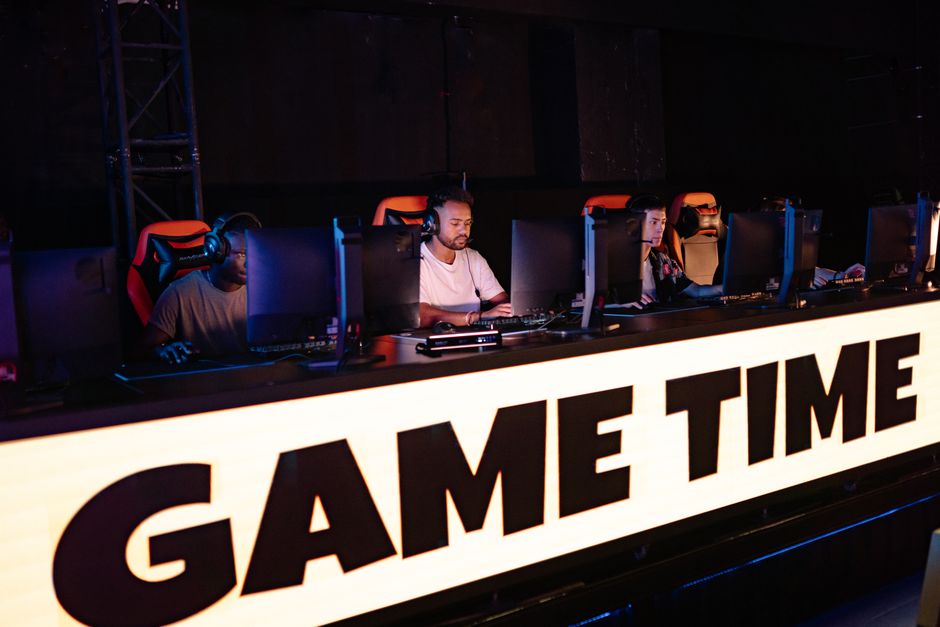
A Tuesday after school: five teenagers in matching jerseys in the school computer lab, headsets on, their coach behind them with a clipboard, playing a state-league match against a school three hours away. A college arena with a stage, a caster desk and a varsity team that recruits players the way the football team recruits linebackers. And a sold-out Barclays Center in Brooklyn on November 14, 2026, for the League of Legends World Championship final. Esports, organized competitive video gaming, is now a real sport with real teams, coaches, scholarships and seasons, and the people who play it are athletes in every way that matters for their health.
Esports, page by page
- Rules: how the game works at every level
- Leagues & associations: pro, college, high school and youth
- Youth & high school: ages, safety and recruiting, for players and parents
- Injuries & sports health: prevention, concussion, when to see a pro
- Training & conditioning: before: off-season to in-season
- Game day: during: fueling, hydration, heat
- Recovery: after: games, tournaments, sleep
- Nutrition & supplements: what to eat, tested supplements
- Best wearables: trackers and watches for the sport
- Gear: the complete equipment list
Buying guide · Our Esports buying guide compares the gear we'd pick, with prices and sizing:
This page is esports for players, parents and coaches: how competitive gaming works, the path from a middle school club to college scholarships and pro leagues, and, most of all, esports health. Gamers don’t tear ACLs, but they do get sore eyes, stiff necks, aching wrists, short sleep and too little movement, and a few simple habits make a big difference. Then training, recovery and the gear that actually matters. It’s general information, not medical advice.
Esports at a glance
| What it is | Organized, competitive video gaming with teams or individual players, rules, referees (admins), seasons and championships. Played on PC, console or mobile, online or at in-person LAN events. |
|---|---|
| Team sizes | Depends on the game: 5 vs 5 in League of Legends and VALORANT, 3 vs 3 in Rocket League, 1 vs 1 in fighting games like Street Fighter 6 and Tekken 8, solo or squads in battle royales like Fortnite. |
| Who runs it | Mostly the game publishers (Riot Games, Activision, Valve, Epic and others) and tournament organizers. Colleges: NACE. High schools: state associations with PlayVS. Worldwide: the International Esports Federation (IESF). Integrity: the Esports Integrity Commission (ESIC). |
| Biggest events (2026) | The Esports World Cup (Paris, summer 2026, a $75 million prize pool), the League of Legends World Championship (USA, October 15 to November 14), VALORANT Champions (Shanghai), the Call of Duty League Championship and the Rocket League World Championship. |
| Physical demands | Hours of sitting, fast and precise hand and finger movements, constant visual focus, and high mental load. Players in one study practiced 3 to 10 hours a day. |
| Most common complaints | Eye fatigue, neck and back pain, wrist and hand pain, poor sleep and too little physical activity. |
How esports works
Every esport is a different game with its own rules, so “esports” is more like “racket sports” than a single sport. What they share is the structure: teams or players compete in matches, usually a series such as best of three or best of five, inside a league season or a bracket tournament. Admins enforce a written rulebook that covers everything from approved equipment to pauses for technical problems, and anti-cheat software watches for illegal programs. High school matches through PlayVS, for example, are played online from each school’s campus with a coach supervising, in a fall and a spring season that each end in playoffs.
The main game families you’ll hear about: MOBAs (League of Legends, Dota 2), tactical shooters (VALORANT, Counter-Strike 2, Rainbow Six Siege), other shooters (Call of Duty, Overwatch, Apex Legends), battle royales (Fortnite, PUBG), sports and racing games (EA Sports FC, Rocket League, Trackmania), fighting games (Street Fighter 6, Tekken 8) and mobile games (Mobile Legends, Honor of Kings, Free Fire). The 2026 Esports World Cup featured 25 tournaments across 24 games, from chess to Counter-Strike. For the full rulebook basics, fair play and age ratings, see our esports rules page.
Esports at every level
Kids and middle school
Most kids start by playing at home. Organized play often begins with a school or community club: the North America Scholastic Esports Federation (NASEF), a nonprofit, is free to join and runs clubs, tournaments and learning programs for middle and high school students, including Minecraft competitions and coaching resources. For parents, the starting points are the ESRB age rating on the box (E, E10+, T, M), the parental controls on every console and PC, and the American Academy of Pediatrics’ advice to make a Family Media Plan. More on our youth esports page.
High school
High school esports is an official, state-sanctioned activity in much of the US. PlayVS has partnered with the National Federation of State High School Associations (NFHS) Network since 2018; by January 2024, 25 NFHS member associations and affiliates were on board and the partnership was extended through 2028. Teams practice and compete like any other school team, often under the same eligibility rules as other athletes. PlayVS requires high school players to be 13 or older, and the NFHS/PlayVS parents’ guide says games offered for school competition are rated E or T.
College
The NCAA voted in 2019 not to govern esports, so college esports has its own organizations. The biggest is the National Association of Collegiate Esports (NACE), a nonprofit member association founded in 2016. NACE says more than 300 college programs have started across North America since then, and its directory lists 260+ schools that offer esports scholarships, ranging from a stipend for books to a full ride. To join NACE as a “varsity” program, a school has to meet six criteria, including a staff member responsible for the team, a dedicated practice space and an operating budget. Two-year colleges have NJCAA Esports.
Pro
Pro esports is run mostly by publishers. Riot runs regional League of Legends leagues that feed the World Championship (in 2026 in Los Angeles, Allen, Texas, and New York) and the VALORANT Champions Tour (Champions 2026 in Shanghai, September 24 to October 18). The Call of Duty League had 12 teams in 2026 and finished with its championship in Las Vegas in July; the Rocket League World Championship was in Fort Worth, Texas, in September. Valve’s Counter-Strike Majors and Dota 2’s The International and Epic’s Fortnite Champion Series round it out. Pro leagues set minimum ages in their rulebooks, and many top players are in their late teens and twenties.
International and Olympic
The Esports World Cup is the biggest multi-game event: the 2026 edition moved from Riyadh to Paris because of the conflict in the Middle East and ran in July and August with more than 2,000 players from about 100 countries and a $75 million prize pool. Esports was a full medal sport at the Hangzhou Asian Games (held in 2023), with seven titles. The International Esports Federation (IESF), founded in 2008 and based in South Korea, has 150+ member nations and holds a World Esports Championship for national teams. And the Olympics? The IOC announced Olympic Esports Games in 2024 with Saudi Arabia as host, but the two ended that partnership in October 2025. The IOC says it is working on a new approach; as of October 2026, no new host or date has been announced. Details on our esports leagues and associations page.
Adult and recreational
Ranked ladders inside each game, amateur leagues, local LAN nights, fighting-game “locals” at game stores and online tournaments keep millions of adults competing. The health basics on this page matter just as much for a 35-year-old playing ranked after work as for a college varsity player, maybe more, because a desk job plus evening gaming adds up to a lot of sitting.
Sports health for esports players
The research on esports health is young but consistent. In a survey of 65 college esports players in the US and Canada (BMJ Open Sport & Exercise Medicine, 2019), players practiced 3 to 10 hours a day; 56% reported eye fatigue, 42% neck and back pain, 36% wrist pain and 32% hand pain. Forty percent did no physical exercise at all, and only 2% had seen a doctor about their pain. In Denmark, 42.6% of 188 esports athletes reported musculoskeletal pain in the previous week, most often the back. Our esports injuries page goes deeper; here are the essentials.
Eyes: the 20-20-20 rule
Long focus on a screen means less blinking, dry eyes, tired focusing muscles and headaches. The American Academy of Ophthalmology (AAO) and the AAP both recommend the 20-20-20 rule: every 20 minutes, look at something at least 20 feet away for at least 20 seconds. The AAO says there’s no scientific evidence that blue light from screens damages the eyes and doesn’t recommend blue-light glasses; late-night screen light can, however, make it harder to fall asleep. The AAP also notes that more outdoor time is good for kids’ developing eyes. Persistent blurry vision or headaches are a reason to see an eye doctor.
Wrists, hands, neck and back
Thousands of fast clicks and keystrokes, often with the wrist bent, plus a head that drifts toward the screen, are where the aches come from. OSHA’s computer-workstation guidance is a good template: the monitor straight in front of you, at least 20 inches away, with the top line of the screen at or below eye level; the keyboard at about elbow height so forearms are roughly parallel to the floor; wrists straight, not bent up, down or sideways; the mouse close to the keyboard; feet flat on the floor (or on a footrest), with lumbar support for the lower back. Then move: micro-breaks, stretches and strength work for the upper back and forearms, which our esports training page covers.
Hearing
Headsets turned up for hours add up. The World Health Organization says 80 dB is safe for up to 40 hours a week, but 90 dB only for about 4 hours a week. In 2025, WHO and the International Telecommunication Union published the first global standard for safe listening in video games and esports. WHO’s simple advice for gamers: keep volume below about 60% of maximum, take a 10-minute break every hour, and use well-fitted or noise-cancelling headphones so you don’t have to crank it. Ringing in the ears that doesn’t go away, or trouble following conversations, is a reason for a hearing check.
Sleep and sitting
In a small study of 17 pro shooter players from South Korea, Australia and the US, median sleep was 6.8 hours a night, with a median bedtime of 3:43 a.m. The CDC recommends 8 to 10 hours for teens and 7 or more for adults, and the AAP advises no screens for at least an hour before bed and no devices in the bedroom overnight for kids. Sitting is the other big one: a study of 24 male college esports players found they took about 6,000 steps a day versus about 12,800 for matched non-players, with more body fat and less lean mass and bone mineral content. The CDC recommends 60 minutes of physical activity a day for kids and teens 6 to 17; adults need 150 to 300 minutes of moderate activity a week plus strength training.
Healthy gaming and mental health
Most people who game never have a problem. The WHO defines gaming disorder narrowly: impaired control over gaming, gaming taking priority over other interests and daily activities, and continuing despite harm, usually for at least 12 months and with significant impairment at school, work or home. It affects only a small proportion of gamers. Watch the balance, not just the hours: is gaming crowding out sleep, school, movement and friends? If it is, or if mood, anxiety or tilt are getting worse, talk to a doctor or counselor.
When to see a doctor, physical therapist or athletic trainer
See a professional for pain, numbness or tingling in the hand or wrist that doesn’t settle with rest, neck or back pain that lasts or keeps coming back, headaches or vision changes, or hearing changes. A sports medicine physician can diagnose and refer; a physical therapist can fix posture, strength and mobility problems; many college esports programs work with athletic trainers just like other varsity teams. The 2019 study’s authors made exactly that point: esports athletes deserve the same team-based medical care as any other athlete.
Training and conditioning for esports
Practice like an athlete: structured blocks of mechanics, scrims and video review beat endless solo queue. Build in breaks: the AAP suggests kids step away from screens for about 10 minutes every hour, and WHO gives gamers the same advice for their ears. Train the body too: upper-back and shoulder strength for posture, forearm and grip work, mobility for the neck and hips, and cardio for general fitness and stamina through long series. Our esports training page has the routines, and the mental side is covered in our mental training tools guide.
Match day and LAN day: sleep first, a real meal, water at the station, and an honest look at caffeine and energy drinks (the AAP says energy drinks have no place in the diets of children and teens). See esports match day and LAN day.
Recovery after long sessions and tournaments
Recovery in esports is mostly about the nervous system, the eyes and the posture muscles: a fixed sleep window, screens off before bed, a walk or workout after a long block, and stretching for the neck, chest, forearms and hips. Some players use a foam roller or a small massage gun for tight upper backs and forearms, and many track sleep with a ring or watch (see Whoop vs Oura vs Garmin and our sleep tracker guide). They’re comfort tools, not treatment. More on our esports recovery page.
Gear for esports
- Chair: adjustable seat height, real lumbar support, armrests that let your upper arms stay close to your body. Fit matters more than looks.
- Desk and monitor: a desk at elbow height (or a sit-stand desk) and a monitor arm or stand that puts the screen at arm’s length with the top at or below eye level.
- Mouse and keyboard: sized to your hand, with the mouse close to the keyboard. Some players use a vertical mouse or split keyboard away from competitive play.
- Headset: comfortable for hours, with a good mic, used at moderate volume. For kids, volume-limited headphones.
- Skip: blue-light glasses (no evidence they help, per the AAO) and any gadget that promises to “boost” reaction time.
Four picks that cover the basics: the Secretlab Titan Evo chair (built-in adjustable lumbar support, 4D armrests, in three sizes), the Ergotron LX monitor arm to get your screen to the right height and distance, the HyperX Cloud III wired headset with memory-foam ear cushions, and the Theragun Mini for a tight upper back after a long day. The full list is on our esports gear page.
Secretlab Titan Evo (Regular)
- Adjustable lumbar support
- 4D armrests, reclining
- About $669
Ergotron LX Monitor Arm
- Monitors up to 34 in, 7-25 lb
- 13 in of lift
- About $219
Theragun Mini
- 3rd Gen pocket massage gun
- 3 speeds, 3 attachments
- About $220
For more, browse Recovery & Regeneration and Wearables.
Esports FAQs
Is esports a real sport?
It has everything a sport has: teams, coaches, rules, referees, seasons, championships and scholarships. State high school associations sanction it, colleges field varsity teams, and it was a medal sport at the Asian Games. The physical demands are different from running sports, but the health needs (eyes, posture, sleep, movement) are real.
Are there esports scholarships?
Yes. NACE lists 260+ schools in the US and Canada that offer esports scholarships, from a book stipend to a full ride. Grades and character matter as much as rank, so keep both up.
Will esports be in the Olympics?
Not yet. The IOC planned Olympic Esports Games with Saudi Arabia, but the partnership ended in October 2025; the IOC says it is developing a new approach, and as of October 2026 no host or date has been announced.
How many hours a day is too much gaming?
There’s no single number. The AAP now focuses less on fixed limits and more on whether screens crowd out sleep, physical activity, school and time with family. For kids 6 to 17, protect the 60 minutes of daily activity and a full night’s sleep first, and build a Family Media Plan around that.
Do blue-light glasses help gamers?
The American Academy of Ophthalmology says there’s no evidence they’re effective and no evidence that screen blue light damages eyes. The 20-20-20 rule, blinking, good screen distance and screens off before bed do more.
What are the most common esports injuries?
Eye fatigue, neck and back pain, and wrist and hand pain, mostly overuse problems from long sessions. Setup, breaks and strength work help; pain, numbness or tingling that lasts needs a sports medicine doctor or physical therapist.
Esports rewards the players who treat their bodies like athletes do: good sleep, a setup that fits, breaks, strength and movement. Keep exploring: esports rules, youth esports, esports gear, our recovery tools guide and every other sport on our sports hub.