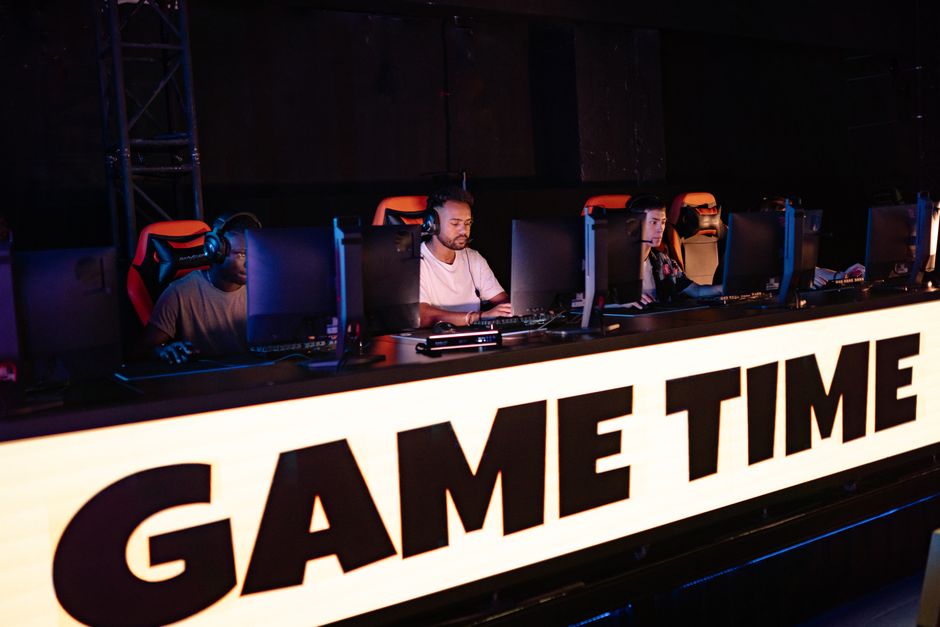
Game three of a best-of-five. You are up 2–0, then you drop two close rounds, someone on comms sighs, and by the next round half the team is playing to prove a point instead of playing the plan. Every player who has been in a scrim or a tournament bracket knows that spiral. Esports mental training means practicing the mental side of play (focus, emotional control, communication, handling a loss) the way you practice aim or game sense. This page is about mental performance. Mental health is a different subject, and it has its own section below.
Quick answer: Mental skills for players are habits you can practice: a short routine before a match, a reset after a lost round, clear and calm talk with teammates, and a plan for losses. The research on esports is young and mostly small surveys or short trials, and no technique guarantees a better result. Burnout, long sleep loss and gaming that crowds out the rest of life are health matters. See a doctor, licensed psychologist or other qualified professional if low mood, anxiety, sleep problems or a loss of control over gaming last more than a couple of weeks or affect school, work or relationships, and call or text 988 in a crisis (US).
Focus and attention control: where your head is during a match
Competitive play asks you to hold attention for a long time while the screen throws constant information at you. A 2026 scoping review of 48 studies in competitive esports (Lachowicz and colleagues, Medical Sciences) mapped how researchers study cognitive overload and related states, and it found they use many different measures (heart rate, eye tracking, sleep data, in-game numbers) that are rarely combined, so there is no single agreed way yet to say when a player is overloaded.
Two habits are common coaching practice, not findings from a specific esports study: pick one job for each round (for example, “hold the timing on the objective”), and use a short cue to bring your attention back when it drifts. The Exercise and Sports Science Australia position statement on performance under pressure (Schweickle and colleagues, Sports Medicine, 2026) lists pre-performance routines, attentional strategies, psychological skills training and mindfulness-based approaches among the strategies with evidence behind them, with suggestions for matching them to the sport. It covers sport in general, not esports in particular.
There is also a link to the physical side. In an 8-week trial of 184 competitive players aged 18 to 25 (Zheng and Zhang, BMC Psychology, 2026), a program that combined aerobic exercise with cognitive self-regulation techniques was linked to greater improvements in reaction time and decision-making on computer tests than a standard training program, with small to moderate effects. Because the two parts were delivered together, the study cannot say which part did the work, and the tests were not match results. More on the exercise side is on our esports training page.
Tilt: staying steady after a bad round
“Tilt” is gaming slang for what happens when frustration or anger starts to drive your decisions. A 2025 interview study (Cregan, Toth and Campbell, Cyberpsychology, Behavior, and Social Networking) asked gamers what tilt means to them. They described it as a mix of negative emotion and behavior that gets in the way of thinking and leads to poor play, and they also described the strategies they use to deal with it. The authors call for tested, tailored programs, which means there is not yet a proven fix.
Here are steps players and coaches often use. They are common practice and have not been tested in esports trials:
- Name it early. Agree as a team on a word for “I’m on tilt” so anyone can say it without an argument.
- Reset between rounds. One slow breath out, shoulders down, hands off the mouse for a second, then say your one job for the next round.
- Breathing is a small bet, not a promise. In a study of 15 professional male players, slow diaphragmatic breathing combined with caffeine improved auditory reaction time and aim-trainer scores compared with caffeine alone (Nutrition Research, 2026). It is a single small study, so treat breathing as something to try in practice first.
- Step away when you need to. If you are too heated to reset, ask for a short break in practice. Long tilt streaks are a good reason to stop for the night.
Handling losses and setbacks
Every player loses, and a loss is information. A simple review habit used in many sports works in esports too: wait until you have eaten, had water and a short walk, then watch the replay and write down one thing to keep, one thing to change and one thing you cannot control. A 2026 survey of 508 male players in Türkiye (Ozdayi and colleagues, Frontiers in Psychology) found that players who had received formal esports training and players with more passion for their game reported stronger team resilience. It is an association, and it does not tell us what training does it.
Team communication
Esports is a team sport played by voice. A 2025 survey of 804 professional players from Türkiye, the USA and South Korea (Kececi and colleagues, Frontiers in Psychology) found that a better relationship between a player and their leader (coach or captain) was linked to better teamwork, partly because players felt more empowered. A survey cannot prove cause. Some habits worth trying in scrims:
- Short, specific calls (“two on the left, rotate now”) during rounds, and longer talk only in the review.
- Praise live, fix later.
- One shot-caller per phase so the team does not hear five plans at once.
- Coaches have pressure too. In interviews with 12 esports coaches (Leis and colleagues, Psychology of Sport and Exercise, 2026), coaches described stress from underperforming players, organizational pressure and social media comments, and said a supportive environment and rest helped them cope.
Tournament pressure
Pressure is not always bad. The ESSA position statement says pressure can both help and hurt performance, and that practicing under pressure in training can prepare athletes for it. For a bracket weekend, that means:
- Practice the stage. Run scrims with something at stake (a forfeit, a score, a coach watching) so the pressure is not new on match day.
- Use the same routine every time. A fixed order (arrive, settings check, warm-up, team huddle, first-round plan) keeps your mind off the scoreboard. Our match day and LAN day page has the food, sleep, caffeine and break side.
- Set goals you control. “Hit my utility timings” is something you can do. “Win the series” is not fully up to you. This is standard goal-setting advice, not a finding from one esports study.
- Try imagery in practice. Picture the first round and your calls before you log in. This is common sport psychology practice; we did not find an esports trial of it.
Burnout, sleep and too much gaming: these are health matters
Mental performance is what you train. Mental health is about how you are doing as a person, and when problems show up they are for a qualified professional, not a coaching tip or an app. These three come up often for players:
- Burnout. A 2026 study of 453 players ranked in the top 40% of their game (Poulus and colleagues, Scandinavian Journal of Psychology) tested a burnout questionnaire with three parts: physical exhaustion, a reduced sense of accomplishment and negative feelings toward the sport. About 2% of the players scored above the study’s provisional high-risk cut-off. Feeling worn out, flat and unmotivated for weeks is a reason to talk to a professional, not to push harder.
- Sleep. In 164 university players (Healthcare, 2026), about half (50.6%) had poor sleep quality, and each hour later in bedtime was linked to higher odds of poor sleep. A 2026 network analysis of 1,025 players (BMC Psychology) suggested that mental fatigue sits close to the sleep and fatigue problems, though the authors call it exploratory. Sleep timing and late-night play are covered in our match day and recovery pages.
- Excessive gaming. The World Health Organization’s ICD-11 defines gaming disorder as impaired control over gaming, gaming taking priority over other activities and interests, and continuing despite negative consequences, usually evident for at least 12 months with significant impairment in daily life. WHO says it affects only a small share of people who game, and asks gamers to watch for time spent to the exclusion of other activities and for changes in health or social life. A 2026 meta-analysis of 53 studies (Tang and colleagues, Sports Medicine – Open) found esports participation was slightly correlated with gaming disorder (r = 0.10). A one-year study of 219 players (Addictive Behaviors, 2026) found players aiming for a pro career did not show higher gaming disorder changes than other players, while negative life consequences and lower life satisfaction were linked to worse trajectories.
The International Olympic Committee’s 2026 consensus statement on mental health in elite athletes says that mental health symptoms and disorders are common among elite athletes, can affect performance, and that with appropriate support and treatment many athletes can continue to train and compete. The statement is about elite athletes in sport in general. Esports-specific health data are still growing, and a 2026 survey of 413 players from 48 countries (Leis and colleagues, Frontiers in Sports and Active Living) found a mixed picture rather than uniformly poor health, with weekly playtime largely unrelated to the health measures.
If you are struggling: talk to a doctor, a licensed psychologist or counselor, or a school or university counseling service. In the US you can call or text 988 (Suicide & Crisis Lifeline, free, confidential, 24/7) any time you are in crisis or worried about someone. Outside the US, call your local emergency number or crisis line. We did not confirm NCAA or esports league mental-health resources, so ask your school or league directly what support they offer.
Youth players and families
We did not find an esports study with age-specific rules for mental skills, so this page gives none. For teen caffeine and energy-drink guidance, see our match day page, and for how organized play works for younger players, our esports youth page. Parents worried about a teen’s exhaustion, withdrawal or inability to cut back should talk to the child’s doctor or a school counselor.
Esports mental training: FAQs
What is tilt in esports?
Tilt is gaming slang for when frustration or anger starts to hurt your play. Gamers interviewed in a 2025 study described it as a mix of negative emotion, behavior and clouded thinking that leads to poor in-game performance. Early signs (rushing, blaming, ignoring the plan) are a good cue to reset.
How do I stop tilting after a lost round?
There is no proven cure, but common habits are a one-breath reset, one clear job for the next round and a team word for “I’m tilting.” Try them in scrims before a tournament. If you cannot calm down, take a short break.
Does sport psychology work for esports?
Esports research on mental skills is still early and mostly surveys and small trials. Sport-wide guidance such as the ESSA 2026 position statement supports routines, attention strategies and psychological skills training for performing under pressure, but nothing guarantees a better result.
Is gaming disorder the same as playing a lot?
No. WHO describes gaming disorder as impaired control, gaming taking priority over other interests and continued play despite negative consequences, usually over at least 12 months and with significant harm to daily life. Many players who train for hours a day do not meet that description, but anyone worried about their own gaming can talk to a doctor.
When is burnout more than being tired?
If exhaustion, feeling that nothing you do counts and a loss of interest in the game last for weeks and do not improve with rest, see a doctor or licensed psychologist. Burnout is a health matter, not a mindset problem.
Can mental training replace sleep and exercise?
No. Studies in esports link later bedtimes with poorer sleep quality, and exercise with better reaction time, so mental skills work best next to sleep and movement, not in place of them.
Sources
- Cregan SC, Toth AJ, Campbell MJ. The Psychology of Tilt: Understanding Tilt and Coping Strategies in Video Games. Cyberpsychology, Behavior, and Social Networking, 2025. PMID 40279257
- Schweickle MJ et al. Performance Under Pressure in Sport: ESSA position statement. Sports Medicine, 2026. PMID 42271117
- Lachowicz M et al. Cognitive Overload and Related States in Competitive Esports: a scoping review. Medical Sciences (Basel), 2026. PMID 42506364
- Zheng W, Zhang H. Psycho-physical training in esports, reaction time and decision-making (randomised trial). BMC Psychology, 2026. PMID 42071222
- Ozdayi N et al. Passion and resilience in esports. Frontiers in Psychology, 2026. PMID 42183569
- Kececi O et al. Leader-member exchange, psychological empowerment and teamwork in esports teams. Frontiers in Psychology, 2025. PMID 41307013
- Leis O et al. Stressors and coping among esports coaches. Psychology of Sport and Exercise, 2026. PMID 41577061
- Caffeine with L-theanine or diaphragmatic breathing in professional male esports players. Nutrition Research, 2026. PMID 42176572
- Poulus DR et al. Burnout in Esports: the Athlete Burnout Scale. Scandinavian Journal of Psychology, 2026. PMID 41165050
- Yuksel A et al. Late Bedtime and Poor Sleep Quality Among University Esports Players. Healthcare (Basel), 2026. PMID 42793641
- Van Ruysevelt L et al. Mapping mental health complexity in esports. BMC Psychology, 2026. PMID 42897689
- Tang D et al. Association Between Esports Participation and Health: systematic review and meta-analysis. Sports Medicine – Open, 2026. PMID 42525214
- Laberge F et al. Determinants of gaming disorder among aspiring professional esports players. Addictive Behaviors, 2026. PMID 41865463
- Leis O et al. Health and health-related behaviors in esports players. Frontiers in Sports and Active Living, 2026. PMID 42483570
- Reardon CL et al. Mental health in elite athletes: IOC consensus statement (2026). British Journal of Sports Medicine. PMID 42580854
- World Health Organization. Gaming disorder (ICD-11 FAQ)
- 988 Suicide & Crisis Lifeline
General information for education only, not medical advice. It does not replace a doctor, psychologist or other qualified professional. See how we work in our editorial policy. Back to the esports hub.