This article contains affiliate links: if you buy through them we may earn a commission, at no extra cost to you. Read our affiliate disclosure.
Thursday night at a club in Minnesota: the hum of the ice plant, the pebbled ice, a skip crouched in the house calling “Hurry! Hard!” as two sweepers chase a 40-pound granite stone down the sheet. It stops on the button, and an hour later everyone shares a drink in the warm room, winners buying the first round. In February 2026, the same game played under the Dolomites at the Milan Cortina Olympics, where Cory Thiesse and Korey Dropkin won mixed doubles silver and Thiesse became the first American woman with an Olympic curling medal. Curling is a sport you can learn in one evening and spend a lifetime trying to master.
What are the most common curling injuries? Curling has a low injury rate, about 0.17 per 1,000 sessions in a Canadian emergency department study, but over 90% of the injuries came from a fall and 31.7% were head impacts. In that study, 41.3% of injured curlers who answered a survey blamed their fall on not having proper footwear. The three habits that help most are keeping a gripper over the slider whenever you walk or sweep, wearing head protection when learning, and knowing the signs of concussion. Read the full curling injuries page.
Curling for beginners, curlers and parents: what do you need?
New to curling? Start with the first card, then the youth guide. Everything below is general education, not medical advice.
More curling guides
Buying guide · Our Curling buying guide compares the gear we'd pick, with prices and sizing:
This page is curling for beginners and for everyone who already has the bug: how the game works, what it looks like from a first Learn to Curl to the Olympics and Paralympics, and how to stay healthy on the ice. Curling is gentle on the body compared with most sports, but it is played on ice, and falls are the main way curlers get hurt. We keep the health part honest and short, then cover training, recovery and the gear that matters.
History & Origins of Curling
Curling is a stone-sliding game with roots in late-medieval Scotland, and its exact birthplace is disputed. The oldest written evidence is a 1540 record by a notary in Paisley, Scotland, of a challenge between a monk of Paisley Abbey and a representative of the abbot. Paintings by the Flemish artist Pieter Bruegel from the 16th century show people playing a similar game on frozen ponds, which is why some historians point to the Low Countries as well (World Curling).
The sport became organised in the 19th century. In 1838 the Grand Caledonian Curling Club formed in Edinburgh and adopted the first formal rules; Queen Victoria’s permission made it the Royal Caledonian Curling Club in 1843. Curling was part of the first Winter Olympics in Chamonix in 1924, with Great Britain winning, and a Scotland-versus-Canada series called the Scotch Cup, started in 1959, grew into the world championship. The international federation took shape in 1966, curling became an official Olympic medal sport in 1992 (first played in that form at Nagano 1998), and wheelchair curling and mixed doubles followed. We list documented milestones only, and we treat every older “first game” story as unproven.
- 1540: Earliest known written record of curling, from Paisley, Scotland.
- 1838 and 1843: First formal rules adopted in Edinburgh; the club becomes the Royal Caledonian Curling Club.
- 1924: Curling appears at the first Winter Olympics, Chamonix; Great Britain wins (the IOC recognised it later, in 2006).
- 1959: The Scotch Cup series between Scotland and Canada begins.
- 1966: The international curling federation is established (now World Curling).
- 1992 and 1998: Men’s and women’s curling gain official Olympic medal status; Nagano 1998 hosts the first Games with it.
- 2002 and 2006: Wheelchair curling gains Paralympic status (2002) and debuts at Torino 2006.
- 2008: First World Mixed Doubles Championship, in Vierumäki, Finland.
- 2018: Mixed doubles joins the Olympic program at PyeongChang.
Legends of the Sport
Athletes from different eras, not ranked. Curling teams win together, so each entry names the skip or the team.
- Rhona Martin (Great Britain): skipped Britain’s women to Olympic gold at Salt Lake City 2002, the nation’s last curling gold until 2022 (Reuters).
- Anette Norberg (Sweden): skipped Sweden’s women to Olympic gold at Torino 2006 and again at Vancouver 2010 (Olympics.com).
- Niklas Edin (Sweden): eight world titles as skip through 2026, and Olympic gold at Beijing 2022 after fourth place in 2010, bronze in 2014 and silver in 2018.
- Eve Muirhead (Great Britain): skipped Great Britain’s women to Olympic gold at Beijing 2022, her fourth Games.
- John Shuster (USA): skipped the team that won the first US Olympic curling gold at PyeongChang 2018.
- Silvana Tirinzoni (Switzerland): four-time world champion and Olympic silver medallist at Milan Cortina 2026.
- Rachel Homan (Canada): three-time world champion, most recently in 2024 and 2025.
- Bruce Mouat (Scotland and Great Britain): world champion in 2023 and 2025, and Olympic silver medallist in 2022 and 2026.
- Mark Ideson (Canada): wheelchair curling skip who won Paralympic gold in 2014 and, as skip, again in 2026.
Official results and records
We only list champions and records here after checking them on the official source. For the latest results, go to:
- World Curling 2026 men’s report
- Grand Slam of Curling
- Olympic men’s final 2026
- Olympedia Beijing 2022 curling
- Paralympic.org
- mixed doubles report
- Olympics.com 2023 women’s worlds
- Canadian Paralympic Committee
How we keep this current: we re-check facts after each major championship and update this page. Spot an error? See our editorial policy.
Curling at a glance
| Players | Four per team: lead, second, vice-skip and skip. Each delivers two stones per end, alternating with an opponent. Mixed doubles: two players, one man and one woman. |
|---|---|
| Game length | Ends instead of innings: 10 ends in men’s and women’s championships, 8 in mixed, mixed doubles and wheelchair events. Most club league games are 8 ends and take about 2 hours. |
| The sheet | 150 feet long and up to 15 feet 7 inches wide. The target, the “house,” is four rings around the tee; the outer ring is 12 feet across. |
| The stone | Granite, 38 to 44 pounds including the handle, no more than 36 inches around. Each team has eight. |
| Governing bodies | World Curling worldwide; USA Curling in the US (founded 1958, nearly 200 member clubs), the governing body for Olympic curling and Paralympic wheelchair curling. |
| Most common injuries | Falls on the ice, including head impacts; knee, back and shoulder pain from delivering and sweeping. |
How curling works
Two teams take turns sliding stones from one end of the sheet toward the house at the other. A player pushes off from a foothold called the hack, slides out in a low lunge and must let go of the stone before it reaches the near hog line. The stone has to travel past the far hog line to stay in play. A small twist of the handle at release makes it rotate, and the rotation makes it drift, or “curl,” to one side; clockwise curls right, counterclockwise curls left. That is where the name comes from.
Two teammates sweep in front of the moving stone. USA Curling explains that sweeping helps a stone travel farther and usually makes it curl less, so the skip, standing in the house, reads the shot and calls the sweepers on or off. Once all 16 stones of an end are thrown, only one team scores: one point for each of its stones in or touching the house that is closer to the center than any of the other team’s stones.
Throwing the last stone of an end, called the hammer, is a big advantage. After the first end, the team that scores gives up the hammer, so the team that didn’t score throws last in the next end; if nobody scores (a “blank” end), the hammer stays put. A free guard zone rule protects stones sitting in front of the house: until the sixth stone of an end, you can’t knock an opponent’s guard out of play. And the whole game runs on the Spirit of Curling: in World Curling’s words, curlers “would prefer to lose rather than to win unfairly,” and they call their own fouls. The details are on our curling rules page.
Curling at every level
Learn to Curl and kids
Almost everyone starts at a Learn to Curl or Try Curling session at a local club. USA Curling says a session teaches you enough to play a short game, and clubs usually lend the special equipment: brooms, sliders, grippers and a stabilizer for balance. Wear warm, stretchy layers and skip the jeans. Kids can start young at many clubs; the Granite Curling Club of Seattle, for example, runs a junior program for ages 7 to 18 and requires helmets for curlers 13 and under. More in our youth curling guide.
Juniors and college
USA Curling runs a National Junior Development Program for curlers aged 12 to 21, plus national championships for under-18 and under-21 teams; the U21 winners represent the US at the World Junior Championships. In college, curling is a club sport run with College Curling USA: teams play for their schools at regional bonspiels, and 16 qualified for the 2026 College National Championship in Schenectady, New York, won by the University of Wisconsin-Madison.
Adult club curling
This is the heart of the sport. You join a club, sign up for a weekly league and, when you’re hooked, travel to bonspiels: weekend tournaments where USA Curling says most teams are guaranteed three or four games. Many games end with “broomstacking,” both teams sitting down together afterward. A study of 110 recreational curlers in North Carolina (average age 50) found that a 90 to 120 minute game included about 36 minutes of moderate-to-vigorous activity and nearly 3,000 steps, so curling counts as real exercise, especially for leads, seconds and vice-skips.
Elite, pro and international
USA Curling holds more than a dozen national championships a year, from men’s, women’s and mixed doubles to events for curlers with five or fewer years of experience. The top teams chase the Grand Slam of Curling, an elite series of men’s and women’s events with equal purses since 2015; its 2026-27 season is five events in Canada from October to December. The Rock League, a new pro league with six franchises, played its first season in Toronto in April 2026. World Curling, which began in 1966 when six countries including the United States formed an international committee, runs the world championships.
Olympics and Paralympics
Curling was a medal sport at the first Winter Games in Chamonix in 1924 and returned for good at Nagano 1998; mixed doubles joined in 2018, when John Shuster’s team won the first US Olympic curling gold. At Milan Cortina 2026, the US women finished fourth and the mixed doubles pair took silver. Wheelchair curling has been a Paralympic sport since Torino 2006, with no sweeping and mixed-gender teams; Milan Cortina 2026 added wheelchair mixed doubles, where the US pair lost the bronze-medal game to Latvia 11-10 in an extra end. See curling leagues and associations for the full picture.
Sports health for curlers
Curling has a low injury rate, but the injuries it does have are worth taking seriously. This section is general information, not medical advice; if you’re hurt, see a sports medicine doctor, physical therapist or athletic trainer.
Falls and head injuries
A Canadian study of curling injuries seen in emergency departments found that over 90% came from a fall and 31.7% were head impacts. The rate was low, about 0.17 per 1,000 curling sessions, but a backward fall onto ice is a real risk at any age. In the same study, 41.3% of injured curlers who answered a survey blamed their fall on not having proper footwear. Three habits help most:
- Grip before you walk. The slider is made to slide. Keep a gripper over it (or step off a step-on slider) whenever you’re walking or sweeping, and wear clean, flat-soled shoes if you don’t have curling shoes.
- Wear head protection when learning. Curling Canada strongly suggests helmets for all curlers under 12 and urges clubs to bring in helmet programs for beginners. Many US clubs require them for kids; for adults, ask your club and decide for yourself. Curling helmets and protective headbands are made for exactly this.
- Know concussion signs. The CDC’s HEADS UP program lists headache, dizziness, confusion, balance problems and feeling slowed down. Anyone who hits their head should stop for the day and see a healthcare provider before returning; call 911 for danger signs such as repeated vomiting, a seizure, or one pupil larger than the other.
Knees, back and shoulders
In a survey of 76 competitive US curlers, 79% reported curling-related aches or pain, most often in the knee (54%), back (33%) and shoulder (20%), and sweeping and delivering were the most likely to bring it on. Injuries that cost playing time were uncommon, about 2 per 1,000 sessions. The delivery puts the tuck knee deep into flexion: a small lab study found the knee joint force was more than double when sliding on the toe than on a flat foot, so if your knee complains, ask a coach to look at your slide. Stabilizers and delivery sticks take the strain off for anyone who needs them. Pain that doesn’t settle, swelling or a knee that gives way needs a professional, not more ends.
Cold rinks
Curling ice is kept cold, and you stand still between shots. Dress in layers you can move in, wear gloves rather than mittens, and keep a hat or protective headband for warmth. You will warm up quickly once you start sweeping.
Training and conditioning for curling
Most curlers get better by throwing stones: practice ice, clinics and adult curling camps, which USA Curling describes as weekend clinics with experienced coaches. Off the ice, the delivery rewards hip and ankle mobility, leg strength for the lunge and balance on one foot, and sweeping rewards a strong core, shoulders and some cardio. A short warm-up before you step on the ice (easy lunges, hip openers, arm circles) is a sensible habit for any age. Competitive teams add structured strength and sweeping fitness work. The mental game matters as much as anything: one bad shot can’t follow you to the next. Our curling training page goes deeper.
For bonspiel weekends, plan your meals around the draw times, carry water and snacks, and keep moving between games; see game day and bonspiel day.
Recovery after curling
Sleep comes first: the CDC, citing the American Academy of Sleep Medicine, recommends 9 to 12 hours for children 6 to 12, 8 to 10 for teens and at least 7 for adults. After a long day of sweeping, many curlers stretch their hips and back, roll tight quads and calves with a foam roller or massage gun, and swap curling shoes for soft recovery shoes. Those tools are about comfort, not treatment. Our curling recovery page and recovery tools guide have more.
Gear for curling
- Shoes, sliders and grippers: curling shoes have a slider on the sliding foot (the left for right-handed curlers) and a gripper on the other. Beginners can use clean, flat sneakers with a step-on slider and a slip-on gripper.
- Broom: a modern brush with a synthetic pad, used for sweeping and for balance in the delivery. Clubs lend them; entry-level brooms start.
- Stabilizer or delivery stick: a stabilizer gives you a stable platform in the slide; a delivery stick lets you throw standing up.
- Head protection: a curling helmet, a certified ski, hockey or bike helmet for kids, or protective headgear such as a toque with a built-in plate.
Three picks to start: Asham Club Ultra Lite curling shoes, whose slider and gripper disks go on either foot (at Broomfitters); the BalancePlus Curling Helmet, made for backward falls and certified to EN 1077 (about C at the maker); and the OOFOS OOahh Slide from our recovery shoes guide for after the game. Everything else is on our curling gear page.
Asham Club Ultra Lite Curling Shoe
- 3/32 in Teflon slider disks
- Gripper disks + slip-on gripper
BalancePlus Curling Helmet
- Made for backward falls
- Dial fit, chin strap
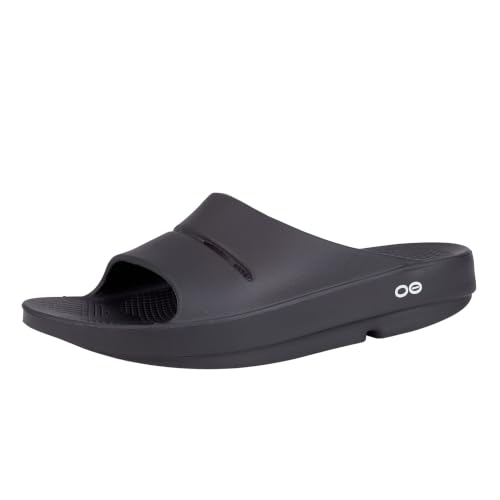
OOFOS OOahh Slide
- OOfoam slide
- APMA Seal of Acceptance
- Machine washable
Curling FAQs
How do I start curling?
Find a club near you with USA Curling’s club map and sign up for a Learn to Curl or Try Curling session. The club lends the equipment; you bring warm, stretchy clothes and clean flat-soled shoes. Afterward, most clubs offer a beginner league, lessons or a chance to “spare” for teams that need a player.
How long is a curling game?
Most club league games are 8 ends and take about 2 hours; some leagues play 6 ends in 90 minutes. Championship men’s and women’s games are 10 ends, with 38 minutes of thinking time per team.
Is curling good exercise?
Yes. In a study of recreational curlers, a typical game included about 36 minutes of moderate-to-vigorous activity, close to a quarter of the CDC’s weekly 150 minutes, plus nearly 3,000 steps. Sweepers worked hardest; skips the least.
Do curlers need helmets?
Most curling injuries come from falls, and about a third of those in one study were head impacts. Curling Canada strongly suggests helmets for everyone under 12 and for beginner programs, and many US clubs require them for kids. Adults decide for themselves; curling-specific helmets and headbands make it easy.
How much does curling cost?
It depends on the club. USA Curling says some clubs charge under $100 a year in dues with league fees on top, while others charge more than $1,000 with unlimited leagues included. Clubs lend equipment to beginners, so you can wait before buying shoes and a broom.
Can people in wheelchairs curl?
Yes. Wheelchair curling is played from a stationary chair, by hand or with a delivery stick, with no sweeping, and it has been in the Paralympics since 2006. Many clubs also allow stick delivery for standing curlers who can’t slide.
Curling rewards patience, good footing and good company. Keep exploring: the rules, curling injuries, curling gear, our recovery tools guide, the figure skating guide for another sport on the ice, and every other sport on our sports hub.