This article contains affiliate links: if you buy through them we may earn a commission, at no extra cost to you. Learn more.
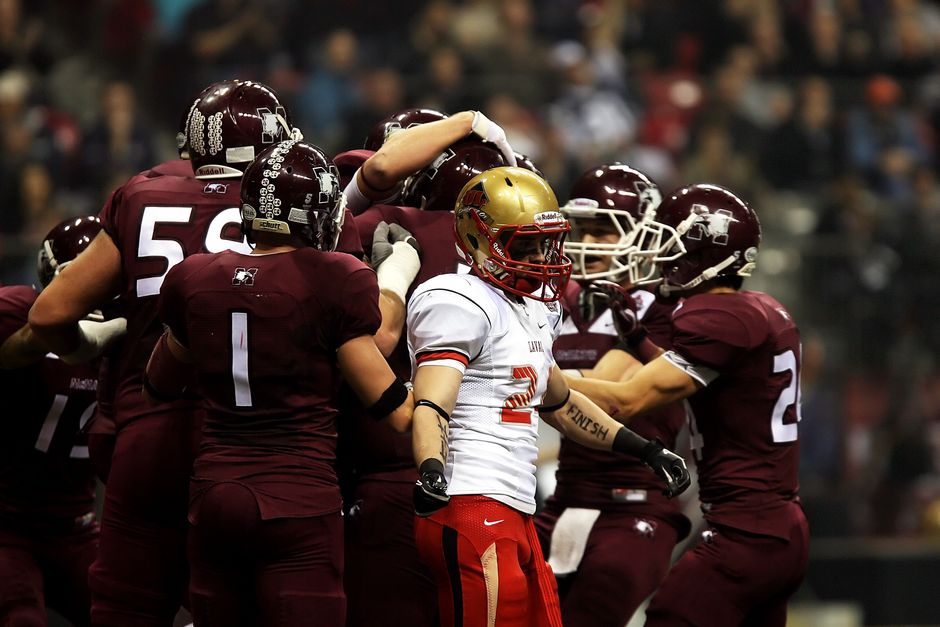
A Friday night in September: the lights come on, the band starts up and half the town fills the bleachers. A Saturday-morning flag game where the seven-year-olds pull more flags off their own teammates than off the other team. A packed college stadium on a fall afternoon, and a Sunday when the whole country seems to stop for the NFL. Football is the biggest sport in American high schools: 1,029,588 boys played 11-player football in 2024-25, according to the National Federation of State High School Associations (NFHS), and girls flag football grew 60% in a single year.
Football, page by page
- Rules: how the game works at every level
- Leagues & associations: pro, college, high school and youth
- Youth & high school: ages, safety and recruiting, for players and parents
- Injuries & sports health: prevention, concussion, when to see a pro
- Training & conditioning: before: off-season to in-season
- Game day: during: fueling, hydration, heat
- Recovery: after: games, tournaments, sleep
- Nutrition & supplements: what to eat, tested supplements
- Best wearables: trackers and watches for the sport
- Gear: the complete equipment list
Buying guide · Our Football buying guide compares the gear we'd pick, with prices and sizing:
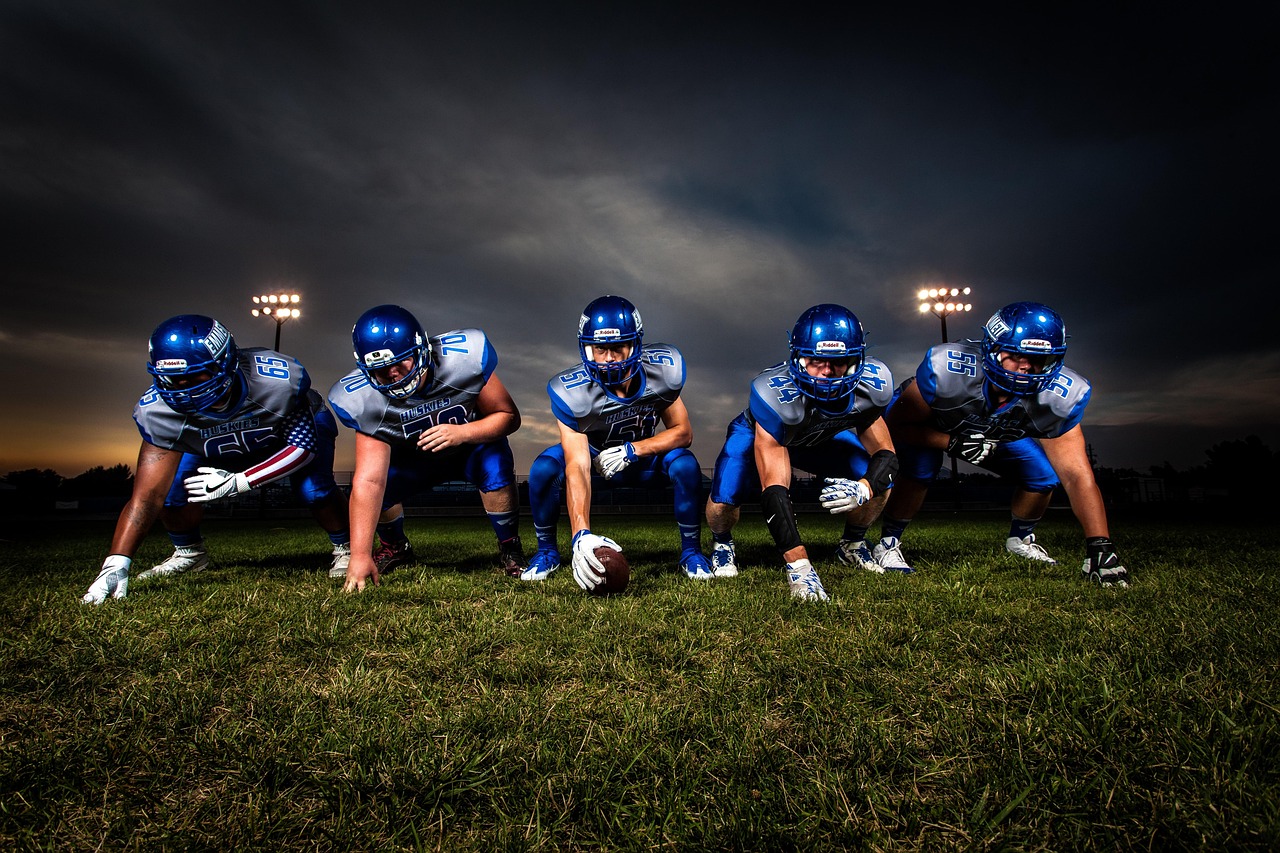
This page is American football for the people who play it and the people who look after them: how the game works, what it looks like at every level from flag football to the pros, and, most of all, how to stay healthy playing it. Sports health is the heart of it: the most common football injuries, concussion, heat, the practice rules that limit contact, and when to see a professional. Then training, recovery and the gear you really need.
Football at a glance
| Players per side | 11 in tackle football. Flag football is usually 5v5 (NFL FLAG and the LA 2028 Olympics). Some small schools play 6-, 8- or 9-player football. |
|---|---|
| Game length | NFL and college: four 15-minute quarters. High school (NFHS): four 12-minute quarters. Youth and flag games are shorter. |
| Field | 100 yards between the goal lines plus two 10-yard end zones, 53⅓ yards (160 feet) wide. NFL FLAG plays on 70 × 30 yards. |
| Governing bodies | NFL (pro), NCAA, NAIA and NJCAA (college), NFHS and state associations (high school), USA Football (national governing body), IFAF (international). |
| Main physical demands | Short, explosive plays with rest between them: sprints, cuts, jumps and collisions, plus long practices in late-summer heat. |
| Most common injuries | Ligament sprains (ankle, knee), concussions, fractures, muscle strains and shoulder injuries. Heat illness is a real risk in preseason. |
How football works
The offense has four downs (tries) to move the ball 10 yards. Make it, and you get a fresh set of downs; fall short, and the ball usually goes to the other team, which is why teams often punt on fourth down. A touchdown is worth 6 points, and the scoring team then tries for 1 more point with a kick or 2 with a run or pass. A field goal is 3 points and a safety, tackling the ball carrier in his own end zone, is 2.
Each play starts with a snap from the line of scrimmage and ends when the ball carrier is down, goes out of bounds or a pass falls incomplete. The rules change in real ways from level to level. An NFL receiver needs two feet in bounds for a catch, while college and high school need one. Overtime works three different ways, and the hash marks sit in three different places. Our football rules page explains it all, along with every position on the field.
Football at every level
Kids and youth
Most kids start with flag football. NFL FLAG says it serves more than 830,000 youth athletes aged 4 to 17 in 2,000+ leagues across all 50 states, playing 5v5 with no tackling, blocking or diving. Youth tackle football runs through organizations like Pop Warner and many local leagues. USA Football’s development model adds a step in between, Rookie Tackle: 6 to 8 players a side on a smaller field, with no three-point stance and no special teams. Our youth football page covers ages, flag versus tackle, contact limits and parents’ questions.
High school
High school football runs on NFHS rules, with each state association running its own season and playoffs. In 2024-25, 14,269 schools sponsored 11-player football. Girls flag football is the fastest-growing new sport for girls: 68,847 played in 2024-25, and the NFHS published its first national flag football rules book for the 2025-26 season.
College
As of the 2026 season, the NCAA has 138 teams in the Football Bowl Subdivision (FBS), 128 in the Football Championship Subdivision (FCS), 160 in Division II and 244 in Division III. FBS crowns its champion through the 12-team College Football Playoff. The NAIA has 96 football teams, and two-year colleges play in the NJCAA and other junior-college leagues. Women’s flag football is growing on campus too: the NAIA already sponsors it, and in January 2026 all three NCAA divisions added it to the Emerging Sports for Women program. See football leagues and associations for the full map.
Pro, international and the Olympics
The NFL has 32 teams playing a 17-game regular season; Super Bowl LXI is set for February 14, 2027, at SoFi Stadium near Los Angeles. The Canadian Football League (nine teams, 12 players a side, three downs) and the spring United Football League (eight teams in 2026) give players more pro options. Internationally, the International Federation of American Football (IFAF) governs the game, and flag football makes its Olympic debut at Los Angeles 2028: six men’s and six women’s teams of 10 players, playing 5v5. NFL clubs voted in 2025 to let NFL players take part.
Adult and recreational
For most adults, football means flag: city rec leagues, coed leagues, company teams and Thanksgiving-morning pickup games. It’s fast and fun, but it still involves sprinting, cutting and the odd collision. If you’re coming back after years away, ease in: build your running and leg strength for a few weeks before the first game rather than going all out on day one.
Sports health for football players
Football is a collision sport, and injuries come with it. The American Academy of Orthopaedic Surgeons (AAOS) notes that almost 300,000 people were treated in US emergency rooms for football injuries in 2018 and calls football the leading cause of school sports injuries. Good coaching, contact limits, proper equipment and smart heat rules lower the risk. This section is general information, not medical advice. If you’re hurt, see a professional.
The most common football injuries
- Sprains: in a national study of US high school boys’ contact and collision sports, ligament sprains that didn’t need surgery were the most common diagnosis. Ankles and knees take most of them.
- Concussions: the same study found football players had a higher concussion risk than athletes in the other contact sports studied. A separate study of 20 high school sports found football had the highest concussion rate, 10.40 per 10,000 athlete-exposures.
- Severe injuries: football had the highest rate of severe injuries in that study. Across the sports studied, the knee accounted for about a quarter of severe injuries, and fractures were the most common severe diagnosis.
- Games versus practice: across those sports, the risk of getting hurt was about four times higher in competition than in practice.
- Heat illness: of 67 exertional heat stroke deaths in US secondary school sports from 1982 to 2022, 63 (94%) were in football, and they peaked in August.
Our football injuries page goes deeper, including knee and ankle injuries and how players come back from them. For support during return to play, see our guides to knee sleeves and ankle braces for athletes, and ask your physical therapist or athletic trainer which one fits your situation.
Contact limits: less hitting in practice
Much of the head contact in football happens in practice, so every level now limits it. For youth tackle football, USA Football recommends no more than 30 minutes of full contact on any day, 75 minutes a week in preseason and 60 minutes a week in season, with no full-contact practices on back-to-back days. Pop Warner limits contact to 25% of practice time. In high school, an NFHS task force recommended in 2014 that full contact be limited to two or three practices and 60 to 90 minutes a week, and most state associations adopted limits. NFHS rules also require a tooth and mouth protector for every player.
Concussion: recognize and remove
The CDC’s HEADS UP program asks coaches and parents to watch for a player who looks dazed or confused or is suddenly slow to react, and to listen for headache, dizziness or balance problems, sensitivity to light or noise, feeling slowed down, trouble concentrating, irritability or sleep changes.
- Remove the player from play right away if you see signs after a hit to the head or body.
- Keep them out for the rest of that day and until a health care provider clears them. Don’t try to judge how serious it is yourself.
- Return slowly: going back to sport happens in steps and usually takes a week or more.
- Call 911 for danger signs: seizures, passing out or growing drowsiness, a headache that gets worse and won’t go away, or one pupil larger than the other.
Since Washington’s Zackery Lystedt Law in 2009, every state has passed a youth concussion law built on the same three ideas: education, removal from play and clearance by a health care professional before returning. NFHS rules say the same for high school games.
Heat: the first two weeks matter most
Most heat deaths happen in the first days of preseason, when players do too much, too soon, in full gear. The National Athletic Trainers’ Association (NATA) recommends a 14-day heat-acclimatization period for high schools: one practice a day for the first five days, helmets only on days 1-2, helmets and shoulder pads on days 3-5, and full pads and full contact no earlier than day 6. AAOS suggests about 24 ounces of non-caffeinated fluid two hours before exercise, 8 ounces right before and a cup of water about every 20 minutes during. Call 911 for confusion, collapse, a racing pulse or seizures; for exertional heat stroke, NATA recommends rapid cold-water immersion on site by trained staff.
When to see a doctor, physical therapist or athletic trainer
Don’t play through pain. See a professional for pain that doesn’t settle, swelling, a knee that “pops” or gives way, a joint you can’t put weight on or that looks out of shape, or any concussion signs. A sports medicine physician manages most sports injuries without surgery and refers you on when needed. A physical therapist guides rehab and the return to play. Athletic trainers are licensed or regulated health care professionals in all 50 states; the American Academy of Pediatrics recommends having them on the sidelines in youth football, and if your school has one, start there.
Training and conditioning for football
Off-season and preseason: AAOS recommends staying fit in the off-season with aerobic work, strength training and flexibility, and getting a preseason physical. Football fitness is short bursts with rest between plays, so mix strength work with sprints, agility and change of direction (see our speed training equipment guide). Build up gradually so your body is ready before the heat and the pads arrive.
In season: keep some strength work, respect the contact limits and watch total load, especially for players on two teams. Many teams and athletes now track sprint loads with GPS (see our GPS trackers for team sports) and recovery with heart-rate variability (HRV for athletes). The mental side matters too: mental training tools for athletes. Our football training page has more.
Game day: the sports-nutrition position statement from the American College of Sports Medicine and two dietitians’ groups recommends a pre-exercise meal high in carbohydrate, moderate in protein and low in fat and fiber, made of familiar foods and eaten roughly 1-4 hours before. Arrive with fluids on board and drink at every break; on hot days many players add electrolytes (see our electrolyte powder guide). More on the football game-day page.
Recovery after football games
Recovery starts with sleep: the CDC, citing the American Academy of Sleep Medicine, recommends 8-10 hours a night for teens and 7 or more for adults. Then real food and fluids after the game; many players reach for a protein shake when a meal is hours away (see our protein powder guide), and the football nutrition and supplements page covers what’s worth it. For a personal plan, the same position statement recommends a registered dietitian.
Simple tools help many players feel better during the week: a foam roller or massage gun for sore legs and shoulders, compression boots after a hard game, and soft recovery shoes once the cleats come off. They’re about comfort, not treatment; pain or swelling that doesn’t go away needs a professional. See football recovery and our recovery tools guide.
Gear for football
- Tackle: AAOS lists a helmet, shoulder pads, hip and knee pads, thigh guards, a mouth guard (with a keeper strap), an athletic supporter and proper footwear. Helmets must fit well and meet the NOCSAE standard; have a coach or equipment manager check the fit.
- Flag: NFL FLAG players wear only a mouthguard for protection, plus a flag belt, shorts and cleats without metal spikes.
- Ball size: makers sell junior balls for roughly ages 9-12 and official size for high school and up; younger kids use smaller youth balls.
Four simple picks: the Wilson NFL Super Grip in junior size (Wilson says ages 9-12) for backyard and flag games; the Shock Doctor Gel Max mouth guard, made in youth and adult sizes with a detachable helmet strap; the Franklin Sports 10-player flag football set for a 5v5 game; and the OOFOS OOahh Slide from our recovery shoes guide for after the game. More on our football gear page. Prices change often. These are what we saw at a major retailer in October 2026.
Wilson NFL Super Grip Football (Junior)
- Junior size, ages 9-12 (maker)
- Composite cover
- About $19
Shock Doctor Gel Max Mouth Guard
- Youth and adult sizes
- Gel-fit liner
- Detachable helmet strap
Franklin Sports Flag Football Set (10 Player)
- 10 belts, up to 46 in waist
- 4 cones + field marker
- About $25
OOFOS OOahh Slide
- OOfoam slide
- APMA Seal of Acceptance
- Machine washable
For more, browse Recovery & Regeneration and Training & Performance, or see the watches and trackers on best wearables for football.
Football FAQs
What age can kids start playing football?
Flag football starts young: NFL FLAG leagues take kids from age 4. USA Football’s youth tackle guidelines cover players about 6 to 14, but there’s no single national starting age for tackle. A CDC study of 6- to 14-year-olds found tackle players took about 15 times more head impacts than flag players, so many families start with flag.
How long is a football game?
Sixty minutes of game clock in the NFL and college (four 15-minute quarters) and 48 minutes in high school (four 12-minute quarters). The clock stops often, so real time is much longer. Flag games are shorter; NFL FLAG plays two halves of 15 to 25 minutes.
What is the most common injury in football?
In a national study of high school boys’ contact sports, ligament sprains that didn’t need surgery were the most common diagnosis, and football had the highest overall injury rate and a higher concussion risk than the other sports studied. Any concussion sign means sitting out until a health care provider clears the player.
Is flag football safer than tackle football?
For head impacts, the research says yes. CDC researchers found youth flag players had a median of 8 head impacts in a season against 378 for tackle players. Flag still has sprains and collisions, so warm-ups, mouthguards and good coaching matter there too.
Is flag football an Olympic sport?
Yes, from Los Angeles 2028. The tournament has six men’s and six women’s teams of 10 players, playing 5v5 on a 50-yard field, and NFL players are allowed to try out for their national teams.
How can football players stay safe in the heat?
Ease into it over two weeks, with less gear and shorter practices at first, drink before and during practice, and take breaks in the shade. Know the warning signs, like confusion, collapse or a racing pulse, and call 911 if you see them. An athletic trainer on site is the best safeguard.
Football asks a lot of the body, and the players who last are the ones who learn good technique, respect the heat, report their symptoms and recover well. Keep exploring: football rules, leagues and associations, youth football, our soccer section and the other sports on our sports hub.