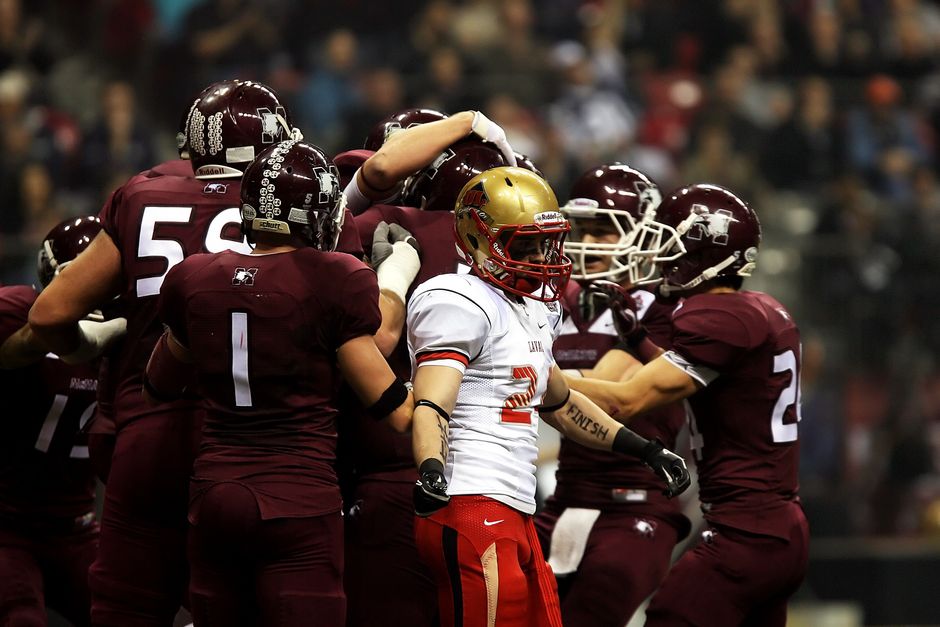
Fourth quarter, down by four, third-and-long, and the crowd is loud enough that the play call is hard to hear. Nothing about the weights you lifted in July changes in that moment. What changes is what you do with your attention. Mental training in football means practicing mental skills, such as focus, routines, imagery and self-talk, the same way you practice a route or a block, so they are there when the game gets loud.
Quick answer: Mental skills for football are learnable habits: a short routine before each snap, a simple focus cue, goals you control, and practice at staying steady when things go wrong. Research on sport psychology programs generally finds moderate benefits, but no technique guarantees a result. Feeling constant dread, low mood, or trouble eating or sleeping is a health issue, not a skills problem. See a doctor, counselor or your athletic trainer, and in the US call or text 988 if you are in crisis.
What mental skills training is, and what it is not
The Association for Applied Sport Psychology (AASP) describes performance work in sport psychology as building skills such as goal setting, concentration, motivation, relaxation and imagery. Many people who teach these skills hold the Certified Mental Performance Consultant (CMPC) credential from AASP. That is a different job from a licensed psychologist or physician who diagnoses and treats mental health conditions. Both matter in football. This page is about the first one, with a clear section near the end on the second.
How strong is the evidence? A 2017 meta-analysis in Sports Medicine by Brown and Fletcher pooled randomized trials of psychological and psychosocial interventions across sports and found a moderate positive effect on performance, with larger effects for psychosocial (team and social) approaches than for purely psychological ones. These were mixed sports and small studies, so treat that as encouraging, not as a promise. For football specifically, the research is thin, and this page only states what we could source.
Focus: one play at a time
Football is built from short plays separated by pauses, which suits a “next play” mindset: finish the rep, let it go, reset for the next. A simple focus cue, one word tied to your job on this snap (a technique point, a read, an assignment), gives your attention somewhere to land. Sport psychology sources describe two kinds of self-talk, instructional (about technique) and motivational (about confidence), and generally favor positive over negative wording. We did not find football-specific trials of any particular cue, so try a few in practice and keep what works for you.
Confidence, motivation and goal setting
Goal setting is one of the core skills AASP lists. Practitioners often separate outcome goals (win the game), performance goals (complete 65% of your passes) and process goals (check your feet and eyes on every drop). In a sport where a block, a penalty or a bounce can swing the scoreboard, process goals are the ones you fully control. Write two or three for each week of practice, check them after film or practice, and keep them small enough to repeat.
Imagery and visualization
Imagery means mentally rehearsing a situation using several senses: the huddle, the sound of the snap count, the feel of the first step. AASP lists it among core performance skills. It fits football well because plays are scripted and repeatable. A player might spend a few quiet minutes the night before picturing the first series, including a mistake and a calm response to it. It adds to physical practice and does not replace it.
Pre-snap and pre-game routines
A routine is a short, repeatable sequence: a breath, a cue word, eyes up. A 2026 study in Frontiers in Sports and Active Living followed 34 amateur American football players aged 16 to 18 through a season. They practiced slow-paced breathing and power posing before games for nine weeks. After the third week, one dimension of pre-competition anxiety dropped and self-confidence rose. It was a small study with a single group and no comparison group, so we cannot say the routine caused the change. It does show that a simple breathing routine is practical on a high school sideline.
For the physical side of game day, meals, hydration and halftime, see our football game day page.
Handling pressure
Sport psychology sources describe relaxation skills as a way to keep arousal from interfering with performance, and note that the goal is not to eliminate nerves, since some nervousness is normal. In practice that means rehearsing under pressure: score the end-of-practice drill, run two-minute drills tired, and use your routine every time. A slow breath with a longer exhale is the technique used in the study above. If pressure feels like more than game-day nerves (see the health section below), that is worth talking about with a professional rather than trying to coach away.
Decision-making and learning the playbook
Quarterbacks and defensive players decide in fractions of a second. A 2025 study in Frontiers in Psychology of 42 NFL quarterbacks found that cognitive measures taken at the NFL Combine (reaction time, visual-spatial processing and decision making) added to the prediction of later performance beyond draft position, with reaction time the strongest. The sample was small and the study does not show that these abilities can be trained. We did not find an authoritative source on the best way to learn a playbook, so we do not give a method here. Ask your position coach how your team teaches it; many players find that film study and walking through assignments before practice help, but treat that as an opinion, not a finding.
Teamwork
Football cannot be played alone: eleven players have to execute one play. The Brown and Fletcher meta-analysis found larger effects from psychosocial interventions than from purely psychological ones, and some evidence of larger effects when coaches delivered them. That supports what many teams already do: shared goals, clear communication calls and a locker room where players can speak up. We did not find football-specific trials on team-building methods, so we leave specifics to your coaches. To see how the roles fit together, read our football rules page.
Setbacks: mistakes, losses and injuries
Every player gets beaten, flagged or benched at some point. A practical frame is the same as for focus: acknowledge it, take one breath, return to your next-play cue. We did not find a football-specific trial on bouncing back, so we offer this as a common coaching habit, not a proven method. Injuries are a bigger setback. Time away can be hard, and the guidance for the physical side is on our football injuries and football recovery pages. If you feel hopeless or cut off after an injury or a loss, treat that as a health matter (next section).
Mental health is not the same as mental performance
Mental skills help you play. Anxiety disorders, depression, disordered eating, substance use and burnout are health conditions, and breathing routines and goal sheets are not treatment for them. The NCAA’s Mental Health Best Practices place athlete mental health on a continuum, call for formal evaluation and treatment by a licensed mental health provider, and encourage athletes to start with their campus health center or athletics health care team. NCAA member schools are required to make mental health services available consistent with those practices.
- In the US, call or text 988 or chat at 988lifeline.org any time. The 988 Suicide & Crisis Lifeline is free, confidential and open 24/7. Text and chat are also available in Spanish. If someone is in immediate danger, call 911.
- Talk to someone you trust: your athletic trainer, team physician, school counselor, a parent or your family doctor.
- After a head injury, the CDC lists changes in thinking, concentration and mood among possible concussion symptoms. Report them to your athletic trainer or doctor.
Youth and high school players
The one football study we found for this page involved players aged 16 to 18, so we cannot say much about younger kids. Coaches and parents can keep it simple: praise effort and process, keep routines short, and make it easy for a player to say they are struggling. More on the youth game is on our youth football page, and preseason preparation is on the football training page.
Football mental training FAQs
What is mental training for football players?
It is practicing skills like goal setting, focus, relaxation and imagery, which AASP lists as core performance skills, so you can use them in games. It does not replace physical practice or treat mental health conditions.
Does visualization improve football performance?
Imagery is a standard sport psychology tool, and a 2017 meta-analysis found moderate performance benefits from psychological interventions overall. We did not find a football-specific trial, and no technique guarantees results.
How do I stop being nervous before a game?
Some nerves are normal. A short routine with slow breathing is one option: a small 2026 study of high school-age players saw lower pre-competition anxiety on one measure and higher confidence after three weeks. If worry is constant or interferes with sleep, school or eating, talk to a professional.
Where can I find a mental performance coach?
AASP maintains a directory of Certified Mental Performance Consultants (CMPC). For diagnosis or treatment of anxiety, depression or an eating disorder, see a licensed clinician instead.
Is it normal to feel down after an injury or a bad season?
Disappointment is common, but if the feeling is heavy or lasts, tell your athletic trainer, doctor or counselor. In the US you can call or text 988 at any time.
Can a quarterback train decision-making?
A 2025 study linked reaction time, visual-spatial processing and decision making to NFL quarterback outcomes, but it did not test training. Ask your coach how your team practices reads and film study.
Sources
- Association for Applied Sport Psychology (AASP) fact sheet and CMPC directory: appliedsportpsych.org
- NCAA Mental Health Best Practices: ncaa.org
- 988 Suicide & Crisis Lifeline: 988lifeline.org
- Brown DJ, Fletcher D. Effects of psychological and psychosocial interventions on sport performance: a meta-analysis. Sports Med 2017: doi.org/10.1007/s40279-016-0552-7
- Fernández-Barradas EY et al. Slow paced breathing and power posing: a pre-competitive ritual during an American football season. Front Sports Act Living 2026: doi.org/10.3389/fspor.2026.1800382
- Boone RT et al. Head in the game: the impact of cognitive abilities on performance of NFL quarterbacks. Front Psychol 2025: doi.org/10.3389/fpsyg.2025.1540498
General information for education only, not medical advice. It does not replace care from a doctor, athletic trainer or licensed mental health professional. See our editorial policy for how we write and source our pages.