This article contains affiliate links: if you buy through them we may earn a commission, at no extra cost to you. Learn more.
A seven-year-old in a helmet that looks too big for him, lined up on the grid at a Saturday club kart race. A teenager at her first track day, hands sweating inside her gloves before the green flag. A full field roaring into Turn 1 at the Daytona 500, the green flag at the Indianapolis 500, a Formula 1 driver fighting 5 g through a fast corner with a cockpit hotter than a summer afternoon. Motorsports look like the machine does the work. The research says otherwise: the driver and the rider are athletes, and their bodies take a beating.
Motorsports, page by page
- Rules: how the game works at every level
- Leagues & associations: pro, college, high school and youth
- Youth & high school: ages, safety and recruiting, for players and parents
- Injuries & sports health: prevention, concussion, when to see a pro
- Training & conditioning: before: off-season to in-season
- Game day: during: fueling, hydration, heat
- Recovery: after: games, tournaments, sleep
- Nutrition & supplements: what to eat, tested supplements
- Best wearables: trackers and watches for the sport
- Gear: the complete equipment list
Buying guide · Our Motorsports buying guide compares the gear we'd pick, with prices and sizing:
This page is motorsports for the people in the seat and the people who look after them: how the sport works across cars, motorcycles and karts, what it looks like at every level from a Kid Kart to F1, and, most of all, race car driver fitness and health: heat, neck strength, crashes, concussion and the safety gear that has changed the sport. Then training, recovery and the gear that matters most.
Motorsports at a glance
| Main disciplines | Open-wheel (F1, IndyCar), stock cars (NASCAR), sports cars and endurance racing (IMSA), road racing motorcycles (MotoGP), supercross and motocross, karting, plus club racing, autocross and track days. |
|---|---|
| Governing bodies | FIA (cars and karts) and FIM (motorcycles) worldwide; in the US, series run their own rules (NASCAR, INDYCAR, IMSA), the AMA sanctions motorcycle racing, and SCCA, NASA, SKUSA and WKA run club and karting racing. |
| Biggest events | The F1 World Championship, the Daytona 500, the Indianapolis 500, the Rolex 24 at Daytona, the MotoGP World Championship and the SuperMotocross World Championship. |
| Where kids start | Karting: Kid Kart classes start at age 5, according to Road America and the World Karting Association. |
| Main health demands | Heat inside suits and cockpits, g-forces on the neck, high heart rates for long stretches, and crash injuries. |
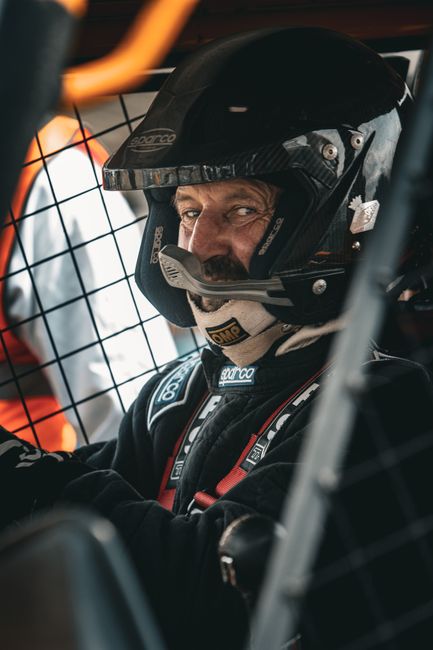
| Key safety gear | A certified helmet (Snell SA, K or CMR, FIA 8859 or 8860; DOT/ECE for motorcycles), a head-and-neck restraint in cars, a fire-resistant suit, gloves and shoes, and body armor for bikes and karts. |
How motorsports work
Every form of racing comes down to the same thing: get around a course faster than everyone else while staying inside the rules and the flags. But the series look very different.
- Formula 1: the FIA’s top single-seater championship. As of the 2026 season it has 11 teams and 22 drivers (Cadillac joined as the 11th team), and the calendar dropped from 24 to 22 Grands Prix after the Bahrain and Saudi Arabian races were cancelled. A Grand Prix runs just over 305 km (260 km in Monaco), with a two-hour limit.
- NASCAR: stock-car racing, mostly on ovals. The 2026 Cup Series has 36 points races, from the Daytona 500 in February to the championship at Homestead-Miami in November, and brought back “The Chase”: 16 drivers, 10 races, one points reset.
- IndyCar: open-wheel racing on ovals, road courses and street circuits. The 2026 season has 17 races, including the 110th Indianapolis 500 on May 24.
- Sports cars: IMSA’s WeatherTech SportsCar Championship races four classes at once (GTP, LMP2, GTD PRO and GTD); the 2026 Rolex 24 at Daytona had 61 entries.
- MotoGP: the FIM’s world championship for prototype road-racing motorcycles, with Moto2 and Moto3 below it: 22 rounds in 2026, a Saturday sprint at about half distance and a Sunday Grand Prix.
- Supercross and motocross: dirt-bike racing over jumps. The 2026 SuperMotocross World Championship combined 17 AMA Supercross rounds in stadiums and 11 Pro Motocross rounds outdoors, then three playoff rounds.
- Karting: small, light, very fast machines on purpose-built tracks, from Kid Karts to shifter karts. Nearly every pro driver started here.
- Club racing and track days: where most adults drive: autocross in a parking lot, a high-performance driving event (HPDE) at a real circuit, or wheel-to-wheel club racing with an SCCA or NASA license.
Flags are the language of every track: green to go, yellow for danger ahead with no passing, red to stop, black to come into the pits, white and checkered near the end. Our motorsports rules page covers flags, the basic rules of each series, and how racing licenses work.
Motorsports at every level
Kids: karting first
Karting is the youth path. Road America’s beginner’s guide says kids can start in the Kid Kart class at 5, and the World Karting Association, the largest karting sanctioning body in North America, has Kid Kart racing for children as young as five or six. National series set their own limits: Superkarts! USA (SKUSA) requires drivers to be at least 7 (younger only with a year of verifiable experience), with Micro Swift for ages 7–10 and Mini Swift for 9–13. Costs add up: Road America lists about $2,000 for a new Kid Kart and $300 or more for the basic safety gear. Our youth motorsports guide covers ages, costs, safety gear and the questions parents ask.
Motocross starts young too; children as young as 4 race in age groups. Pediatricians are cautious about it: the American Academy of Pediatrics (AAP) recommends that no child under 16 ride off-road vehicles, including two-wheeled dirt bikes, and backs state laws to that effect.
Teens: the ladders
From karting, drivers move into cars on a “ladder.” In the US, the USF Pro Championships (USF Juniors, USF2000 and USF Pro 2000) lead to Indy NXT and IndyCar, with scholarships for each champion: about $595,000 for the 2026 USF Pro 2000 champion to move up. In Europe, FIA Formula 3 and Formula 2 lead to F1. Stock-car hopefuls race late models and the ARCA Menards Series before NASCAR’s Truck, O’Reilly Auto Parts and Cup Series. Motorcycle racers move up through amateur motocross, including the AMA Amateur National Motocross Championship at Loretta Lynn’s Ranch in Tennessee, held since 1982.
Pro
F1, NASCAR Cup, IndyCar, IMSA, MotoGP and SuperMotocross are the top of the sport, and the age gates are real: an F1 driver needs an FIA Super Licence (at least 18, with 40 points earned in junior series over three seasons), and since 2023 the FIM has required riders to be 18 to race in the MotoGP World Championship classes, with a 17-year-old exception for the Moto3 Junior World Champion or Red Bull Rookies Cup winner. More on our leagues and associations page.
International
Motorsport isn’t on the Olympic program, but the FIA, founded in Paris in 1904 and now made up of 246 member organizations in 149 countries, runs the FIA Motorsport Games, where nations race for gold, silver and bronze. Karting is part of it, including sprint, endurance and a slalom event for 14- to 16-year-olds.
Adults and weekend racers
This is where most people race. The Sports Car Club of America (SCCA), founded in 1944, has more than 50,000 annual members in 115 regions and runs autocross, track days, time trials, rally and club racing. The National Auto Sport Association (NASA), founded in 1991, uses four HPDE levels to take drivers from their first track day to racing. Adult karting leagues, arrive-and-drive kart programs and amateur motocross fill the rest of the weekend calendar.
Sports health for drivers and riders
Are race car drivers athletes? Physiologists have measured it. In a 2002 study of professional open-wheel drivers, road-course driving at race speed used about 79% of their maximal oxygen uptake, with average heart rates of 152 beats per minute; the authors compared drivers’ fitness to athletes in basketball, football and baseball. This section is general information, not medical advice. If you’re hurt, see a professional.
Heat: the hidden opponent
Fire suits keep flames out and heat in. In a 2025 study of professional drivers, the cockpit averaged about 41 °C (106 °F) on a 34 °C day, core body temperature rose to about 38.5 °C (101 °F), and heart rate averaged about 159 beats per minute over the last 50 minutes of a real race, 47 beats higher than the same drivers in a simulator. Heat stress is why drivers plan their hydration, and why many use heat acclimation and cooling before and during races. The NATA, the athletic trainers’ association, notes that losing more than about 2% of body weight in sweat can hurt performance, and that drinking far more than you sweat brings its own risk. Our race day page covers fluids, food and cooling.
Neck strength and g-forces
Downforce lets race cars corner and brake at about 2 to 5 times the force of gravity, sometimes more, and the driver’s neck has to hold a helmeted head against it, lap after lap. A 2026 review in the British Journal of Sports Medicine, which drew on published data and interviews with F1 performance coaches, found that F1 drivers aren’t exceptional in aerobic fitness or size, but they do have unusually strong necks, and neck training, heat acclimation and cooling are routine parts of their preparation. Kart drivers feel big lateral loads too: SKUSA calls the lateral forces in kart racing “a serious concern” and urges rib protection. Our motorsports training page covers neck and core work.
Crashes and the injuries they cause
- Motocross: a review of injuries in young riders found most are musculoskeletal, most often the forearm, collarbone, thigh bone (femur) and shin (tibia), many needing surgery, plus some head injuries. At one week-long amateur motocross event over 10 years, a quarter of injured children were hospitalized.
- Karting: US emergency departments saw an estimated 34,561 go-kart-related head, neck and spine injuries from 2004 to 2023, nearly two-thirds in people 18 and under. More than half involved the head; concussion made up about 17%. Rollovers and collisions with other karts were common causes. Race karting answers with strict rules on helmets, neck braces and chest protection.
- Cars: modern safety gear has changed the picture. After Dale Earnhardt’s fatal crash in February 2001, NASCAR made head-and-neck restraints such as the HANS device mandatory that October. Today a fire-resistant suit, an SFI or FIA-rated restraint, and a helmet made for auto racing are standard.
Concussion: recognize and remove
A hard hit in a car, kart or on a bike can cause a concussion even with a great helmet. The CDC’s HEADS UP program lists the signs: a driver or rider who seems dazed or confused, can’t remember the crash, or has a headache, dizziness, balance problems, sensitivity to light or noise, or feels foggy.
- Out of the car or off the bike for the rest of the day if there are any signs. No “one more session.”
- Get checked by a healthcare provider, and return to racing only when cleared, step by step.
- Replace the helmet after a significant impact.
- Call 911 for danger signs: seizures, passing out, growing drowsiness, a headache that gets worse, repeated vomiting, or one pupil larger than the other.
When to see a doctor, physical therapist or athletic trainer
After any crash with head symptoms, neck pain, or a limb that’s deformed, very painful or won’t move, get medical care first. For neck, back, wrist or forearm pain that keeps coming back, a sports medicine physician or physical therapist can find the cause and build a plan; athletic trainers are licensed or regulated health care professionals in all 50 states. Sanctioning bodies also have medical rules: SKUSA bars drivers whose medical condition makes it unsafe to race, and the SCCA asks for a doctor-completed medical form for minors and older drivers. Our motorsports injuries page goes deeper.
Training and conditioning for racing
Engine: racing keeps heart rates high for an hour or more, so aerobic fitness matters. Many drivers run, ride or row, and a heart rate strap such as the Polar H10 makes zone training simple (see our heart rate monitor guide and VO2 max training). Neck, core and grip: neck strength is the clearest physical trait of elite drivers; add core work for bracing in corners and forearm and grip work for steering and the handlebars. Build up gradually, ideally with a coach or physical therapist, because the neck is no place for ego lifting.
Heat: train some sessions in the warmth and practice your race-day drinking plan. Skills and seat time: karting, track days and simulators sharpen reactions and racecraft, though the 2025 study above is a reminder that a simulator doesn’t reproduce the physical load of a real car. Many racers track recovery with a wearable (HRV for athletes). More on our training page.
Race day: the sports-nutrition position statement from the American College of Sports Medicine and two dietitians’ groups recommends a pre-event meal high in carbohydrate, moderate in protein and low in fat and fiber, from familiar foods, about 1–4 hours before. Many drivers sip an electrolyte drink through the day, since a race suit and helmet make sweating heavy even before the green flag. See our race day page and our electrolyte powder guide.
Recovery after race weekends
A race weekend is long days in the heat, early starts and travel. Recovery starts with sleep: the CDC, citing the American Academy of Sleep Medicine, recommends 8–10 hours a night for teens and 7 or more for adults. Then fluids and real food; after a hot day many drivers reach for a protein shake when dinner is far off. For a stiff neck, shoulders and forearms, many racers like a massage gun on the low settings (never on the front of the neck) or a foam roller for the upper back, and compression boots for legs after a long day on their feet in the paddock. These are comfort tools, not treatment; pain that lingers needs a professional. More on our motorsports recovery page.
Gear for motorsports
- A helmet made for the job: Snell SA (auto racing) or K (karting), CMR for young kart drivers, FIA 8859 or 8860 for international events; motorcycle helmets carry DOT, ECE 22.06 or Snell M ratings. Snell’s SA2025 standard took effect October 1, 2025; SA2020 helmets stay legal in many series through 2030.
- A head-and-neck restraint rated SFI 38.1 or FIA 8858 for cars; a neck brace for kart drivers (mandatory in SKUSA junior classes).
- A fire-resistant suit, gloves and shoes rated SFI 3.2A and 3.3 or FIA 8856 for cars; an abrasion-resistant suit (CIK Level 2 in SKUSA) for karting.
- Body armor: rib and chest protectors for karting, and chest protectors, knee braces and boots for motocross.
Four picks to start with: the Conquer Snell SA2025 Full Face Helmet, an entry-level auto racing helmet with a fire-retardant interior (about $230 on Amazon in October 2026); the Simpson Hybrid Sport head-and-neck restraint, rated SFI 38.1 (about $645); the K1 Race Gear Pro-Lite Rib Protector for karting (about $90); and Nuun Sport electrolyte tablets for hot race days (Informed Choice certified, according to the maker). Our motorsports gear page goes through every piece, and best wearables for motorsports covers heart rate and recovery tracking.
Conquer Snell SA2025 Full Face Racing Helmet
- Snell SA2025 certified
- Fire-retardant interior
- About $230
Simpson Hybrid Sport Head and Neck Restraint
- SFI 38.1 rated
- Sliding tether system
- About $645
K1 Race Gear Pro-Lite Rib Protector
- Hydro-formed rib shell
- Adjustable shoulder straps
- About $90
Nuun Sport Electrolyte Tablets
- 300 mg sodium per tablet
- 1 g sugar
- Informed Choice (maker)
Motorsports FAQs
Are race car drivers athletes?
Yes. Studies of professional drivers have measured heart rates around 150–160 beats per minute for long stretches of a race, oxygen use near 79% of maximum on road courses, core temperatures around 38.5 °C, and g-forces of 2 to 5 g on the neck. Researchers compare their fitness to basketball, football and baseball players.
How old do you have to be to start racing?
Kid Kart classes start at about 5, depending on the club; national karting series such as SKUSA start at 7. Club car racing usually starts at 16 (SCCA considers 14- and 15-year-olds with karting experience case by case), F1 requires 18, and so do the MotoGP World Championship classes.
What does a HANS device do?
A head-and-neck restraint connects the helmet to a collar or yoke held down by the shoulder belts, limiting how far the head whips forward in a frontal crash. NASCAR made them mandatory in October 2001, FIA events require an FIA 8858 device, and many other series require one rated SFI 38.1 or FIA 8858.
What’s the most common injury in motocross?
Broken bones and other musculoskeletal injuries, most often in the forearm, collarbone, thigh and shin, according to a review of injuries in young riders. Head injuries happen too, which is why a properly fitted helmet, chest protector and knee braces are standard gear.
How do drivers handle the heat?
With preparation: training in the heat to acclimatize, drinking to a plan before and during the race, and cooling before and during the race, strategies F1 performance coaches describe as routine. Anyone who feels confused, faint or stops sweating in the heat needs to stop and get help.
Motorsports give back speed, focus and friendships made in the paddock. The drivers and riders who keep going wear certified gear, train their necks and their engines, respect the heat and listen to their bodies after a crash. Keep exploring: our recovery tools guide, Nutrition & Supplements for long, hot race days, our cycling guide for drivers who train on two wheels, and every other sport on our sports hub.