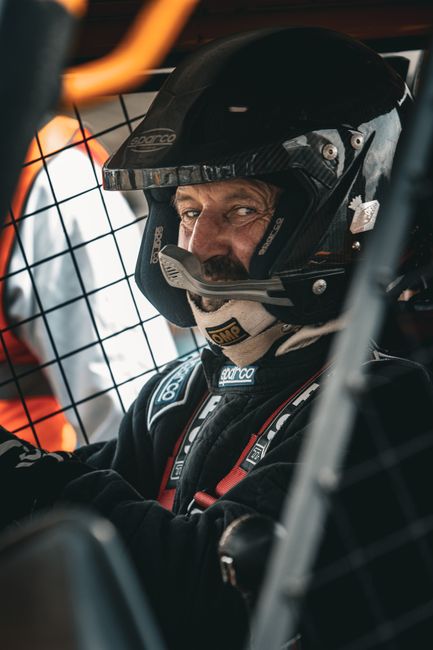
Lap 38 of a 50-lap club race. You are third, your lap times have been steady for twenty minutes, and then the car in front runs wide and the gap opens up. Your mind jumps to the pass, to the points, to the car behind you, and for half a corner you are not looking at the apex at all. Nobody has to tell you how that feels. Mental training for drivers and riders is the deliberate practice of attention, routines, self-talk, goals and imagery so that you can drive or ride your own race, lap after lap, whether you race karts, club cars, motocross or an endurance team. It supports good driving; it cannot promise a result.
Quick answer: Racing asks for steady concentration over a long run, calm decisions at speed and a quick reset after a mistake. The habits most coaches use are a fixed pre-start routine, one or two simple focus cues per section of the track, small safe steps when you push your limit, and a short plan for what you do after an error. None of these guarantees a result. See a doctor after any hard impact or suspected concussion, and a doctor or licensed mental health professional if worry, low mood, disordered eating or exhaustion are affecting daily life.
General information for drivers, riders and parents. Back to the motorsports hub. The physical side (neck, cardio, reaction drills, heat) is on our motorsports training page, and hydration, fuel and cooling for the day are on the race day page. This page covers the thinking side and avoids repeating those.
What research says about the racing mind
Motorsport psychology research is still thin, so here is what exists, with its limits. A 2026 study of ten professional single-seater drivers (five in Formula 1, five in Formula 2) used a standard coping-skills questionnaire and found the F1 drivers scored higher on concentration and on confidence and achievement motivation, with no clear difference in the overall score (McKnight and colleagues, Frontiers in Psychology 2026). Ten drivers is a very small group, and it cannot show that training these skills makes anyone faster.
One more reason the mind needs its own practice: a study of professional drivers in a real race and on a simulator found heart rates of about 159 beats per minute in the race and 112 on the simulator in matched heat and gear, and the authors concluded the simulator does not reproduce the psychological stress of racing (Holland and colleagues, Frontiers in Sports and Active Living 2025).
Concentration over a long run
A race or an endurance stint can ask for the same level of attention for an hour or more.
- Being under-hydrated can dull alertness. In a short simulated race, drivers made 1% and 3% body-weight fluid losses and lap times did not change, but they felt less alert and less able to concentrate (Mollica and colleagues, International Journal of Exercise Science 2019). In a hotter, longer test with 20 elite drivers, those who drank in big gulps lapped about 4% slower, mostly from errors in high-speed corners, than when a system prompted regular sips (Ferguson and colleagues, Journal of Sports Sciences 2023). Our race day page covers the plan.
- Give attention one job at a time. Many coaches split a lap into sections and pick one cue for each, such as "brake late and straight" for a heavy braking zone or "look through" for a long corner. This is general coaching practice, not tested in motorsport. A meta-analysis of 32 studies in other sports found self-talk helped most on fine or unfamiliar tasks (Hatzigeorgiadis and colleagues, Perspectives on Psychological Science 2011).
- Notice drift, then return. Thinking about the gap or the last mistake is normal. A breath on a straight and back to the cue is the habit to train, first on test days.
Composure and risk judgment
Racing is a sport where speed and risk are tied together, and good judgment is part of the skill. A 2025 survey of 75 Italian motorcycle racers (43 national or international, 32 regional) found that riders at both levels reported similar levels of intrinsic motivation, flow and sensation seeking, and that flow was linked with enjoying the sport for its own sake (Mancin and colleagues, Frontiers in Sports and Active Living 2025). It does not say that taking more risk makes you faster. Many coaches suggest:
- Separate learning days from racing days. New lines, a new braking point or a new section of a motocross track are best tried when you are fresh and warm, not on the last lap of a tired day or in the middle of a race.
- Pre-decide your rules. Decide in the paddock what you will do if a rival is alongside in turn one or the track is damp. A rule made calmly is easier to follow at speed. Check the rules of your series on the rules page.
- A "not today" is allowed. Take advice from an experienced driver, rider or coach you trust, and ease off when you are ill, tired or unsure.
When something goes wrong: a mistake or an incident
A spin, a missed apex, contact with another car or a crash will happen to almost every driver and rider. The first step after a hard hit is medical, not mental. A concussion can happen without losing consciousness, and a clinician or the event medical team, not the driver or the clock, decides when it is safe to return. A 2026 case series of former professional motorsport drivers raised concerns about their brain health after sport-related concussions and repeated head impacts (Sports Medicine Open 2026). See our injuries page for signs to watch for.
A UK Faculty of Sport and Exercise Medicine position statement (Heron and Griffin, Frontiers in Sports and Active Living 2026) recommends rehearsed emergency plans for critical incidents in sport, and structured aftercare that includes communication, debriefing and psychological support. If you have been in or have seen a serious crash, support from your team, your series medical staff or a professional is part of the process, not a weakness. For ordinary mistakes:
- One breath, one word, next corner. A short reset cue stops one error becoming three. Slow breathing, under about ten breaths a minute, has been linked with feeling calmer and more alert (Zaccaro and colleagues, Frontiers in Human Neuroscience 2018). That supports a slow breath on a straight; it does not prove it makes you faster.
- Review after, not during. Do the replay once you have cooled down, with data or a coach if you have them: one thing that went well, one thing to practice.
- Rebuild after a crash in steps. Once cleared, return to a pace and a track section you can do well, check the car or bike and your safety gear first (see the gear page), and let a coach watch your first sessions back.
Race-start nerves
The grid, the lights and the waiting are where nerves show most. A fast heart rate is normal in racing: professional drivers average around 160 beats per minute (Holland and colleagues 2025, above). What most coaches use:
- A fixed routine from the paddock to the grid. The same belt check, the same breath, the same look down the track every time, so that a nervous mind has something to do. This is common coaching practice, not tested for racing.
- One start cue, such as "smooth on the throttle" or "eyes up."
- Read the feeling as readiness. A tight stomach before an all-out effort is normal. If it turns to dread, or you cannot sleep for days before races, see the health section below.
Goals, motivation and imagery
"Win the race" depends on other drivers. "Run my routine every time" and "hit my braking point in every lap" are yours. An expert statement on goal setting for Exercise and Sports Science Australia (Swann and colleagues, Sports Medicine 2026) is a good place to read about setting goals well. Many coaches pair a process goal with a performance goal and hold outcome goals loosely.
Imagery means rehearsing a lap or a start in your mind, with the feel and sound of it and not only the picture. A 2026 scoping review mapped how athletes use mental imagery to manage stress (Zhao, Wang and Anuar, Frontiers in Psychology), but we are not aware of a motorsport-specific study on how much it helps. A few minutes the night before, and a few seconds before the start, is common.
Race-day preparation, teamwork and young drivers
Mental preparation mostly means removing surprises: study the circuit, decide your cues, and agree radio calls with your team or co-driver (we found no studies on team communication in amateur racing, so this is general practice). Logistics are on the race day page. For young karters and riders, see youth motorsports. The most useful skills for children are simple: a short routine, a calm adult who praises effort and safe habits over results, and goals that can change. A 2025 article in the British Journal of Sports Medicine raised the question of whether goal setting in youth sport can unintentionally contribute to dropout (Goddard and colleagues), so keep children's goals playful and flexible. We have not cited motorsport-specific research on age-appropriate mental skills.
Mental performance is not mental health
Routines, imagery and self-talk are performance skills. Anxiety that will not settle, low mood, loss of interest, disordered eating, constant exhaustion or burnout are health matters, not weaknesses of technique. The International Olympic Committee consensus statement on mental health in elite athletes (Reardon and colleagues, British Journal of Sports Medicine 2019) treats them as health concerns that need appropriate assessment and care. A 2024 perspective paper on Formula 1 describes heat, weight restrictions and other stressors that may raise vulnerability to mental health concerns and calls for mental health programs (Colangelo and colleagues, Frontiers in Sports and Active Living 2024); it is not a measure of how many drivers are affected. If these are affecting your sleep, school, work, relationships or enjoyment of racing, talk to a doctor or a licensed mental health professional. In the United States, you can call or text 988 (the 988 Suicide and Crisis Lifeline) at any time if you or someone you know is in distress. The Association for Applied Sport Psychology lists resources for finding a sport psychology professional.
Motorsports mental training: FAQs
How do I stay focused for a whole race?
Start with the basics: be hydrated, because studies link fluid loss with lower alertness and more errors in hot conditions. Then give each part of the lap one simple cue, notice when your mind drifts and return to the cue, and practice full-length stints in testing. These are general coaching practices, not a guarantee.
How do I calm my nerves on the grid?
Some nerves are normal before an all-out effort. Build a fixed routine from the paddock to the grid, add one start cue and a slow breath, and practice starts in training. If worry is severe or constant, speak to a doctor or licensed mental health professional.
How do I recover from a mistake mid-race?
Use a short reset (one breath, one cue word) and go back to the next corner. Do the review after you have cooled down, not on the radio in the middle of the race.
When can I race again after a crash?
That is a medical decision, not a mental one. After a possible concussion or other injury, a clinician or event medical team decides. See our injuries page.
Is fear before racing a problem?
Fear of real risk is common and useful. If worry, low mood or avoiding racing are frequent, last more than a short time or interfere with daily life, speak to a doctor or licensed mental health professional. In the US, 988 is available by call or text.
Sources
- McKnight PJ, Manwaring R, Felton L. Formula 1 drivers demonstrate superior concentration and confidence compared to Formula 2 drivers. Front Psychol 2026 (link)
- Holland and colleagues. Physiological responses of race car drivers in authentic and simulated motor-racing. Front Sports Act Living 2025 (PMID 40115438) (link)
- Mollica J, Desbrow B, Irwin C. Dehydration and simulated racing. Int J Exerc Sci 2019 (PMID 31523354) (link)
- Ferguson DP and colleagues. Hands-free drinking in elite drivers. J Sports Sci 2023 (PMID 37728081) (link)
- Mancin P and colleagues. Riding with the flow: motivation, flow and sensation seeking in Italian motorcycle racers. Front Sports Act Living 2025 (link)
- Brain health in former professional motorsport drivers: case series. Sports Med Open 2026 (PMID 42207477) (link)
- Heron N, Griffin S. Preparation for, and care during and after, critical incidents in sport: Faculty of Sport and Exercise Medicine position statement. Front Sports Act Living 2026 (link)
- Colangelo J and colleagues. Psychiatric risk factors in Formula One. Front Sports Act Living 2024 (link)
- Hatzigeorgiadis A and colleagues. Self-talk and sports performance: a meta-analysis. Perspect Psychol Sci 2011 (PMID 26167788) (link)
- Zaccaro A and colleagues. Slow breathing review. Front Hum Neurosci 2018 (PMID 30245619) (link)
- Swann C and colleagues. Goal setting: expert statement for Exercise and Sports Science Australia. Sports Med 2026 (link)
- Goddard SG and colleagues. Goal setting in youth sport: are we unintentionally contributing to dropout? Br J Sports Med 2025 (link)
- Zhao L, Wang Y, Anuar N. Mental imagery for stress management in athletes: a scoping review. Front Psychol 2026 (link)
- Reardon CL and colleagues. Mental health in elite athletes: IOC consensus statement. Br J Sports Med 2019 (PMID 31097450) (link)
- 988 Suicide and Crisis Lifeline (link)
- Association for Applied Sport Psychology resources (link)
General information for education only, not medical advice. It does not replace a doctor, licensed mental health professional or qualified coach. See our editorial policy for how we research and write.