This article contains affiliate links: if you buy through them we may earn a commission, at no extra cost to you. Learn more.
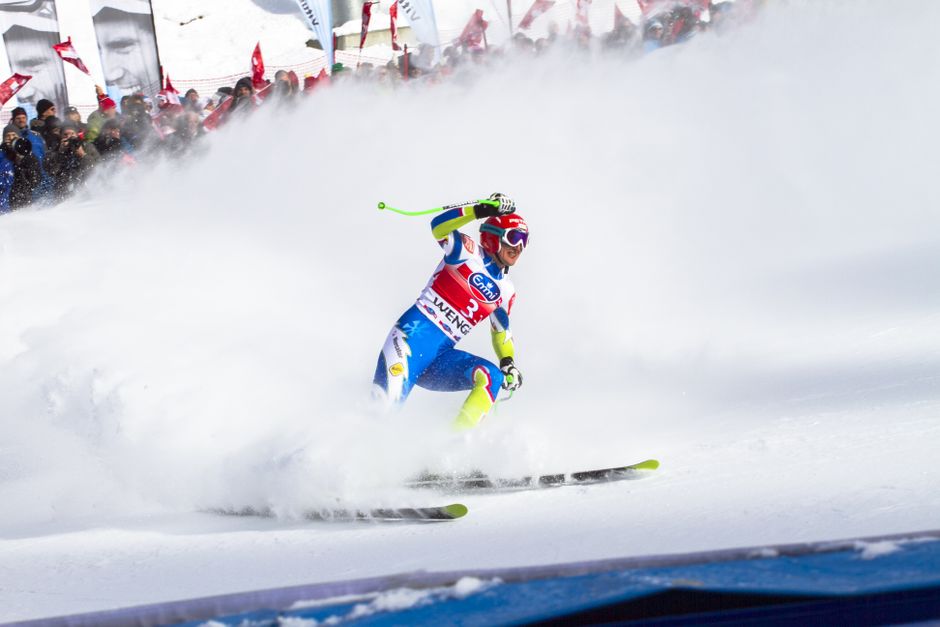
First chair on a bluebird morning, the corduroy still untouched. A six-year-old in a ski-school bib snowplowing down the bunny hill behind an instructor, arms out like an airplane. A high school racer kicking out of the start gate under the lights on a Tuesday night in Minnesota. And every February, the Olympic downhill, where the world’s fastest skiers drop down an icy mountain at highway speeds. Skiing is a family vacation, a lifelong sport and one of the great Olympic events, and it’s big: U.S. ski areas counted 61.6 million skier and snowboarder visits in the 2024/25 season, according to the National Ski Areas Association (NSAA).
Skiing, page by page
- Rules: how the game works at every level
- Leagues & associations: pro, college, high school and youth
- Youth & high school: ages, safety and recruiting, for players and parents
- Injuries & sports health: prevention, concussion, when to see a pro
- Training & conditioning: before: off-season to in-season
- Game day: during: fueling, hydration, heat
- Recovery: after: games, tournaments, sleep
- Nutrition & supplements: what to eat, tested supplements
- Best wearables: trackers and watches for the sport
- Gear: the complete equipment list
Buying guide · Our Skiing buying guide compares the gear we'd pick, with prices and sizing:
This page is skiing for the people who ski and the people who look after them: how the sport works (alpine racing first, plus freestyle and cross-country), what it looks like at every level from ski school to the World Cup, and, most of all, how to stay healthy doing it. Sports health is the heart of it: the skiing injuries that happen most, what the research says about helmets, how to spot a concussion on the hill, and when to see a professional. Then training, recovery and the gear that matters. Snowboarders have their own section: see our snowboarding guide.
Skiing at a glance
| Main disciplines | Alpine (downhill) skiing, freestyle skiing, cross-country skiing, plus ski jumping and Nordic combined. Para alpine and para cross-country for athletes with impairments. |
|---|---|
| Alpine race formats | Downhill and super-G (speed, one run), giant slalom and slalom (technical, two runs, times added), and the team combined. |
| Governing bodies | FIS (International Ski and Snowboard Federation) worldwide, with 141 member nations; U.S. Ski & Snowboard in the US. |
| Biggest events | The Olympic and Paralympic Winter Games, the FIS World Championships (every two years) and the FIS World Cup, raced each winter. |
| Slope safety rules | NSAA’s Your Responsibility Code (10 points since 2022), posted at U.S. ski areas. |
| Most common injuries | Knee injuries (especially the ACL), shoulder dislocations and sprains, fractures around the shoulder and lower leg, “skier’s thumb” and head injuries. |
How skiing works
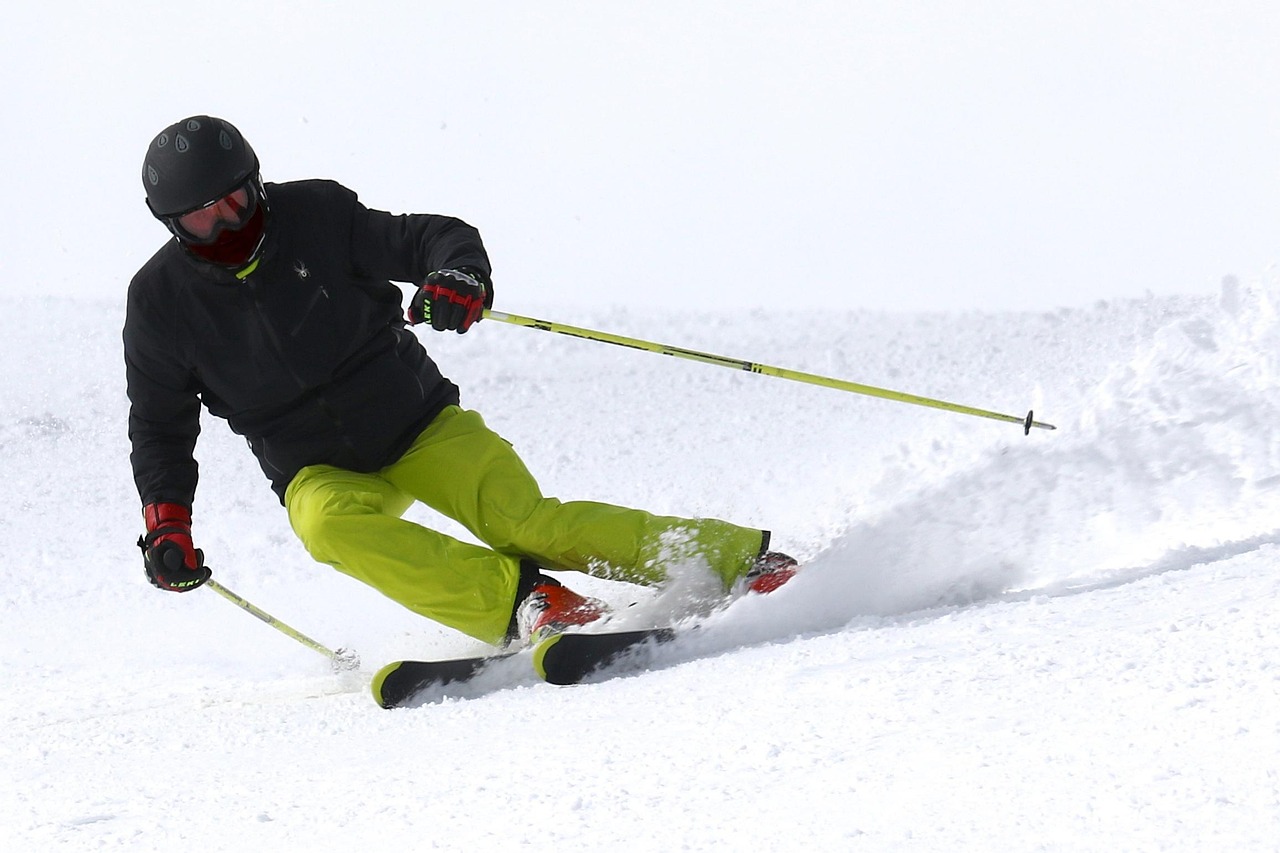
For most people, skiing means a day at a resort: ride the lift, pick a run that matches your ability, ski down, repeat. U.S. trails are marked with the same symbols everywhere: a green circle for easier, a blue square for more difficult, a black diamond for most difficult, a double-black diamond for “most difficult, use extra caution” and an orange oval for freestyle terrain. NSAA notes that ratings are relative to each resort, so a green at one mountain can feel harder than a blue at another. Every skier also shares the slope under a set of etiquette and safety rules, the Your Responsibility Code, covered on our skiing rules page.
Alpine ski racing
Alpine racing is a race against the clock through gates, one skier at a time. The events split into speed and technical:
- Downhill: the longest course with the fewest gates and the highest speeds, raced in a single run.
- Super-G (super giant slalom): downhill speed with more turning, also one run.
- Giant slalom: wider, flowing turns; two runs on different courses, and the fastest combined time wins.
- Slalom: the shortest course with the most, tightest turns; also two runs. Racers must pass every gate with both ski tips and feet; a “straddle” or missed gate is a fault.
- Team combined: new at the Milano Cortina 2026 Olympics, where one skier from a country races a downhill and a teammate races a slalom, and their times are added. It replaced the individual combined and the team parallel event.
Freestyle and cross-country, briefly
Freestyle skiing is judged or head-to-head: moguls and dual moguls, aerials, slopestyle, halfpipe, big air and ski cross, where four skiers race side by side over jumps and banked turns. Milano Cortina 2026 had 15 freestyle events, with dual moguls new to the Olympics. Cross-country skiing is the endurance branch, on skinny skis in two techniques: classic (skis in parallel tracks) and skate (a skating push off the edges). The 2026 Olympics held 12 cross-country events, from sprints to the 50 km. Ski jumping and Nordic combined round out the Nordic family.
Skiing at every level
Kids and ski school
Most skiers start in ski school. The American Academy of Pediatrics (AAP) recommends that kids learn from a qualified instructor in a program designed for children, never ski alone, wear a helmet, use equipment that fits, and ski on slopes that match their ability. Helmets are now the norm: NSAA reports that 96% of skiers and riders 17 and under wore one in 2024/25. Many kids who catch the racing bug join one of the roughly 400 local clubs of U.S. Ski & Snowboard. Our youth skiing guide covers ski school, kids’ helmets and the questions parents ask most.
High school
Ski racing is a school sport in the snow states. In the 2024-25 participation survey of the National Federation of State High School Associations (NFHS), 12 states reported alpine skiing, with 9,411 boys and girls on teams; Minnesota and Massachusetts had the most. Another 6,508 students raced cross-country skiing. Many high school racers also race for a club.
College
NCAA skiing is co-ed: men and women race slalom and giant slalom plus classic and freestyle cross-country, and the team title is decided by points across all of it. East, Central and West regions run qualifiers, and the 2027 NCAA championships are set for Stowe Mountain Resort and the Craftsbury Outdoor Center in Vermont, March 10–13. Club racing runs through the United States Collegiate Ski & Snowboard Association (USCSA), founded in 1974, which counts more than 140 member schools and over 5,000 student-athletes. More on our leagues and associations page.
Pro: the World Cup
Elite alpine racers chase points all winter on the FIS World Cup, which began in 1967. The top 30 in each race score points, 100 for a win, and the skier with the most points at the end of the season in March wins the big crystal globe; each discipline has its own small globe. FIS says it sanctions about 330 World Cup events a year across all its sports. America’s Mikaela Shiffrin won her 87th World Cup race in March 2023, passing Ingemar Stenmark for the most in history.
Olympic and Paralympic
Alpine skiing has been on the Olympic program since 1936. Milano Cortina 2026 had 10 alpine medal events: downhill, super-G, giant slalom, slalom and team combined for men and women, with the women racing in Cortina d’Ampezzo and the men in Bormio. The US won four alpine medals, including Breezy Johnson’s downhill gold and Mikaela Shiffrin’s slalom gold, her third Olympic title. Para alpine skiing joined the Paralympics in 1976, with sitting, standing and vision-impaired classes; vision-impaired skiers race behind a guide who calls the course. FIS has run para alpine skiing since July 2022.
Adult and recreational
This is where most skiers live: weekend trips, season passes, a week in the mountains with family, and adult race leagues on weeknights. Skiing is a sport for life, and helmet use is high at every age: NSAA counted 91% helmet use overall in 2024/25 and 92% among visitors 65 and older. The catch is that many recreational skiers ski only a few days a year, often without preparing their legs for it. That’s where most of the trouble starts.
Sports health for skiers
Skiing is safer than many people think, but it has real risks. The American Academy of Orthopaedic Surgeons (AAOS) counted more than 76,000 skiing injuries treated in hospitals, doctors’ offices and emergency rooms in 2018. NSAA reported 50 skier and snowboarder deaths at U.S. ski areas in 2024/25, or 0.81 per million visits; collisions with trees caused nearly half, and most happened on intermediate terrain. This section is general information, not medical advice. If you’re hurt, see a professional.
The most common skiing injuries
- Knee injuries: the knee accounts for about a third of all injuries in recreational alpine skiers, according to a 2021 Austrian study, and the anterior cruciate ligament (ACL) was injured in every knee injury the researchers recorded, often together with the MCL or a meniscus.
- Shoulder injuries: skiers put an arm out to break a fall, so AAOS lists shoulder dislocations and sprains among the most common injuries, along with fractures around the shoulder.
- Lower-leg fractures: also on AAOS’s list of common ski injuries.
- Skier’s thumb: an injury to the ulnar collateral ligament of the thumb, from falling on an outstretched hand while holding a pole.
- Head injuries: the reason helmets matter, covered next.
Good news on the knee: when ski patrollers and instructors at 20 ski areas were trained with videos of how ACL injuries happen in skiing, their serious knee sprains fell by 62% compared with the two previous seasons, while a comparison group saw no drop (Ettlinger and colleagues, 1995). Bindings matter too: they should be set by a shop (more below). Our skiing injuries page goes deeper.
Helmets: what the research says
A 2010 meta-analysis of 12 studies in the Canadian Medical Association Journal found that skiers and snowboarders wearing a helmet were significantly less likely to have a head injury (an odds ratio of 0.65), with an even stronger link in children under 13, and no increase in neck injuries. Ski helmets are their own category: AAOS says to wear a ski-specific helmet, not a bike helmet. In the US, look for ASTM F2040 (the standard for recreational snow sports helmets) or the European EN 1077. ASTM itself notes that a helmet helps reduce the risk of some head injuries at slower speeds but that the protection is limited, and NSAA’s advice is to wear a helmet but ski as if you weren’t wearing one.
Concussion: recognize and remove
Skiers often fall far from help, so friends and parents need to know the signs. The CDC’s HEADS UP program lists a skier who looks dazed or confused or can’t remember the fall, and symptoms like headache, dizziness, balance problems, sensitivity to light or noise, or feeling foggy.
- Stop skiing after a blow to the head or a hard fall if there are any signs. Call ski patrol rather than skiing down alone “to see how it goes.”
- Stay off the slopes for the rest of the day and until a healthcare provider clears you. Return to sport goes in steps.
- Replace the helmet after a hard impact.
- Call 911 or ski patrol right away for danger signs: seizures, passing out, growing drowsiness, a headache that gets worse, repeated vomiting, or one pupil larger than the other.
Cold, sun and deep snow
The mountain environment brings its own risks. The World Health Organization notes that fresh snow can reflect up to 80% of UV radiation and that snow blindness, a painful sunburn of the eye, hits skiers at altitude, so goggles or sunglasses and sunscreen matter even on cold days. The AAP warns that fingers, toes, ears and noses are most prone to frostbite and recommends several thin layers and breaks indoors. Off the groomed runs, NSAA warns of tree wells and deep snow, where a fallen skier can be trapped; its rule is to always ski with a partner within sight.
When to see a doctor, physical therapist or athletic trainer
See a professional after any fall with head symptoms, a knee that popped, swelled quickly or gives way, a shoulder or thumb that’s deformed, very painful or weak, or pain that’s still there a few days later. A sports medicine physician can diagnose the injury, a physical therapist can guide the way back to the slopes, and athletic trainers, licensed or regulated health care professionals in all 50 states, work with many school, college and club teams. Ski patrol is your first call on the mountain.
Training and conditioning for skiing
Get in shape before the season: AAOS says to be in good physical condition before a ski trip and, if you’re out of shape, to pick runs carefully and build up gradually. Skiing asks a lot of the legs and core, so most preseason programs combine leg strength (squats, lunges, step-ups), balance work and some cardio. Resistance bands make hip and knee strength work easy at home.
On the day: AAOS suggests warming up with 3 to 5 minutes of jumping jacks, running or walking in place, then a few slow runs, and drinking fluids before, during and after skiing. It also notes that many injuries happen at the end of the day, when tired skiers go for one last run, so quit while your legs still feel good. A lesson is worth it at every level. Racers add gate training, dryland work and race-day routines; see our skiing training page and race day page. Many skiers track readiness with a wearable (HRV for athletes).
Recovery after a ski day
Recovery starts with sleep: the CDC, citing the American Academy of Sleep Medicine, recommends 8–10 hours a night for teens and 7 or more for adults, and a ski trip often means altitude, late dinners and early lifts. Then food and fluids; cold air is dry, and AAOS reminds skiers to keep drinking. Many skiers add a light electrolyte drink on long days.
For heavy quads after a day of bumps, many skiers like a foam roller or a small massage gun that fits in a duffel, compression boots after a big day, and soft recovery slides after a day in stiff boots. These are comfort tools, not treatment; pain that lingers or a swollen knee needs a professional. More on our skiing recovery page.
Gear for skiing
- A ski helmet certified to ASTM F2040 or EN 1077 that fits snugly, with no gap between helmet and goggles.
- Boots and bindings set by a ski shop: AAOS says they should be set, adjusted, maintained and tested by a shop that follows ASTM standards, matched to your height, weight and ability. The AAP adds that kids’ bindings should be adjusted at least every year.
- Goggles with UV protection, and sunscreen.
- Layers: AAOS recommends several layers of light, loose, water- and wind-resistant clothing, plus a thin pair of ski socks (no cotton).
Four picks to start with: the Smith Mission MIPS, a helmet the maker says is certified to ASTM F2040 and EN 1077, with a MIPS liner and 14 adjustable vents (about $85 to $120 on Amazon in October 2026, depending on color and size); Smith Squad goggles with a ChromaPop lens and a wide cylindrical lens (about $120); the PEET Original boot dryer, which dries boots overnight with no fan (about $50); and the Hyperice Normatec Go calf compression sleeves for the evening (about $379). Our skiing gear page goes through boots, bindings, goggles and layers.
Smith Mission MIPS Helmet
- ASTM F2040 + EN 1077 (maker)
- MIPS liner, dial fit
- 14 adjustable vents
Smith Squad Goggles (ChromaPop)
- Cylindrical ChromaPop lens
- Anti-fog coating
- Pairs with Smith helmets
PEET Original Boot Dryer
- Fanless, silent, 36 W
- Dries overnight
- Made in USA
Hyperice Normatec Go
- Calf compression sleeves
- 7 pressure levels
- Wireless, travel size
Skiing FAQs
What is the most common skiing injury?
Knee injuries, especially to the ACL. In recreational alpine skiers the knee accounts for about a third of all injuries. Shoulder dislocations and sprains, fractures around the shoulder and lower leg, skier’s thumb and head injuries are also common, according to AAOS.
Do ski helmets really work?
Yes. A meta-analysis of 12 studies found that skiers and snowboarders with helmets were significantly less likely to have head injuries, with no rise in neck injuries. Their protection has limits at high speed, so ski in control too. Choose one certified to ASTM F2040 or EN 1077.
How dangerous is skiing?
Serious accidents are rare: NSAA counted fewer than one death per million skier and snowboarder visits in 2024/25, and its 10-season average is 0.76 per million. Most fatal accidents involve speed, loss of control and collisions with trees or the snow surface, which is why the first rule of the code is to always stay in control.
What are the alpine skiing events at the Olympics?
Downhill, super-G, giant slalom, slalom and team combined, each for men and women: 10 medal events at Milano Cortina 2026. Downhill and super-G are one run; giant slalom and slalom are two runs with the times added.
Is skiing good exercise?
Yes, it works the legs, core and balance, and cross-country skiing is one of the toughest endurance sports there is. To enjoy it and avoid injury, get in shape before the season, warm up, and stop before you’re exhausted, as AAOS advises.
Skiing gives back cold, bright mornings, family trips and a sport you can do for life. The skiers who keep going stay in control, wear a helmet, have their bindings set by a shop, get their legs ready before the season and know when to call it a day. Keep exploring: our recovery tools guide, snowboarding for the riders in your group, our soccer guide for the off-season, and every other sport on our sports hub.