
This article contains affiliate links: if you buy through them we may earn a commission, at no extra cost to you. Learn more.
It usually starts with someone else’s finish. A friend’s medal photo, a cousin crying happy tears at mile 26, a teammate from your old basketball league who swore she’d never run more than a 5K. Then you click “register”, and the question lands: how do you train for your first marathon without getting hurt or burned out? The honest answer is simpler than most plans make it look: enough weeks, a long run that grows slowly, mostly easy miles, fuel practice, and real rest. Here’s how it fits together.
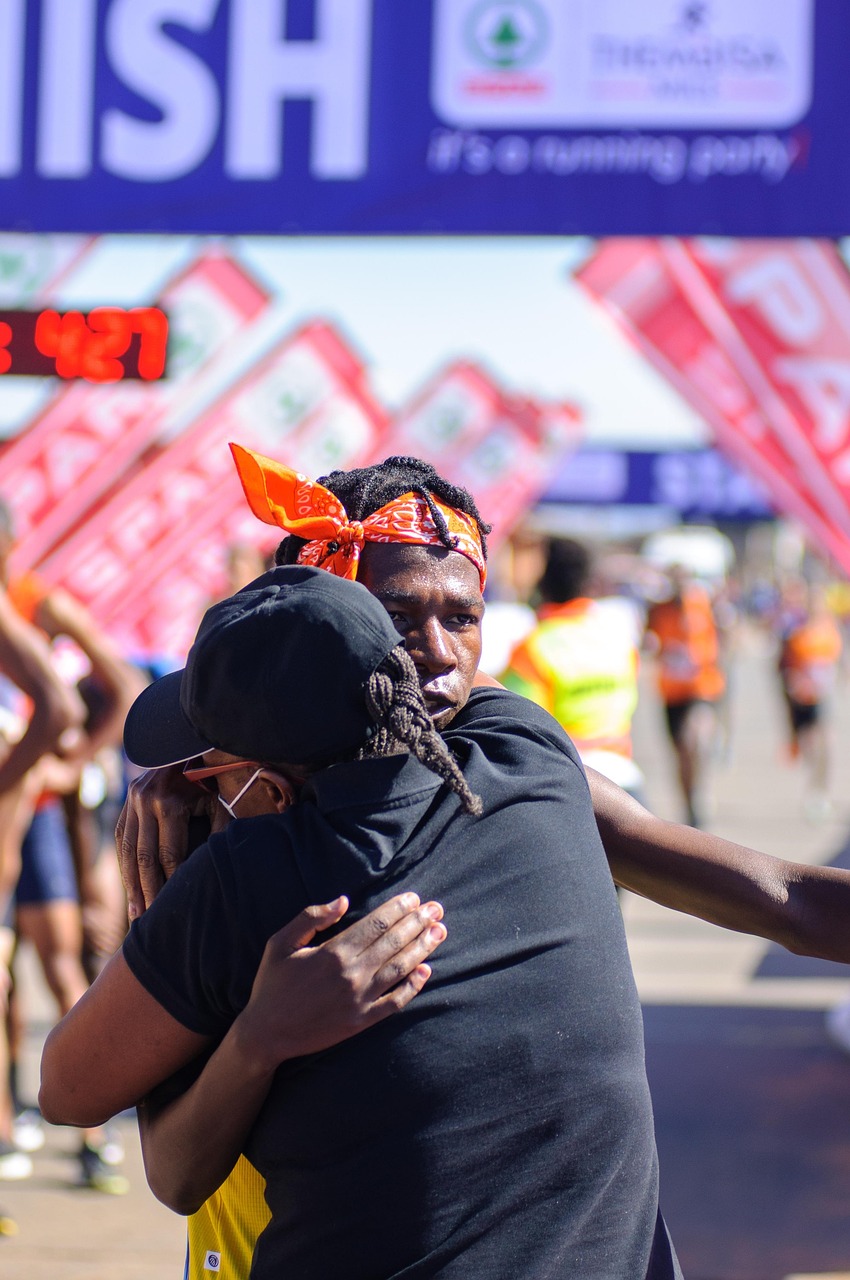
How long do you need to train for a first marathon?
A marathon is 26.2 miles (42.195 km). Most first-timer plans run about four to five months. Hal Higdon’s widely used Novice 1 plan, for example, is 18 weeks long, with four running days, one cross-training day and two rest days a week. It’s built for people with modest running experience, so if you can’t yet run comfortably for 30 to 45 minutes, spend a few months building that base first, or pick a later race. Rushing the build is the most common way first marathons go wrong.
New runners get hurt more often: a meta-analysis found about 17.8 injuries per 1,000 hours of running in novice runners, compared with 7.7 in recreational runners. Time is your best protection.
The long run is the backbone
Once a week, usually on the weekend, you run longer than any other day. In Higdon’s novice plan the long run grows from 6 miles to a peak of 20 miles in week 15, with an easier “step-back” week every third week so your body can absorb the work. His advice is blunt: “Do not cheat on the long runs.” Just as important, run them at a conversational pace. Long runs are about time on your feet, not speed.
A simple week of marathon training
- Two or three short easy runs (30 to 60 minutes) at a pace where you can talk.
- One medium run midweek that grows a little as the plan goes on.
- One long run that builds gradually, with a step-back week every few weeks.
- One cross-training day: cycling, swimming, an easy hike, a pickup game played gently.
- Two rest days. Higdon calls rest critical. That’s when the training turns into fitness.
First-timers don’t need speed work. If you have a few marathons behind you, intervals can come later; our VO2 max training guide explains how. Walking breaks are fine too: Higdon calls walking “a perfectly acceptable strategy”, and many people walk through every aid station to drink.
Practice your race-day fuel on long runs
The joint position of the American College of Sports Medicine (ACSM), the Academy of Nutrition and Dietetics and Dietitians of Canada suggests 30 to 60 g of carbohydrate per hour for exercise lasting 1 to 2.5 hours, and up to 90 g per hour for efforts longer than 2.5 to 3 hours. Most first marathons take well over three hours, so fuel matters. Gels, chews, sports drinks or real food all count; what matters is that you practice on long runs, because a stomach that has never had a gel at mile 18 may object on race day. Our best energy gels guide compares the main options.
For fluids, the same paper says most athletes do well with about 0.4 to 0.8 liters per hour, adjusted to sweat rate, heat and comfort, and the goal is to keep fluid loss under about 2% of body weight. Weigh yourself before and after a long run to learn your sweat rate (1 kg lost is about 1 liter). In the two days before the race, many runners also carbohydrate-load; the paper’s target for events over 90 minutes is 10 to 12 g of carbohydrate per kg of body weight per day for 36 to 48 hours.
The taper: trust it
After your longest run, plans cut back for the last few weeks; Higdon’s novice plan tapers for three weeks. You’ll feel restless and maybe a bit sluggish. That’s normal. Keep runs short and easy, sleep well (the CDC recommends 7 or more hours for adults), and don’t try anything new: no new shoes, no new breakfast, no new gel flavor.
Recovery during the build
After long runs, eat carbohydrate and some protein (the ACSM position suggests about 0.3 g of protein per kg of body weight after key sessions) and drink a bit more than you lost: around 1.25 to 1.5 liters per kg. Our recovery for runners guide covers the after-run routine step by step.
Common first-marathon mistakes
- Running every run too fast. If easy days aren’t easy, the long runs and the race suffer. Slow down until you can talk.
- Making up missed long runs. Life happens. Skip it and carry on with the plan; don’t cram two weeks into one.
- Trying new things on race day. New shoes, a new breakfast or an untested gel are the classic ways to ruin a good build.
- Ignoring small pains. A niggle that changes how you run deserves a few easy days or a visit to a physical therapist, not another long run.
- Starting too fast. Race-day adrenaline makes the first miles feel easy. Hold back; the second half is where first marathons are won or lost.
- Forgetting strength and rest. Short, simple strength work and real rest days keep your legs ready for the long runs.
Gear that helps
Prices change often. The prices below are what we saw at the maker or a major retailer in October 2026; check the current price before you buy.
Garmin Forerunner 570
- GPS, AMOLED, 42/47 mm
- Garmin Coach run plans
- About $550
Nathan VaporAir Lite 4L
- 2L bladder included
- 7 pockets
- About $130 list
OOFOS OOahh Slide
- OOfoam slide
- APMA Seal of Acceptance
- About $60
- Garmin Forerunner 570: a GPS running watch (about $549.99 at launch) with an AMOLED screen, Garmin Coach adaptive running plans, Training Readiness and HRV Status. Garmin lists up to 11 days of smartwatch battery for the 47 mm size. Compare it with others in best Garmin for runners.
- Nathan VaporAir Lite 4L: a light vest with a 2-liter bladder and seven pockets; Nathan lists 11.5 oz with the bladder. List price $130, and we saw it at $97.50 on sale. For 20-milers on routes without fountains. More choices in best running hydration vests.
- OOFOS OOahh Slide: soft, washable foam slide for the hours after a long run, about $60.
Shoes matter most of all. Get fitted at a running store, train in the pair you’ll race in, and replace them when they feel flat. If you have a heart condition, diabetes, are pregnant, are new to exercise or have any health concern, check with your doctor before starting a marathon plan. Sharp or worsening pain is a reason to stop and get it checked. Browse more in our running section.
First marathon questions
How many weeks should I train for my first marathon?
Most beginner plans run about 16 to 20 weeks; Hal Higdon’s Novice 1 is 18. That assumes you can already run comfortably for 30 minutes or more. If not, build a base first.
What’s the longest run before a marathon?
Many beginner plans peak at about 20 miles, about three weeks before race day. Higdon’s novice plan hits 20 miles in week 15 of 18. You don’t run the full 26.2 in training; race-day adrenaline and the taper carry you the rest.
How many days a week should I run?
Three to five. Higdon’s novice plan uses four running days, one cross-training day and two rest days. More isn’t better if it means no rest.
Is it OK to walk during a marathon?
Yes. Many first-timers walk through aid stations or use planned run-walk intervals. It’s a perfectly good way to finish strong.
How much should I eat during the race?
The ACSM joint position suggests up to 90 g of carbohydrate per hour for efforts over 2.5 to 3 hours. Many runners start lower and build up in training to see what their stomach handles.