This article contains affiliate links: if you buy through them we may earn a commission, at no extra cost to you. Read our affiliate disclosure.
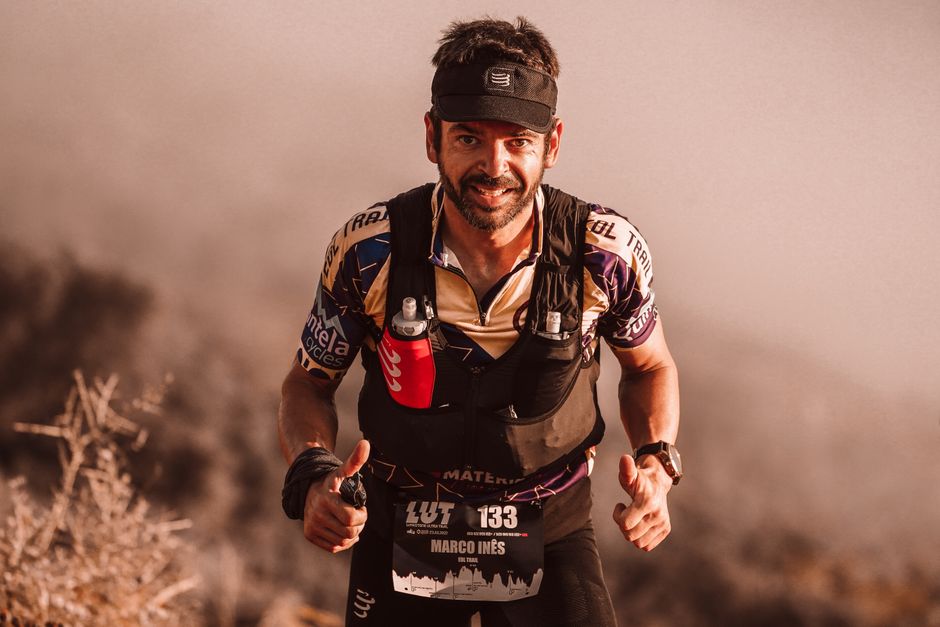
Mile 14 of a summer long run, no fountain for miles, and the sun is up over the trees. Or a three-hour mountain bike ride, a fastpacking day, a hot preseason double for a soccer player logging extra miles. That’s when a running hydration vest earns its place: water up front where you can reach it, gels in the chest pockets, a jacket and phone in the back, and nothing bouncing. Below are six vests really sold in 2026, from a light 5-liter race vest to 12-liter packs for long trail days, and how to choose.

Our top picks

Salomon ADV Skin 5 Set
- 5 L storage
- Two 500 ml soft flasks
- 220 g / 8 oz

Salomon ADV Skin 12 Set
- 12 L storage
- Two 500 ml soft flasks
- 367 g with flasks

CamelBak Zephyr Pro Vest
- Two 17 oz flasks
- Removable pole quiver
- Body-mapped mesh

Ultimate Direction Race Vest 6.0
- 6.3 L storage
- 2 bottles included
- 7.2 oz
Nathan VaporAir 3.0 7L
- 2 L bladder included
- 7 L storage
- Fits 22 oz flasks up front

Nathan VaporAir Lite 4L
- 2 L bladder included
- 7 pockets
- 11.5 oz with bladder
Running hydration vests compared
| Vest | Storage | Water included | Weight (listed) |
|---|---|---|---|
| Salomon ADV Skin 5 Set | 5 L | 2 x 500 ml flasks | 220 g / 8 oz |
| Salomon ADV Skin 12 Set | 12 L | 2 x 500 ml flasks | 367 g / 12.9 oz with flasks |
| CamelBak Zephyr Pro Vest | About 11–12 L (sources differ) | 2 x 17 oz flasks | Varies by source |
| Ultimate Direction Race Vest 6.0 | 6.3 L | 2 bottles (1 L total) | 7.2 oz |
| Nathan VaporAir 3.0 7L | 7 L | 2 L bladder | 13 oz with bladder |
| Nathan VaporAir Lite 4L | 4 L | 2 L bladder | 11.5 oz with bladder |
The best running hydration vests for 2026
1. Salomon ADV Skin 5 Set: best overall
The ADV Skin 5 is the vest you see at half the trail races and road marathons with sparse aid. Running Warehouse lists it at 220 g (8 oz) with 5 liters of storage and two 500 ml (17 oz) Salomon soft flasks in holsters on the shoulder straps, about 34 oz of water in total. The Sensifit construction wraps the upper body, so it fits snugly like a shirt rather than a backpack. It comes in sizes XS to XL. Salomon’s sets include a safety whistle and an emergency blanket.
- Good: light and stable; flasks right at hand; enough room for a jacket, phone and gels.
- Watch out: sized like clothing, so measure your chest; 1 liter of water may not be enough on hot, remote days.
- Best for: marathon and half training, trail races up to about 50 km, long rides.
2. Salomon ADV Skin 12 Set: best for long trail days
The bigger sibling carries 12 liters, enough for the mandatory gear lists of many ultras: a waterproof shell, a warm layer, a headlamp and food. Running Warehouse lists 367 g (12.9 oz) with the two included 500 ml soft flasks and. It has two flask holsters, two front stretch pockets for gels and two front zip pockets, plus a new sternum strap system Salomon says fits both men and women. Sizes run XS to XL.
- Good: big capacity in a close-fitting vest; lots of front storage.
- Watch out: more than most road runners need; warmer on the back in summer.
- Best for: ultras, mountain days, fastpacking, all-day hikes.
3. CamelBak Zephyr Pro Vest: best for runners who use poles
CamelBak sells the Zephyr Pro with two 17 oz Quick Stow flasks and a stowable, fully removable trekking pole quiver, so you can carry poles across your back on steep climbs. The back and straps use knit mesh in men’s and women’s patterns based on CamelBak’s body-mapping research on where people get hot. Reviewers describe dual adjustable sternum straps, side adjustment and room for a 2-liter reservoir. Storage is quoted as 11 or 12 liters depending on the source, and weights vary too, so we leave a single number out. List price is, and it’s often discounted at big retailers.
- Good: pole quiver; breathable mesh; men’s and women’s versions.
- Watch out: one reviewer found it short on pockets for its size.
- Best for: mountain trail runners and hikers who use poles.
4. Ultimate Direction Race Vest 6.0: best value race vest
Ultimate Direction’s Race Vest 6.0 weighs a listed 7.2 oz with 6.3 liters of storage and two Body Bottle soft bottles (about 1 liter total). It has a zippered, water-resistant phone pocket, four movable trekking-pole loops, a breathable back panel and a rear compartment that takes up to a 2-liter reservoir (not included). At about $130 it’s the cheapest of the flask vests here.
- Good: very light; reservoir-ready for hot days; fair price.
- Watch out: the 6.0 has been around a while, so colors and sizes vary by store.
- Best for: trail half marathons to 50Ks, gravel rides.
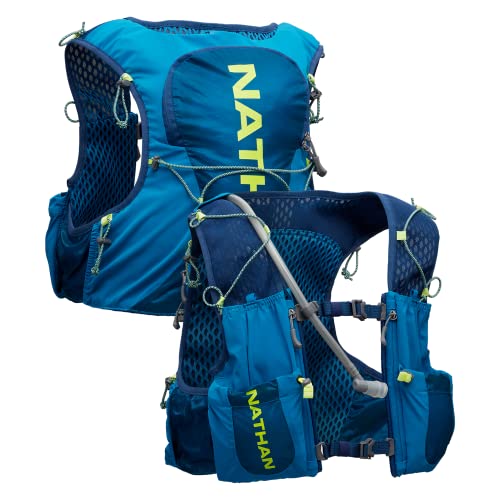
5. Nathan VaporAir 3.0 7L: best with a bladder
If you’d rather sip from a tube than squeeze flasks, the VaporAir 3.0 comes with a 2-liter bladder with a quick-release valve. Retailers list 7 liters of storage, 13 oz with the bladder (8.8 oz without), a nylon ripstop exterior, a chafe-free lining, zip pockets on the shoulders and front pockets that fit bottles or flasks up to 22 oz. It’s one size fits most, adjusted with front and side straps. List price is, and we saw it lower on sale.
- Good: up to 2 liters in the back plus flasks up front; reviewers praise the bounce-free fit.
- Watch out: a full bladder is heavier and warmer on your back than flasks.
- Best for: hot climates, long unsupported runs, speed hiking.
6. Nathan VaporAir Lite 4L: best for road runners
A smaller, simpler Nathan with the same 2-liter bladder. Nathan lists 11.5 oz with the bladder and 7.0 oz without, and seven pockets in total, including front pockets for bottles or flasks up to 22 oz and back pockets for a layer. List price is $130; Nathan had it at $97.50 on sale when we looked. It’s a good fit for marathon long runs on roads without fountains.
- Good: lots of water for the price; light; easy to use.
- Watch out: only 4 liters of storage; not enough for mountain gear lists.
- Best for: road long runs, first marathons, summer training.
How to choose a hydration vest
- Match the size to your longest day. 4–6 liters covers road long runs and most races; 10–12 liters is for ultras, mountains and mandatory gear lists.
- Flasks or bladder? Flasks up front are easy to refill and you can see what’s left; a bladder holds more and keeps weight centered. Several vests here take both.
- Know how much you drink. The ACSM joint position on sports nutrition says most athletes do well on about 0.4 to 0.8 liters an hour, adjusted to sweat rate and heat. Sweat rates range from about 0.3 to 2.4 liters an hour, so weigh yourself before and after a long run to learn yours.
- Get the fit right. Salomon sizes by chest; Nathan and CamelBak use adjustable straps. A good vest shouldn’t bounce when you run downhill with full flasks.
- Think about what goes in the water. On long or hot runs many athletes add electrolytes; see our best electrolyte powder guide, and best energy gels for the front pockets.
Training for a big one? Read how to train for your first marathon, then plan your after-run routine with recovery for runners. Track your long runs with a watch from best Garmin for runners, or browse the whole running section.
Hydration vest questions
Do I need a hydration vest for a marathon?
Usually not on race day, since big-city marathons have frequent aid stations. Many runners use one in training for long runs on routes without water, and some wear one in races to carry their own drink and gels.
Hydration vest or belt?
A belt is fine for one small bottle and a phone. A vest spreads more weight over your shoulders and chest, bounces less with a liter or more of water, and carries a jacket.
What size hydration vest should I get?
For storage, 4–6 liters for road and most trail races, 10–12 for ultras. For fit, measure your chest and follow the maker’s chart; Salomon runs from XS to XL, while Nathan’s VaporAir is one size with adjustable straps.
How do I clean soft flasks and bladders?
Rinse with warm water after every run, especially after sports drinks, and let them air dry open. Follow the maker’s care instructions for deeper cleaning.
Are running vests good for cycling or hiking?
Yes. Many cyclists, gravel riders and hikers use them because they sit close to the body and don’t swing. Bigger vests like the Salomon ADV Skin 12 or CamelBak Zephyr Pro suit long days out.