This article contains affiliate links: if you buy through them we may earn a commission, at no extra cost to you. Read our affiliate disclosure.
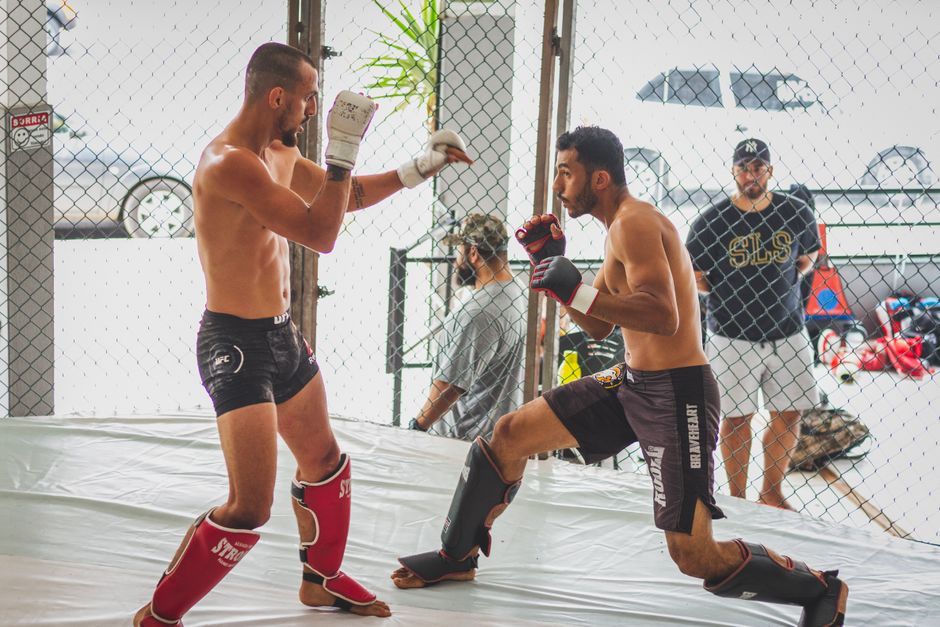
It is the last round of a Thursday sparring session. Two fighters in headgear are tired, the rounds have run long, and the coach is watching from the corner with a timer in his hand. One of them has had a dull headache since Tuesday and has told no one. This is where kickboxing injury prevention either works or does not: the sparring rules, the checks on shins and hands, and the honesty about symptoms that aim to lower the chance of getting hurt. They can lower the odds. They cannot promise anything.
Quick answer: In kickboxing the head is the most injured area in competition and the legs in training, so prevention means limiting head contact in sparring, never sparring with symptoms, caring for shins and calves, wrapping hands and fitting gloves well, and cutting weight only with a plan. The CDC says an athlete with a suspected concussion should be removed from play the same day and cleared by a health care provider before returning. See a sports medicine doctor, physical therapist or athletic trainer if pain in a shin, hand or knee keeps coming back, and go to emergency care for danger signs.
General information, not medical advice. This page is about lowering risk. For what each kickboxing injury looks like and when to get it checked, see our kickboxing injuries guide.
Know where the risk sits
Prevention works best when it aims at the real problem. In a Swiss survey of 419 Muay Thai, K-1 and kickboxing athletes, the legs were 74.8% of training injuries, while the head led in competition at 68.1% (Swiss Dental Journal, 2025). A review of 15 years of Nevada Athletic Commission records found head injuries were 57.8% of the injuries logged among fighters, and lacerations were the most common type (Lystad et al., 2015). So the two big jobs are protecting the head in bouts and sparring, and looking after the legs in training.
Head impacts and sparring limits
No governing body sets a single safe number of sparring rounds, and we will not invent one. What research does show comes mostly from boxers and mixed martial arts fighters: more sparring has been linked to higher blood levels of a marker of nerve-cell damage and to slower thinking and poorer balance (see sources). Long-term head-injury research specific to kickboxing is thin. With that in mind, these are general coaching habits, not tested rules:
- Keep most sparring light and technical. Body-and-legs rounds and point-style rounds teach timing with far fewer head shots.
- Match partners by size and experience, and agree the intensity before the bell.
- Count hard rounds across the week, not only in one session.
Recognize and remove
The Centers for Disease Control and Prevention (CDC) HEADS UP guidance says an athlete suspected of a concussion should be removed from play the same day, and should not return until a health care provider says so. Symptoms can appear hours later, and the CDC lists danger signs, such as a headache that gets worse, repeated vomiting, seizures, or confusion, that call for emergency care. This is a weak spot in combat sports: in a survey of 70 athletes and 35 coaches in MMA, boxing, kickboxing and Muay Thai, 79% of the athletes relied on self-diagnosis, and 68.5% of coaches said a health professional was probably not present at training (Follmer et al., 2020). Agree a rule before you start: any suspected head injury ends the session, and a headache, dizziness or fog from last time means no sparring until a doctor says so.
Time off after a knockout
In competition, the WAKO Rules (v.2, 2022) require a fighter knocked out by a head strike, or stopped for a head blow, to be examined by a doctor straight away and to stay out of every discipline for at least 4 weeks, a minimum that cannot be overruled even if a scan shows nothing. California’s athletic commission rules put a fighter knocked out or stopped by TKO on an unavailable list for at least 30 days. Those suspensions cover bouts, not your gym, so the sparring break is up to you, your coach and your doctor. Headgear is a limited answer: it protects against cuts, but the American Academy of Pediatrics (AAP, 2016) found no evidence that it reduces concussion, and in a 2023 trial of WAKO K-1 rules fighters landed more direct head strikes with headgear on. Wear it for the skin and keep the rounds light.
Shin and leg checks
A narrative review of 23 studies of the leg kick (Healthcare, 2026) describes a trade-off: kicking with the shin loads the tibia, while kicking with the instep risks the small bones of the foot and the ankle, and the pivoting support leg takes rotational stress through the knee. The Victoria study of professional kickboxers found the lower leg was the most common single injured region (23.3%; Zazryn et al., 2003). After each session, run a quick check:
- Shin: a lump or a spot that stays tender from one session to the next needs a clinician, not more kicks. Stress fractures come from repeated loading that outpaces the bone’s ability to adapt, often with training-load errors or low energy intake (Journal of Clinical Medicine, 2026). We found no studies backing shin-conditioning methods such as rolling a bottle or stick, so we do not recommend them.
- Calf: repeated low kicks bruise muscle. In 2026, doctors reported an elite 21-year-old kickboxer who developed acute compartment syndrome after repeated calf kicks in sparring and needed emergency surgery. The American Academy of Orthopaedic Surgeons (AAOS) calls this a surgical emergency: pain far worse than the injury seems to explain, a tight swollen calf, tingling or burning. Go to the emergency department.
- Foot and toes: AAOS describes toe and forefoot fractures from hitting something hard, and untreated ones can leave chronic pain. A swollen, bruised toe after a check needs a look.
- Knee: WAKO bans kicks to the knee in low-kick and K-1 rules, and the American Boxing Commission calls thrusting kicks to the knee joint a foul, so keep partners’ kicks off the knee in sparring, too.
Strength work and a sensible build-up are in our kickboxing training guide; the 2016 International Olympic Committee (IOC) consensus statement on load in sport (Soligard et al.) says rapid jumps in training load are risky and a gradual, planned build helps protect athletes. It gives no kickboxing number, and neither do we.
Hand wraps and glove fit
Hand and wrist injuries are among the most frequent in elite boxing (Loosemore et al., 2017), and AAOS describes the “boxer’s fracture” of the hand bone behind the little finger. Wraps are standard practice to hold the hand and wrist together. WAKO requires hand wraps with gloves, 2.5 to 5 metres by 5 cm in its rules, and forbids sticking them with tape in low-kick and K-1. Keep the wrist straight when you hit, a general coaching habit and not a tested rule. Glove fit matters too: a glove that is too small for the hand, or too light for the job, leaves less padding between your fist and your partner’s face. Title Boxing’s size chart suggests 16 to 18 oz for adults over 150 lb, and Hayabusa suggests 12 oz for bags and 16 oz for sparring. Those are maker guides, not standards. In competition WAKO requires 10 oz kickboxing gloves for most ring disciplines and 8 oz open-palm gloves for point fighting. Full details are on our kickboxing gear page.
Protective gear: standards versus claims
What the rulebooks say: WAKO makes headgear, a mouthguard, groin protection, shin guards (covering shin and instep in low-kick and K-1) and hand wraps mandatory in its fighting disciplines. What is only a seller’s claim: any listing that says “WAKO approved”. We did not check such wording against WAKO’s own list, so ask your coach what your event requires. On mouthguards, a UK survey of 92 kickboxers found 71.7% had at least one injury to the mouth or face, and injuries per participant were 2.1 with headgear, 2.6 with a mouthguard and 4.7 with neither (Patel and Moore, 2025). In the Swiss survey, only 11.5% wore a professionally made mouthguard; a dentist can fit one.

Venum Kontact Shin Guards
- Slip-on with hook-and-loop straps
- Cover shin to foot
- Machine washable
$27.99 at Amazon, as of Nov 17, 2026 02:07 UTC
Check price on Amazon
Shock Doctor Gel Max Mouthguard
- Boil-and-bite fit
- Ask a dentist about custom
$11.99 at Amazon, as of Nov 17, 2026 02:07 UTC
Check price on AmazonSafe weight management
In a 2026 study of 10 elite male kickboxers, the average loss in the week before weigh-in was 3.1 kg (4.2%) and all were dehydrated on competition day (BMC Sports Science, Medicine and Rehabilitation). In another study of elite kickboxers cutting 5% or more in 48 hours, a heart-rate-variability measure stayed lower through match day (Frontiers in Psychology, 2026). A scoping review linked rapid weight loss to higher muscle-damage markers, fatigue and injury rates (Journal of Functional Morphology and Kinesiology, 2025). These are small studies and cannot say how much is safe for you. What the rules say: WAKO runs a daily weigh-in with fights at least 3 hours later in ring disciplines; California’s commission allows oral rehydration only, bans IV fluids if you want to compete, and can test hydration. Planned weight changes are a question for a sports dietitian or doctor, and more so for young fighters. See our fight day page and nutrition page.
Youth fighters
The AAP’s 2020 statement on resistance training for children and adolescents supports supervised strength work for young athletes. For a young kickboxer’s foot, one case report describes Iselin disease, a growth-plate pull at the outer foot, in a 15-year-old kickboxer, suspected from the pull of side and round kicks, with normal X-rays and a diagnosis by MRI. WAKO’s rules give children shorter rounds and light-contact formats. More is on our youth kickboxing page.
What prevention cannot do
Kickboxing is a striking sport. Even with careful sparring, good gear and sensible weight habits, concussions, cuts, broken hands and sore shins still happen, and no program on this page has been shown to prevent them in kickboxing. Rest habits are on our recovery page.
When to see a professional
- Emergency care: any CDC danger sign after a head hit, a tight and very painful calf, or severe or worsening belly pain after a body shot.
- Same day: a knocked-out tooth needs a dentist right away.
- Soon: a shin lump, a hand that stays swollen, a knee that gives way, or a headache that lingers after sparring. Ask a sports medicine doctor, physical therapist or certified athletic trainer.
Kickboxing injury prevention: FAQs
How much sparring is safe in kickboxing?
No governing body sets one safe number. Research in boxers and MMA fighters links more sparring with markers of nerve-cell damage and with slower thinking and poorer balance, so many coaches keep most sparring light. Ask your coach and a doctor about your own plan.
Does headgear prevent concussion in kickboxing?
Not proven. Headgear helps against cuts, but the AAP found no evidence it reduces concussion, and a WAKO K-1 pilot found more direct head strikes with it on.
Should I train through a sore shin?
Persistent focal shin pain should be checked. Stress fractures come from repeated loading that outpaces bone adaptation, and a clinician can tell what is going on.
Do hand wraps prevent a broken hand?
We found no study showing that they do, though WAKO requires them with gloves and they are standard practice. Wraps, a straight wrist and well-fitted gloves are habits, not guarantees.
Is it safe to cut weight for a bout?
Small studies in kickboxers link rapid loss with dehydration and lower heart-rate variability, and a review links it with higher injury rates. Talk with a sports dietitian or doctor first, especially for a young fighter.
Sources
- CDC HEADS UP: signs and symptoms and response
- Swiss survey of Muay Thai, K-1 and kickboxing athletes, 2025
- Lystad et al., Nevada Athletic Commission injuries, 2015
- Zazryn et al., Victoria professional kickboxers, 2003
- Follmer et al., concussion knowledge in combat sports, 2020
- Sparring and blood nerve-damage marker, 2018 and sparring exposure in professional boxers
- WAKO Rules v.2 (2022)
- California State Athletic Commission laws and regulations
- American Boxing Commission unified kickboxing rules
- AAP, Injury Risk in Martial Arts, 2016
- WAKO K-1 headgear pilot, 2023
- Leg-kick narrative review, Healthcare, 2026
- Compartment syndrome after calf kicks, 2026 and AAOS compartment syndrome
- Stress fractures, Journal of Clinical Medicine, 2026
- AAOS toe and forefoot fractures and hand fractures
- Loosemore et al., hand and wrist injuries in elite boxing, 2017
- Title Boxing size chart and Hayabusa glove guide (maker guidance)
- Patel and Moore, UK kickboxers’ maxillofacial injuries, 2025
- Weight cut in elite kickboxers, 2026, heart-rate variability study and scoping review
- Soligard et al., IOC consensus statement on load and injury, 2016
- AAP resistance training for children and adolescents, 2020
- Iselin disease in a young kickboxer, 2017
General information for education only, not medical advice. It does not replace a visit with a doctor, physical therapist or athletic trainer. See how we write and check our pages in our editorial policy.