This article contains affiliate links: if you buy through them we may earn a commission, at no extra cost to you. Read our affiliate disclosure.
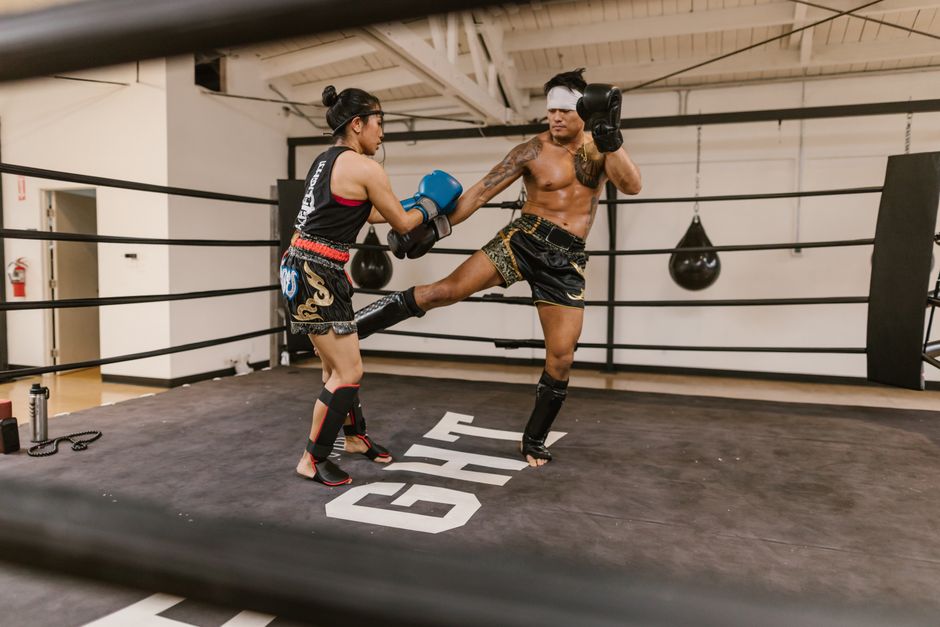
It is Tuesday night in a Muay Thai gym. Before the bell the trainer walks the room: who is paired with whom, who has a fitted mouthguard, whose hand wraps are bunched, who still has a headache from Saturday and should be on the pads, not in the ring. Nobody says “injury prevention” out loud, but that is what it is. Muay Thai injury prevention means the habits around a nak muay, how hard and how often they spar, how they build shin and kicking volume, how the clinch is policed, how hands are wrapped and gear fitted, and how weight is managed, that aim to lower the chance and the cost of getting hurt in a sport of eight limbs. It lowers risk. It does not remove it.
Quick answer: Head impacts add up, mostly in sparring, and no source we read gives a safe number of hard rounds, so keep most sparring light, match partners carefully and never spar with symptoms. Under CDC HEADS UP, a fighter who may have a concussion stops that day until a health care provider clears a return. Wrap your hands every session, wear gear that fits, build kicking volume gradually and make weight over weeks, not by drying out. See a sports medicine doctor, physical therapist or athletic trainer for a tight swollen calf, shin pain that lingers, or headaches and memory changes after sparring.
General information, not medical advice. This page is about lowering risk. For what each Muay Thai injury looks like and when to get it checked, see our Muay Thai injuries guide, which we do not repeat here.
Know where the risk sits
Prevention works best when it aims at the real problem. In a UK study of 152 Muay Thai practitioners (Gartland et al., 2001), the legs were the most injured area in beginners, amateurs and pros alike. A 2025 Swiss survey of 419 Muay Thai, K-1 and kickboxing athletes found legs made up about three in four training injuries, while the head led in competition. So the work splits in two: protect the legs and hands in the gym, and protect the head in sparring and fights.
Head impacts and sparring limits
Honest answer first: no federation or study we read sets a safe number of sparring rounds for Muay Thai. What exists is evidence that exposure adds up.
- A 2026 case study put a sensor mouthguard on one elite Muay Thai fighter through seven sparring sessions and recorded 590 head impacts, most of them low with occasional high rotational peaks (Sports, 2026). That is one fighter, not a rule.
- In pro boxers and mixed martial arts fighters, more sparring has been linked to a blood marker of nerve-cell damage and to slower thinking (PMIDs 29609512 and 25101253). Those are boxing and MMA studies; we found no equivalent long-term study in Muay Thai.
Habits that keep head contact down
- Make most rounds light. Body-and-leg rounds, clinch rounds and the flowing “play” sparring many camps use build timing with far fewer head shots. This is common coaching practice, not a studied dose.
- Pair by size and experience, with a coach watching. Elbows to the head are not everyday sparring.
- Do not count on headgear for the brain. The American Academy of Pediatrics (2016) found no evidence that soft headgear prevents concussion, and a K-1 rules pilot found fighters landed more direct head strikes while wearing it. Headgear mainly helps with cuts.
- Neck strength is not a proven shield. A 2026 review found the evidence on neck strength and concussion inconclusive (Postula et al.).
Recognize and remove
CDC HEADS UP says an athlete who may have a concussion comes out of activity the same day and returns only when a health care provider clears it. In the gym that means a dazed look, slow answers, clumsiness, headache, dizziness, nausea or fogginess ends that fighter’s night, whatever they say. The CDC’s emergency signs (one pupil larger than the other, a worsening headache, slurred speech, weakness or numbness, repeated vomiting, seizures, increasing confusion, loss of consciousness) mean 911 or the emergency department. Under IFMA rules (May 2026), a knockout or stoppage for head blows means at least 30 days with no competition or sparring, longer for repeats, with a neurologist’s clearance. The injuries page has the full ladder.
Shin conditioning: cautions
Our training page covers shin conditioning myths versus evidence; here is the prevention angle. A 2026 review of leg-kick research explains the trade-off: the shinbone carries the load of kicking. A 2026 review of stress fractures describes them as what happens when load outruns the bone’s ability to adapt, with training errors and low energy availability among the causes. So the safer pattern is to build kick volume on the bag and pads a little at a time, kick with technique that lands on the right part of the shin, and back off when a sore spot stops you kicking normally. A 2026 case report described an elite kickboxer who needed emergency surgery for compartment syndrome after repeated calf kicks in sparring. AAOS says pain far out of proportion to the injury, with a tight swollen calf, is a surgical emergency. Leg-kick-heavy sparring rounds are a place to hold back.
Rapid jumps in training load are the general risk. The 2016 International Olympic Committee consensus statement on load and injury makes the point that sudden increases are risky and a planned, gradual build protects athletes. It gives no Muay Thai number, and neither do we.
Clinch, knees and elbows
The clinch is where fighters are closest and most tangled. IFMA rules ban hip throws, hooking the legs, lifting and joint locks, and the same limits belong in gym clinch rounds. Agree on the intensity with your partner before the round, tap or say stop early, and keep elbows and knees at touch strength in drills. IFMA makes shin and elbow guards mandatory in competition; wear elbow pads for partner elbow work too. A 2026 leg-kick review links the pivoting support leg to rotational stress on the knee, which is a reason to build roundhouse volume gradually (coaching advice, not a studied dose). A knee that pops or gives way needs a doctor (AAOS).
Hand wraps and gear fit
Separate what is verified from what makers say.
- Verified rules and research: IFMA requires wraps of no more than 5 metres, with tape allowed only as a single wrist strap, and a form-fitted mouthguard. In a UK survey, 14% of Muay Thai athletes had a dental injury (Pickering et al., 2020). AAOS names the boxer’s fracture, the hand-bone break from punching with a closed fist. Hand and wrist injuries are frequent in punching sports (Loosemore et al., 2017).
- Maker claims, not independent proof: sizing charts such as Title Boxing’s. Treat them as a starting point. Lab tests found approved boxing headgear roughly halved rotational acceleration of a gloved punch (McIntosh and Patton, 2015), which is not the same as preventing concussion.
Practical fit checks: wraps snug but not tingling, gloves that do not leave the knuckles bare, shin guards that cover the shin and instep and do not spin, headgear that does not slip over the eyes, and a mouthguard that stays put without biting. In a 2016 study, protective equipment use was linked to lower injury odds (Strotmeyer et al.). Air out gloves and wash wraps often, and shower after every session; the National Athletic Trainers’ Association advises not sharing towels or gear and keeping suspicious rashes off the mats. Our gear page covers choices and sizes.

Hayabusa 4.0 Perfect Stretch Hand Wraps
- 180 in
- Four-way stretch
- Thumb loop
$19.99 at Amazon, as of Nov 17, 2026 02:07 UTC
Check price on Amazon
Shock Doctor Gel Max Mouthguard
- Boil-and-bite fit
- Gel liner
- Adult and youth sizes
$11.99 at Amazon, as of Nov 17, 2026 02:07 UTC
Check price on Amazon
Fairtex SP5 Muay Thai Shin Guards
- Covers shin and instep
- Two hook-and-loop straps
- Sizes XS to XL
$105.00 at Amazon, as of Nov 17, 2026 02:07 UTC
Check price on AmazonWeight management
Many fighters still cut water, and the numbers are not reassuring. Australian Muay Thai fighters, winners and losers alike, had typically dropped around 5 to 6% of body weight in the week before fighting (Sports, 2024). A 2026 study of ten elite kickboxers who lost about 4% found all were still dehydrated on competition day. A 2026 study in MMA and Muay Thai fighters found a dehydration protocol produced markers suggesting acute kidney stress, and a 2025 paper links rapid weight loss to higher muscle-damage markers and fatigue. The International Society of Sports Nutrition’s 2025 position stand points to oral rehydration after the scale, not shortcuts. Under IFMA rules, a weight more than 5% above class is a disqualification, and some pro events add hydration tests; our fight day page covers those. Plan weight with your coach and a registered sports dietitian, over weeks, and see our nutrition page. Dizziness, confusion or a racing heart after a cut means telling the ringside doctor.
Environment: heat, humidity and mats
Gyms in warm, humid climates add risk of their own. A 2026 case report described a Muay Thai fighter back from training in Thailand with a rare bacterial skin infection on the legs, possibly spread by contact and mats in humid settings. Keep the mats clean and report any open skin or rash to your coach.
Young fighters
IFMA competition rules limit contact by age: children under 12 may not strike the head, and under-14s may not use elbows or knees to the head. The American Academy of Pediatrics supports supervised strength training with good technique and gradual progression. Our youth page has the detail.
What prevention cannot do
Muay Thai allows full-power strikes to the head, shins, knees and elbows. Nothing on this page makes that safe, and no gear, program or rule guarantees you will not be hurt. After an injury, see our recovery page.
When to see a professional
- Emergency: any CDC concussion danger sign, trouble breathing after a body shot, or a tight, swollen calf with pain out of proportion.
- Soon: a suspected concussion, shin pain in one spot lasting weeks, a sunken knuckle, headaches or memory changes building over weeks of sparring.
Ask a sports medicine doctor, physical therapist or athletic trainer; they, not this page, decide on return to sparring.
Muay Thai injury prevention: FAQs
How much sparring is safe in Muay Thai?
No source we read gives a safe number. Research in boxers and MMA fighters links more sparring with brain changes, so keep most rounds light, limit hard rounds to fight camp and never spar with concussion symptoms.
Does headgear stop concussions in sparring?
Not reliably. The American Academy of Pediatrics found no evidence soft headgear prevents concussion; it mainly helps with cuts.
Can I condition my shins safely?
We found no study showing sticks or bottles make shins tougher. Build bag and pad volume gradually and see a doctor for shin pain that lingers.
Do I need hand wraps for the heavy bag?
Wrapping every session is standard practice, and hand and wrist injuries are frequent in punching sports. Wraps do not prevent every break, so land with a straight wrist.
Is it safe to cut water to make weight?
Studies of fighters who do show dehydration on competition day. Make weight over weeks with a dietitian’s help; dizziness or confusion after a cut is a reason to see the doctor.
Sources
- CDC HEADS UP, concussion response and signs and symptoms
- IFMA Rules and Regulations v3.057, May 2026
- Gartland et al., UK Muay Thai injuries, 2001
- Swiss survey of Muay Thai, K-1 and kickboxing athletes, 2025
- Instrumented mouthguard case study, Muay Thai sparring, 2026
- Sparring and neurofilament light in fighters and Cumulative Sparring Index, pro boxers
- K-1 rules pilot, headgear and head strikes
- AAP, Youth Participation and Injury Risk in Martial Arts, 2016
- McIntosh and Patton, headgear and rotational acceleration, 2015
- Postula et al., neck strength and concussion, 2026
- Leg-kick narrative review, 2026
- Stress fracture review, J Clin Med, 2026
- Compartment syndrome after repeated calf kicks, 2026 and AAOS compartment syndrome
- Soligard et al., IOC consensus statement on load and injury, 2016
- AAOS hand fractures and ACL injuries
- Loosemore et al., hand and wrist injuries, 2017
- Pickering et al., dental injuries, 2020 and Strotmeyer et al., protective equipment, 2016
- NATA skin diseases position statement and skin infection case report, 2026
- Weight loss in Australian Muay Thai events, 2024, elite kickboxers, 2026, dehydration and kidney markers, 2026, rapid weight loss, 2025
- ISSN position stand on combat sports nutrition, 2025
- Title Boxing size chart (maker guidance)
General information for education only, not medical advice. It does not replace a visit with a doctor, physical therapist or athletic trainer. See how we write and check our pages in our editorial policy.