This article contains affiliate links: if you buy through them we may earn a commission, at no extra cost to you. Read our affiliate disclosure.
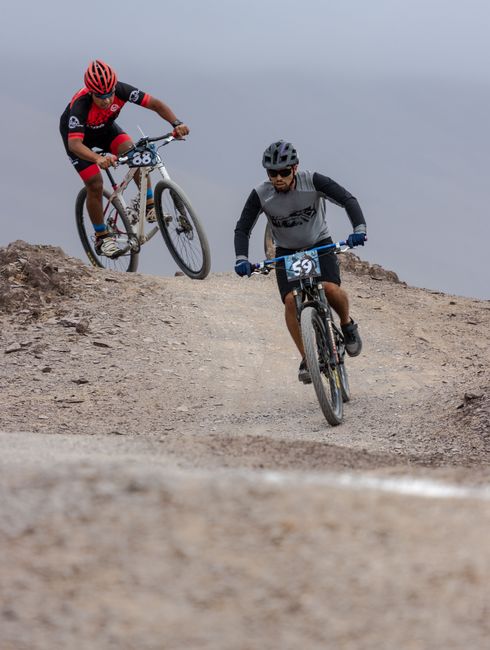
It is a quarter to nine at the trailhead and the group is not quite ready to roll. One rider is squeezing both brake levers, another is pushing down on her fork to check it moves, and the new rider is being told, kindly, to buckle his helmet and put his knee pads on before the first descent instead of after. Those few minutes are mountain bike injury prevention: the habits around a rider (a helmet that fits, protective gear, skills that match the trail, a bike in working order, a sensible read of the conditions and honest attention to tiredness) that aim to lower the chance of getting hurt. They can lower the odds. They cannot promise a clean ride.
Quick answer: Most serious mountain bike injuries come from crashes, and a 2025 video study of 534 crashes found that over-the-bars falls after poorly landed jumps were the most common type. So the plan is: wear a helmet that fits on every ride, add pads and a full-face helmet as the trail gets faster and steeper, learn the skills before you ride the features, check the bike, ride the trail rating you can handle, and stop when you are tired. See a sports medicine doctor, physical therapist or athletic trainer if pain keeps returning, and call 911 after any crash with loss of consciousness, neck or back pain, numbness or worsening confusion.
General information, not medical advice. This page is about lowering risk. For what each injury looks like and how a crash plan works far from the trailhead, see our mountain biking injuries guide.
Where the risk sits
Prevention works best when it is aimed at how riders actually get hurt. In the 2025 video analysis of 534 real crashes (Bonte and colleagues, European Journal of Sport Science), 55% were over-the-bars falls, most of them after a poor landing from a jump, and 75% of those happened above 30 km/h. A national US emergency-room analysis (Koehne and colleagues, 2025) found that falling off the bike caused about 63% of mountain bike injuries, and that the authors recommended front-brake coaching for young riders. A 2025 sports-medicine review (Koivisto and colleagues, Current Sports Medicine Reports) noted that few studies have tested prevention measures in mountain biking. Much of what follows is sensible practice backed by crash data, not proven recipes.
Before you roll: warm-up and a bike check
Football and soccer have named, tested warm-up programs such as FIFA 11+. We did not find an equivalent published program for mountain biking, so there is no evidence-based routine to cite. Many riders spin easily on a flat or a fire road for several minutes and loosen the shoulders, hips and wrists first, which is common practice rather than a studied protocol. The bike check is simpler to defend. The International Mountain Bicycling Association (IMBA) Rules of the Trail say to plan ahead and ride in control, and in practice that starts with working brakes, tires with air, a tight stem and bars, and nothing loose.
Skills first, then speed and features
Because so many crashes are over-the-bars falls, braking and landing skills are the heart of prevention. The emergency-room study named above recommends front-brake coaching for young riders, and the video study tied the most common crash to poor jump landings. A skills clinic or a coached group ride is the usual way to learn them. Our mountain bike training page covers a skills progression in more detail. Tips such as walking a feature first and rolling a jump before you fly it are common coaching practice, not published rules.
Build load gradually, and strengthen what the bike doesn’t
We found no mountain-bike-specific rule for how fast to add rides or hours, so we do not give a number. What the sports medicine bodies do say is general. The 2016 IOC consensus statement on load and injury (Soligard and colleagues) is about training load and injury risk across sports, and the American Academy of Pediatrics (AAP) advises young athletes to take at least one to two days off a week and time away from one sport. Add riding time in small steps, especially after a lay-off.
For strength, the CDC adult guidelines recommend muscle-strengthening work on at least two days a week. In a 2026 randomized study of 24 trained female mountain bikers aged 14 to 22 (Blechschmied, Strahler and Granacher, Sports Medicine – Open), eight weeks of off-season trunk and core training improved trunk strength and reduced lateral bike movement. That study measured performance and strength, not injuries, so read it as a reason to train the core, not as proof that it prevents crashes. The training page above has exercises and a sample week.
Trail conditions, weather and etiquette
- Trail ratings. The IMBA difficulty system runs from green circle through blue square and black diamond to double black, and rates technical challenge only. A blue at one trail center can ride like a black somewhere else, so look before you commit.
- Ride in control and share the trail. The IMBA Rules of the Trail ask riders to ride in control, yield appropriately, announce themselves when passing, and to carry what they need.
- Heat. The National Athletic Trainers’ Association (NATA) position statement on exertional heat illness advises acclimatizing over 7 to 14 days and names cold-water immersion as the most effective cooling for exertional heat stroke.
- Storms. NATA’s lightning-safety statement and the National Weather Service say to get into a building or an enclosed metal vehicle when thunder is heard, and to wait 30 minutes after the last thunder. See ride day and race day for the full plan.
- Remote riding. The National Park Service advises telling someone your route and return time, checking the weather and setting a firm turnaround time. The injuries page has a full emergency plan.
If you race, the rules page explains the courses and formats, and the leagues and associations page lists the bodies whose rulebooks set the safety requirements.
Bike setup and fatigue
Setup for your weight (suspension pressure, tire pressure, lever and grip position, saddle height) matters for control and comfort, but we found no published study linking a specific setup to fewer injuries. The maker’s setup guide or a bike shop is the place to start. Pain in the knee, back or hands that returns every ride is a prompt to get the fit looked at; see cycling injuries for fit-related overuse.
Fatigue is where riders talk themselves into trouble. The 2023 study of the UCI Downhill World Championships in Fort William (Fallon and colleagues) found that more riders were injured in training than in racing, which is a reminder that injuries are not only a race-day issue. Tired hands and slow eyes are a practical sign to stop; fueling is covered in nutrition and supplements.
Helmets, concussion and protective gear
A 2017 meta-analysis of 55 studies (Olivier and Creighton) linked bicycle helmets with about half the odds of head injury and about 69% lower odds of serious head injury. The US Consumer Product Safety Commission (CPSC) requires every bike helmet sold in the US to meet its standard, says a helmet should fit snugly, should be replaced after a crash, and notes that no helmet has been proven to prevent concussion. ASTM F1952 is the standard for downhill mountain bike racing helmets, and the UCI regulations require full-face helmets for downhill and enduro riding, with USA Cycling requiring them in downhill and four-cross races. A 2023 laboratory study (Meng and colleagues) found that a full-face helmet reduced brain strain in lower-face impacts, but not in mid-face impacts. Real-world proof that full-face helmets prevent injury on trails is still thin, so treat the choice as a trade-off, not a guarantee.
What a maker prints on the box is a separate matter from a standard. When we list specs below, those marked “maker” come from the company, not from a test we ran. The Virginia Tech helmet ratings recommend 4 and 5 star models. Helmet types, pads and gloves are on the gear page.
If you suspect a concussion, the CDC’s HEADS UP guidance is to stop riding and get a health care provider to say when it is safe to return. A 2022 review of downhill riders found that many kept riding after a concussion, so a rule you agree on before the ride (a crash plus confusion means you are done for the day) is worth making.

Giro Radix MIPS
- MIPS rotational layer
- Roc Loc 5.5 fit system
- Adjustable visor

Fox Racing Launch Pro D3O Knee Guard
- D3O impact foam
- Removable hard cap
- CE-certified (per listing)
Young riders
The AAP says a child should wear a helmet on every ride, and that a bike to grow into is a bad idea: the child should reach the ground with the balls of both feet. National Interscholastic Cycling Association (NICA) surveillance over five seasons (2018 to 2022, 119,098 student-athlete years) found that about 2.2% of riders per season had an injury event, with wrist and hand injuries, head injuries and shoulder or collarbone injuries leading, and that the rate fell 27% over the period. See the youth page for how teams work.
What prevention can’t do
Even a well-prepared rider on the right trail can crash. Elite downhill riders at the 2023 World Championships, with full gear and practiced skills, were injured at a rate of about 10% over five days. Pads do not stop every fracture, and rare spinal injuries happen despite all of it. Prevention lowers risk; it does not remove it.
When to see a professional
- Call 911: loss of consciousness, a possible neck or back injury, concussion danger signs such as a worsening headache, repeated vomiting or growing confusion, or a possible broken bone.
- Within a day or two: a suspected concussion, a shoulder that will not lift, wrist pain at the base of the thumb after a fall.
- Soon: knee, back or hand pain that returns every ride, or numbness that lasts after riding.
Healing and getting back on the bike gradually are covered in mountain bike recovery, and trackers that can send crash alerts are on the wearables page.
Mountain bike injury prevention: FAQs
How do I avoid going over the handlebars?
Over-the-bars falls were 55% of crashes in a 2025 video study, often after a poor jump landing. Coaching on braking and landing is the usual answer; the national emergency-room study recommended front-brake coaching for young riders. A coach or skills clinic can teach it safely.
Do knee pads and body armor prevent injuries?
USA Cycling strongly recommends body armor, elbow and knee pads and full-finger gloves at gravity events, and many trail riders wear knee pads. We found no study proving they prevent fractures, so they are best seen as a layer of protection, not a guarantee.
Does a full-face helmet prevent concussion?
The CPSC says no helmet has been proven to prevent concussion. A lab study found full-face helmets reduced brain strain for chin impacts but not mid-face impacts, and real-world trail data are scarce.
When should I replace my helmet?
After a hard crash. The CPSC standard requires a warning that impact damage may not be visible, and the CPSC advises replacing a helmet after a single significant impact.
Is core strength worth the time?
The CDC recommends muscle strengthening at least two days a week for adults, and a 2026 trial in young female mountain bikers showed better trunk strength and less lateral bike movement. It did not measure injuries, so train for strength and control, not as a promise against crashes.
Sources
- Bonte et al., video analysis of 534 mountain bike crashes, Eur J Sport Sci, 2025
- Koehne et al., US emergency-department mountain bike injuries 2013-2022, Orthop J Sports Med, 2025
- Koivisto et al., mountain biking injuries review, Curr Sports Med Rep, 2025
- NICA injury surveillance 2018-2022
- Fallon et al., 2023 UCI Downhill World Championships injuries, BMJ Open Sport Exerc Med, 2024
- Scoping review of downhill mountain biking injuries, 2022
- Meng, Ivarsson and Lubbe, full-face bike helmet facial impacts, Accid Anal Prev, 2023
- Blechschmied, Strahler and Granacher, trunk training in young female mountain bikers, Sports Med Open, 2026
- Soligard et al., IOC consensus statement on load and injury, 2016
- AAP clinical report, sports specialization, Brenner 2016
- AAP clinical report, resistance training for children and adolescents, 2020
- CDC, physical activity guidelines for adults
- CDC HEADS UP, signs and symptoms of concussion
- CPSC, Which Helmet for Which Activity?
- Virginia Tech Helmet Lab, bicycle helmet ratings
- USA Cycling rulebook (helmets and protective gear)
- UCI mountain bike regulations 2026
- IMBA, Rules of the Trail
- IMBA trail difficulty ratings (Singletracks summary)
- NATA, Exertional Heat Illnesses, 2015
- NATA, Lightning Safety, 2013
- National Weather Service, lightning safety outdoors
- National Park Service, hike smart
- AAP HealthyChildren.org, Bicycle Safety: Myths and Facts
- NICA, brain injury awareness
General information for education only, not medical advice. It does not replace a visit with a doctor, physical therapist or athletic trainer. See how we write and check our pages in our editorial policy.