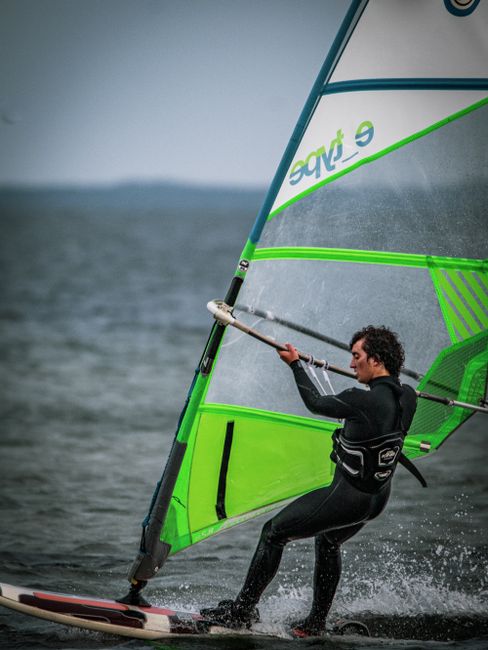
The wind has just gone left, the fleet is bunched at the pin end, and your crew says “one minute” a little louder than usual. Or it is race four on day three, you are tired, the breeze is building, and you rounded the windward mark in the wrong place. Or you are sitting ashore after a race you threw away. Sailing mental training means practicing the skills between your ears (reading changing conditions, talking clearly in the boat, staying composed at the start and at the marks, resetting after a bad race) the way you practice tacks and gybes. This page is for dinghy and keelboat racers, from juniors to masters. It is about mental performance and judgment, which is different from mental health; a section below explains the difference.
Quick answer: Sailors can train a few mental habits: a short routine before the start, a simple plan agreed with your crew, one cue to refocus after a mistake, and a reset between races. Research on mental skills in sailors specifically is thin, and none of these tools guarantees a better result. Look after sleep and fatigue, because tired sailors decide worse. See a doctor, licensed psychologist or other qualified professional if worry, low mood or trouble eating or sleeping lasts more than a couple of weeks or gets in the way of daily life. In a crisis in the US, call or text 988.
Why racing is a decision-making sport
Sailing never stands still: wind shifts, current, other boats and the next mark are all moving. A 2026 study of Masters sailors at the Oceania and Australian Laser Masters Championships (22 sailors, European Journal of Sport Science) found mental and physical fatigue, stress and workload all rose after the event and recovery fell. The sailors named weather and complex decision making as important modulators of fatigue, with weather affecting physical fatigue more than mental fatigue. It was a small survey of one championship, so it describes those sailors, not every fleet. The practical point is that the mind gets tired across a regatta too; our sailing recovery page covers rest, and the fitness page notes that fatigue builds up over a regatta.
Decision-making when conditions change
We found no published trial that tests a decision-making training program in racing sailors, so the habits below are common coaching practice unless a source is named. What the research does support is that decisions suffer when you are worn down. A 2026 systematic review in Sports Medicine of sleep in offshore sailing regattas (16 studies) reported that partial sleep deprivation impairs cognition and reaction speed and increases technical errors. It described “banking sleep” beforehand as beneficial for short regattas and said no single approach fits every crew size and race length. It is about offshore racing, so for a weekend dinghy regatta treat it as a reason to protect your sleep, not a schedule.
- Make a plan before the start, then hold it loosely. Note the shift pattern, the favored side, the current and the first-beat options on the way out. Then keep looking: a plan is a starting point, not a promise.
- Check the same few things on every leg. Wind direction and pressure, the boats near you, the next mark. A short list is easier to run when you are tired.
- Decide, commit, then review ashore. A good decision can lose a place and a bad one can win it; judge the call on what you knew at the time.
Crew communication
On a double-handed dinghy or a keelboat, much of the mental game is shared. A 2025 evaluation of an inclusive sailing team of sighted and visually impaired athletes at Kiel Week (Greve and colleagues, Frontiers in Sports and Active Living; interviews over three years) found that communication between the sighted and blind athletes played a special role and became a strength of the team. It is one German team, so it proves no method for every crew.
- Agree on words before the race. Who calls the line, who calls the shifts, and who says “ready about.” Keep calls short and the same every time.
- Agree who decides. Helm and crew can discuss, but one voice makes the final call so there is no hesitation at a mark.
Composure at starts and mark roundings
Starts and marks are where boats bunch and pressure peaks. A 2026 position statement from Exercise and Sports Science Australia on performance under pressure (Schweickle and colleagues, Sports Medicine) says pressure can have both helpful and harmful effects, and lists pre-performance routines, implicit attentional strategies, psychological skills training and mindfulness-based approaches among the strategies that can be used. It also says realistic pressure in training can prepare athletes, so run practice starts with a clock and a fleet.
A study of 54 Olympic RS:X windsurfers at a World Cup event (Sensors, 2026) used GPS tracking and found that first-leg ranking was the variable most strongly associated with final ranking in light, moderate and strong wind. That is a windsurfing class, and an association is not proof that a good start causes a good finish. It is still a sensible reason to give the start and first beat a routine of their own. A plain version:
- Before the sequence: a few slow breaths, one quick check of line, shift and current, one sentence of plan.
- In the last minute: hand the words to the crew, “30 seconds, 15 seconds,” and keep your eyes up on the boats around you, not on your own worries.
- At the mark: agree the rounding plan on the approach, make the call early, and settle into the next leg before thinking about places lost or won.
Our sailing rules page covers the basics of the start sequence and right of way; knowing the rules cold removes one source of hesitation.
Confidence and focus, including in heavy air
A 2026 study of 192 sailors with recent regatta experience (Frontiers in Psychology) looked at what motivates people to race and how that links to “flow”: concentration, a sense of control and a changed sense of time. Competition motivation and a taste for novelty went with stronger flow on all three. Relaxation as a main motive went with weaker concentration, control and time distortion. It is a survey, so it shows links, not causes.
For heavy air, we found no study of confidence training in sailors. Here is what the sources do say. Coaches of the single-handed ILCA dinghy interviewed in a 2025 PLoS One study (10 coaches) rated hiking as the most physically demanding skill, said conditions change the demands, and stressed sailing in a variety of conditions and “keeping the joy.” The RS:X GPS study found that in winds above 15 knots, speed on the beam reach was a key variable for both men and women. Put together, a reasonable approach is:
- Get exposure in steps. Sail in building breeze with a coach boat or rescue cover, and add a little more each session. See our regatta day page for weather, cold water and life jackets, and the injuries page for safety.
- Build the body that backs the confidence. Strong legs and trunk make hiking feel doable; see sailing fitness.
- Give yourself a heavy-air checklist. Depower early, keep the boat flat, look ahead for the next puff, and keep the first few tacks simple.
- Know your limit and respect it. Confidence is not the same as ignoring danger. Going ashore, reefing or retiring can be the strong decision.
Handling a bad race
Everyone has a bad race: an over-early, a capsize, a protest, a bad shift. Published sailing-specific evidence on bouncing back is not available to us, so this is common coaching practice. Many coaches use a simple three-step reset between races: let the feeling out (a breath, a word with your crew), pick one fact to learn from, and name one task for the next start. Keep the full review for ashore, when you are not trying to sail a race in your head at the same time.
Imagery, routines and what the research says
Many sailors “sail the course in their heads” the evening before a race. A 2023 systematic review and meta-analysis of psychological interventions in athletes (Reinebo and colleagues, Sports Medicine; 111 studies, 25 synthesized) found moderate effects for psychological skills training, mindfulness- and acceptance-based approaches and imagery compared with controls. When non-randomized trials and subjective performance outcomes were removed, the effects were no longer significant. Our reading: these tools are worth trying alongside real time on the water, but they are not guaranteed. None of the studies in that review was a sailing trial that we could confirm.
Preparing for a regatta
Logistics belong on the regatta day page: fueling, hydration, sun, cold water and the checklist. Mentally, repeat one short routine each day: a light plan, a conditions check, a team word and one thing to learn.
Young sailors can use the same ideas. We found no sailing-specific youth mental-skills research, so keep it simple and fun: process goals (a clean start, a call to the crew) rather than only results, and a coach or parent who keeps the day light. Our youth sailing page has more on pathways and safety.
Mental performance is not the same as mental health
Everything above is about performance skills. Anxiety disorders, depression, disordered eating and burnout are health matters, not mindset problems, and a better pre-start routine does not fix them. The 2026 International Olympic Committee consensus statement on mental health in elite athletes (Reardon and colleagues, British Journal of Sports Medicine) says mental health symptoms and disorders are common among elite athletes, can have sport-related causes and can affect performance. It recommends screening and monitoring with validated tools, and says that with appropriate support and treatment many athletes can continue to train and compete safely.
Signs worth taking seriously include worry or low mood lasting weeks, panic before going afloat, big changes in eating or sleep, or dreading a sport you used to love. Start with your doctor, a licensed psychologist or another qualified mental health professional. In the US, you can call or text 988 (Suicide & Crisis Lifeline) at any time.
Sailing mental training: FAQs
How do I stay calm at the start?
A 2026 position statement from Exercise and Sports Science Australia lists pre-performance routines, among other strategies, for performing under pressure. Build a short routine (breath, plan, crew words) and rehearse it in practice starts so it is familiar on race day.
Does visualizing the course help?
Many sailors do it, but we found no sailing trial. A 2023 review across sports found moderate effects for imagery that were not stable once weaker studies were removed. Use it as an add-on to time on the water.
How do I get confident in heavy air?
Step up gradually with rescue cover, build leg and trunk strength, and keep a simple checklist. ILCA coaches in a 2025 study stressed sailing in many conditions. If a day is beyond your skills or equipment, going ashore is a sound call.
When is it a mental health problem and not a mindset problem?
When anxiety, low mood, panic, disordered eating or burnout lasts weeks or gets in the way of daily life. See a doctor or licensed mental health professional, and in the US call or text 988 in a crisis.
Sources
- Perceived mental and physical fatigue, stress and recovery in Masters sailors, 2026, European Journal of Sport Science: PubMed 41420566
- Sleep management and performance in offshore sailing regattas, systematic review, 2026, Sports Medicine: PubMed 41578071
- Greve and colleagues, 2025, Frontiers in Sports and Active Living, inclusive sailing team at Kiel Week: PubMed 40583933
- Performance and tactical indicators in elite Olympic RS:X sailing using GPS data, 2026, Sensors: PubMed 42280833
- Differential motivational pathways to flow experience in competitive sailing, 2026, Frontiers in Psychology: PubMed 42183541
- Coaches’ insights on physical training for the single-handed Olympic-class dinghy, 2025, PLoS One: PubMed 40489500
- Reinebo and colleagues, 2023, Sports Medicine, psychological interventions meta-analysis: PubMed 37812334
- Schweickle and colleagues, 2026, Sports Medicine, ESSA position statement on performance under pressure: PubMed 42271117
- Reardon and colleagues, 2026, British Journal of Sports Medicine, IOC consensus statement on mental health in elite athletes: PubMed 42580854
- 988 Suicide & Crisis Lifeline: 988lifeline.org
General information for education only, not medical advice. It does not replace a doctor, psychologist, qualified coach or other qualified professional, and sailing has real risks. See how we work in our editorial policy. Back to the sailing hub.