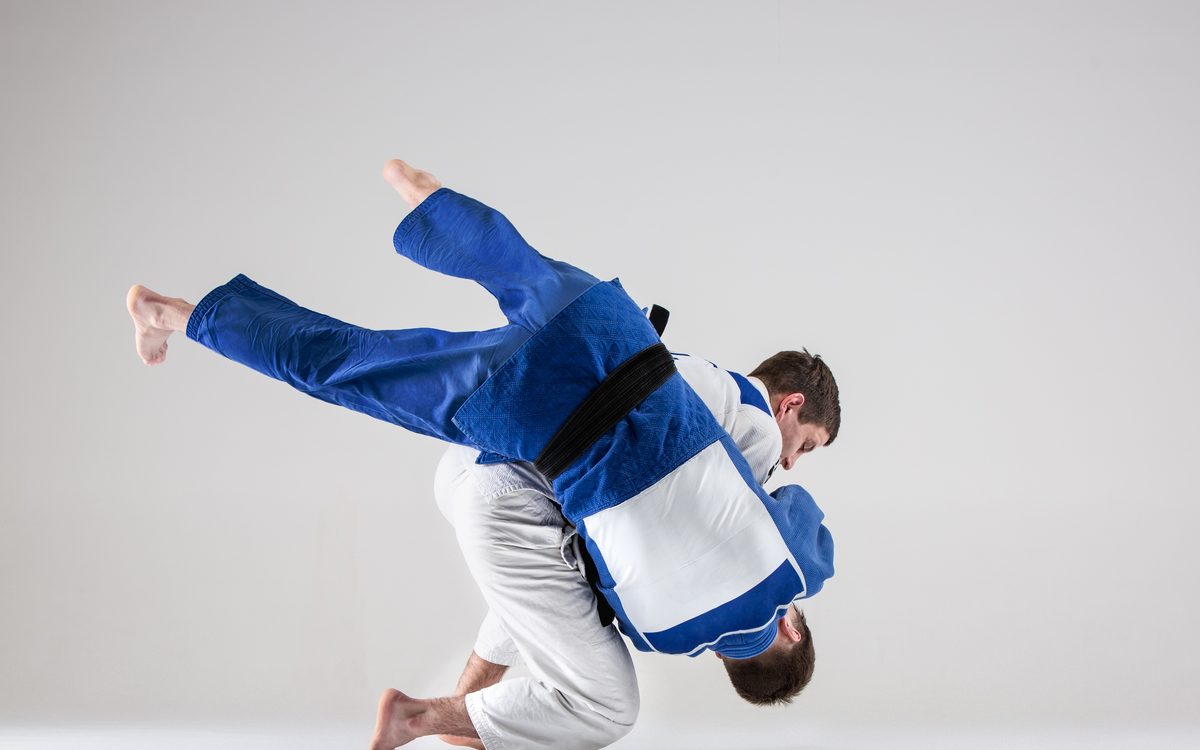
Friday afternoon, two days before a regional tournament. A 17-year-old judoka is 1.5 kilograms over her weight class, the weigh-in is tomorrow, and a teammate has just suggested a sauna suit and no dinner. Judo nutrition is the food, fluid and supplement choices that fuel training and keep an athlete healthy, and in a weight-class sport it also means knowing which weight-control methods are risky. This page is general information, not a diet plan. A sports dietitian or doctor is the right person for anything personal.
Quick answer: Most judoka do best eating regular meals with enough carbohydrate and protein, drinking fluids through the day, and competing in a weight class they can reach gradually without starving or dehydrating. Rapid weight cutting is common in judo but risky, especially for teens. Supplements are optional, none is risk-free, and any you use should be third-party tested for sport. Talk to a doctor or registered dietitian, particularly if you are under 18, pregnant, have a medical condition or take medicines.
Fuel for training
The International Society of Sports Nutrition position stand on combat sports (Ricci and colleagues, 2025) gives daily floors for athletes in weight-class combat sports of 3 to 4 g of carbohydrate, 1.2 to 2.0 g of protein and 0.5 to 1.0 g of fat per kilogram of body weight. The joint position of the American College of Sports Medicine, the Academy of Nutrition and Dietetics and Dietitians of Canada (2016) also puts protein for athletes at 1.2 to 2.0 g per kilogram a day. Applied to a 68 kg (150 lb) judoka, that protein range is about 82 to 136 g a day; the arithmetic is ours. These are starting ranges for planning with a dietitian, not instructions for everyone, and growing teens need enough energy to grow as well as train.
- Before class: a meal or snack with carbohydrate that sits comfortably, eaten early enough that it does not slosh during throws.
- After: carbohydrate and protein within a few hours; the 2016 position suggests about 0.25 to 0.3 g of protein per kilogram after exercise.
- Across the day: the plate model of protein, grains or starch, fruit and vegetables is a general illustration, not a judo-specific study.
Hydration
The 2016 joint position advises drinking about 1.25 to 1.5 litres of fluid for each kilogram of body weight lost after exercise. A mat room is often warm, and sweat losses add up across a class. Pale yellow urine and a stable body weight across sessions are common guides. Do not wait for thirst before a tournament day, and take fluids between contests. A sports dietitian can tailor sodium and fluid advice, particularly for heavy sweaters.
Weight classes and weight cutting
Judo has weight classes by sex and age, and many athletes try to compete below their everyday weight. A survey of 607 male and 215 female judo competitors (Artioli and colleagues, Medicine and Science in Sports and Exercise, 2010) found that 86% had lost weight to compete, most by up to 5% of body weight (average 2.5%), usually within about a week of the contest, with about three reductions per season. The athletes began at an average age of 12.6 years, and the most successful athletes reported more aggressive practices. That pattern is why the American Academy of Pediatrics (AAP) published a clinical report on healthy weight-control practices in young athletes, naming martial arts among weight-class sports and steering toward gradual, healthy approaches.
The warning from a sister sport is stark. The CDC reported in 1998 that three collegiate wrestlers died in 1997, with vapor-impermeable suits, heat and restriction of food and fluid involved. Judo is not wrestling, but the mechanisms are similar. The International Judo Federation (IJF) rules set weigh-in the day before competition for its events and allow random weigh-ins where athletes may not be more than 5% over their category, which is a limit on how far a weight can bounce back, not a recommendation for cutting. The National Athletic Trainers’ Association (NATA) position on safe weight loss suggests about 1 to 2 lb (0.5 to 0.9 kg) a week, no more than 1.5% of body weight.
- Choose a division you can make well ahead of the contest, with a plan agreed with a coach, doctor or dietitian.
- Avoid sauna suits, diuretics, fasting and fluid restriction to make weight.
- Warning signs of dehydration, such as dizziness, a racing heart, confusion, very dark urine or cramps, mean stop and get help.
Relative energy deficiency in sport (REDs)
The International Olympic Committee consensus statement on Relative Energy Deficiency in Sport (Mountjoy and colleagues, British Journal of Sports Medicine, 2023) describes REDs as the result of low energy availability, which can be intentional or unintentional, in female and male athletes, with outcomes that can include reproductive, bone, metabolic, iron, immune and mental health problems. Weight-class sports carry this risk. Signs to take seriously include missed or absent periods, repeated stress injuries or illness, constant fatigue and fixation on food or weight. These are reasons to see a doctor, ideally one familiar with sport; they are not to be diagnosed from a web page. Disordered eating is a health matter, covered also on our mental training page.
Supplements: the cautious approach
Supplements are optional, and a food-first approach covers most needs. The International Olympic Committee, the International Society of Sports Nutrition and the American College of Sports Medicine all stress that only a few have good evidence, and that quality varies. A UEFA expert group statement (Collins and colleagues, British Journal of Sports Medicine, 2021) notes a study of 634 supplements in which about 15% had undeclared prohormones. The United States Anti-Doping Agency (USADA) says no supplement is risk-free and that third-party certification lowers risk, and it offers Supplement Connect. Look for NSF Certified for Sport or Informed Sport, check the registry yourself, and check any product against the rules of your competition. Judo athletes who compete in events with anti-doping controls remain responsible for what they take, called strict liability.
- Protein powder: convenient, not essential, with food often just as good.
- Creatine: one of the most studied supplements, and not on the 2026 WADA Prohibited List. It can add 1 to 2 kg of weight, which matters in a weight class, and the AAP does not recommend creatine under age 18.
- Caffeine and energy drinks: caffeine does not suit everyone, such as people with heart conditions or sensitivity. The AAP says energy drinks have no place in the diets of children and adolescents.
- Fluid methods: the 2026 WADA list prohibits intravenous infusions or injections over 100 mL in 12 hours outside hospital care, and diuretics and masking agents. Never use them to make weight.
Frequently asked questions
How much should a judoka eat?
It depends on size, age, training and goals. The ISSN and ACSM ranges are starting points: protein 1.2 to 2.0 g per kilogram daily and at least 3 to 4 g per kilogram of carbohydrate. A registered dietitian can individualize them.
Is cutting weight for judo safe?
Rapid loss through dehydration or restriction is risky, particularly for teenagers. The AAP and NATA recommend gradual, healthy approaches, and CDC reported deaths in wrestlers using extreme methods in 1997.
What should I eat before a tournament?
Familiar, easy-to-digest foods with carbohydrate, eaten well before the first contest, with fluids and small snacks between contests. Try the plan in practice first, since tournament day is the wrong time to test new foods.
Do I need creatine for judo?
No. It is a well-studied supplement and is not on the 2026 WADA list, but it can add 1 to 2 kg, matters in a weight class, and is not recommended by the AAP for people under 18. Talk to a doctor or dietitian first.
How do I know a supplement is safe?
No supplement is risk-free. Choosing products certified by NSF Certified for Sport or Informed Sport lowers risk, and you can confirm them on the certifier’s registry.
Sources
- ISSN position stand on combat sports nutrition (Ricci 2025, PMID 40059405)
- ACSM/AND/DC nutrition and athletic performance (PMID 26891166)
- Artioli et al., weight loss in judo competitors (PMID 19952804)
- AAP: healthy weight-control practices in young athletes (PMID 28827381)
- CDC MMWR 1998: weight loss in collegiate wrestlers
- NATA safe weight loss position statement
- IJF Sport and Organisation Rules (Jan 2025)
- IOC consensus statement on REDs (PMID 37752011)
- UEFA expert group statement on supplements (PMID 33097528)
- USADA Supplement Connect
- AAP HealthyChildren: performance-enhancing substances
- AAP: energy drinks (Pediatrics 2011;127:1182)
- WADA 2026 Prohibited List
General information for education only, not medical advice. It does not replace a sports medicine doctor, physical therapist or athletic trainer who knows you. Supplements and weight loss decisions belong with a doctor or registered dietitian. See how we work in our editorial policy, and return to the judo hub.