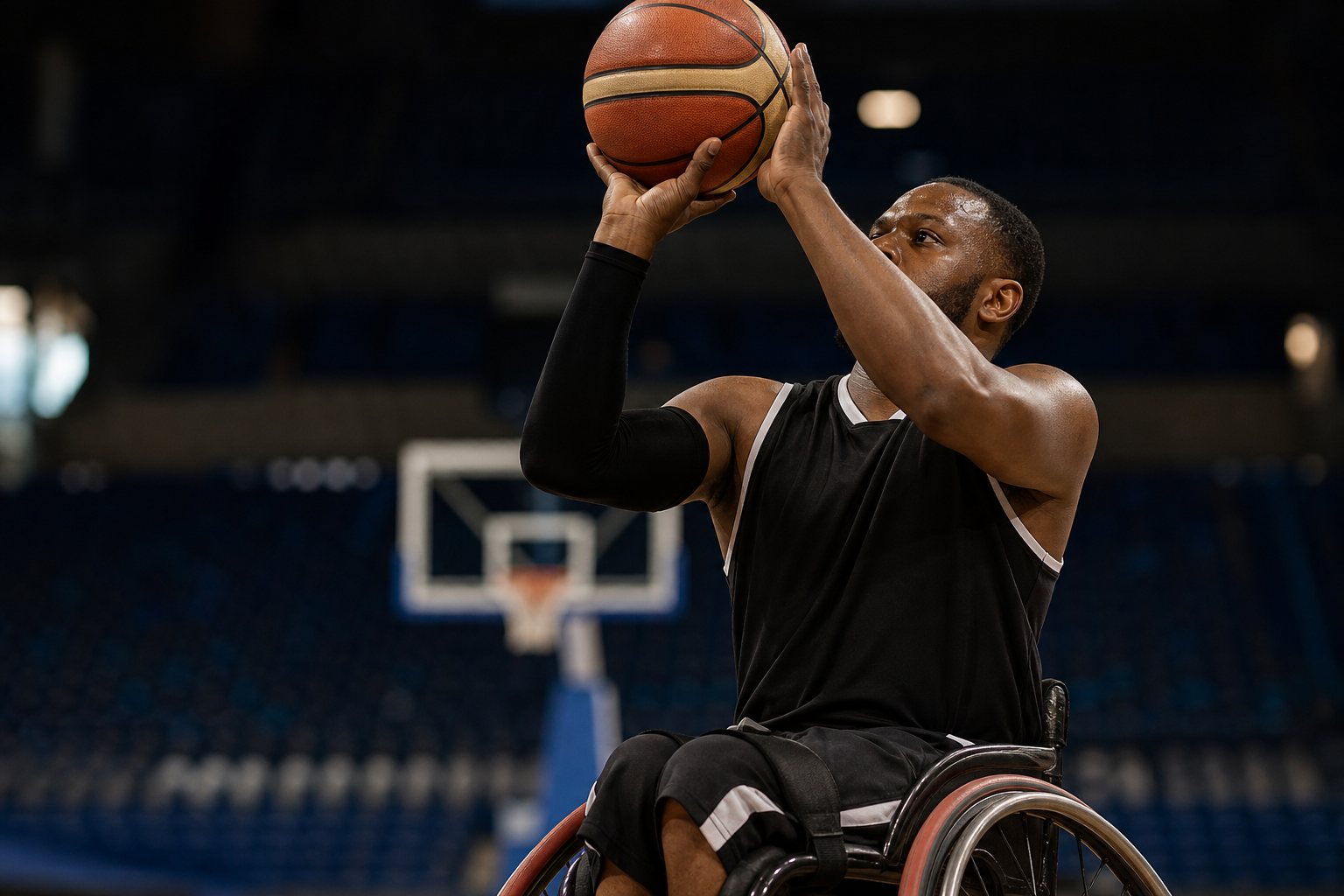
After a Saturday tournament, the gym empties and the chairs get stacked by the door. Players stretch their arms across their chests, one holds an ice pack on a shoulder, another is already thinking about the 90-minute drive home. For a chair athlete, recovery has an extra catch: the same arms that played the game are used the next day to push, transfer and carry. This page covers sleep, load management, mobility and what the evidence says about recovery tools.
Quick answer: Sleep and planned rest do the most for recovery. Stretching, foam rolling, massage guns, ice and similar tools are comfort measures with mixed evidence, and none is shown here to prevent injury in wheelchair basketball. Ease soreness with easy movement and rest; see a sports medicine doctor, physical therapist or athletic trainer if pain is sharp, stays in one place, wakes you at night, or comes with numbness, weakness or a skin change.
For training structure, see training. Injuries are on injuries, and the gear that helps is on gear.
Sleep comes first
The CDC says adults need at least 7 hours of sleep a night and teens 8 to 10 hours. A 2026 survey of 60 coaches and healthcare staff preparing Paralympic athletes before the Tokyo Games (Grade and colleagues) found that although they understood sleep matters, only 56 percent monitored athletes’ sleep, mostly by subjective methods, and lack of athlete adherence and lack of training were the main barriers. Practical habits are general sleep hygiene: a regular schedule, a dark and cool room, less screen time before bed, and caution with caffeine late in the day. Players with a spinal cord injury or other conditions may have pain, bladder or temperature issues that affect sleep; raise them with a clinician. Evening games make good sleep harder, so plan a wind-down.
Load management in a chair
The 2025 Paralympic injury study (Brombacher and colleagues) suggests that daily wheelchair use outside sport adds load and limits rest for the upper limb. So rest days should be real rest days for the arms where possible. General practice ideas: avoid back-to-back hard days for the shoulders, put lighter pushing between heavy sessions, and talk to a clinician about the day-to-day load of transfers and pushing at school or work. The 2018 championship study (Hollander and colleagues) says 52 percent of injuries were attributed to overuse, which fits the idea that rest and gradual load matter. See injury prevention for more.
Mobility and flexibility
Pushing and shooting tend to leave the chest and front of the shoulders tight and the upper back working hard. The mini-review of fitness tests (Front Sports Act Living, 2022) includes a back-scratch test among its suggested measures, which shows that shoulder mobility is something coaches check. Light stretches for the chest, shoulders, neck and arms, and easy rotation work for the upper back, are common after play (general coaching practice). Keep stretches comfortable, avoid forcing a painful range, and have a physical therapist tailor a routine if you have a particular impairment or an old injury.
What the evidence says about recovery methods
We did not find studies of recovery methods in wheelchair basketball players specifically. The paragraphs below describe general practice, and we label evidence as limited.
- Easy movement and a cool-down: widely used, low risk; benefits are modest and mostly about feeling better.
- Foam rolling and massage (including massage guns): many athletes use them for how they feel; they are comfort tools, not treatment. Pressure over skin that is numb or at risk of damage is not a good idea without clinician advice.
- Cold water, ice and heat: popular, with mixed evidence overall. For players with reduced sensation or temperature regulation, the heat and cold cautions on nutrition and health and in the Zhang and Bishop review matter; ask a clinician first.
- Compression and electrical devices: mixed evidence and not tested in this sport; ask a clinician if you have circulation, skin or sensation concerns.
- Sleep and food have the clearest support, as above and on the nutrition page.
This page does not recommend any particular recovery product for chair athletes; ask your clinician what suits you.
Skin, pressure and transfers
Long sessions in a sports chair can load the skin where it touches the seat. A 2026 scoping review in the Australian Occupational Therapy Journal (Parker and colleagues) found only 10 sources on pressure injury prevention and management in disability sport, from eight sports, and said sport-specific evidence is limited. Checking the skin after play and managing the cushion are routine advice from rehabilitation clinicians (general practice). Report any red area that does not fade, or any open skin, to a clinician.
Soreness or injury?
| Probably ordinary soreness | Both sides feel achy or tired, it is worst the day after play, and it eases with movement over a day or two. |
|---|---|
| Get it checked | Sharp or pinching pain, pain in one spot that returns each session, night pain, swelling, loss of strength, numbness or tingling, or a skin change. |
| Urgent | Head injury with confusion, repeated vomiting or a seizure, or sudden severe headache with flushing in someone prone to autonomic dysreflexia. |
Wheelchair basketball recovery FAQs
How much sleep do athletes need?
The CDC recommends at least 7 hours for adults and 8 to 10 hours for teens.
Is a massage gun good for shoulders?
Many athletes use them for comfort. We found no evidence in wheelchair basketball, and they are not a treatment. Ask your clinician, especially if sensation is reduced.
Should I stretch after games?
Gentle stretching is common practice. Evidence for preventing injury is limited, so keep it comfortable.
How many rest days do I need?
No source gives a number for this sport. Plan at least one full rest day a week and more in heavy periods.
Is ice or heat better?
Evidence is mixed. Players with reduced sensation or temperature control should check with a clinician first.
How do I tell soreness from injury?
Ordinary soreness is general and eases in a day or two. Sharp, one-sided, night pain, numbness or weakness should be checked.
Sources
- CDC: about sleep
- Grade et al. 2026, sleep management in Paralympic sports (Europe PMC)
- Brombacher et al. 2025, Paralympic wheelchair basketball injuries (PMC)
- Hollander et al. 2020 (PubMed)
- Physical fitness assessment in wheelchair basketball: a mini-review, 2022
- Zhang and Bishop 2020, heat illness in athletes with SCI
- Parker et al. 2026, pressure injury in disability sport
- CDC HEADS UP
General information for education only, not medical advice. It does not replace a sports medicine doctor, physical therapist, athletic trainer or seating specialist who knows chair sports. Read how we work in our editorial policy.