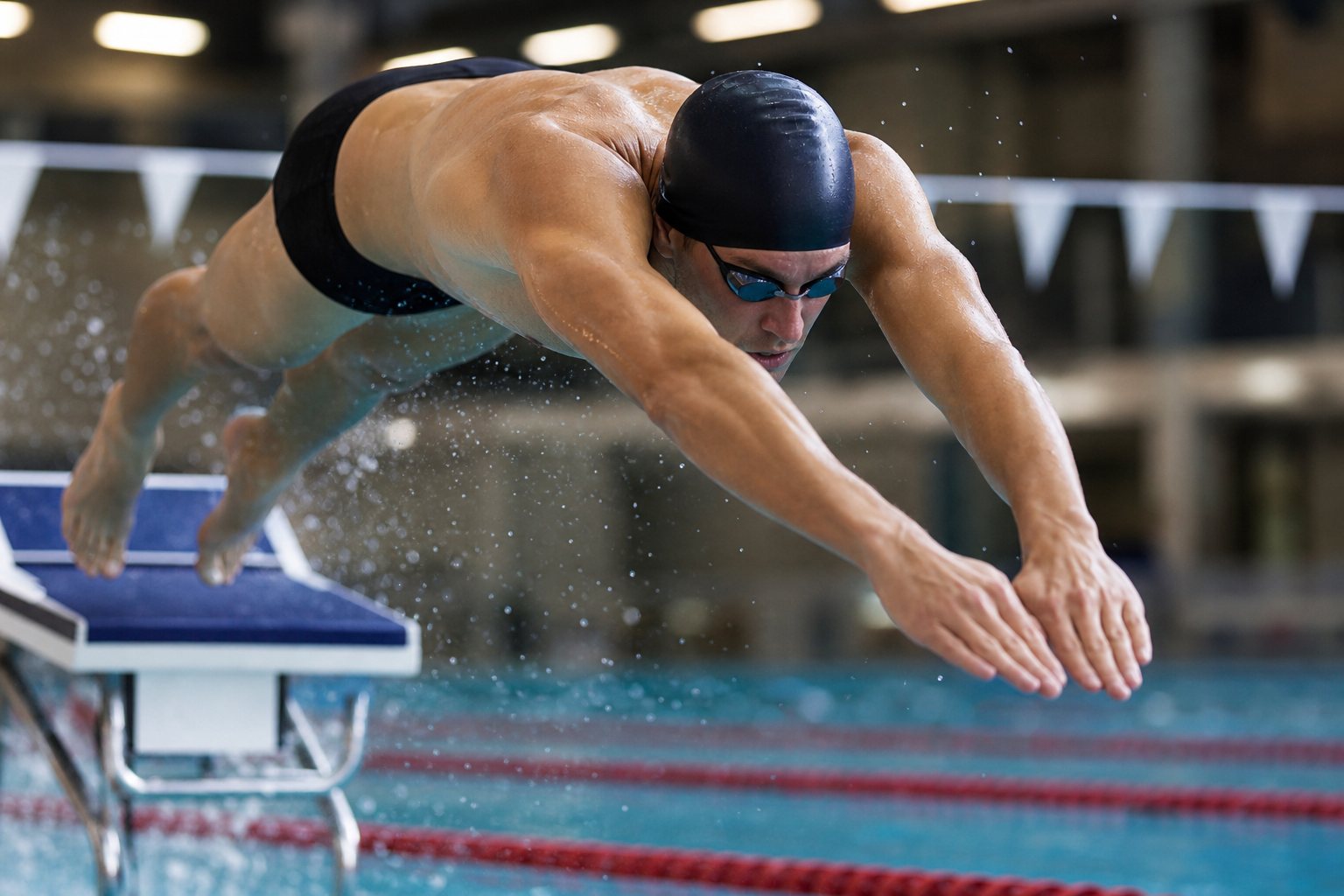
Pool-deck snack bags tell a story: a banana and a bagel before 6 a.m. practice, a bottle that stays full because “you do not sweat in the water,” a sandwich at lunch that gets skipped. Aquatic sports nutrition is simply fueling for long sessions in water that keeps you cool but does not stop you losing fluid or burning energy. This page covers fuel, hydration, the energy-deficiency risks that matter in swimming, diving and artistic swimming, and how to think about supplements without hype.
Quick answer: Aquatic athletes need enough total energy, carbohydrate before and after hard sessions, protein spread through the day and regular fluids, even though you may not feel hot. Low energy availability is a real risk and the IOC calls the resulting syndrome REDs. Supplements are optional, can be contaminated, and should be discussed with a doctor or sports dietitian first. A registered dietitian, ideally a sports dietitian, is the right person for personal advice.
Energy: elite swimmers burn a lot
In a 1997 study of five elite female swimmers covering about 17.5 km a day, total energy expenditure averaged about 5,593 kcal a day while intake averaged about 3,136, a gap the swimmers did not close (Trappe et al., PMID 9243495). That is an extreme example, not a target. It shows that high-volume swimming can outrun appetite. In a 2023 study of 30 NCAA Division III swimmers, 43% showed low energy availability in pre-season, 37% were sub-optimal and 20% optimal (PMID 37447154).
Daily eating
A 2014 expert review of nutrition for swimming suggested carbohydrate between 3 and 10 g per kg of body weight a day depending on training, about 0.3 g/kg of high-quality protein after key sessions and at regular intervals, a mixed diet that covers most micronutrients, and avoiding rapid weight changes in favor of modest changes over long periods (Shaw et al., PMID 24903758). For divers, artistic swimmers and water polo players there is less sport-specific data; the general principles of the ACSM, Academy of Nutrition and Dietetics and Dietitians of Canada position (PMID 26891166) apply: enough energy, carbohydrate matched to the work, protein spread over the day, and planned fluids. Adolescents are still growing, so a well-planned diet comes before any supplement.
Before, during and after practice
- Before: the ACSM position suggests a carbohydrate-rich meal about one to four hours before hard exercise; for a 5 a.m. practice that may mean a small snack you tolerate, such as a banana (illustration, not a prescription).
- During: swimmers do sweat. A swimming study recorded sweat losses of roughly 107 to 138 ml per km in elite swimmers (Cox et al., PMID 12413035). A bottle on the deck is practical for long sessions. Water polo and open water add heat or cold; see the sport pages.
- After: refuel and rehydrate as described on our recovery page.
RED-S (REDs), eating disorders and weight pressure
The IOC’s 2023 consensus statement defines Relative Energy Deficiency in Sport as a syndrome from problematic low energy availability that can affect energy metabolism, reproductive function, bone health, immunity, cardiovascular health and well-being, with higher injury risk and lower performance (Mountjoy et al., PMID 37752011). It reports indicators of low energy availability in 23% to 79.5% of female and 15% to 70% of male athletes across studies. Warning signs include missed or absent periods, bone stress injuries, frequent illness, poor sleep, low mood and a preoccupation with food. Sports where leanness or appearance is emphasized, including diving and artistic swimming, carry extra weight-pressure risk. If food, weight or exercise feel out of control, that is a health matter for a doctor or mental health professional; the ANAD helpline and NIMH pages are listed under Sources. Do not diet to change body composition without a qualified professional, and for athletes under 18, body-composition assessment is recommended only for medical purposes.
Supplements: be careful
We do not give dosage advice beyond what a product label says. Most athletes get what they need from a varied diet; supplements can help in specific cases (for example iron for a diagnosed deficiency) and only with a clinician. If you use any, look for third-party testing such as NSF Certified for Sport or Informed Sport, because supplements can contain substances banned in sport, and athletes are responsible for what they take. Check the WADA Prohibited List and your federation’s anti-doping rules. Caffeine, creatine and protein powders can fit some athletes, but they are not for children without a doctor’s advice. Talk to a doctor before taking supplements if you have a medical condition, are pregnant or take medicine. Our guides: creatine, protein and electrolytes.
Heat, cold and open water
Indoor pools can be warm and humid, especially for water polo and diving on deck; open water can be cold. Plan food and warm clothes for after a cold swim, and see open water swimming nutrition. For sport details: swimming, diving, water polo and artistic swimming.
Frequently asked questions
Do swimmers need to drink during practice?
Yes, especially in long sessions. Swimmers sweat even though the water hides it; a study of elite swimmers recorded about 107 to 138 ml per km. Keep a bottle on deck.
How much should a swimmer eat?
It depends on size, age and training. High-volume elite swimmers can burn well over 5,000 kcal a day. A sports dietitian can set targets; do not copy elite numbers.
What is RED-S?
Relative Energy Deficiency in Sport, now abbreviated REDs by the IOC, is a syndrome caused by not eating enough for the training load. It can affect bones, hormones, immunity and mood.
Are supplements safe for young swimmers?
Food first. Talk to a doctor or dietitian before any supplement, look for third-party testing, and remember athletes are responsible for banned substances.
Is a protein shake needed after swimming?
Not necessarily. Food can supply the roughly 0.3 g/kg suggested after key sessions. Powders are a convenience, not a requirement.
Sources
- Trappe et al., energy expenditure of swimmers, 1997
- Low energy availability in NCAA Division III swimmers, 2023
- Shaw et al., nutrition for swimming, 2014
- ACSM, AND and DC: nutrition and athletic performance, 2016
- Cox et al., sweat in elite swimmers, 2002
- Mountjoy et al., IOC consensus on REDs, 2023
- IOC REDs consensus statement (PDF)
- NIMH: eating disorders
- ANAD: eating disorders helpline
- NSF Certified for Sport
- Informed Sport
- WADA: Prohibited List
General information for education only, not medical advice. It does not replace a visit with a doctor, physical therapist or athletic trainer. See how we write and check our pages in our editorial policy.