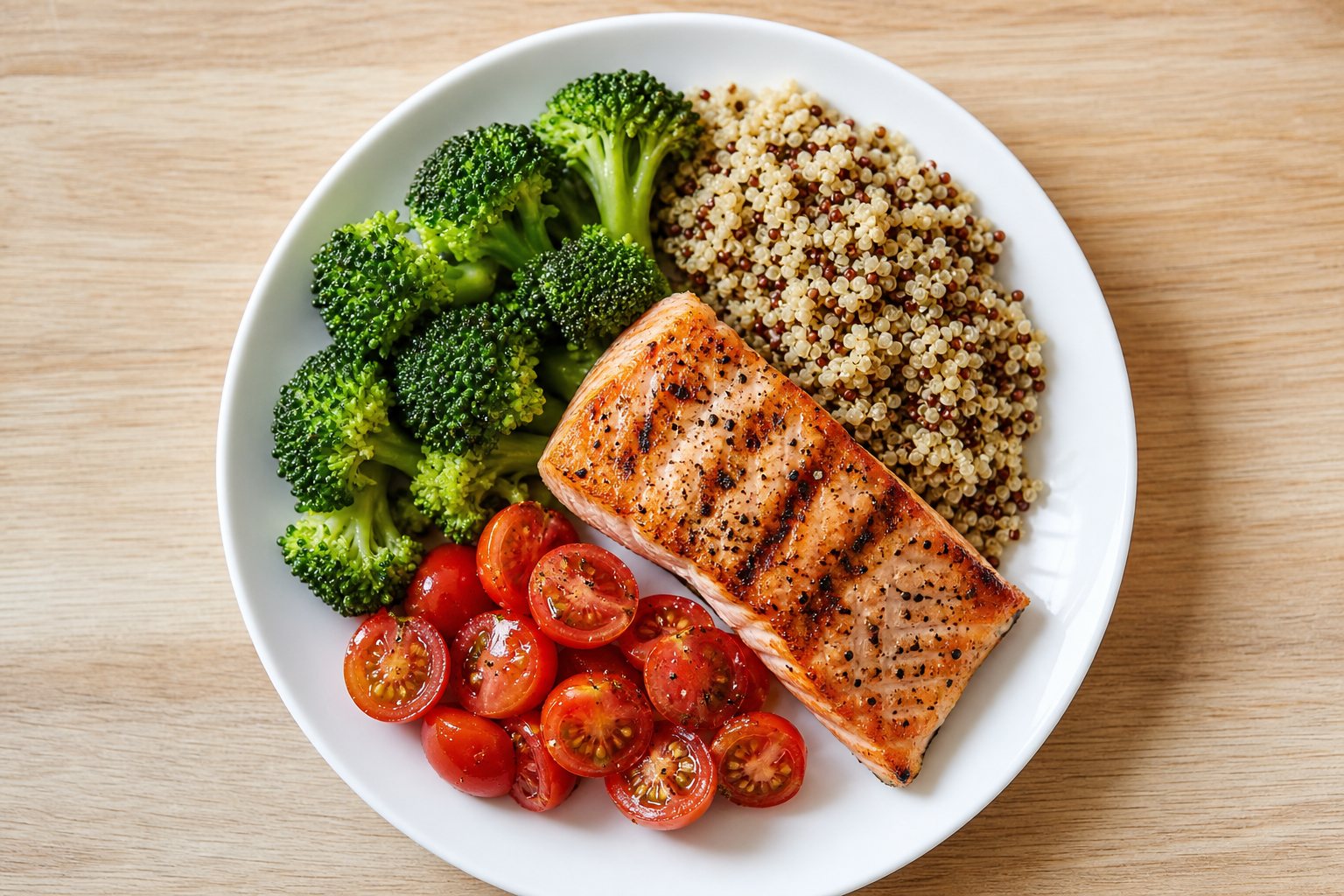
This page is for athletes at any level, and for the parents, coaches and adult beginners who support them. It answers a simple question: what does good everyday eating look like when you train? It is general education, not a personal plan.
The idea running through it is food first. Regular meals built from ordinary foods do most of the work. Powders, bars and pills are extras, and many athletes never need them.
Start with regular, balanced meals
Most athletes do better with a steady rhythm of meals and snacks than with long gaps followed by a huge meal. A useful plate usually has a starchy or grain food, a protein food, plenty of fruit and vegetables, and some healthy fat. You do not need to count anything to start. Ask yourself whether most of your meals look like that.
Eating enough overall matters more than any single nutrient. Athletes who train hard and under-eat can feel tired, get ill more often and recover slowly. If you are worried you are not eating enough, or that food has become stressful, talk to a doctor or a registered dietitian.
Carbohydrates: the main fuel
Carbohydrates are the body’s preferred fuel for most training. They come from bread, rice, pasta, oats, potatoes, fruit, beans and many other everyday foods. Whole-grain and high-fibre choices are a good base for daily meals. Lighter, quicker carbohydrates have a place close to training, which is covered on our page about fueling training and competition.
Heavier training days usually call for more carbohydrate than rest days. Rather than following a rule, notice how your energy and training feel, and adjust with a coach or dietitian who knows your sport.
Protein: spread through the day
Protein helps the body repair and build muscle. Good sources include meat, fish, eggs, dairy, soy foods, beans, lentils, nuts and seeds. Most people who eat a varied diet get what they need from food. Including a protein source at each meal is a simple, practical habit.
Protein powders are one convenient option, not a requirement. If you do use one, our guide to protein powder for athletes explains what to look for, and the page on supplement safety explains why checking products matters. Older athletes have their own questions, covered in protein for older athletes.
Fats: needed, not the enemy
Fats help the body absorb some vitamins, support hormones and give long-lasting energy. Everyday sources include olive oil, nuts, seeds, avocado and oily fish. Fatty foods eaten right before hard exercise can sit heavily in the stomach, so many athletes save the richest meals for other times.
Vitamins and minerals from variety
Vitamins and minerals support energy, bones, muscles and the immune system. The most reliable way to get them is variety: different coloured vegetables and fruit, whole grains, dairy or fortified alternatives, and a mix of protein foods. Some groups, such as athletes who follow vegan diets, who are growing quickly, or who have heavy periods, can be at higher risk of certain shortfalls. A blood test and advice from a doctor or dietitian is better than guessing or buying pills on your own.
Sources: general healthy-eating guidance is summarised in the CDC’s nutrition guidelines hub, cdc.gov, which points to the Dietary Guidelines for Americans.
Practical food choices
- Plan the ordinary days. Keep easy options at home: fruit, yoghurt, eggs, wholegrain bread, rice, tinned beans, nuts.
- Pack for busy days. A sandwich, fruit and a snack in your bag beats a skipped meal.
- Eat after training. A normal meal with carbohydrate and protein within a reasonable time is plenty for most people.
- Keep it enjoyable. Food is also culture, family and fun. Rigid rules tend to backfire.
When to ask a professional
See a doctor or registered dietitian if you have a medical condition, food allergies, a history of disordered eating, unexplained weight change, constant fatigue, or you are a young athlete who is still growing. We do not give meal plans for medical conditions, and no website can replace advice built around you.
Guides to read next
- Hydration & Electrolytes for Athletes
- Fueling Training & Competition
- Supplements for Athletes
- Athlete Health
- Supplement Safety for Athletes
- Sleep and Recovery for Athletes
- Best Protein Powder for Athletes (if you use one)
- Best Protein for Older Athletes
- Running Nutrition & Supplements
- Soccer Nutrition & Supplements
- Swimming Nutrition & Supplements
- Basketball Nutrition & Supplements
Frequently asked questions
Do athletes need special foods?
Usually not. Regular meals with enough carbohydrate, some protein, fruit and vegetables and healthy fats cover most needs. Special products are optional.
Do I have to eat low-fat or low-carb?
There is no single best pattern for every athlete. Very restrictive approaches deserve professional guidance, especially for young athletes.
Is a protein shake necessary after training?
No. A normal meal or snack with protein works. A shake is a convenient choice when food is not practical.
Should my child eat like a professional athlete?
Young athletes need enough food to grow and train, not a special diet. A paediatrician or dietitian can help with specific worries.
Where do supplements fit?
After food. See our supplement safety guide before buying anything.