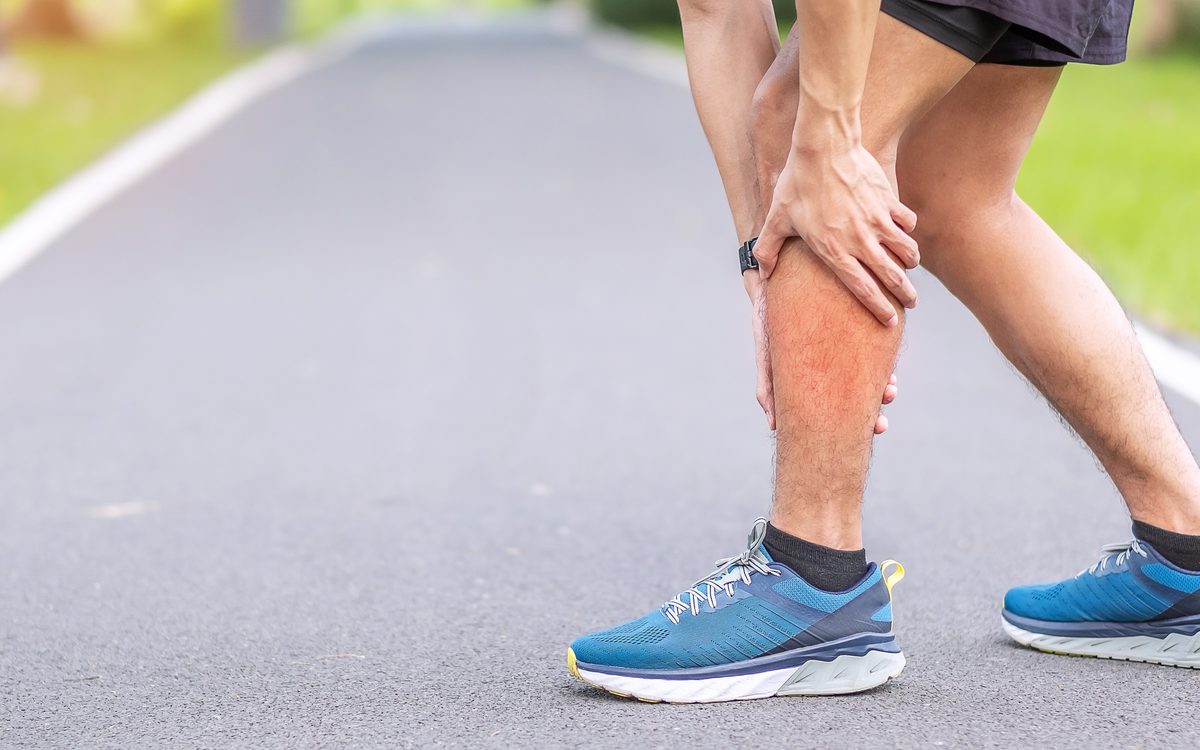
This page is for runners, field and court athletes, parents and coaches who have felt pain in the shin, calf or Achilles area, or who want to avoid it. It explains the main structures, the usual kinds of trouble, and what a professional would look at. It is general education, not a diagnosis.
Lower leg complaints are some of the most common in sport, and many of them grow slowly. That makes them easy to ignore until they are hard to ignore. Knowing the patterns helps you decide when to adjust and when to get checked.
Basic anatomy and function
The lower leg runs from the knee to the ankle. It has two bones: the large shin bone (tibia) at the front and the thinner fibula beside it. Muscles surround them. The calf muscles at the back power push-off in walking, running and jumping, and smaller muscles at the front and sides lift the foot and control the ankle.
The calf muscles join the Achilles tendon, the thick cord that attaches to the heel bone. It stores and releases energy with every stride and jump, and it carries high loads.
Common injury categories
- Shin pain from repeated load, often called shin splints, usually felt along the inner shin.
- Stress reactions and stress fractures, where bone is overloaded faster than it can adapt.
- Calf strains, where muscle fibres are overstretched or torn during sudden effort.
- Achilles tendon problems, ranging from irritation of the tendon to partial or complete tears.
- Compartment-type pain, where tight muscle space is linked to pain during exercise.
- Direct blows, such as kicks or collisions, causing bruising or, less often, fractures.
Symptoms people may notice
Shin and bone problems often start as an ache at the start of exercise that fades, then lingers, then appears at rest or at night. Pain that you can point to with one finger is treated more cautiously than a wider ache. Calf strains tend to come on suddenly with a tight, sharp feeling. Achilles trouble commonly shows as morning stiffness and tenderness just above the heel.
A sudden snap or a blow to the back of the lower leg, difficulty pushing off, a calf that is swollen, hot or one-sided painful for no clear reason, or numbness, are reasons to seek prompt medical advice rather than waiting.
Typical mechanisms and sport contexts
Overload is the usual story: a jump in distance, speed, hills or hard surfaces, new shoes, or a restart after time off. Sports with sprinting, jumping and quick stops, such as soccer and track and field, carry a risk of sudden calf and Achilles injuries. Distance sports such as running and trail running more often bring shin and tendon overuse. Striking sports add the risk of direct hits to the shin.
Professional assessment
A clinician will ask about training changes, footwear and the pattern of pain, then press along the bone and tendon, test strength and movement, and watch you walk or run. Imaging is used when a bone injury or tendon tear is suspected. Persistent bone pain in particular should be assessed, since the care can differ from a muscle or tendon problem.
General care pathways
Clinicians commonly manage lower leg problems by reducing the load that triggered them and then guiding a gradual return, with strengthening and movement work set to the specific tissue. Bone stress injuries may need a longer period of protected loading, and complete Achilles tears are often discussed with orthopaedic specialists. These choices depend on assessment, so this page does not give a self-treatment plan.
Rehabilitation and returning to activity
Rehabilitation focuses on restoring strength, calf and tendon capacity, and running or jumping mechanics in steps. Our pages on rehabilitation and returning to sport explain how clinicians judge readiness. Coming back too fast is a common reason these problems return.
Prevention
Gradual increases in load are the common thread. See training load and technique for the principles, and protective equipment for shin guards and similar gear. Our guide to overuse injuries explains how small loads add up.
Relevant sports
Read the injury sections for running, trail running, track and field and soccer, where lower leg problems are most discussed.
Guides to read next
- Running Injuries
- Trail Running Injuries
- Track and Field Injuries
- Soccer Injuries
- Marathon Training
- Overtraining and Overuse Injuries in Athletes
- Rehabilitation After Sports Injury
- Return to Sport After Injury
- Training Load and Injury Prevention
- Technique and Injury Prevention
- Protective Equipment
- Running Form Tips
- Best Running Shoes for Beginners
- Best Compression Boots
- Best Muay Thai Shin Guards
Frequently asked questions
Are shin splints the same as a stress fracture?
No, but they can feel similar early on. Shin pain that is sharp, pinpoint or present at rest should be assessed to rule out a bone injury.
Why does my Achilles feel stiff in the morning?
Tendon irritation often feels stiffest after rest. It is common in athletes who have recently increased training, but persistent stiffness is worth having examined.
Can I run through calf tightness?
A mild tight calf is different from a sudden sharp pain. Sudden pain during effort should be looked at before you carry on.
Do compression sleeves or boots prevent these injuries?
They are used for comfort and recovery by some athletes, but they are not proven fixes. Our buying guide explains what they do and do not do.