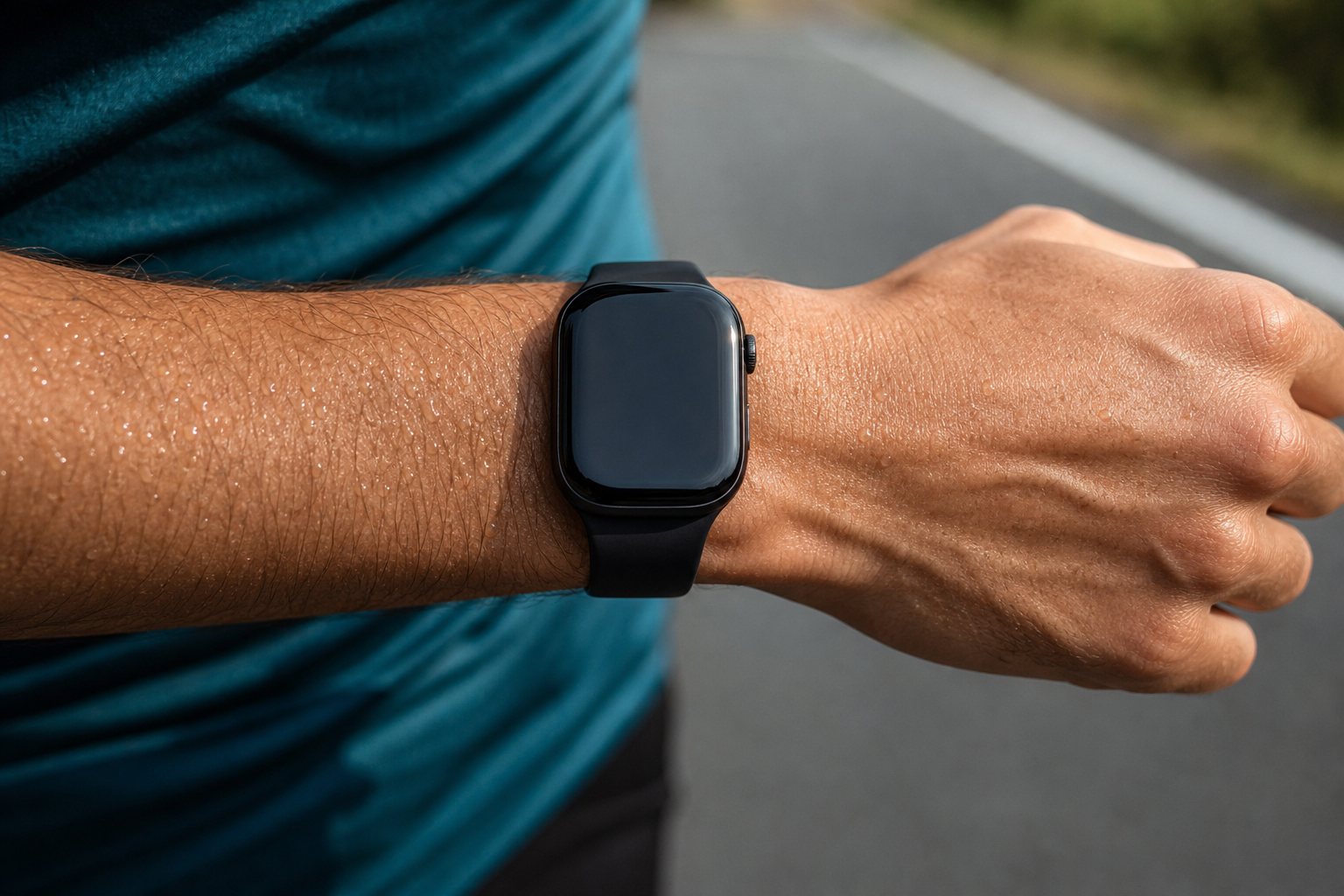
A wearable is any device you wear to record something about your body or your movement: a watch, a ring, a strap, a chest band, a small clip or pod. This page is for athletes, parents, coaches and adult beginners who keep seeing these devices and want to know what they actually measure, where they go wrong, and what to check before buying one.
It answers four plain questions. What kinds of device exist? What do the numbers mean, and how much can you trust them? Will it work with your phone and your other apps? And what does it cost to keep it running after the first purchase? The deeper reviews and comparisons are linked at the end.
The main types of wearable
Most devices fall into a few families, and each one is built around a different job.
- Sports watches. Worn on the wrist, usually with GPS, a heart rate sensor on the back and a screen you can read mid-session. Best when you want pace, distance, route and training load in one place. See Best Garmin for Runners and Garmin Forerunner vs Fenix.
- Screenless bands and straps. Built for wearing around the clock, with the focus on recovery, strain and sleep rather than live workout data. See WHOOP Review and Best Whoop Alternatives.
- Smart rings. Small, comfortable for sleep, and strong on overnight data. They have no screen and tend to be weaker for live training. See Best Smart Rings and Oura Ring Review.
- Chest straps and arm bands. Separate heart rate sensors that pair with a watch or phone. Many athletes use them because they read heart rate during hard, changing efforts more steadily than a wrist sensor can. See Best Heart Rate Monitor for Athletes.
- Team-sport trackers. Small GPS units worn in a vest or pocket to record distance and movement across a match. See Best GPS Tracker for Team Sports.
- Smart scales and sleep devices. Home devices that log weight, body composition estimates or sleep. See Best Smart Scale for Athletes and Best Sleep Tracker for Athletes.
What these devices measure
Some things are measured fairly directly; others are estimated by the device’s software from indirect signals. It helps to know which is which.
- Heart rate is read from the pulse, either with light sensors against the skin or with electrical sensors in a chest strap.
- Location, speed and distance come from satellite signals, so they are strongest outdoors with a clear sky.
- Steps, cadence and movement come from motion sensors.
- Heart rate variability (HRV) is the small change in time between heartbeats. Devices often read it during sleep and turn it into a trend. We explain it in HRV for Athletes.
- Sleep stages, readiness, recovery and strain scores are the device’s own estimates. Each brand builds them differently, so a score from one brand cannot be compared with a score from another. Garmin Training Readiness Explained shows how one such score is put together.
Limitations to keep in mind
Consumer wearables are useful for noticing your own patterns. They are not medical devices, and they do not diagnose anything. A few honest limits:
- Wrist heart rate can lag or drift during fast changes in effort, with loose straps, cold hands, tattoos or heavy movement.
- Sleep stage readings are estimates. The trend over weeks is more useful than any single night.
- Recovery and readiness scores are a summary of a few inputs. They can disagree with how you feel, and how you feel still counts.
- Calorie figures are rough. Treat them as a guide, not a measurement.
- Watching a number too closely can make some people anxious or push them to train when they should rest. If a score is making you worried, put the device away for a while.
If a reading ever worries you, such as chest pain, fainting or a racing heart you cannot explain, do not rely on a wearable. Speak to a doctor or use emergency services.
Compatibility: check before you buy
Most of the frustration with wearables comes from things that do not talk to each other. Before buying, check:
- That the companion app works with your phone and its current software.
- That it can send workouts to the apps you already use, such as a training log, a running or cycling app, or a platform your coach uses.
- That a chest strap or other sensor pairs with your watch or bike computer using the connection types both support.
- That the size and fit suit you. Rings, in particular, need the right finger size, and the brand’s own sizing method matters.
- Whether your team, school or coach requires a particular system.
Subscriptions and ongoing costs
Some devices work fully once you buy them. Others lock most of their features behind a monthly or yearly membership, and some need a replacement battery or band after a few years. Before you buy, work out the cost over the time you plan to use it, not only the price on day one. Check which features stop if you cancel, whether your data stays accessible, and what the return policy is. Our guides call out the subscription question where it applies, for example in Best Smart Rings, which looks at options with and without a subscription.
Privacy and your data
Wearables collect sensitive information: where you go, when you sleep, how your heart behaves. Read the privacy settings in the app and decide what you are happy to share. Think about location sharing, public activity maps, links to other apps, and who can see your data in a team setting. For children and teenagers, a parent or guardian should review the privacy terms and settings. Coaches and teams should ask for consent and explain how data will be used.
Guides to read next
- Best Smart Rings
- Whoop vs Oura vs Garmin
- Oura Ring Review
- WHOOP Review
- Best Whoop Alternatives
- HRV for Athletes
- Best Garmin for Runners
- Garmin Forerunner vs Fenix
- Garmin Training Readiness Explained
- Best Heart Rate Monitor for Athletes
- Best Sleep Tracker for Athletes
- Best GPS Tracker for Team Sports
- Best Smart Scale for Athletes
- Sleep and Recovery for Athletes
- Running Training & Performance
- Soccer Gear
Frequently asked questions
Do I need a wearable to train well?
No. Athletes trained well long before these devices existed. A wearable can help you spot patterns in sleep, effort and recovery, but it adds convenience, not a requirement.
Which type is best for a beginner?
It depends on what you want to learn. A sports watch suits someone who wants to track runs or rides. A ring or band suits someone mainly curious about sleep and recovery. Start with the question you want answered, then choose the type.
Can a wearable tell me if I am overtraining or injured?
It can show trends, such as a resting heart rate that stays higher than usual, but it cannot diagnose anything. If you have pain, dizziness or symptoms that do not settle, see a health professional. Our guide to overtraining and overuse injuries explains warning signs in plain language.
Are the scores comparable between brands?
No. Each brand calculates its own sleep, readiness and recovery scores in its own way, so use a score to follow your own trend on one device rather than to compare with a friend using another.