This article contains affiliate links: if you buy through them we may earn a commission, at no extra cost to you. Read our affiliate disclosure.
It is the first week of the season and the coach has sent a short message: “bring a ball to practice.” You stand in the sports aisle with three sizes in front of you, and every ball says it is for indoor and outdoor play. Which one is right?
The short answer: choose the size by the player’s age and league, then the cover by where the ball will mostly be bounced. The NBA and USA Basketball youth guidelines page lists size 5 (27.5 inches) for ages 7-8 and size 6 (28.5 inches) for ages 9-11. Older players move up to size 7 (29.5 inches), which makers list as regulation, but check your own league’s rule before you buy. This guide is for parents, coaches and adult players, and compares six balls using the text of their Amazon listings plus the one official page we could open.
Our top picks
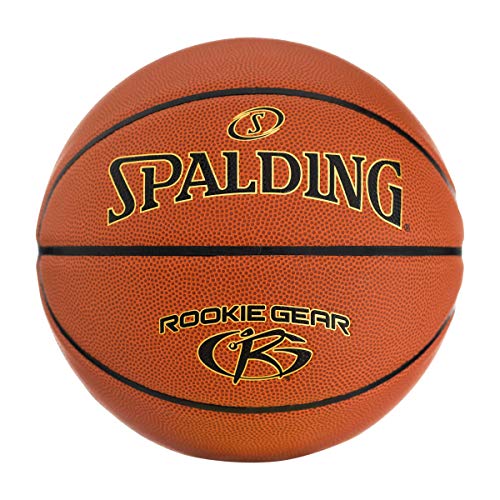
Spalding Rookie Gear Youth (Size 5)
- Size 5, 27.5 inches
- Performance composite cover
- Described as 15% lighter to help develop technique
- Shipped inflated; indoor and outdoor
$31.99 at Amazon, as of Nov 22, 2026 12:07 UTC
Check price on Amazon
Wilson NBA DRV (Size 6)
- Size 6, 28.5 inches
- Outdoor cover designed for grip on rough surfaces
- Outdoor durability focus
- Inflation-retention lining
$14.44 at Amazon, as of Nov 22, 2026 12:07 UTC
Check price on Amazon
Wilson NCAA Final Four Edition (Size 6)
- Size 6, 28.5 inches
- High-performance composite leather cover
- Deep channels between panels
- Inflation-retention lining; indoor/outdoor
$22.04 at Amazon, as of Nov 22, 2026 12:07 UTC
Check price on Amazon
Wilson NBA Authentic Series Indoor/Outdoor (Size 7)
- Size 7, 29.5 inches
- Pure Feel cover
- Ever Bounce construction
- Indoor/outdoor; air-retention lining
$44.95 at Amazon, as of Nov 22, 2026 12:07 UTC
Check price on Amazon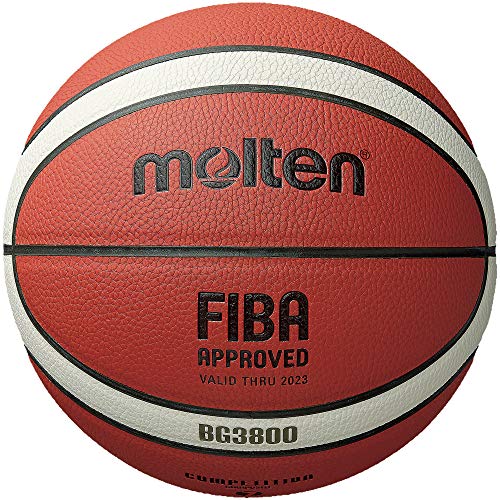
Molten BG3800 (Size 7)
- Size 7
- FIBA Approved (per the listing)
- Official 12-panel, 2-tone design
- Indoor/outdoor synthetic cover, butyl bladder; ships deflated
$32.70 at Amazon, as of Nov 22, 2026 12:07 UTC
Check price on Amazon
Franklin Sports Hard Court Rubber (29.5 inch)
- 29.5 inches, listed as regulation size and weight
- Durable rubber cover
- Pebble grip texture
- Pump with needle included; listed for ages 8+
$14.99 at Amazon, as of Nov 22, 2026 12:07 UTC
Check price on AmazonThe picks compared
| Product | Size | Cover (per listing) | Surface (per listing) | Ships | What the listing says |
|---|---|---|---|---|---|
| Spalding Rookie Gear Youth | 5 (27.5 in) | Performance composite | Indoor and outdoor | Inflated | 15% lighter to help develop technique |
| Wilson NBA DRV | 6 (28.5 in) | Outdoor performance cover | Outdoor | Not stated | Grip on rough surfaces, outdoor durability |
| Wilson NCAA Final Four Edition | 6 (28.5 in) | Composite leather | Indoor and outdoor | Not stated | Deep channels, top coating for durability |
| Wilson NBA Authentic Series Indoor/Outdoor | 7 (29.5 in) | Pure Feel cover | Indoor and outdoor | Not stated | Ever Bounce construction, air-retention lining |
| Molten BG3800 | 7 | Synthetic | Indoor and outdoor | Deflated | FIBA Approved, 12 panels, butyl bladder |
| Franklin Hard Court Rubber | 7 (29.5 in) | Rubber | Outdoor | Deflated, pump included | Pebble grip, regulation size and weight |
The picks in detail
1. Spalding Rookie Gear Youth (Size 5): lightest option for young players
This is the only size 5 candidate whose listing says it is made lighter for young hands, which fits the goal of learning technique rather than heaving a heavy ball. It is also the one that arrives ready to play.
What the Amazon listing says
- Youth ball, size 5, 27.5 inches
- Performance composite cover
- 15% lighter to help develop technique
- Shipped inflated and game-ready
- Designed for indoor and outdoor play
What the research says: The 27.5 inch size matches the NBA and USA Basketball youth guidelines page for ages 7-8. The "15% lighter" figure is the maker's own claim and we found no independent source for it.
- Strengths: Lighter build for developing technique (maker's claim); Arrives inflated; Composite cover for indoor and outdoor use
- Limitations: Size 5 only, so it is outgrown when a player moves up a size; Listing gives no detail on channel depth or bladder
- Suits: Children in the size 5 age band who play on both a gym floor and a driveway.
- Look elsewhere if: Players already using a size 6 or 7, or families wanting a ball built only for rough concrete.
2. Wilson NBA DRV (Size 6): outdoor-first size 6
A size 6 built specifically for outdoor courts, so it suits players who mostly practise on a driveway or park hoop. It is the clearest outdoor-only choice in the size 6 group.
What the Amazon listing says
- Wilson NBA DRV Series, size 6, 28.5 inches
- Performance cover: outdoor cover designed for grip on rough surfaces
- Designed for outdoor durability
- Inflation retention lining for longer-lasting air retention
- Official NBA branding with the Wilson script
What the research says: 28.5 inches matches the size 6 figure on the NBA and USA Basketball youth page (ages 9-11). Whether an outdoor-only ball is allowed in your gym league is a venue and league question we could not check; ask before buying.
- Strengths: Cover made for rough surfaces; Air-retention lining; Official NBA branding on the ball
- Limitations: Outdoor design, so not the natural pick if most play is on a gym floor; Listing does not say which cover material is used
- Suits: Size 6 players who play mainly outside.
- Look elsewhere if: Players in a gym league, who may prefer an indoor/outdoor composite such as the NCAA Final Four size 6.
3. Wilson NCAA Final Four Edition (Size 6): composite size 6 for indoor and outdoor
A composite-cover size 6 sold for both indoor and outdoor use, which covers the common case of a player who trains at the park and plays in a gym.
What the Amazon listing says
- Indoor/outdoor, size 6, 28.5 inches, brown
- Composite leather cover with a top coating said to strengthen the layers
- Deeper channels between panels for more grip points
- Specialized inflation-retention lining
- Described as the official ball of March Madness (per the listing)
What the research says: Size matches the NBA youth page for ages 9-11. The "official ball" wording is the listing's own; we did not open an NCAA page, so treat it as branding, not as proof your league will accept it.
- Strengths: Composite leather cover with a top coating for durability; Deep channels for grip; Works indoors and outdoors
- Limitations: The listing describes it as indoor/outdoor, not as made for rough concrete; Brand edition naming does not change the size rules of your league
- Suits: Size 6 players splitting time between gym and outdoor courts.
- Look elsewhere if: Anyone who only plays on rough outdoor pavement.
4. Wilson NBA Authentic Series Indoor/Outdoor (Size 7): full-size composite for mixed surfaces
A regulation-size ball sold for both surfaces, with construction aimed at consistent bounce. It suits adult players who want one ball for the gym and the park.
What the Amazon listing says
- Indoor/outdoor, size 7, 29.5 inches
- Pure Feel cover: pro-level feel and durability
- Ever Bounce construction for consistent bounce
- Inflation-retention lining
- NBA Pro Seams channel construction; official NBA branding
What the research says: The NBA youth page does not cover ages 12 and up, so we have no official source here for who must use size 7. The title also mentions composite leather, but the feature list does not, so check the product page for the exact cover.
- Strengths: Indoor and outdoor use; Consistent-bounce construction (maker's claim); Air-retention lining
- Limitations: Full size only; Listing does not say which cover material it uses beyond the Pure Feel name
- Suits: Adults and older teens who need one regulation-size ball for everything.
- Look elsewhere if: Younger players, or anyone who plays only on rough outdoor courts.
5. Molten BG3800 (Size 7): size 7 with a fiba-approved listing
The only candidate whose listing mentions FIBA approval, which is worth noting for players in FIBA-style leagues. It uses a synthetic cover for both surfaces.
What the Amazon listing says
- FIBA Approved (listing text)
- Official 12-panel, 2-tone design
- Indoor/outdoor synthetic cover
- Butyl bladder
- Ships deflated
What the research says: We tried to open the FIBA rules page and it was unavailable, so the approval claim is unverified here. If it matters for your club, look for the FIBA approval on the ball or on FIBA's own site.
- Strengths: Synthetic cover for indoor and outdoor; Butyl bladder; 12-panel design
- Limitations: Ships deflated, so you need a pump; FIBA approval is the listing's claim; we could not confirm it on a FIBA page
- Suits: Adult players and clubs that follow FIBA-style rules.
- Look elsewhere if: Players who want a pre-inflated ball or a smaller size.
6. Franklin Sports Hard Court Rubber (29.5 inch): rubber ball for outdoor courts
A rubber ball made for outdoor play, with a pump in the box. It shows what a rubber cover offers: built for pavement rather than polished wood.
What the Amazon listing says
- Highly durable rubber covering for outdoor play
- 29.5 inch circumference, official regulation size and weight (listing wording)
- Pebble covering for a tacky feel and grip
- Rubber bladder built for air retention
- Arrives deflated; pump with needle included
What the research says: The listing says ages 8+, but the NBA youth page lists size 5 for ages 7-8 and size 6 for ages 9-11, so a 29.5 inch ball is larger than that guidance suggests for young players. Follow the youth guidance over the age tag.
- Strengths: Rubber cover aimed at outdoor durability; Includes pump and needle; Full-size ball
- Limitations: Described as an outdoor ball; the listing does not promote indoor game use; Arrives deflated
- Suits: Teens and adults who play on driveways and park courts.
- Look elsewhere if: Players in indoor leagues, and young children (a 29.5 inch ball is large for small hands).
How to choose the right size
Size is the choice that matters most. A ball that is too big makes a young player push the ball with two hands and drop good form.
- Ages 7-8: size 5, 27.5 inches, per the NBA and USA Basketball youth guidelines page we opened.
- Ages 9-11: size 6, 28.5 inches, per the same page.
- Older players and adults: size 7, 29.5 inches is what most makers list as the regulation ball. That same page does not list sizes for ages 12-14 or high school, and we could not open the current NFHS or FIBA rule text. Ask your league or school, or check the NFHS and FIBA rulebooks directly.
Do not buy a bigger ball for a child to grow into. A ball that fits now builds better habits. If a child is between sizes, follow the league’s rule. Several size 6 listings are labelled for women and girls; the NBA youth page does not split its guidance by gender, so ask the league rather than assuming.
Cover material: composite, rubber, synthetic
The listings we reviewed use three words for the cover.
- Composite (or composite leather): usually the choice for mixed gym and outdoor use. The Wilson listing says composite gives a consistent texture for grip and control.
- Rubber: described by makers as the durable outdoor choice, built for pavement.
- Synthetic: used by the Molten listing for both surfaces.
Real leather is not among the candidates here, so we do not compare it. Match the cover to where most of the bouncing happens. Note that these are makers’ descriptions: none of them are independent wear tests, and a brand name does not tell you how a cover will age.
Indoor, outdoor or both
If a ball is played mainly outside, pick one the maker calls an outdoor or rubber ball. If it is played mainly in a gym, check that your league allows the model. For one ball that does both, choose an indoor/outdoor composite or synthetic. Many listings say “indoor/outdoor,” so read the cover line, not just the label.
A simple rule of thumb: the rougher the surface you play on, the more the cover matters; the more official the game, the more the league rule matters. A driveway game has no rule. A school game does. Wilson’s own DRV listing says its cover is made for rough surfaces, while the NCAA Final Four listing sells indoor and outdoor use. Those are different promises.
Essential and optional features
- Essential: the right size, a cover that suits your surface, and a league-legal ball if you play in a league.
- Helpful: deep channels for grip, an air-retention lining, and a ball that ships inflated or with a pump.
- Optional: pro branding and colour. These do not change how the ball plays.
Keep in mind that a ball that ships deflated costs you a pump if you do not own one. Several listings state this plainly, and only one of our six includes it in the box.
Care and replacement
Keep the ball inflated to the pressure on the ball, store it indoors, and wipe it clean. Use outdoor balls on pavement and indoor-rated balls on wood where the maker says so. Replace a ball when the cover wears smooth, it will not hold air, or it bounces unevenly.
Practical habits that help any ball: wipe it with a slightly damp cloth after outdoor use, let it dry away from direct heat, and do not leave it in a hot car or a freezing garage for days. Check the air before each practice by pressing the ball with your thumb. If you need to top it up often, the bladder or valve may be leaking, and it may be time to replace it. The only pressure figure in our listings is the NCAA Final Four size 7 ball (7-9 PSI, per its listing), so for any other ball read the number printed on the ball itself.
Common mistakes when buying a basketball
Most wrong purchases come from the same few slips.
- Buying one size up. A parent buys a full-size ball because it is “the real one.” For a young child it is harder to hold, to dribble and to shoot with one hand.
- Trusting the age tag alone. The Franklin listing says ages 8+, while the NBA youth page puts 9-11 players on size 6. Compare the tag to the size, not the other way round.
- Buying outdoor-only for a gym league. If your team plays in a school gym, ask whether a rubber outdoor ball is allowed.
- Forgetting the pump. Several listings ship the ball deflated and say the pump is sold separately or not included.
- Paying for branding. Official league logos on the ball are marketing text in the listing, not a different size or a proof of quality.
- Ignoring the cover words. “Indoor/outdoor” appears on almost everything, so read the material line.
Avoiding these keeps the first week of the season simple.
By age and level: a plain table in words
Use this as a starting point and then confirm with the league.
- Ages 7-8, just starting: size 5 (27.5 inches). A lighter youth ball such as the Spalding Rookie Gear listing is the clearest fit among our six.
- Ages 9-11, learning team play: size 6 (28.5 inches). Choose outdoor-first (Wilson DRV) if play is on the driveway, or an indoor/outdoor composite (Wilson NCAA Final Four size 6) if there is a gym league.
- Older players, women’s and girls’ leagues: sizes vary by league and age group. We did not open an official page for these groups, so ask your coach or league.
- Adults and teens playing for fun: a size 7 indoor/outdoor ball covers most use; a rubber size 7 makes sense if all play is on pavement.
- Club or FIBA-style play: check what ball the club requires before you buy; the Molten BG3800 listing mentions FIBA approval.
Level matters less than size. A beginner and an experienced player of the same age need the same size ball.
How to check the size before you buy
The size number (5, 6, 7) is a label, and listings also give the circumference in inches. Look for both. Our six picks match that pattern: 27.5 inches for size 5, 28.5 inches for size 6 and 29.5 inches for size 7.
- Find the size number and the inch figure in the listing title or the first feature line. If only a colour or a brand name is shown, keep looking.
- Match the inch figure to the age line on the NBA and USA Basketball youth page (27.5 for 7-8, 28.5 for 9-11).
- Check your league’s own handbook. Leagues can set their own rules, and some mark different sizes for different age groups.
- When the ball arrives, wrap a soft tape measure around its widest part. It should read close to the number on the label.
- Watch your child hold it. They should be able to cup the ball with fingers spread and shoot with one hand, without clutching it to their chest.
If the ball is far off the size on the label, return it. A wrong size defeats the whole point of buying carefully.
Rules and leagues: what we verified and what we did not
The only rule page we opened is the NBA and USA Basketball youth guidelines page. It lists size 5 at 27.5 inches for ages 7-8 and size 6 at 28.5 inches for ages 9-11. It also says an 8-foot basket for ages 7-8 and a 9-foot basket for ages 9-11, when possible, and no 3-point field goals for either age group. It does not list sizes for ages 12-14 or grades 9-12.
We tried the NFHS rules-changes page, a Wilson size page and the FIBA rules page, but each was missing or moved, so we do not quote their numbers. For high school, college, women’s and international play, check:
- your school or league handbook,
- the NFHS rulebook for U.S. high school play,
- the FIBA Official Basketball Rules for international play.
When a rule is not confirmed, buying the size your league tells you in writing is safer than any rule of thumb in a buying guide.
Myths and facts
- Myth: a bigger ball makes a child stronger. Fact: a ball that is too big changes shooting and handling form. Follow the size for the age and league.
- Myth: indoor/outdoor means it is good on everything. Fact: it is a label. Read the cover material and the maker’s surface wording, such as the DRV listing’s “rough surfaces.”
- Myth: a pro logo means a better ball for you. Fact: the logo is branding. Size and cover are what change the game.
- Myth: rubber is always for kids. Fact: rubber appears in adult-size balls too, such as the Franklin 29.5 inch listing.
- Myth: FIBA approved means any league accepts it. Fact: leagues set their own ball rules, and we could not verify the approval text.
- Myth: a new ball is ready to play out of the box. Fact: some ship deflated, and only one of our six includes a pump.
A one-minute checklist
- Who is the ball for, and what age group does the league put them in?
- Which size does the league or coach name in writing?
- Where will it be played most: gym, driveway, park, or all three?
- Does the cover line (composite, rubber, synthetic) fit that surface?
- Does it ship inflated, or do you need a pump and needle?
- Is the size shown in both number and inches?
- Do you need a league-approved ball, or is this for practice at home?
If you can answer all seven, you can pick from the table above in a couple of minutes.
Glossary: words on a basketball listing
- Size 5, 6, 7: the size labels. The inch measures are 27.5, 28.5 and 29.5, in line with the listings and the NBA youth page.
- Circumference: the distance around the ball at its widest point.
- Composite leather: a man-made leather-style cover, described in the Wilson listing as giving consistent grip and control.
- Rubber cover: a moulded rubber surface, usually sold for outdoor use.
- Synthetic cover: a man-made cover, used in the Molten listing for indoor and outdoor.
- Channels: the grooves between panels. Deeper channels are said to add grip points.
- Bladder: the air-holding part inside; listings mention butyl or rubber bladders for air retention.
- Pebbling: the small raised bumps on the cover for grip.
- Air-retention lining: an inner layer that is said to keep the ball inflated longer.
- Ships deflated: the ball needs to be pumped up before use.
What to buy first, and what can wait
First, one ball in the right size. If your player will be on a team, wait for the coach’s note before buying a second. That one ball, and a way to inflate it, is a full starter kit.
Buy later, only if you need them:
- A second ball of a different cover, once you know whether most play is indoor or outdoor.
- A pump and needle, unless one is included. Only the Franklin listing among our six includes one.
- A ball bag or net, if your player takes the ball to practice.
- Court shoes and ankle support, which matter more to comfort and injury risk than the ball does. See our guides on basketball shoes and ankle braces below.
Skip the temptation to buy a pro-branded ball because it looks right. Size, cover and league rules come first.
How we chose these picks
This is a research-based comparison, not a hands-on test. We started from real Amazon listings for basketballs in sizes 5, 6 and 7, and picked six that cover different sizes and surfaces. Product facts come from each listing’s own text, labelled “per the listing.” The age-to-size figures, the basket heights and the 3-point note come from the NBA and USA Basketball youth guidelines page we opened. We did not test the balls, quote customer reviews or rank by sales. Where we could not open an official rule page (NFHS, FIBA) or a maker’s size page, we did not state its numbers, and we say so in the guide.
Sources
- NBA and USA Basketball youth basketball guidelines (checked 2026-11-13)
- Amazon product listing (ASIN B08QJL7DTK), Spalding Rookie Gear Youth (checked 2026-11-13)
- Amazon product listing (ASIN B091M5L92R), Wilson NBA DRV size 6 (checked 2026-11-13)
- Amazon product listing (ASIN B0009KF59W), Wilson NCAA Final Four size 6 (checked 2026-11-13)
- Amazon product listing (ASIN B091MBQYPH), Wilson NBA Authentic Series Indoor/Outdoor (checked 2026-11-13)
- Amazon product listing (ASIN B083JZKB24), Molten BG3800 (checked 2026-11-13)
- Amazon product listing (ASIN B0915HYML1), Franklin Sports Hard Court Rubber (checked 2026-11-13)
Frequently asked questions
What size basketball for a 9-year-old?
The NBA and USA Basketball youth guidelines page lists size 6 (28.5 inches) for ages 9-11. Confirm with your child's league, as some use different cut-offs.
What size basketball for a 7 or 8-year-old?
The same page lists size 5 (27.5 inches) for ages 7-8. It also suggests an 8-foot basket for that group, when possible.
What size basketball is 29.5 inches?
That is size 7, the regulation size most makers list for adult and older teen play. Check your league for who must use it.
Can I use an outdoor ball indoors?
Often yes for play at home, but leagues and gyms set their own rules. Check the maker's text and your venue's policy.
Is composite or rubber better?
Neither is better for everyone. Composite suits mixed surfaces; rubber is made for outdoor pavement. Pick by where you play.
Should I buy a bigger ball so my child can grow into it?
No. A ball that is too large hurts shooting and handling form. Buy the size that fits now.
How long does a basketball last?
There is no fixed number. A ball is worn out when the cover is smooth, it will not hold air, or it bounces unevenly. Outdoor use on rough pavement tends to wear a cover faster than gym use.
Can I use a size 6 ball for adult play?
For casual play, yes, if you like the smaller ball. For a league game, use the ball your league requires. We could not verify league rules for adults, so ask the organiser.
Do I need a pump?
If the listing says the ball ships deflated, yes. Of our six picks, the Spalding ships inflated and the Franklin includes a pump; the others are not stated or ship deflated per their listings.
Are girls and women supposed to use size 6?
The NBA youth page does not split its guidance by gender, and we could not open NFHS or FIBA text for older girls and women. Ask your league which size it uses.