This article contains affiliate links: if you buy through them we may earn a commission, at no extra cost to you. Read our affiliate disclosure.
It is the first practice of the season, and a nine-year-old is holding a glove that looks as big as her torso. Dad says it will do, because she will grow into it. It will not, because a glove has to close easily around the hand that wears it, and a glove she cannot squeeze shut is a glove that lets the ball fall out.
The short answer: choose the size by age and position, pick a pattern made for the job, and for younger players favour soft gloves that are mostly broken in at the factory. This guide serves parents of youth players, teens and adult recreational players, and compares seven gloves using the maker’s size chart, a league rules page and the Amazon listing text. It is a research-based comparison, not a hands-on test.
Our top picks

Rawlings Sure Catch Youth 10.5'
- 10.5 inch youth size
- Soft all-leather shell
- Heel cutout designed to make closing easier
- About 90% broken in at the factory
$33.56 at Amazon, as of Nov 22, 2026 13:07 UTC
Check price on Amazon
Wilson A500 10.5' Infield Youth
- 10.5 inch infield youth size
- Top grain leather
- H web
- Quick Fit adjustable wrist
$59.95 at Amazon, as of Nov 22, 2026 13:07 UTC
Check price on Amazon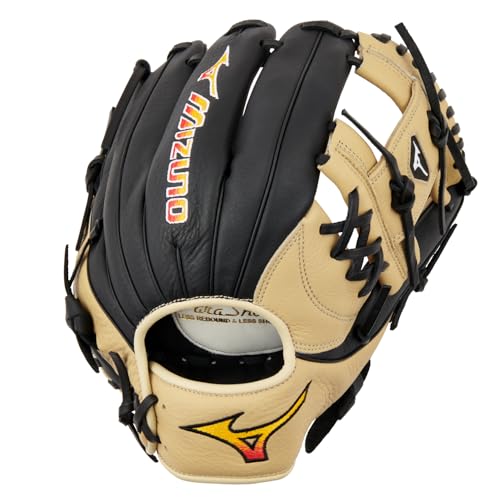
Mizuno Franchise 11.5' Infielder
- 11.5 inch infield size
- Full grain leather shell
- Deep 3 web, center pocket pattern
- Parashock palm pad
$95.00 at Amazon, as of Nov 22, 2026 13:07 UTC
Check price on Amazon
Rawlings R9 12' Pitcher and Utility
- 12 inch size
- 2-piece solid web
- All-leather shell, about 80% broken in
- Reinforced palm pad

Wilson A1000 1750 12.5' Outfield
- 12.5 inch outfield size
- Full grain leather
- Dual welting
- DriLex wrist lining
$189.95 at Amazon, as of Nov 22, 2026 13:07 UTC
Check price on Amazon
Rawlings Sure Catch Adult 12.5'
- 12.5 inch adult size
- Lightweight all-leather shell
- Heel cutout
- About 90% factory break-in
$40.46 at Amazon, as of Nov 22, 2026 13:07 UTC
Check price on Amazon
Rawlings R9 First Base Mitt 13'
- 13 inch mitt
- Single post double bar web
- All-leather shell, about 80% broken in
- Reinforced palm pad
$149.99 at Amazon, as of Nov 22, 2026 13:07 UTC
Check price on AmazonThe picks compared
| Product | Size | Best use | Leather | Break-in | What the listing says |
|---|---|---|---|---|---|
| Rawlings Sure Catch Youth | 10.5" | Youth, ages 10 and under | All-leather | About 90% factory | Heel cutout, adjustable wrist strap |
| Wilson A500 Youth Infield | 10.5" | Youth infield and pitcher | Top grain leather | Not stated | H web, Quick Fit wrist, rolled welting |
| Mizuno Franchise Infielder | 11.5" | Infield | Full grain leather | Not stated | Deep 3 web, Parashock palm pad |
| Rawlings R9 Pitcher/Utility | 12" | Pitcher and utility | All-leather | About 80% factory | Closed 2-piece solid web |
| Wilson A1000 1750 Outfield | 12.5" | Outfield | Full grain leather | Game ready, per Wilson | Dual welting, DriLex wrist lining |
| Rawlings Sure Catch Adult | 12.5" | Adult recreational | All-leather | About 90% factory | Heel cutout, padded finger linings |
| Rawlings R9 First Base Mitt | 13" | First base | All-leather | About 80% factory | Single post double bar web, deep pocket |
The picks in detail
1. Rawlings Sure Catch Youth 10.5": easiest to close for younger kids
Rawlings says this glove is designed for youth baseball and tee-ball players ages 10 and under. The 10.5 inch size sits inside the Rawlings youth infield range (10.25 to 11.5 inches), and the factory break-in means a young player does not have to fight a stiff glove.
What the Amazon listing says
- Designed for youth baseball and tee-ball players ages 10 and under, per the listing
- Soft all-leather shell, ready to use off the shelf
- "Easy close" heel cutout to help young players close the glove
- Cushioned finger linings and an adjustable wrist strap
- 90% factory break-in, so minimal player break-in is needed
What the research says: The 10.5 inch length falls inside the Rawlings youth infield range of 10.25 to 11.5 inches. The chart is a general guide, so the real test is whether the child can close the glove with one hand.
- Strengths: Heel cutout made to help small hands close the glove; Adjustable wrist strap and cushioned finger linings; Mostly broken in, so little player break-in is needed
- Limitations: Sold as a youth glove for ages 10 and under, so older players will outgrow it; Not a position-specific pattern; it is a general youth glove
- Suits: Children around 7 to 10 who are learning to catch and need a glove that closes easily.
- Look elsewhere if: Players 11 and older, or anyone who wants a dedicated first-base or outfield pattern.
2. Wilson A500 10.5" Infield Youth: youth glove with a clear-window h web for infield and pitching
Wilson describes this glove as a youth infield model with a classic H web that gives a clear view of the ball, for a young shortstop or pitcher. It uses top grain leather with rolled welting that Wilson says helps it keep its shape.
What the Amazon listing says
- Top grain leather said to keep its structure and stay light on the hand
- Rolled dual welting in the finger backs to help hold the pocket
- Quick Fit wrist system that cinches around the hand
- Classic H web that gives a clear window to the ball
- Aimed at a young shortstop, an aspiring pitcher or any small hand moving up
What the research says: At 10.5 inches it sits inside the Rawlings youth infield range (10.25 to 11.5 inches). The listing says nothing about factory break-in, so check how stiff it feels before a child's first practice.
- Strengths: Top grain leather and rolled welting for shape retention; Adjustable Quick Fit wrist system; Pattern aimed at young infielders and pitchers
- Limitations: The listing does not say how much break-in it needs; Infield-sized, so it is smaller than most outfield gloves
- Suits: Youth players who already play infield or pitch and want a glove made for that job.
- Look elsewhere if: Very young players who need an easy-close glove, or kids moving to the outfield.
3. Mizuno Franchise 11.5" Infielder: infield pattern for teens and adults
At 11.5 inches it falls inside the Rawlings adult infield range (11.25 to 12 inches). Mizuno lists a full grain leather shell, laced binding and a palm pad to reduce sting.
What the Amazon listing says
- Full grain leather shell and laced binding, described as premium and durable
- Hand-based patterns that set the pocket under the web
- Parashock plus palm pad for less sting
- MZO lining that disperses perspiration
- HiLo lacing to keep a fully laced web with more flexibility
What the research says: 11.5 inches is inside the Rawlings adult infield range (11.25 to 12 inches) and also at the top of the youth infield range (10.25 to 11.5 inches), so it is a size to try on rather than assume. The listing gives no break-in level.
- Strengths: Full grain leather shell; Center pocket pattern for shaping the pocket; Palm pad to absorb impact
- Limitations: The listing does not give a break-in level; No youth-specific hand opening is described
- Suits: Teens and adults who play second base, shortstop or third base.
- Look elsewhere if: Younger children, outfielders, and first basemen.
4. Rawlings R9 12" Pitcher and Utility: closed web for pitchers and utility players
Rawlings designs the R9 for youth, high school and intermediate players. The solid web is closed, which Rawlings says helps pitchers conceal their grip, and it can also serve infielders, outfielders and utility players.
What the Amazon listing says
- Designed for youth, high school and intermediate players, per the listing
- Soft all-leather shell with pro-style patterns
- Approximately 80% broken in, leaving about 20% for the player
- Reinforced palm pad to reduce sting
- 12 inch 2-piece solid web with a deeper pocket and closed design to hide pitch grips
What the research says: Rawlings' chart has no pitcher size, so 12 inches is best read against its adult infield (11.25 to 12) and youth outfield (11.5 to 12.25) ranges. If the pitcher plays in Little League, the glove must not be white or light gray or distract the hitter, per the league's FAQ page.
- Strengths: Closed web that hides pitch grips; Mostly broken in from the factory; Suits several positions
- Limitations: 12 inches is large for smaller children; Only about 20% of the break-in is left, but that is still some work
- Suits: Pitchers and players who move between positions.
- Look elsewhere if: Young children and players who want a smaller infield glove.
5. Wilson A1000 1750 12.5" Outfield: full grain leather outfield glove
The 12.5 inch size sits inside the Rawlings adult outfield range (12 to 12.75 inches). Wilson says it is game ready from day one, made in the Wilson Pro Stock factory, and its dual welting helps hold the glove's shape.
What the Amazon listing says
- Full grain leather that Wilson says is game ready from day one without a meticulous break-in
- Dual welting built into the liner to help the glove hold its shape
- DriLex wrist lining to keep the hand dry
- Bold outlined Wilson logos
- Handcrafted in the Wilson Pro Stock factory, per the listing
What the research says: 12.5 inches is inside the Rawlings adult outfield range (12 to 12.75 inches). The listing makes no age guidance, so a younger player should be measured against the youth outfield range (11.5 to 12.25 inches) instead.
- Strengths: Full grain leather; Game-ready feel without a long break-in; Moisture-managing wrist lining
- Limitations: Large for infield play; Wilson's listing gives no youth sizing guidance
- Suits: Teens and adults who play outfield and want a leather glove built to last.
- Look elsewhere if: Younger players, infielders and first basemen.
6. Rawlings Sure Catch Adult 12.5": easy-to-close adult glove for recreational play
Rawlings describes it as made for adult recreational baseball and slowpitch softball. The heel cutout makes it easy to close and it arrives mostly broken in.
What the Amazon listing says
- Designed for adult recreational baseball and slowpitch softball
- Durable, lightweight all-leather shell with padded finger linings
- Sure Catch heel cutout to make it quick and easy to close
- Arrives 90% broken in, 10% player break-in
- Ready for practices, games and casual play
What the research says: 12.5 inches is inside the Rawlings adult outfield range (12 to 12.75 inches) and the adult slowpitch outfield range (12.5 to 14 inches) on the same chart. Check your league's rules before assuming it suits competitive play.
- Strengths: Ready to use out of the box; Padded finger linings; Light for its size
- Limitations: Aimed at recreational play, not high-level competition; 12.5 inches is not an infield size
- Suits: Adults in rec leagues who want a glove that needs little break-in.
- Look elsewhere if: Competitive players and anyone playing infield.
7. Rawlings R9 First Base Mitt 13": first-base mitt for youth, high school and intermediate players
Rawlings made this mitt for first basemen, with a deep pocket and extended reach for scooping low throws. Its 13 inch size is at the top of Rawlings' adult first-base range (12 to 13 inches).
What the Amazon listing says
- Designed for youth, high school and intermediate players, per the listing
- Soft all-leather shell, approximately 80% broken in
- Reinforced palm pad to reduce sting
- Padded thumb loops and fingerback liners
- 13 inch single post double bar web with extended reach and a deep pocket for first base
What the research says: 13 inches is the top of the Rawlings adult first-base range (12 to 13 inches) and above its youth first-base range (11.5 to 12 inches). A first baseman's mitt is not legal for a baseball catcher in Little League, per the league's FAQ page.
- Strengths: Deep pocket for scooping low throws; Mostly broken in from the factory; Reinforced palm pad
- Limitations: 13 inches is too big for most younger children; First-base only, not a general glove
- Suits: Teens and adults who play first base.
- Look elsewhere if: Younger children, who should look at a youth first-base size, and players at other positions.
Accessories (separate from the main picks)
- Rawlings glove conditioner: Break-in aid for keeping leather soft. Listed here as an accessory, not ranked with the gloves.
- Rawlings glove mallet: A break-in aid for shaping the pocket. Accessory only.

Rawlings glove conditioner
$10.97 at Amazon, as of Nov 22, 2026 13:07 UTC
Check price on Amazon
Glove size by age and position
Glove size is a length in inches, measured by the maker. Start with the size range the maker publishes for your age and position, then check that the player can open and close the glove with one hand. Rawlings publishes this chart and calls it a general guide:
- T-ball, ages 3 to 6: 8.5 to 10 inches, all positions.
- Youth, ages 7 to 12: infield 10.25 to 11.5 inches, outfield 11.5 to 12.25 inches, first base 11.5 to 12 inches.
- Adult, 12 and older: infield 11.25 to 12 inches, outfield 12 to 12.75 inches, first base 12 to 13 inches.
That chart does not list pitcher or catcher sizes, and it does not explain how to measure a glove, so check the maker’s page for the exact model. Sizes differ a little between brands. Treat any chart as a starting point and buy the size that fits the hand now, not one to grow into.
Position and web pattern
The web is the part between the thumb and fingers. The product pages for the gloves above describe it this way:
- Infield: shorter gloves with a shallow pocket for quick transfers (Rawlings describes an 11.5 inch single post web this way on its Heart of the Hide infield listing).
- Pitcher: a closed web, such as the solid web on the Rawlings R9, to hide the grip.
- Outfield: longer gloves for extra reach. Rawlings describes a 12.75 inch Pro H web as a deep pocket with extended reach for fly balls.
- First base: a mitt with no separate fingers, a deep pocket and extra reach for scooping low throws.
An open web such as an H web gives a clear window to the ball (Wilson says this on its youth infield listing). A closed web hides the ball and the grip. Neither is better in general: it depends on the job.
League rules to check
Little League says catchers in baseball must wear a catcher’s mitt that protects the hand, not a first baseman’s mitt or a regular fielding glove. In softball the same page says a catcher may use a first baseman’s mitt or a fielder’s glove as long as it protects the hand. It also says baseball pitchers may not wear a glove that is white or light gray, or one that distracts the hitter, and in softball a pitcher’s glove may not be the same colour as the ball. Source: the Little League Rule 5.00 FAQ page.
Other leagues can differ, and we have not verified size limits or high school and adult rules, so ask your coach or league before buying a pitcher’s glove or a mitt.
Leather and break-in
Gloves in this guide use soft all-leather shells, top grain leather or full grain leather. The listings say softer youth and recreational gloves arrive about 80 to 90 percent broken in, so they are easy to close from day one. Rawlings says its premium steerhide Heart of the Hide line needs about 60 percent player-driven break-in, and its Pro Preferred line about 70 percent.
What that means in practice: a glove that is stiff will not catch well for a young player, so for kids lean toward gloves that are mostly broken in. Older, stronger players who want a glove that molds to their hand may accept more break-in work. Leather names (full grain, top grain, steerhide) describe the hide, not how a glove will feel, so we have not tested the differences ourselves.
Essential and optional features
- Essential: the right size for the hand and position, a hand-orientation match (a right-hand thrower wears the glove on the left hand), and a glove that closes easily.
- Helpful: factory break-in, an adjustable wrist, and a palm pad to reduce sting.
- Optional: pro-model styling, signature names, colour, and moisture-wicking linings.
Care and replacement
Keep a glove dry, store it in a cool place, and do not leave it in a hot car. Conditioner and a mallet can help break one in, but follow the maker’s care notes. Replace a glove when the laces are failing, the leather has cracked, the pocket will not hold its shape, or the player has outgrown it. See the storage and cleaning section below for a simple routine.
Common mistakes when buying a glove
Most bad glove purchases come from a short list of mistakes.
- Buying big to grow into it. A glove that is too large is hard to close, slow to transfer from and easy to drop the ball from. Buy the size the hand needs this season.
- Buying the wrong hand. A right-hand throw glove goes on the left hand. Many listings repeat this note, because it is easy to mix up.
- Choosing by pro-style name. A model named after a professional does not make a child a better fielder. Fit and ease of closing matter more than a signature on the palm.
- Ignoring position. A 13 inch first-base mitt is a poor choice for a shortstop, and a 10.5 inch youth glove is too small for most outfielders.
- Assuming a stiff glove is a good glove. A stiff premium glove can need a lot of player break-in. For a nine-year-old that mostly means missed catches.
- Skipping the rule check. A catcher in Little League baseball may not use a first baseman’s mitt, and a pitcher’s glove has colour limits.
If you are unsure, take the player to a store, have them try two or three sizes, and open and close each with one hand.
Choosing by age and level
Age is a guide, not a rule. Use the maker’s chart, then the hand.
- Ages 3 to 6 (tee-ball): Rawlings lists 8.5 to 10 inches for all positions. This guide does not feature a glove in this range, so check the maker’s page for one that fits. The most important qualities are light weight and an easy close.
- Ages 7 to 10: the youth range on the Rawlings chart. A 10.5 inch glove such as the Sure Catch sits in the youth infield range, and Rawlings says it is made for ages 10 and under.
- Ages 11 to 12: the top of the youth range. Pick a position-specific glove only if the child plays that spot most of the time, since fielders move around at this age.
- Teens and adults, recreational: a mostly broken-in all-leather glove is plenty, and it saves practice time.
- Teens and adults, competitive: a position-specific glove in full grain or premium leather, accepting that it may need more break-in.
Cost is not a measure of fit. An expensive glove that is too big or too stiff will do a young player less good than a simple glove that fits and closes.
How to check fit at home
Neither the Rawlings chart nor the Amazon listings explain how to measure a glove, so here is a simple, practical check rather than a rule.
- Have the player put the glove on the correct hand. Fingers should reach the end of the finger stalls without being jammed or leaving big empty gaps.
- Tighten the wrist strap or closure so the glove stays on when the arm is raised, but does not pinch.
- Ask the player to open and close the glove with just that hand, ten times. If the hand tires or the glove will not close fully, it is too big or too stiff.
- Place a ball in the pocket and close the glove. The ball should stay put without the player squeezing hard.
- Try a play: a gentle catch and transfer to the throwing hand. If the glove gets in the way, try a smaller size.
Youth-fit lines (Rawlings describes its Select Pro Lite as having a smaller hand opening and narrower finger stalls, and Wilson describes shorter finger stalls and a narrow wrist opening on one model) are aimed at smaller hands. Those two models are not in our seven, but the idea is useful if a child’s hand is small for the glove size.
Storage, cleaning and when to replace
A glove can last several seasons if it is looked after. The maker’s care page was not available to us, so this is general good practice rather than a quoted rule: follow the instructions that came with your glove first.
- After play: wipe off dirt and sweat with a dry or slightly damp cloth, and let the glove dry at room temperature. Do not use a radiator or hot car.
- Shape: store with a ball in the pocket and the glove loosely closed, so it keeps its pocket.
- Conditioner: the conditioner listings say they soften and protect leather. Use a little, not a lot. Heavy oil can make a glove heavy and dark, and some conditioners can darken coloured leather.
- Laces: check for frayed or snapped laces at the start of every season. A failing lace in the web will let the pocket collapse.
Replace the glove when the leather has cracked, the web will not hold the ball, the laces cannot be repaired, or the player has outgrown it. For a growing child that is often every one to three years, though it depends on how fast the hand grows.
Myths versus facts
- Myth: a bigger glove catches more. Fact: a bigger glove is harder to close and slower to get the ball out of. The maker’s chart gives different ranges by position because size should suit the job.
- Myth: a glove must be stiff to be good. Fact: several makers sell gloves described as 80 to 90 percent broken in. Premium gloves are sold with more player break-in, but that is a feature of those lines, not a sign of quality for every player.
- Myth: a pro model is better for a kid. Fact: pro-style lines are mainly about pattern and look. For a child, how easily the glove closes matters more.
- Myth: any glove works at any position. Fact: a first-base mitt and a catcher’s mitt are different tools, and in Little League baseball a catcher cannot use a first baseman’s mitt.
- Myth: more expensive gloves last longer for kids. Fact: a child often outgrows a glove before it wears out. We have not compared lifespans.
One-minute checklist
- Know the player’s age and main position.
- Find the maker’s size range for that age and position.
- Check the glove is for the right hand (right-hand thrower wears it on the left hand).
- Try it on: can the player close it with one hand?
- Check how much break-in is left, and whether the player can handle it.
- Look for a palm pad, adjustable wrist and padded finger linings.
- Check league rules if buying for pitcher or catcher.
- Plan on a ball in the pocket for storage.
Glossary: words you will see on glove listings
- Web: the leather or laced section between thumb and index finger. It can be open (H web, basket) or closed (solid).
- Pocket: the part of the palm where the ball lands. Deeper pockets hold the ball, shallower pockets let infielders get it out fast.
- Heel cutout: a cut at the base of the palm that Rawlings says helps young players close its Sure Catch glove.
- Full grain leather: leather from the outer layer of the hide, kept with its natural grain.
- Top grain leather: leather from the upper layer of the hide, as used on the Wilson A500.
- Welting: reinforcing inside the finger backs and liner that Wilson says helps a glove hold its shape.
- Break-in: the process of softening a glove so it closes easily. Listings quote a percent done at the factory.
- Hand throw (RHT/LHT): right-hand throw means the glove goes on the left hand.
- Mitt: a glove without separate fingers, used by first basemen and catchers.
What to buy first and what can wait
Spend on the glove first, then the extras.
- First: a correctly sized glove for the position the player plays most. For a young child, a general youth glove is enough.
- Second: a baseball. A ball kept in the pocket helps the glove keep its shape.
- Later: glove conditioner and a mallet. The listings describe them as break-in aids, and they are optional on a glove that is already mostly broken in.
- When the player specialises: a position glove such as a first-base mitt or a pitcher’s glove. Check league rules first.
- Other gear: bats, helmets and protective gear are different buying questions with their own sizing rules. See the related guides below.
Safety note: gloves are not protective equipment in the way a helmet is, but a glove that fits and closes properly helps a player catch the ball rather than be surprised by it. Teach children to watch the ball into the glove, and see a doctor for any hand or finger injury that does not settle quickly.
How we chose these picks
This is a research-based comparison, not a hands-on test. We chose seven gloves from a larger list of Amazon listings covering youth, infield, pitcher/utility, outfield and first base, picking one glove for each age, level or position need rather than ranking them against each other. Facts come from the listing text and from the two pages we opened: the Rawlings glove size chart and the Little League Rule 5.00 FAQ page. Where we could not open a maker’s care or fit page, we say so and give general practice instead. We left out catcher’s mitts and prices, and we did not check size limits in any rule book. Selection was based on fit to age and position.
Sources
- Rawlings baseball glove sizing chart (dealer site) (checked 2026-11-13)
- Little League: Rule 5.00 Putting the Ball in Play FAQs (checked 2026-11-13)
- Amazon product listing (ASIN B0DWHBZN1S), Rawlings Sure Catch Youth 10.5" (checked 2026-11-13)
- Amazon product listing (ASIN B0D89F2ZRD), Wilson A500 10.5" Infield Youth (checked 2026-11-13)
- Amazon product listing (ASIN B0D3JFKBQ7), Mizuno Franchise 11.5" Infielder (checked 2026-11-13)
- Amazon product listing (ASIN B0FHYR76RT), Rawlings R9 12" Pitcher and Utility (checked 2026-11-13)
- Amazon product listing (ASIN B0CHN8KYG7), Wilson A1000 1750 12.5" Outfield (checked 2026-11-13)
- Amazon product listing (ASIN B0DWGW2GYC), Rawlings Sure Catch Adult 12.5" (checked 2026-11-13)
- Amazon product listing (ASIN B0FHZ2HFBX), Rawlings R9 First Base Mitt 13" (checked 2026-11-13)
Frequently asked questions
What size baseball glove should a 9-year-old use?
Rawlings lists youth ages 7 to 12 at 10.25 to 11.5 inches for infield and 11.5 to 12.25 inches for outfield. A 10.5 inch glove that the child can close easily is a common fit, but check the maker's page.
Should I buy a bigger glove for my child to grow into?
No. A glove that is too big is hard to close and control. Buy the size that fits the hand and position now.
Is a first baseman's mitt allowed for a catcher?
In Little League baseball, no. Little League says a catcher must wear a catcher's mitt, not a first baseman's mitt or fielder's glove. In Little League softball its FAQ page says a catcher may use one if it protects the hand. Check your own league's rules.
Can a pitcher wear any colour glove?
Not in Little League. Little League says baseball pitchers may not wear a glove that is white or light gray, or one that distracts the hitter. Ask the umpire or league if unsure.
What is the difference between full grain and soft all-leather gloves?
The listings describe full grain leather as a premium outer-hide leather and the soft all-leather shells as lighter, easier-closing and mostly broken in. We have not tested the two.
How do I know whether I need a right-hand throw glove?
A right-hand throw glove goes on the left hand, and a left-hand throw glove goes on the right hand.
How long does it take to break in a baseball glove?
It depends on the glove. Listings for soft youth and recreational gloves say they arrive about 80 to 90 percent broken in, while Rawlings says its Heart of the Hide line needs about 60 percent player-driven break-in. We have no tested time, so expect more work on a premium glove.
Can I use a baseball glove for softball?
Some can. The Rawlings Sure Catch Adult listing says it is for adult recreational baseball and slowpitch softball. Rawlings publishes separate softball sizes (for example, adult slowpitch infield 12 to 13 inches), so check the size for the game you play.
Is a 12 inch glove too big for a 12-year-old?
It can be. Rawlings lists youth outfield up to 12.25 inches and youth infield up to 11.5 inches, and the 12 inch R9 listing is aimed at youth, high school and intermediate players. Let the player try it and check they can close it with one hand.
When should my child move from a youth glove to an adult glove?
Rawlings' chart moves to adult sizes from age 12 and up. Move up when the hand has outgrown the youth glove, not just because of age, and when the larger glove still closes easily.
Do I need to oil or condition a new glove?
Not always. Conditioner listings describe softening and protecting leather, but gloves sold as 80 to 90 percent broken in need little. Use a small amount and follow the maker's care notes.