This article contains affiliate links: if you buy through them we may earn a commission, at no extra cost to you. Learn more.
Coffee at 7 a.m., a dozen riders clipping in outside the bike shop for the Saturday group ride. A 12-year-old in a too-big jersey grinding up her first singletrack climb at a middle school mountain bike race. Two hundred miles of Kansas gravel at Unbound. And every July, the Tour de France, three weeks of mountain passes and sprint finishes that turn whole countries into cycling fans. Cycling is a sport, a commute and a way to stay fit for life, and the American Academy of Orthopaedic Surgeons (AAOS) counts more than 80 million Americans who ride for fun, exercise or transportation.
Cycling, page by page
- Rules: how the game works at every level
- Leagues & associations: pro, college, high school and youth
- Youth & high school: ages, safety and recruiting, for players and parents
- Injuries & sports health: prevention, concussion, when to see a pro
- Training & conditioning: before: off-season to in-season
- Game day: during: fueling, hydration, heat
- Recovery: after: games, tournaments, sleep
- Nutrition & supplements: what to eat, tested supplements
- Best wearables: trackers and watches for the sport
- Gear: the complete equipment list
Buying guide · Our Cycling buying guide compares the gear we'd pick, with prices and sizing:
This page is cycling for the people who ride and the people who look after them: how the sport works across road, mountain, gravel, track, BMX and indoor riding, what it looks like at every level from a balance bike to the Olympics, and, most of all, how to stay healthy doing it. Sports health is the heart of it: the cycling injuries riders get most, what the research says about helmets, how to spot a concussion after a crash, and when to see a professional. Then training, recovery and the gear that really matters.
Cycling at a glance
| Main disciplines | Road, track, mountain bike, BMX racing, BMX freestyle, cyclo-cross, trials and indoor cycling (the UCI’s eight), plus gravel, which now has its own UCI world series and world championships. |
|---|---|
| Race formats | Road races, time trials, criteriums and stage races on the road; sprint, keirin, pursuit, omnium and madison on the track; cross-country, short track and downhill off-road; 8-rider motos in BMX. |
| Governing bodies | UCI (Union Cycliste Internationale) worldwide; USA Cycling in the US; USA BMX for BMX racing; NICA for middle and high school mountain biking. |
| Biggest events | The Grand Tours (Giro d’Italia, Tour de France, Vuelta a España) and their women’s races, UCI world championships, Unbound Gravel, and the Olympic and Paralympic Games. |
| Olympic events | 22 medal events in five disciplines at Paris 2024 and planned for LA 2028: road, track, mountain bike, BMX racing and BMX freestyle. |
| Most common injuries | Crash injuries (cuts and scrapes, broken collarbones and wrists, head injuries) and overuse problems, mostly lower back and front-of-knee pain. |
How cycling works
Cycling was on the program of the first modern Olympics in 1896, and the UCI, the sport’s world governing body, was founded in Paris in 1900; today it says it represents 197 national federations and about a million licensed competitors. Every discipline asks you to pedal hard and handle the bike, but the races look very different:
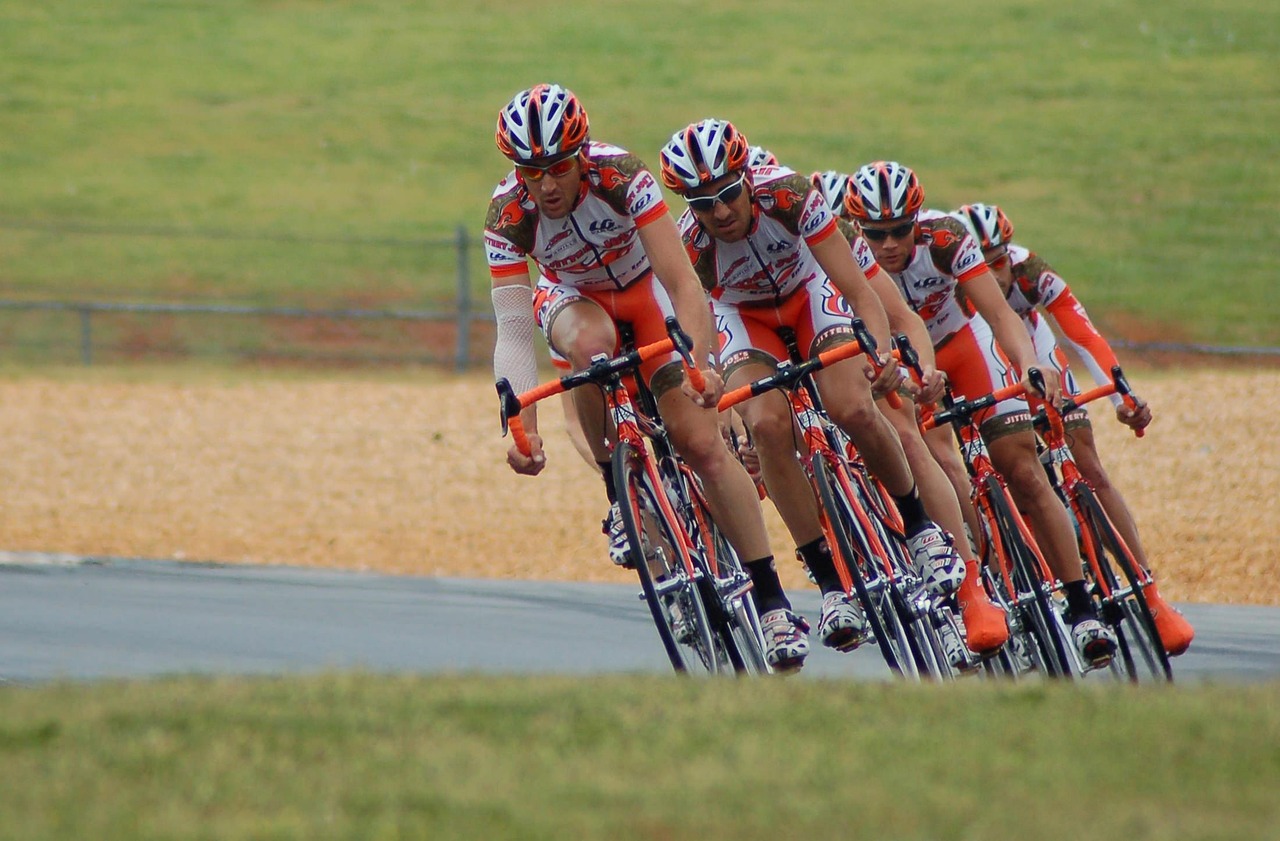
- Road: mass-start road races where riders share the work in a group (the peloton), solo time trials against the clock, fast criteriums on short city loops, and stage races like the Tour de France, where the lowest total time over all stages wins the yellow jersey.
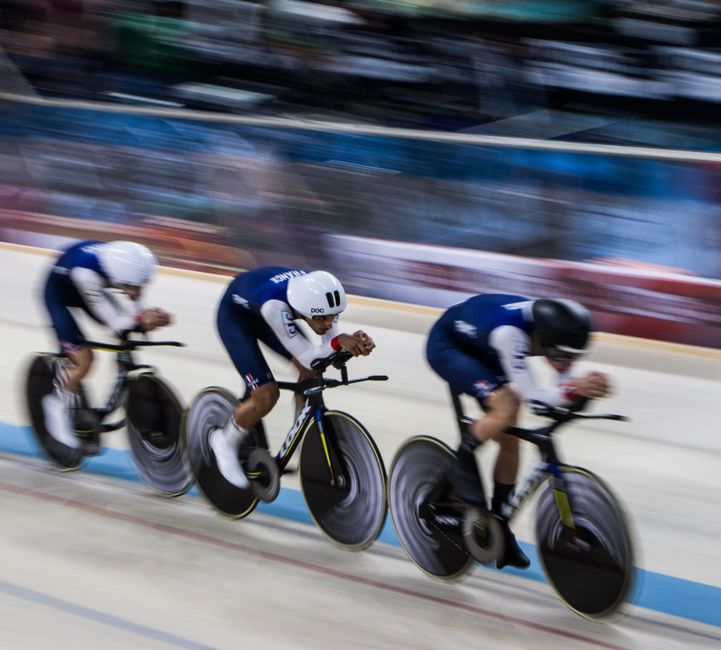
- Track: racing on a banked velodrome (250 meters at major championships) on fixed-gear bikes with no brakes: the sprint, keirin and team sprint for pure speed, and the team pursuit, omnium and madison for endurance and tactics.
- Mountain bike: cross-country (the Olympic format, multiple laps of a technical circuit), short track, marathon, enduro and downhill.
- Gravel: long races on dirt and gravel roads, from local events to the 200-mile Unbound Gravel in Kansas. The UCI added a Gravel World Championships in 2022.
- Cyclo-cross: a fall and winter sport of short laps on grass, mud and sand, with barriers (40 cm high at most under UCI rules) that riders hop or run over with the bike on their shoulder.
- BMX: racing (up to eight riders blast out of a starting gate over jumps and banked turns) and freestyle park (tricks, judged on a course of ramps).
- Indoor: for most riders that means a smart trainer or a spin bike on winter evenings. The UCI’s “indoor cycling” is something else: artistic cycling and cycle-ball, played in gyms, mostly in Europe.
Each discipline has its own rulebook, and on the road the traffic laws matter as much as race rules. Our cycling rules page covers both: the basics of racing, the road safety rules for riders, and group-ride etiquette.
Cycling at every level
Kids and youth
Most riders start on a balance bike or with training wheels in the driveway. The American Academy of Pediatrics (AAP) asks parents to get a bike that fits now, not one to grow into (a child should be able to put the balls of both feet on the ground while seated), a helmet on every ride, and sidewalks or bike paths rather than the street for children under 10. Kids can race too: USA Cycling runs events for ages 6 and up, often grouping juniors in two-year age bands. Our youth cycling guide covers bike sizing, safety and the questions parents ask most.
Middle and high school
School cycling in the US mostly means mountain biking with NICA, the National Interscholastic Cycling Association. Founded in Berkeley, California, in 2009, NICA says it now has 33 leagues, more than 25,000 student-athletes and about 1,055 teams, coached by some 15,000 trained adult volunteers. Races are cross-country, and riders are grouped by grade (middle school, freshman, JV and varsity).
College
Collegiate cycling isn’t an NCAA sport. It runs through USA Cycling’s collegiate program, with 11 regional conferences, Club Divisions I and II (Division I for schools of 15,000 or more students) and a Varsity division whose schools can offer athletic scholarships. The seasons follow the calendar: track in summer, mountain bike in early fall, cyclo-cross in winter and road in spring. More on our leagues and associations page.
Pro
Pro road cycling is built around teams and a season-long calendar of one-day classics and stage races. The three Grand Tours, the Giro d’Italia in May, the Tour de France in July and the Vuelta a España in August and September, each last three weeks with 21 stages. The women’s Tour de France Femmes began in 2022; in 2026 it ran nine stages from Lausanne to Nice, August 1–9. Mountain bike, cyclo-cross, gravel and BMX have their own World Cups, series and pro teams.
Olympic and Paralympic
Mountain biking joined the Olympics at Atlanta 1996, BMX racing at Beijing 2008 and BMX freestyle at Tokyo 2020. At LA 2028 the 22 cycling events are planned at Venice Beach and Los Angeles streets (road), the Carson velodrome (track), Industry Hills (mountain bike) and venues in the Valley (BMX). Para cycling has been on the Paralympic program since 1984, with handcycles, tricycles, bicycles and tandems in 15 sport classes; the LA28 Paralympics run August 15–27, 2028.
Adult and recreational
This is where most cyclists live: group rides, century and charity rides, gravel weekends, indoor training, local criteriums and commuting. Beginners race as Category 5 or Novice in USA Cycling and work up. Low impact on the joints, cycling is a favorite of older athletes, but it brings its own risks on the road, covered next.
Sports health for cyclists
Cycling injuries come in two kinds: crashes and overuse. AAOS reports that emergency departments treated 405,688 bicycle-related injuries in 2023, and the National Highway Traffic Safety Administration (NHTSA) counted 1,166 bicyclists killed in crashes with motor vehicles that year, up 4% from 2022, plus an estimated 49,989 injured. This section is general information, not medical advice. If you’re hurt, see a professional.
The most common cycling injuries
- Crash injuries: AAOS says bruises and cuts are the most common, followed by fractures, strains and sprains. Broken collarbones and wrists are classics, because riders fall onto a shoulder or an outstretched hand. In a study of two European bike parks, the shoulder and collarbone were the most injured area (about a third of injuries) and fractures were the most common diagnosis.
- Head injuries and concussions: the reason helmets matter so much. In NICA’s injury surveillance of youth mountain bike racing, concussion or possible concussion was the most commonly reported injury (22%).
- Lower back pain: in a study of 109 professional road cyclists (Clarsen and colleagues, 2010), 58% had had low back pain in the previous year, and 45% of all overuse injuries were in the lower back.
- Knee pain: 36% of the same pros had had pain at the front of the knee, and knee problems were the overuse injuries most likely to cost riding time. Bike fit, sudden jumps in training and poor technique are common causes, according to a review of lower-limb cycling injuries.
Helmets: what the research says
The evidence is strong. A 2017 meta-analysis of 40 studies and more than 64,000 injured cyclists found that helmet use was linked to about half the odds of head injury, roughly a third of the odds of serious head injury, and about a third of the odds of fatal head injury. AAOS puts it plainly: an approved helmet reduces the risk of a serious head injury by nearly 70%. NHTSA calls a helmet “the single most effective way” to prevent head injury in a crash.
In the US, every bicycle helmet made after 1999 must meet the Consumer Product Safety Commission (CPSC) standard; look for the CPSC label inside. The CPSC also notes that no helmet has been proven to prevent concussions, that a bike helmet is built for one crash and must be replaced after one even if it looks fine, and that it should fit snugly and sit level, not tilted back. Many riders also choose a rotational-impact system such as MIPS, and Virginia Tech’s helmet lab recommends any bike helmet it rates four or five stars. Our cycling gear page goes through fit and choice.
Concussion: recognize and remove
Cyclists often crash far from a coach, so riding partners need to know the signs. The CDC’s HEADS UP program lists a rider who looks dazed or confused or can’t remember the crash, and symptoms like headache, dizziness, balance problems, sensitivity to light or noise, or feeling foggy.
- Stop riding after a crash with a blow to the head or a hard fall if there are any signs. Don’t ride home “to see how it goes.”
- Stay off the bike for the rest of the day and until a healthcare provider clears you. Return to riding goes in steps.
- Replace the helmet: the foam is made to crush once.
- Call 911 for danger signs: seizures, passing out, growing drowsiness, a headache that gets worse, repeated vomiting, or one pupil larger than the other.
Traffic, visibility and the road
NHTSA’s data shows where the risk is: 81% of bicyclist deaths in 2023 happened in urban areas, 28% at intersections, and alcohol (in the driver or the rider) was involved in 34% of fatal crashes. Its advice: ride with traffic and follow the same rules as drivers, wear bright clothing by day, and at night use a front light and a red rear light or reflector. Daytime lights may help too: in a Danish trial of nearly 3,850 cyclists, riders with permanent running lights had 19% fewer injury accidents.
Bone health, fueling and hydration
Because cycling isn’t weight-bearing, researchers have found low bone density to be common among elite road riders, especially when they under-fuel. Strength training and some impact work off the bike, and eating enough for the training you do, are worth discussing with a sports medicine doctor or dietitian. On long rides, AAOS suggests drinking fluids every hour, and many riders use electrolyte drinks and gels (see our electrolyte powder and energy gels guides). More on our cycling nutrition page.
When to see a doctor, physical therapist or athletic trainer
See a professional after any crash with head symptoms, a shoulder or wrist that’s deformed, very painful or won’t move, or pain that’s still there a few days later. For knee or back pain that keeps coming back, numbness that doesn’t go away, or saddle problems, a sports medicine physician or physical therapist can find the cause, and a professional bike fit often helps (AAOS recommends one for regular riders). Athletic trainers are licensed or regulated health care professionals in all 50 states; many teams and NICA leagues work with them. Our cycling injuries page goes deeper.
Training and conditioning for cycling
Base and build: most riders build endurance with steady, easy miles, then add harder intervals and climbs closer to their target events. Increase volume gradually: doing too much too soon is one of the main causes of overuse injuries. Add strength training for the hips, legs and core, which helps with back pain on the bike and with bone health off it. A heart rate strap such as the Polar H10 makes zone training simple (see our heart rate monitor guide and VO2 max training).
Skills: cornering, braking, riding close in a group and handling rough ground matter as much as fitness; a skills clinic, a club ride or a NICA team is the place to learn. Indoors: a smart trainer makes winter training structured and keeps you out of traffic. Many riders also track recovery with a wearable (HRV for athletes). More on our cycling training page.
Race day: the sports-nutrition position statement from the American College of Sports Medicine and two dietitians’ groups recommends a pre-exercise meal high in carbohydrate, moderate in protein and low in fat and fiber, from familiar foods, eaten roughly 1–4 hours before. USA Cycling’s advice for first-time racers is the same in plain words: don’t try new foods on race day, arrive early, and warm up. See our race day page.
Recovery after big rides
Recovery starts with sleep: the CDC, citing the American Academy of Sleep Medicine, recommends 8–10 hours a night for teens and 7 or more for adults. Then real food and fluids. After a long ride many cyclists reach for a recovery drink or a protein shake when a meal is far off, and an easy spin the next day is a classic active recovery session.
For tired legs, many riders like compression boots after a big day or a stage race, a foam roller or massage gun for quads, calves and glutes, and slides for the walk around the house. These are comfort tools, not treatment; pain that lingers needs a professional. More on our cycling recovery page.
Gear for cycling
- A helmet that meets the CPSC standard and fits snugly, on every ride. It’s also required at every USA Cycling-permitted event and NICA race.
- A bike that fits: AAOS recommends the right frame size and handlebar and seat heights, and a professional fit for regular riders.
- Lights: a white front light and a red rear light, visible from 500 feet; many riders run them in daylight too.
- Comfort and ride-ready kit: padded gloves, bright clothing and sunglasses (AAOS), plus a pump, spare tube and multi-tool.
Four picks to start with: the Giro Register MIPS, an everyday helmet with a MIPS liner and a dial fit system (about $40 to $85 on Amazon in October 2026, depending on version and color); the Garmin Varia RTL515, a tail light with radar that warns you of cars approaching from behind up to 153 yards away (list price $199.99, often about $150 to $160); Skratch Labs Hydration Sport Drink Mix, developed by sports scientist Allen Lim and NSF Certified for Sport according to the maker (about $24 for 20 servings); and the Hyperice Normatec Go calf compression sleeves for after a big day (about $379). Our cycling gear page and best wearables for cycling go further.
Giro Register MIPS Helmet
- MIPS rotational liner
- Universal adult fit (54-61 cm)
- Meets CPSC standard
Garmin Varia RTL515 Radar Tail Light
- Radar alerts up to 153 yd
- Up to 16 h in day flash
- Pairs with Garmin and phones
Skratch Labs Hydration Sport Drink Mix
- 400 mg sodium per serving
- NSF Certified for Sport (maker)
- 20 or 60 servings
Hyperice Normatec Go
- Calf compression sleeves
- 7 pressure levels
- Wireless, travel size
Cycling FAQs
What is the most common cycling injury?
From crashes, bruises and cuts, followed by fractures such as broken collarbones and wrists, according to AAOS. From overuse, lower back pain and pain at the front of the knee; in a study of professional road cyclists, 58% had had low back pain and 36% knee pain in the previous year.
Do bike helmets really work?
Yes. A meta-analysis of more than 64,000 injured cyclists linked helmet use to much lower odds of head injury, serious head injury and fatal head injury, and AAOS says an approved helmet cuts the risk of serious head injury by nearly 70%. No helmet prevents every concussion, so ride carefully too.
How often should I replace my bike helmet?
After any crash where it hit something, even if it looks fine, because bike helmets are designed for a single impact. Otherwise follow the maker’s advice; without it, the CPSC suggests replacing a helmet within 5–10 years, sooner if it’s cracked, faded or worn.
What are the cycling events at the Olympics?
Five disciplines and 22 medal events: road (road race and time trial), track (sprint, keirin, team sprint, team pursuit, omnium and madison), mountain bike cross-country, BMX racing and BMX freestyle park, all with equal events for men and women.
Can kids race bikes?
Yes. USA Cycling has races for ages 6 and up, USA BMX lets kids try a local track free for a day, and NICA runs mountain bike teams for middle and high school students. A helmet is required at all of them.
Cycling gives back friends, new roads and fitness for life. The riders who keep going wear a good helmet, stay visible, build up gradually and listen to their bodies. Keep exploring: our recovery tools guide, Nutrition & Supplements for long rides, our soccer guide if your kid plays both, and every other sport on our sports hub.