This article contains affiliate links: if you buy through them we may earn a commission, at no extra cost to you. Learn more.
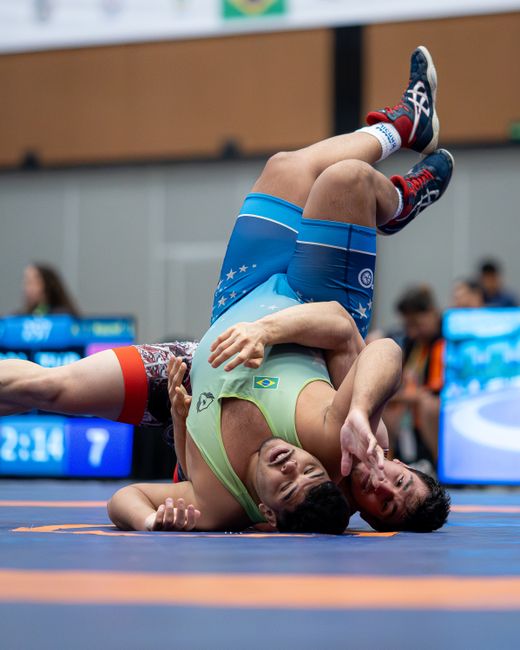
A gym that smells of mat cleaner on a Saturday in January, eight mats taped down, brackets on the wall and a hundred kids in singlets waiting for their name to be called. A dual meet on a weeknight, the lights dimmed over one mat and the student section on its feet for the heavyweights. The NCAA finals in March, an arena full of fans who know exactly what a riding-time point means. Wrestling is one of the oldest sports there is, and in the US it’s growing fast: in 2024-25, more than 300,000 boys and 74,064 girls wrestled for their high schools, according to the National Federation of State High School Associations (NFHS). Ten years earlier, only 11,496 girls wrestled.
Wrestling, page by page
- Rules: how the game works at every level
- Leagues & associations: pro, college, high school and youth
- Youth & high school: ages, safety and recruiting, for players and parents
- Injuries & sports health: prevention, concussion, when to see a pro
- Training & conditioning: before: off-season to in-season
- Game day: during: fueling, hydration, heat
- Recovery: after: games, tournaments, sleep
- Nutrition & supplements: what to eat, tested supplements
- Best wearables: trackers and watches for the sport
- Gear: the complete equipment list
Buying guide · Our Wrestling buying guide compares the gear we'd pick, with prices and sizing:
This page is wrestling for athletes and the people who look after them: the three styles and how they score, what the sport looks like from kids’ tournaments to the Olympics, and, most of all, how to stay healthy doing it. Sports health is the heart of it: the injuries wrestlers get most, skin infections and how to keep them off the mat, cauliflower ear, concussion, and the safe way to handle weight. It’s general information, not medical advice.
Wrestling at a glance
| Styles | Folkstyle (US high school and men’s college), freestyle (international, Olympic, and NCAA women’s wrestling) and Greco-Roman (international and Olympic; holds above the waist only). |
|---|---|
| Match length | High school: three periods. NCAA men: 7 minutes (3-2-2). Freestyle and Greco-Roman: two 3-minute periods for U20 and older, two 2-minute periods for U15 and U17, with a 30-second break. |
| How you win | A fall (pin), a big lead (technical fall or technical superiority), or more points when time runs out. |
| Weight classes | High school: 14 classes from 106 to 285 lb. NCAA men: 10 from 125 to heavyweight. NCAA women: 10 from 103 to 207 lb. Olympics: 6 per style. |
| Governing bodies | United World Wrestling (UWW) worldwide; USA Wrestling in the US; NFHS and state associations for high school; NCAA, NAIA and NJCAA for college. |
| Main physical demands | Short bursts of all-out effort, grip and pulling strength, hips and legs for shots and lifts, and the will to keep going in the third period. |
| Most common injuries | Knee, shoulder and head/face injuries, concussion, skin infections, cauliflower ear, and problems from cutting weight the wrong way. |
How wrestling works
Two wrestlers of about the same weight meet on a mat. The cleanest way to win is a fall, or pin: holding both of your opponent’s shoulders to the mat. If nobody gets a fall, points decide it, and a big enough lead ends the match early.
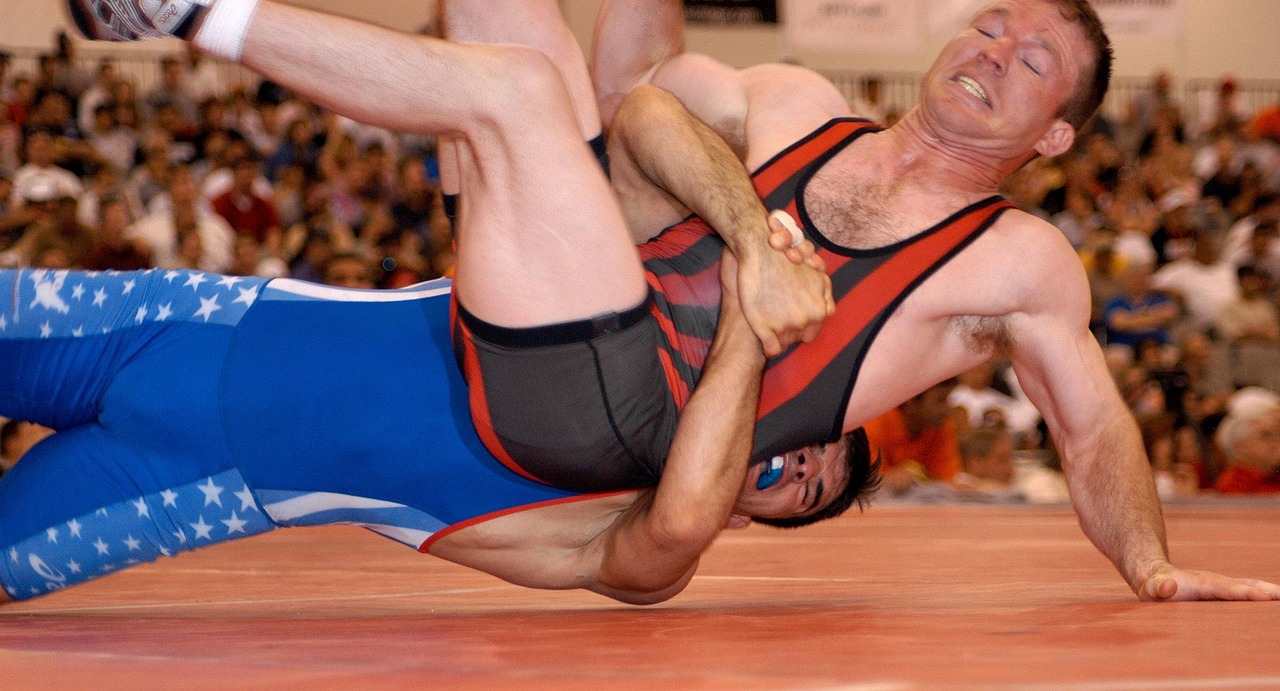
Folkstyle is the American style, wrestled in high schools, men’s college and most kids’ winter seasons. It rewards control. A takedown (bringing your opponent down and controlling them) is worth 3 points in both high school and NCAA rules. On the mat, the bottom wrestler can earn 1 point for an escape or 2 for a reversal, and the top wrestler earns near-fall points (2, 3 or 4) for holding the opponent’s back toward the mat. College adds a riding-time point for a minute or more of control. A 15-point lead is a technical fall.
Freestyle and Greco-Roman are the international styles, run by United World Wrestling and wrestled at the Olympics. They reward big, fast action: a takedown is 2 points, exposing the opponent’s back is 2, a throw from standing into danger is 4, and a high, sweeping throw is 5. Stepping out of the circle gives the opponent 1 point. In Greco-Roman you can’t attack the legs or use your own legs to score, so the action is all upper body: body locks, arm throws and lifts. Technical superiority comes at a 10-point lead in freestyle and 8 in Greco-Roman.
Every style has weigh-ins, and most have skin checks before them. The details of scoring, periods, weight classes and weight certification for each level are on our wrestling rules page.
Wrestling at every level
Kids and youth
Most kids start in a club or a school-district program, often through USA Wrestling, which had a record membership of nearly 372,000 in 2024-25, including more than 52,000 female athletes by April 2025. Kids wrestle folkstyle in winter, and many add freestyle and Greco-Roman in spring and summer. USA Wrestling’s age divisions run in two-year bands: 8U, 10U, 12U, 14U and 16U, then the Junior division for high schoolers. Matches are shorter for kids: at USA Wrestling’s folkstyle nationals, 8U and 10U matches are three 1-minute periods. Our youth wrestling page covers age groups, weight rules, skin checks and the questions parents ask most.
High school
High school wrestling follows NFHS rules, and each state association runs its own season, weight certification and state tournament. It’s one of the biggest school sports for boys, and the fastest-growing story in the sport is girls’ wrestling: 74,064 girls at 8,100 schools in 2024-25, and 40 states now hold a separate girls’ state championship, up from 5 ten years ago, according to the NFHS. Every high school wrestler has to go through a weight management program before competing; we explain it below.
College
NCAA men’s wrestling has championships in Divisions I, II and III. In March 2026 in Cleveland, Penn State won its fifth straight Division I team title. Women’s wrestling became a full NCAA championship sport in 2025-26: the first NCAA Women’s Wrestling Championships, held March 6–7, 2026, in Coralville, Iowa, were won by McKendree, 171–166 over Iowa. NCAA women wrestle freestyle, not folkstyle. The NAIA holds men’s and women’s national championships, and the NJCAA has a men’s championship and a women’s invitational for two-year colleges.
Olympic and international
Wrestling has been part of every modern Olympics except Paris 1900. Greco-Roman goes back to the first Games, freestyle and Greco-Roman have been held together since 1920, and women’s freestyle joined in Athens in 2004. Today there are six Olympic weight classes in each style, 18 events in all, and United World Wrestling also runs World Championships for U17, U20, U23 and seniors. In the US, the road to the national team runs through USA Wrestling’s events and the World Team Trials. All the organizations are explained on our wrestling leagues and associations page.
Adult and recreational
Wrestling doesn’t have to end at graduation. Many clubs run adult open mats, USA Wrestling has Masters (veterans) divisions, and plenty of former wrestlers move into jiu-jitsu or MMA. If you’re coming back after years away, build back slowly; hard live wrestling on day one is how older athletes get hurt. Our jiu-jitsu recovery and MMA recovery gear guides cover the grappler’s recovery kit.
Sports health for wrestlers
Wrestling is a full-contact sport on a shared mat, with a scale at the end of every week. That makes its health story different from most sports: injuries, yes, but also skin infections and weight. This section is general information. If you’re hurt or sick, see a sports medicine doctor, physical therapist or athletic trainer.
The most common wrestling injuries
- Knees, shoulders and the head: in NCAA men’s wrestling from 2014-15 to 2018-19, the knee (21.4%), shoulder (13.4%) and head/face (13.3%) were the most injured body parts, and concussion was the single most reported injury. Injuries were about four times as common in matches as in practice.
- High school is different: a study of high school boys found the head/face and shoulder were injured most, and the injury rate was lower than in college (2.38 versus 9.28 per 1,000 athlete-exposures).
- Girls: in a study of girls aged 5–18 treated in US emergency departments for wrestling injuries (2014–2023), the head, shoulder, knee and elbow were injured most, sprains and strains were the most common diagnosis, and more than 60% of injuries were above the waist.
- Cauliflower ear: a blow or rub to the ear can cause bleeding under the skin (an auricular hematoma) that, left alone, can harden into a permanent lump. In a classic survey of 537 Division I wrestlers, those who wore headgear reported ear hematomas about half as often (26% versus 52%). That’s why high school and college rules require ear guards. If an ear swells, see a doctor or athletic trainer quickly.
Our wrestling injuries page goes deeper into each one and how to lower the risk.
Skin infections: keep them off the mat
Skin-to-skin contact on a shared mat spreads infections: ringworm (tinea), impetigo and staph, and herpes gladiatorum, a herpes simplex infection. In one well-known outbreak at a high school wrestling camp, 60 of 175 wrestlers (34%) caught herpes gladiatorum, mainly through direct skin contact. NCAA injury surveillance data link skin infections to at least 21% of the practice injuries and illnesses in wrestling that need medical attention. That’s why wrestlers have skin checks before weigh-ins, and why a contagious lesion keeps you off the mat even if it could be covered.
The National Athletic Trainers’ Association (NATA) position statement on skin diseases sets out the habits that work: shower right after every practice and match, don’t share towels, bar soap, water bottles or gear, wash practice clothes and towels every day, wear shower shoes in the locker room, and clean the mats on a set schedule with an EPA-registered disinfectant. Show any new spot or rash to the athletic trainer before practice, not after.
Weight: the safe way to make a weight class
In late 1997, three healthy college wrestlers in North Carolina, Wisconsin and Michigan died within weeks of each other while trying to lose weight fast for competition. According to the CDC’s report, each was restricting food and fluids and exercising hard in hot conditions while wearing vapor-impermeable (rubber or plastic) suits. Those deaths changed the sport. The NCAA built its weight management program in 1998, and today high school and college wrestlers go through weight certification before the season:
- Hydration test first: a urine specific gravity test. High school wrestlers must be at 1.025 or below and NCAA wrestlers at 1.020 or below, or they can’t be assessed that day.
- Body composition next, which sets the lowest weight you may wrestle: 7% body fat for high school boys and 12% for girls; 5% for NCAA men and 17% for NCAA women.
- A slow descent: you can lose no more than 1.5% of body weight per week toward that minimum.
- Banned tools: the NCAA bans saunas, rubber or other vapor-impermeable suits, diuretics, stimulants and over-heated rooms during the season.
The American Academy of Pediatrics and the American College of Sports Medicine both warn against rapid weight cutting. The safe path is a weight class you can make by eating well, with any loss planned early and slowly with a coach, athletic trainer or registered sports dietitian. A smart scale (see our smart scale guide) helps you watch the trend, but it doesn’t replace certification. Our wrestling nutrition page covers what to eat.
Concussion: recognize and remove
Heads hit mats, knees and other heads. The good news is that at one of the largest national tournaments for wrestlers aged 13–18, the concussion rate was low and falling, from 1.31 per 100 athletes in 2015 to 0.50 in 2025. The CDC’s HEADS UP program asks coaches and parents to watch for a wrestler who looks dazed or confused, or who has a headache, dizziness, balance problems or sensitivity to light or noise.
- Remove the wrestler from the match or practice right away.
- Keep them out for the rest of that day and until a healthcare provider clears them.
- Return slowly, step by step; it usually takes a week or more.
- Call 911 for danger signs: a seizure, passing out, a headache that keeps getting worse, repeated vomiting, or one pupil larger than the other.
When to see a professional
Don’t wrestle through a swollen ear, a knee that gives way, a shoulder that slips, a rash that’s spreading, or any concussion sign. A sports medicine physician handles most of these without surgery. An athletic trainer (often in the room at practice) does skin checks, first aid and return-to-play steps, and a physical therapist rebuilds strength after an injury.
Training and conditioning for wrestling
Off-season: build strength (legs, hips, back, grip and neck) and an aerobic base, and wrestle other styles or play another sport. For young athletes, a clinical study linked specializing in one sport, and training more hours a week than their age in years, with a higher injury risk. Preseason: add hard intervals that look like a match, short all-out bursts with short rests, and plan your weight class now, not the week before the first meet. In season: keep a little strength work, drill technique, and watch the total load. Many wrestlers track sleep and recovery with a wearable; see HRV for athletes and our wrestling training page.
Tournament day: a long day of short matches. After weigh-ins, refuel with familiar food and fluids, then keep eating small and drinking between rounds. Our tournament day page walks through it.
Recovery after matches and tournaments
Shower first; it’s the most important recovery habit in this sport. Then real food and fluids, and sleep: the CDC, citing the American Academy of Sleep Medicine, recommends 9–12 hours a night for children 6–12, 8–10 hours for teens and 7 or more for adults. Simple tools help many wrestlers feel better between tournaments: a foam roller or massage gun for tight hips and shoulders, and soft recovery slides once the wrestling shoes come off. They’re about comfort, not treatment. More on our wrestling recovery page.
Gear for wrestling
- Headgear (ear guards): required in NFHS and NCAA wrestling; NCAA rules require it any time live wrestling happens, practice included.
- Wrestling shoes: light, heelless and above the ankle, with laces taped or locked.
- Singlet (or the NFHS two-piece uniform in high school), plus a sports bra for girls.
- Mouthguard if you wear braces (NFHS requires one that covers both upper and lower braces), and knee pads if you like them.
- Hygiene kit: your own towel, soap and shower shoes.
Three staples for a wrestling bag: the Cliff Keen F5 Tornado headgear, which Cliff Keen says is 43% lighter than other models (about $56 at the maker); the ASICS Matflex 7, a heelless wrestling shoe sold in men’s and kids’ versions; and a pack of Defense Soap bars with tea tree and eucalyptus oils, which the maker says are made by wrestlers (about $31 for five on Amazon). The full list is on our wrestling gear page.
Cliff Keen F5 Tornado Headgear
- 43% lighter than other models (maker)
- Adjustable strapping
- Many team colors
ASICS Matflex 7 Wrestling Shoe
- Heelless wrestling shoe
- Rubber outsole
- Men's and kids' versions
Defense Soap Tea Tree Bar (5-pack)
- Tea tree and eucalyptus oils
- No SLS or added fragrance
- Five bars
For more after practice, browse Recovery & Regeneration and Training & Performance.
Wrestling FAQs
What’s the difference between folkstyle, freestyle and Greco-Roman?
Folkstyle is the American school style and rewards control: escapes, reversals and riding time count. Freestyle and Greco-Roman are the international and Olympic styles and reward big moves and exposure. In Greco-Roman, you can’t attack the legs or use your legs to score.
How long is a wrestling match?
NCAA men: 7 minutes in three periods (3, 2 and 2 minutes). High school: three periods. Freestyle and Greco-Roman: two 3-minute periods for U20 and older and two 2-minute periods for U15 and U17. Kids’ matches are shorter.
Can girls wrestle in high school?
Yes, and in growing numbers: 74,064 girls in 2024-25. Forty states hold a separate girls’ state championship, and in other states girls may wrestle on the boys’ team. Girls can go on to NCAA, NAIA and NJCAA programs and to the Olympics.
How do wrestlers prevent ringworm and other skin infections?
Shower right after practice, never share towels or soap, wash gear daily, wear shower shoes, and make sure the mats are cleaned on schedule with an EPA-registered disinfectant. Report any new spot to the athletic trainer before practice; a contagious lesion means sitting out until a doctor clears you.
Is cutting weight safe?
Rapid weight cutting by dehydration isn’t. High school and college programs limit loss to 1.5% of body weight a week and set a minimum weight from a hydration test and body composition. Pick a class you can make by eating well, and plan any change with a coach, athletic trainer or registered dietitian.
Do you have to wear headgear in wrestling?
In high school (NFHS) and NCAA wrestling, yes. In USA Wrestling events, headgear is recommended but not required, and freestyle and Greco-Roman wrestlers at the top level usually wrestle without it. Wearing it lowers the risk of cauliflower ear.
Wrestling teaches toughness, but the wrestlers who last are the ones who keep their skin clean, make weight the slow way, protect their ears and tell someone when something’s wrong. Keep exploring: our recovery tools guide, electrolytes for long tournament days, the best wearables for wrestlers, and every other sport on our sports hub.