This article contains affiliate links: if you buy through them we may earn a commission, at no extra cost to you. Learn more.
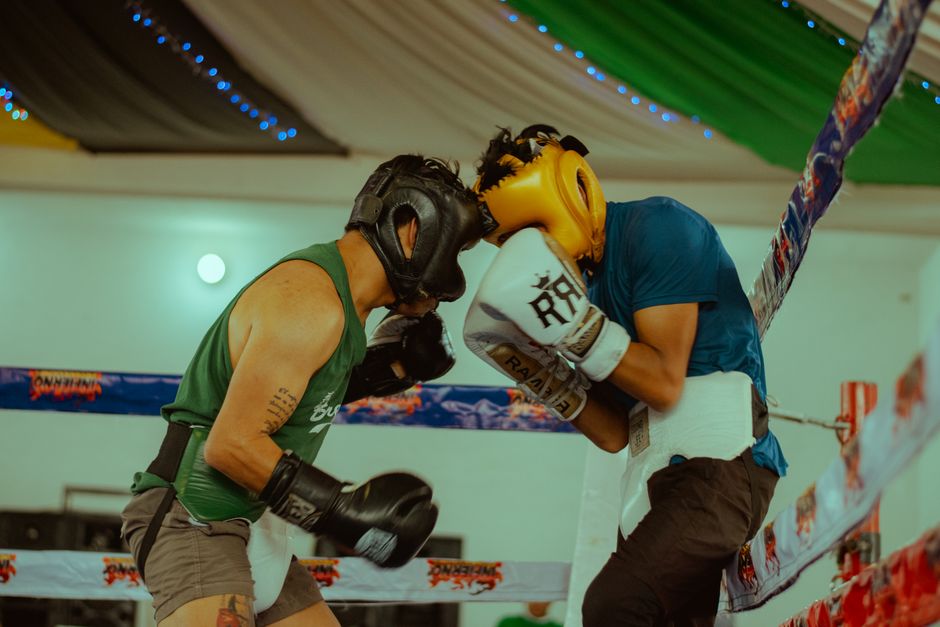
Six a.m. in a strip-mall gym: music up, twenty people in hand wraps working the heavy bags in three-minute rounds, nobody getting hit back. A Friday night in a rec center, folding chairs around a ring, a 12-year-old in red headgear bouncing in the corner before her first Golden Gloves bout. The Olympic final in a packed arena, five judges at ringside. A title fight in Las Vegas, twelve rounds and four world belts on the line. Boxing is all of these at once: a fitness class, a youth sport, an Olympic event and a professional business.
Boxing, page by page
- Rules: how the game works at every level
- Leagues & associations: pro, college, high school and youth
- Youth & high school: ages, safety and recruiting, for players and parents
- Injuries & sports health: prevention, concussion, when to see a pro
- Training & conditioning: before: off-season to in-season
- Game day: during: fueling, hydration, heat
- Recovery: after: games, tournaments, sleep
- Nutrition & supplements: what to eat, tested supplements
- Best wearables: trackers and watches for the sport
- Gear: the complete equipment list
Buying guide · Our Boxing buying guide compares the gear we'd pick, with prices and sizing:
This page is boxing for the people who do it and the people who look after them: how a bout works, what the sport looks like from kids’ club shows to world title fights, and, most of all, how to stay healthy doing it. Sports health is the heart of it. Boxing is a sport where hitting the head is part of the game, so we’re straight about the risks: boxing injuries to the hands and face, concussion and brain health, the safety rules that protect boxers, making weight, and when to see a professional. It’s general information, not medical advice.
Boxing at a glance
| Kinds of boxing | Olympic-style (amateur) boxing, professional boxing, and non-contact fitness boxing (bag, mitt and class workouts with no sparring). |
|---|---|
| Bout length | Olympic-style: three rounds, 3 minutes each for adults and 17-18-year-olds, shorter for kids (1.5 to 2 minutes). Pro men: up to 12 three-minute rounds. Pro women: up to 10 two-minute rounds under the commissions’ model rules. |
| How you win | Knockout, the referee stopping the contest, disqualification, or on the judges’ scorecards (10-point must system). |
| Weight classes | USA Boxing: 10 for elite men and 10 for elite women. Pros: 17 from mini flyweight (105 lb) to heavyweight. LA28 Olympics: 7 for men and 7 for women. |
| Governing bodies | World Boxing internationally (Olympic boxing); USA Boxing in the US; state athletic commissions license and supervise pro boxing; the WBA, WBC, IBF and WBO sanction pro world titles. |
| Main physical demands | Repeated short bursts of punching and footwork over several rounds, a big aerobic base, core and hip power, shoulder endurance and fast reactions. |
| Most common injuries | Hand and wrist injuries, cuts to the face, nose injuries, concussion and shoulder strains, plus the long-term risk of repeated head blows. |
How boxing works
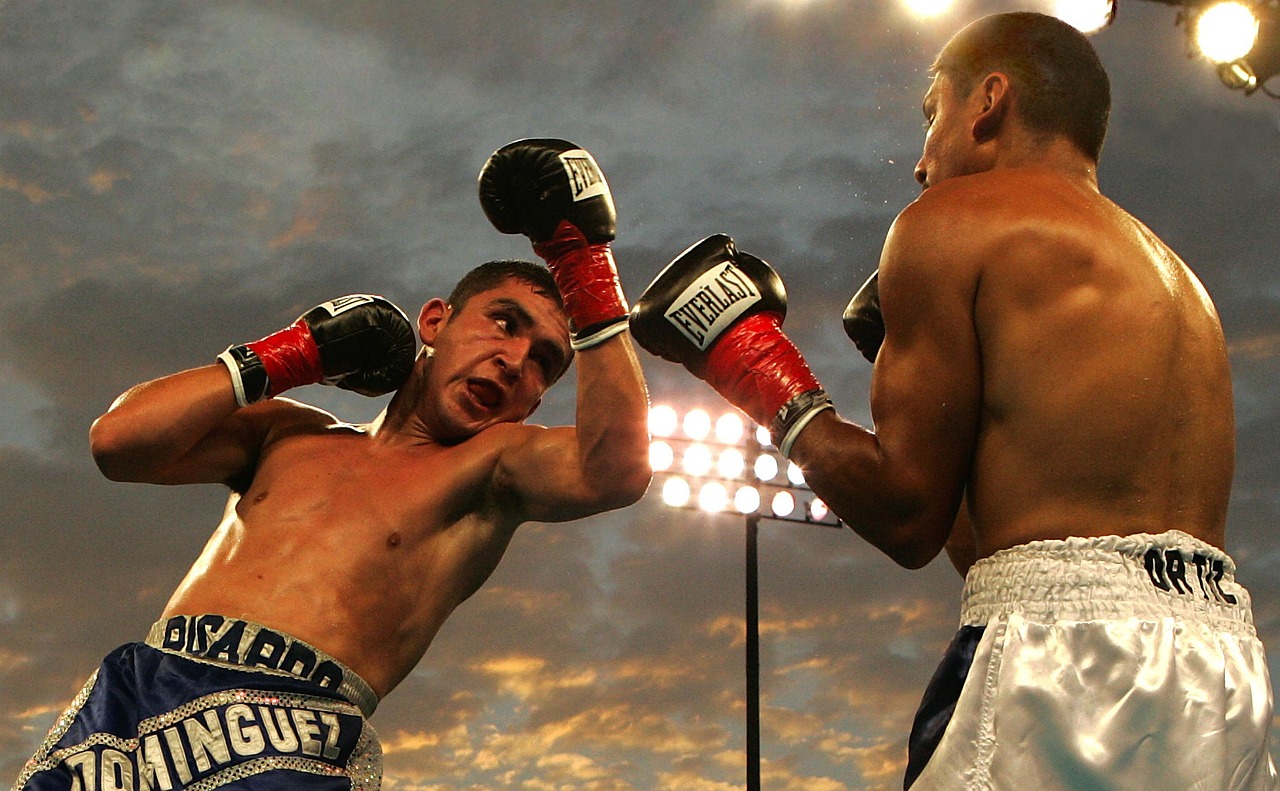
Two boxers of about the same weight meet in a roped ring and try to land clean punches with the knuckle part of the glove on the front and sides of the head and the body above the belt. Hitting below the belt, holding, head-butting and hitting the back of the head are fouls. A referee runs the bout in the ring, and judges at ringside score each round.
Scoring is the 10-point must system: the judge must give the round’s winner 10 points and the loser 9 or fewer. In Olympic-style boxing, World Boxing and USA Boxing judges look first at the number of clean scoring blows, then technical and tactical superiority, then competitiveness, and every round must have a winner. A bout can also end early: a knockout (a boxer down who doesn’t beat the referee’s count of ten), the referee stopping the contest because a boxer is outclassed, hurt or taking too many hard blows, a disqualification, or a corner throwing in the towel. When a boxer is knocked down in Olympic-style boxing, the referee must count at least to eight before the bout goes on. The full details, amateur vs pro, are on our boxing rules page.
Boxing at every level
Kids and youth
In the US, kids box through clubs registered with USA Boxing, the national governing body. The youngest age a child can compete is 8. USA Boxing’s 2026 rule book groups kids as Prep boxers (8 to 14: Pee Wee 8-10, Bantam 11-12, Intermediate 13-14), Junior boxers (15-16) and Youth boxers (17-18). Pee Wee and Bantam bouts are three rounds of 1.5 minutes, Intermediate and Junior three rounds of 2 minutes. Headgear is required in all divisions at USA Boxing local, regional and national events, and kids are matched by age, weight and experience.
Parents should know where the doctors stand. In a joint policy statement, the American Academy of Pediatrics (AAP) and the Canadian Paediatric Society say boxing brings exercise, self-discipline and self-confidence, but because it rewards deliberate blows to the head, they oppose boxing as a sport for children and teens and encourage sports where head blows aren’t central. Non-contact boxing training is a different thing from sparring and bouts. Our youth boxing page covers the rules, sparring safety and the questions parents ask.
Teens and amateurs: Golden Gloves and national championships
Boxing teens and adults climb through local club shows, state and regional tournaments such as the Golden Gloves and Junior Olympics, and USA Boxing national championships. The Golden Gloves is a yearly series of tournaments, the Golden Gloves Tournament of Champions series, hosted under USA Boxing sanction by franchises of Golden Gloves of America. Every boxer needs an annual sports physical and a ringside physician’s check before and after each bout.
College
Boxing hasn’t been an NCAA sport since 1960. College boxers compete through the National Collegiate Boxing Association (NCBA), founded in 1976, which runs club boxing at schools including the Army, Navy and Air Force academies, with regional tournaments leading to a national championship for men and women.
Olympic and international
Boxing has been on the Olympic program since 1904 (missing only 1912, when Swedish law banned it), and women’s boxing joined in London 2012. The United States has won more Olympic boxing gold medals than any other country. World Boxing, founded in 2023, received provisional IOC recognition in February 2025 and runs the qualification path to Los Angeles 2028, where boxing will have seven weight classes for men and seven for women, the first Olympics with equal places for both (124 each). Under World Boxing rules, elite men box without headgear; women and boxers under 19 wear it.
Professional boxing
Pro boxers must be at least 18 under the Association of Boxing Commissions’ model rules, and every pro fight in the US must be supervised by a state athletic commission. Federal law requires a physical exam before each fight, a physician at ringside, an ambulance or medical team on site and health insurance for each boxer. Four major sanctioning bodies award world titles: the WBA (which began as the National Boxing Association in 1921), the WBC (1963), the IBF (1983) and the WBO (1988). A boxer who holds all four belts in a division at the same time is the undisputed champion. Who’s who is on our boxing leagues and associations page.
Adults, masters and fitness boxing
Most people who box never step into a ring. Fitness boxing classes, bag workouts at home and mitt work with a coach give you the conditioning without getting hit. Adults who want to compete can: USA Boxing’s elite division runs to age 40, and boxers 41 and older box as Masters in 16 oz gloves and headgear, with a yearly Masters physical and opponents matched within ten years of age.
Sports health for boxers
Boxing builds fitness, coordination and toughness, and it carries real risks. This section is general information, not medical advice. If you’re hurt, see a professional.
The most common boxing injuries
- Hands and wrists: in injury records from Great Britain’s Olympic boxing squad, hand and wrist injuries were the most frequent (23% of all injuries in 2005-2009), and an eight-year follow-up found “boxer’s knuckle” (damage to the tissue over the knuckle) and instability at the base of the fingers were the most common. They happened far more often in competition than in training. The American Academy of Orthopaedic Surgeons (AAOS) notes that the most common hand fracture, a break of the bone below the little finger, is called a “boxer’s fracture” because it usually comes from punching something hard with a closed fist.
- Cuts and facial injuries: cuts around the eyes, nosebleeds and broken noses come with the sport. When elite men stopped wearing headgear in international competition, a study by ringside physicians found fewer bouts stopped for head blows but a notable increase in cuts.
- Concussion: the AAP lists concussion among the most common boxing injuries. In the GB squad study, concussions were rare (5 in 5 years), but every punch to the head counts.
- Long-term brain health: in the Professional Fighters Brain Health Study of 224 professional boxers and MMA fighters, more pro fights and more years of fighting were linked with smaller volumes in parts of the brain and slower processing speed. Later work from the same study linked more sparring rounds with higher levels of neurofilament light, a blood marker of nerve-cell damage. Sparring counts, not just fights.
The safety rules that protect boxers
USA Boxing’s 2026 rules require an annual physical, a ringside physician’s check before and after every bout, headgear in all its competitions, a mouthpiece, and a cup protector for men. After a knockout or a stoppage for hard blows to the head, a boxer may not box or spar for at least 30 days; two in 90 days means at least 90 days out, three in 12 months at least a year. If a boxer lost consciousness, the minimum rest grows to 90 or 180 days depending on how long. The same rules apply to knockouts in training, and a boxer needs written clearance from a physician to come back. Pro boxers who are knocked out get at least a 60-day medical suspension under the commissions’ model rules.
Headgear helps, but it isn’t a force field. In lab tests, approved amateur headgear roughly halved the rotational acceleration of the head from a gloved punch and reduced cuts, yet no headgear makes repeated head blows safe. The best protection is good coaching: controlled sparring, matched partners and fewer hard rounds.
Concussion: recognize and remove
The CDC’s HEADS UP program asks coaches and parents to watch for an athlete who looks dazed or confused or is slow to react, and to listen for headache, dizziness or balance problems, sensitivity to light or noise, feeling foggy, trouble concentrating, irritability or sleep changes.
- Remove the boxer from sparring or competition right away.
- Keep them out the rest of the day and until a healthcare provider clears them; don’t judge it yourself.
- Return in steps, usually over a week or more, and in USA Boxing never before the medical restriction ends.
- Call 911 for danger signs: a seizure, passing out or growing drowsiness, a headache that gets worse, repeated vomiting, or one pupil larger than the other.
Making weight the safe way
Boxing has weight classes, and with them the temptation to cut weight fast. The AAP’s clinical report on weight control in young athletes names weight-class sports as a place where athletes try to lose weight to compete lower, and describes the unhealthy methods to avoid. Restricting food and fluids and sweating weight off in rubber suits or hot rooms were behind the deaths of three college wrestlers in 1997, as the CDC reported. In USA Boxing tournaments, boxers weigh in on each day they box. Compete at a weight you can make while eating and drinking normally, and plan any change with a coach and a registered dietitian. Our boxing nutrition page covers fight-week eating.
When to see a doctor, physical therapist or athletic trainer
AAOS says to get medical care for a possible hand fracture as soon as possible, because a delayed fracture is harder to treat. See a professional for a knuckle that looks sunken or a hand that swells, bruises or won’t move normally, a cut that won’t close, a nose that looks out of shape, shoulder pain that lingers, and any concussion signs. A sports medicine physician manages most of these, a physical therapist guides the return to training, and an athletic trainer can help if your club or school has one. The full rundown is on our boxing injuries page.
Training and conditioning for boxing
Boxing fitness is built in rounds: three minutes on, one minute off, just like a bout. Most boxers mix roadwork (easy runs for the aerobic base plus intervals), skipping rope, shadowboxing, heavy-bag and mitt rounds, and strength work for the legs, hips, core and shoulders. Many boxers use a heart-rate strap to keep easy days easy (see our heart rate monitor guide), and the mental side, staying calm under pressure, is trainable too: mental training tools for athletes. More on our boxing training page.
Fight day: the sports-nutrition position statement from the American College of Sports Medicine and two dietitians’ groups recommends a pre-exercise meal that is high in carbohydrate, moderate in protein, low in fat and fiber, made of familiar foods and eaten roughly 1-4 hours before. After the weigh-in, eat and drink familiar food and fluids; many boxers add electrolytes (see our electrolyte powder guide). The plan for the whole day is on our fight day page.
Recovery after training and fights
Sleep comes first: the CDC, citing the American Academy of Sleep Medicine, recommends 9-12 hours a night for children 6-12, 8-10 for teens and 7 or more for adults. Then real meals with protein; many boxers use a shake when a meal is hours away (see our protein powder guide). Hard sparring needs days of rest around it, and after a knockout the rules require weeks off.
For tight shoulders, forearms, calves and back, many boxers use a foam roller or a massage gun, and slip into soft recovery shoes after a long day on their toes. They’re about comfort, not treatment. Our combat sports recovery gear guide and boxing recovery page go deeper.
Gear for boxing
- Gloves: heavier gloves for sparring, often 16 oz for adults; lighter ones for bag and mitt work. In competition, organizers provide approved 10, 12 or 16 oz gloves in USA Boxing; pros wear 8 or 10 oz by weight class.
- Hand wraps: under every pair of gloves, every time. Many adults use 180-inch wraps; kids and small hands need shorter ones.
- Mouthguard and headgear: a mouthguard for any sparring; headgear for amateur sparring and competition.
- Shoes and a jump rope: light boxing shoes with grip, no spikes or heels (a USA Boxing rule).
Three simple picks to start: Title Classic Pro Style Training Gloves 3.0, an affordable hook-and-loop training glove sold from 8 to 16 oz; Everlast Elite 180″ hand wraps; and the Shock Doctor Gel Max mouthguard in youth and adult sizes. The full list, from headgear to heavy bags, is on our boxing gear page.
Title Classic Pro Style Training Gloves 3.0
- Synthetic leather, hook-and-loop
- Multi-layer foam
- 8 to 16 oz
Everlast Elite 180" Hand Wraps
- 180 in long
- Cotton-polyester blend
- Machine washable
Shock Doctor Gel Max Mouthguard
- Boil-and-bite gel liner
- Youth and adult sizes
- About $12
For after the gym, browse Recovery & Regeneration and Training & Performance.
Boxing FAQs
What age can kids start boxing?
USA Boxing’s minimum age to compete is 8, in the Pee Wee division, with 1.5-minute rounds and headgear. Many gyms teach younger kids non-contact skills. The AAP and Canadian Paediatric Society oppose boxing bouts for children and teens because of head blows, so talk it over with your child’s doctor.
How many rounds are in a boxing match?
Olympic-style bouts are three rounds: 3 minutes each for adults and 17-18-year-olds, 2 minutes for 13-16-year-olds and 1.5 minutes for 8-12-year-olds in USA Boxing. Pro fights for men run up to 12 three-minute rounds; women’s pro bouts run up to 10 two-minute rounds under the commissions’ model rules.
Do Olympic boxers wear headgear?
Women do and elite men don’t, under World Boxing rules; boxers under 19 also wear it. In the US, USA Boxing requires headgear in all divisions at its local, regional and national events.
What are the most common boxing injuries?
Hand and wrist injuries top the list in elite amateur boxers, followed by cuts, nose and facial injuries, concussion and shoulder problems. Wrap your hands every time, wear the right gloves, and get any hand that swells or looks out of shape checked quickly.
Is fitness boxing safe if you don’t spar?
Without sparring there are no blows to the head, which removes boxing’s biggest risk. You can still hurt your hands, wrists or shoulders, so wrap your hands, use padded gloves, warm up and build up the number of rounds gradually. Check with a doctor first if you have a heart condition or haven’t exercised in a while.
How long after a knockout can you box again?
In USA Boxing, at least 30 days with no boxing or sparring after a knockout or a stoppage for hard head blows, longer after repeated knockouts or a loss of consciousness, and only with a physician’s written clearance. Pros who are knocked out get at least 60 days under the commissions’ model rules; your doctor may say longer.
Boxing rewards the people who respect it: good coaches, matched partners, wrapped hands, real rest and honest answers about head knocks. Keep exploring the rest of our boxing section, our recovery tools guide, Nutrition & Supplements, and the other combat sports on our sports hub, like wrestling.