This article contains affiliate links: if you buy through them we may earn a commission, at no extra cost to you. Learn more.
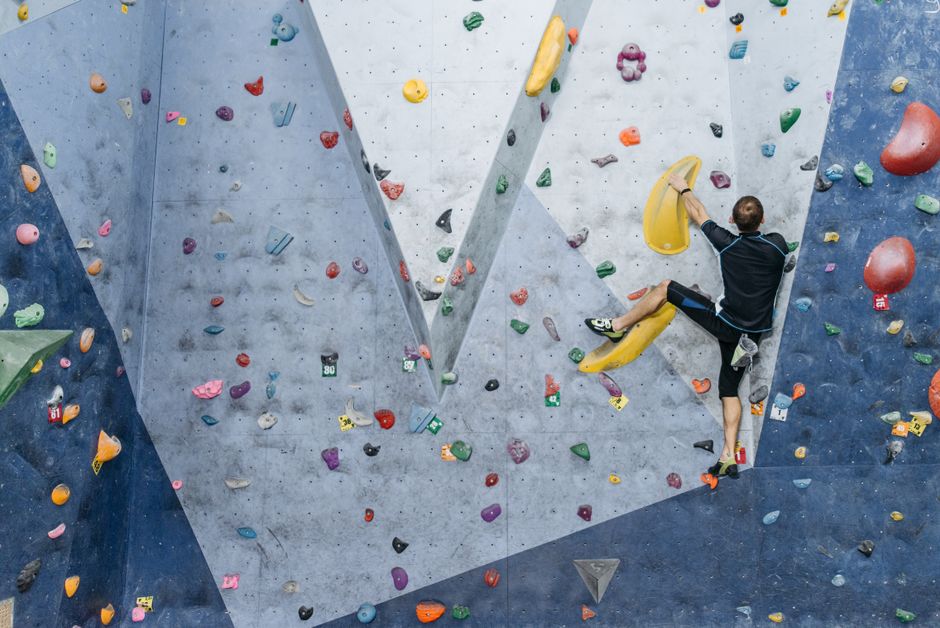
Chalk in the air on a Tuesday night at the bouldering gym, a crew of friends cheering someone through the last move of a purple V3. A 10-year-old tying a figure-eight knot for the first time while a coach checks it twice. A sunrise start at a sandstone crag, the rope stacked and the partner check done. And the Olympic final, where the best in the world have a few minutes to solve a boulder no one has seen before. Climbing has gone from a fringe sport to a gym on almost every city’s map: the Climbing Business Journal counted nearly 700 climbing facilities in the US at the end of 2025.
Climbing, page by page
- Rules: how the game works at every level
- Leagues & associations: pro, college, high school and youth
- Youth & high school: ages, safety and recruiting, for players and parents
- Injuries & sports health: prevention, concussion, when to see a pro
- Training & conditioning: before: off-season to in-season
- Game day: during: fueling, hydration, heat
- Recovery: after: games, tournaments, sleep
- Nutrition & supplements: what to eat, tested supplements
- Best wearables: trackers and watches for the sport
- Gear: the complete equipment list
Buying guide · Our Climbing buying guide compares the gear we'd pick, with prices and sizing:
This page is climbing for the people who climb and the people who look after them: how the sport works, from gym bouldering and top-rope to lead, outdoor sport and trad and competition; what it looks like at every level, from a youth team to the Olympics; and, most of all, how to stay healthy doing it. Sports health is the heart of it: the climbing injuries climbers get most (fingers first), why falls and belay mistakes matter so much, how to spot a concussion and when to see a professional. Then training, recovery and the gear that really matters.
Climbing at a glance
| Main styles | Bouldering (short walls, no rope, crash pads or mats), top-rope (rope anchored above you), lead (you clip the rope into bolts or gear as you go), outdoor sport climbing (bolted routes) and trad climbing (you place and remove your own protection). |
|---|---|
| Competition disciplines | Boulder, lead and speed. At the Olympics: one combined event at Tokyo 2020, speed plus a boulder-and-lead combined event at Paris 2024, and three separate medal events per gender at LA28. |
| Grades in the US | V-scale for bouldering (VB or V0 up to V17) and the Yosemite Decimal System for roped climbs (5.0 up to 5.15d). |
| Governing bodies | World Climbing (called the IFSC until December 2025) worldwide, with 98 member federations; USA Climbing in the US for youth, collegiate, adult and elite competition. |
| Main physical demands | Finger and grip strength, pulling strength, core tension, flexibility, footwork and a lot of problem-solving. Lead adds endurance; speed is pure power. |
| Most common injuries | Finger pulley injuries, elbow and shoulder overuse, ankle and lower-leg injuries from falls, and, in teenagers, growth-plate stress injuries in the fingers. |
How climbing works
The idea is simple: get from the bottom to the top of a route or boulder using the holds or rock features, without falling, weighting the rope or touching the ground. In a gym, routes are marked by hold color or tape and given a grade. Bouldering walls are low, about 4.5 meters (15 feet) at the Olympics, with thick mats underneath. Roped walls are taller: competition lead walls are at least 15 meters (about 50 feet) high.
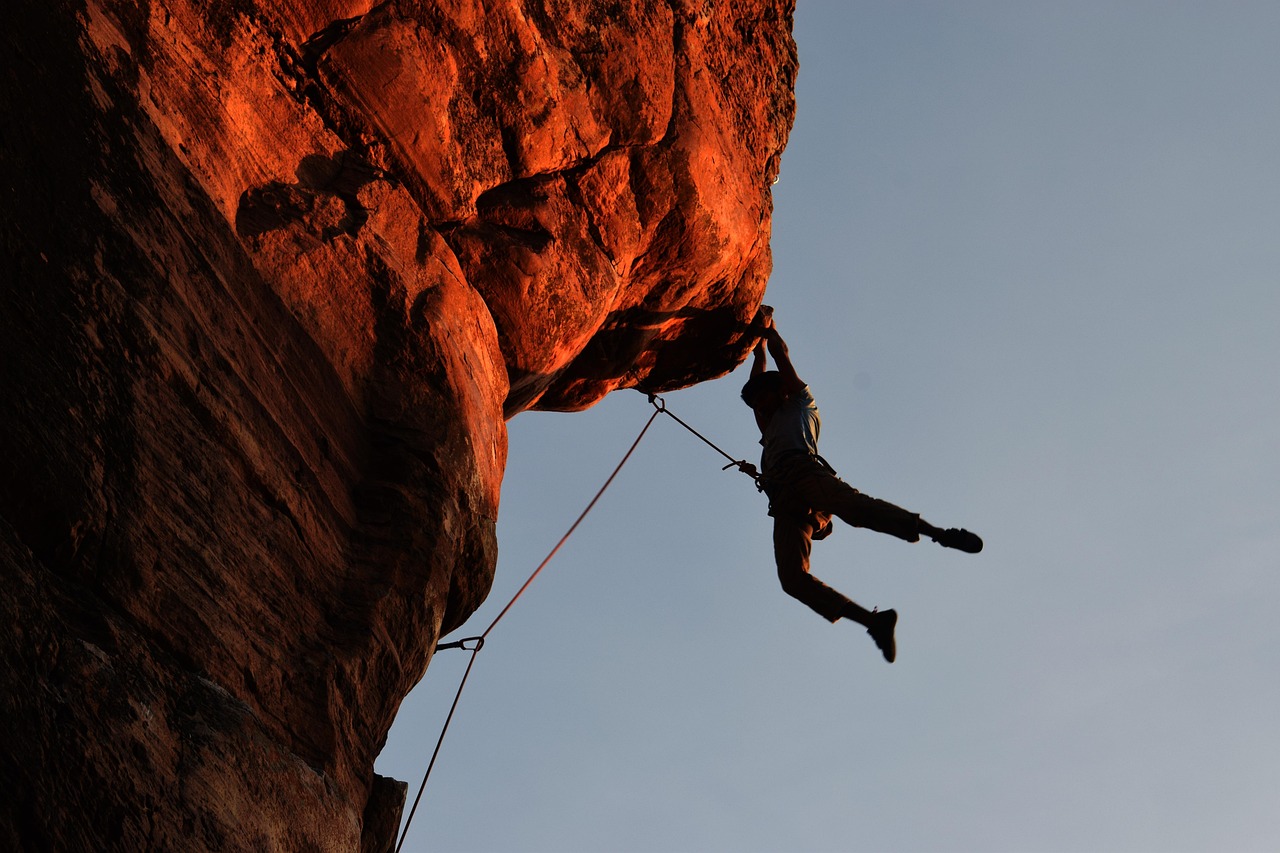
On a rope, a partner called the belayer manages the rope through a belay device and catches you when you fall. On top-rope the rope already runs through an anchor above you, so falls are short. On lead you trail the rope and clip it into quickdraws as you climb, so falls are longer. Outdoors, sport climbing follows lines of fixed bolts, while trad climbing means placing removable gear (cams and nuts) in cracks as you go: a bigger skill set best learned from a certified guide or an experienced mentor. Many gyms also have auto-belays, which take up slack and lower you automatically, as long as you remember to clip in.
Competitions use three formats. In boulder, climbers try to solve as many boulders as they can in a set time, scoring points for reaching the top or a “zone” hold, with a small deduction for every extra attempt. In lead, each climber gets one try at a route they haven’t practiced, in no more than six minutes, and the highest hold reached wins. In speed, two climbers race side by side up a standardized 15-meter route; the best men now finish in under five seconds and the best women in about six. Our climbing rules page explains scoring and grades in detail.
Climbing at every level
Kids and youth
Most kids start with a birthday party, a camp or a gym youth program, then join a gym’s youth team. USA Climbing’s Youth Series runs by age: a mixed U11 category (no minimum age, aimed at 9- and 10-year-olds) plus U13, U15, U17, U19 and U20, with competitions moving from local qualifying events to regionals, divisionals and Youth Nationals. Under USA Climbing rules, climbers in U15 and younger climb roped routes on top-rope only. Our youth climbing guide covers starting ages, belay safety and parents’ questions.
High school and college
In the US, competitive teen climbing runs mainly through gym-based youth teams rather than school teams. In college, it’s mostly club climbing: USA Climbing’s Collegiate Series has intermediate and advanced categories, and the 2026 Collegiate National Championships in Kennesaw, Georgia, drew over 350 climbers from 105 colleges, competing in boulder, lead and speed.
Elite, pro and Olympic
World Climbing runs the World Climbing Series (the World Cups until 2026), a World Championship every two years and an annual Youth World Championship. Climbing joined the Olympics at Tokyo 2020. At Paris 2024, Brooke Raboutou won silver in boulder-and-lead, the first Olympic climbing medal for an American woman, and Sam Watson won bronze in speed. At Los Angeles 2028 (July 14–30), climbing gets six medal events, boulder, lead and speed for women and men, with 76 athletes, at the Long Beach Climbing Theater. Many top climbers also make a living outdoors, through sponsorships, films and hard first ascents. More on our climbing leagues and associations page.
Adult and recreational
This is where most climbers live: after-work gym sessions, weekend trips to the crag, bouldering leagues and adaptive programs. Adults can start at any age. A beginner class teaches gym rules and belaying; outdoors, a course with an AMGA-certified instructor or guide is the safest way to learn. Outdoors also means looking after the places you climb: Leave No Trace and the Access Fund’s Climber’s Pact are the basics (more on our rules page).
Sports health for climbers
Climbing loads the fingers, elbows and shoulders like few other sports, and every fall ends somewhere: on a mat, on a rope or, when something goes wrong, on the ground. The good news is that much of the risk is manageable with good habits. This section is general information, not medical advice. If you’re hurt, see a professional.
The most common climbing injuries
- Finger pulley injuries: a 2023 review of indoor climbing injuries found that upper-body injuries are more common than lower-body ones, finger injuries lead, and pulley injuries (to the A2 or A4 pulleys that hold the flexor tendons against the finger bones) are the single most common type. They often happen on small holds with a closed, “crimp” grip.
- Elbow and shoulder overuse: the same review names medial epicondylopathy (pain on the inner elbow) as the most common elbow problem; shoulders take a beating on steep walls and big moves.
- Fall injuries: a study of US emergency-room data estimated 47,251 rock climbing injuries from 2014 to 2023. Fractures (26.8%) were the most common, half involved the lower body, falls caused 58.8%, and falls of more than 20 feet carried a 52% higher fracture risk. Climbers over 45 had higher fracture odds than those aged 7–20.
- Growth-plate injuries in teens: in adolescent climbers, stress injuries to the finger growth plates are the most frequent climbing-specific injury; in one clinic’s study they were 45.3% of all injuries. Hard finger training such as campus boarding is a known risk factor.
Prevention: grip, load and falling well
The research points to a few habits. In a study of US competitive youth climbers, the injury risk factors included bouldering more than roped climbing, more hours per session and per year, climbing at harder bouldering grades, climbing unsupervised and, the big one, going back to climbing while still in pain. In a survey of 3,919 French federation climbers, those with 0–3 years’ experience were more likely to have had a fall injury in the past year, especially if they had progressed fast; the authors call for attentive, dynamic (soft) belaying. In practice: warm up on easy climbs, build hard finger training slowly, mix in open-hand grips, rest between hard sessions, learn to fall and land on the mats, and never ignore finger pain. Our climbing injuries page goes deeper.
Belay and auto-belay safety
Many of the worst climbing accidents are human errors, not gear failures. The American Alpine Club’s Accidents in North American Climbing found that more than half of reported lowering accidents over a decade involved the rope end passing through the belay device; its advice is to close the system with a stopper knot, check the rope is long enough, agree on clear commands and stay attentive for the whole lower. On auto-belays, the classic accident is forgetting to clip in, so build a check into every climb. And do the partner check every time: harness buckles, a finished figure-eight follow-through, the belay device loaded right and the carabiner locked.
Concussion: recognize and remove
A fall to the ground, a swing into the wall or a falling rock can cause a concussion. The CDC’s HEADS UP program lists the signs: looking dazed or confused, being slow to react, headache, dizziness or balance problems, sensitivity to light or noise and trouble concentrating. Stop climbing for the day and don’t return until a healthcare provider clears you; returning to sport goes in steps. Call 911 for danger signs: seizures, passing out with growing drowsiness, a worsening headache that won’t go away, or one pupil larger than the other. Outdoors, a climbing helmet (UIAA 106 or EN 12492) protects against rockfall and falls.
When to see a doctor, physical therapist or athletic trainer
See a professional for a pop in a finger followed by pain or swelling, a finger that bowstrings or can’t grip, pain that keeps coming back, any joint you can’t put weight on after a fall, and any concussion signs. Teenagers with pain on the back of the middle finger joint should be checked promptly: a 2022 review warns that growth-plate stress injuries can have long-term consequences if missed. A sports medicine physician diagnoses and manages most injuries and refers when needed; a physical therapist (ideally one who knows climbing) guides rehab and the return to climbing; an athletic trainer can help if your school or team has one.
Training and conditioning for climbing
Climb to get better at climbing: technique and footwork come first, and newer climbers improve most by climbing lots of different routes. Add strength gradually: pulling and core work, plus “antagonist” pushing exercises for the shoulders and a resistance band routine for shoulder health. Hangboards and campus boards are powerful tools for experienced adult climbers; for teens still growing, intensive finger training is exactly what the growth-plate research warns about.
Session and competition day: the sports-nutrition position statement from the American College of Sports Medicine and two dietitians’ groups recommends a pre-exercise meal high in carbohydrate, moderate in protein and low in fat and fiber, roughly 1–4 hours before. Bring water and snacks for long sessions and comp days, and add electrolytes on hot crag days (see our electrolyte powder guide). The mental side matters as much as the physical: fear of falling, focus and patience (see mental training tools for athletes). More on our climbing training page.
Recovery after climbing
Fingers and tendons recover more slowly than muscles, so rest days matter. Sleep comes first: the CDC recommends 8–10 hours for teens and 7 or more for adults. Then real food, fluids and protein after a hard session; many climbers keep a shake on hand (see our protein powder guide). Some use a heart-rate variability tracker to plan hard and easy days.
Simple tools help many climbers feel better between sessions: a massage gun for tight forearms and upper back, a foam roller for the back and legs, and soft recovery shoes after hours in tight climbing shoes. They’re about comfort, not treatment; finger pain that doesn’t settle needs a professional. See our climbing recovery page and recovery tools guide.
Gear for climbing
- Shoes: snug but not painful at first; flat, comfortable shoes for beginners, more downturned shoes for steep, hard climbing.
- Harness: made to UIAA 105 or EN 12277; full-body harnesses for small kids.
- Belay device and locking carabiner: a tube device or an assisted-braking device such as the Petzl GRIGRI.
- Chalk and chalk bag for grip; a helmet outdoors; crash pads for outdoor bouldering.
Three picks to start: the La Sportiva Tarantulace, a comfortable lace-up beginner shoe with a leather upper and FriXion RS rubber (about $99); the Petzl GRIGRI, an assisted-braking belay device for 8.5–11 mm single ropes (about $100 on Amazon); and the Theragun Mini for forearms after the session. Our climbing gear guide has the full list.
La Sportiva Tarantulace
- Lace-up, leather upper
- FriXion RS rubber
- About $99
Petzl GRIGRI Belay Device
- Assisted braking
- 8.5-11 mm single ropes
- About $100
For more after climbing, browse Recovery & Regeneration and Training & Performance.
Climbing FAQs
Is climbing a good workout?
Yes. It works grip, back, arms, shoulders and core, and asks for balance, flexibility and focus. Lead climbing builds endurance, bouldering builds power, and beginners can start on easy routes and progress at their own pace.
What are the most common climbing injuries?
Finger pulley injuries lead, followed by elbow and shoulder overuse problems; falls cause most fractures and lower-body injuries. Teens are prone to growth-plate stress injuries in the fingers. Pain that doesn’t settle is a reason to see a sports medicine doctor or physical therapist.
What’s the difference between bouldering and rope climbing?
Bouldering is climbing short walls or rocks without a rope, over mats or crash pads, graded on the V-scale. Rope climbing (top-rope or lead) uses a harness, rope and belayer on taller walls, graded on the Yosemite Decimal System (5.x).
How many climbing events are at the Olympics?
At LA28 there are six: boulder, lead and speed for women and men, each with its own medals for the first time. Paris 2024 had four (speed and a boulder-and-lead combined, for each gender), and Tokyo 2020 had one combined event per gender.
Do I need a helmet for climbing?
In most gyms it’s optional. Outdoors, on roped routes and anywhere rock can fall, a climbing helmet made to UIAA 106 or EN 12492 is strongly recommended, and for kids many parents use one everywhere.
Climbing gives back strength, friends, problem-solving and beautiful places. The climbers who keep going check their knots, respect their fingers, learn from qualified people and leave the crag better than they found it. Keep exploring: our recovery tools guide, Nutrition & Supplements, our soccer guide if your kid plays both, and every other sport on our sports hub.