This article contains affiliate links: if you buy through them we may earn a commission, at no extra cost to you. Learn more.
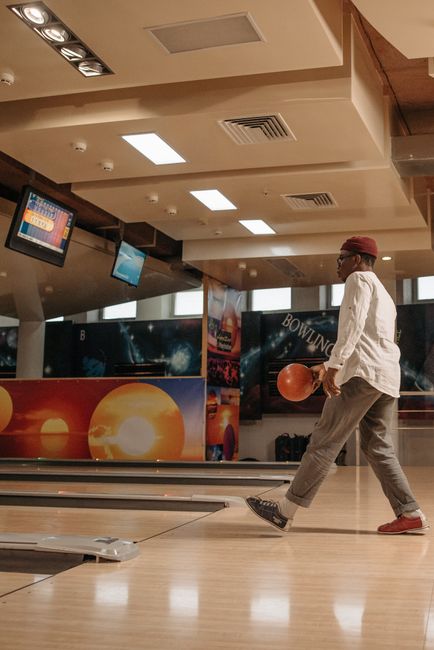
Tuesday, 7 p.m.: the low rumble of a dozen balls rolling at once, a team in matching shirts slapping hands after a spare, someone’s grandmother quietly throwing her fourth strike in a row. On the next pair, a nine-year-old with the bumpers up watches her ball wobble down the lane and take out seven pins. On a Sunday afternoon in spring, the best players in the world bowl for a title on network TV. Bowling is a sport for every age and almost every body. The United States Bowling Congress (USBC), the sport’s national governing body, had 1,075,194 members and certified 29,026 leagues in the 2024-25 season.
Bowling, page by page
- Rules: how the game works at every level
- Leagues & associations: pro, college, high school and youth
- Youth & high school: ages, safety and recruiting, for players and parents
- Injuries & sports health: prevention, concussion, when to see a pro
- Training & conditioning: before: off-season to in-season
- Game day: during: fueling, hydration, heat
- Recovery: after: games, tournaments, sleep
- Nutrition & supplements: what to eat, tested supplements
- Best wearables: trackers and watches for the sport
- Gear: the complete equipment list
Buying guide · Our Bowling buying guide compares the gear we'd pick, with prices and sizing:
This page is ten-pin bowling for the people who bowl and the people who look after them: how the game works, what it looks like from youth leagues to college and the pros, and how to stay healthy doing it. Bowling looks gentle, and for most people it is. But bowling injuries are real: fingers and thumbs, wrists, the lower back and knees, plus slips and falls on the approach. We keep the health part honest and useful, then cover training, league-night fueling, recovery and the gear that matters.
Bowling at a glance
| Players | Individual sport, usually bowled in teams of two to five in leagues. Singles, doubles and team events in tournaments. |
|---|---|
| The game | 10 frames. Up to two balls per frame, three in the 10th frame after a strike or spare. A perfect game is 12 strikes in a row: 300. |
| The lane | 60 feet from the foul line to the center of the head pin, 41½ inches wide, with an approach of at least 15 feet. |
| The ball | No heavier than 16 pounds, no minimum weight. Up to five gripping holes, one per finger and thumb. |
| Governing body | USBC in the United States, recognized by the U.S. Olympic & Paralympic Committee. USBC writes the playing rules and certifies leagues, tournaments and lanes. |
| Most common injuries | Sprains and strains; fingers and thumb, trunk and lower back, wrist, knee, ankle and foot. Falls are a leading cause, especially in young kids and seniors. |
How bowling works
Ten pins stand in a triangle at the end of the lane. You get two tries per frame to knock them all down. All ten with the first ball is a strike (marked X), worth 10 plus whatever you knock down with your next two balls. All ten with two balls is a spare (/), worth 10 plus your next ball. Anything less is an open frame, and you just add the pins. That bonus is why strikes in a row add up so fast: three straight strikes, a “turkey,” is worth 30 in the first of those frames. Twelve in a row is 300, the perfect game.
The foul line is the one hard rule beginners need. If any part of your body, shoes included, crosses it and touches the lane or anything beyond during or after your delivery, it’s a foul: the ball counts, but you get no pins for it. The USBC rules even treat the line as infinitely long, running through walls and ball returns. Our bowling rules page explains scoring frame by frame, fouls, legal pinfall, what you can and can’t do to your ball during play, oil patterns and lane etiquette.
Averages and handicaps are what make league bowling fair and fun. Your USBC average is simply the total pins you knock down in a league divided by the games you bowl that season. In a handicap league, each bowler gets extra pins based on the gap between their average and a base number set higher than anyone’s average, so a 140 bowler and a 210 bowler can have a real match. The leagues and associations page walks through the math.
Then there’s the oil. Every certified lane is dressed with a thin layer of oil in a pattern, and that pattern decides how much your ball can hook. The friendly “house shot” most centers put down promotes high scores; harder “Sport” patterns, the kind the pros and college teams bowl on, can drop averages by 20 pins or more. Learning to read the lanes is half the game once you can roll the ball straight.
Bowling at every level
Kids and youth leagues
Most kids start with a birthday party, bumpers and a two-handed push from between the legs. USBC’s rulebook notes the two-handed style is the one most youth use when they learn. Youth leagues run at local centers, USBC Youth membership is open to anyone who hasn’t turned 18 before August 1 of the season, and national youth dues are $4 a year. USA Bowling offers a team-based league and tournament for U12 and U15 teams, and the USBC Junior Gold Championships draw more than 3,500 youth bowlers in U12, U15 and U18 divisions. One thing parents should know early: youth bowlers can’t win cash; prizes go into scholarship funds. Our youth bowling guide covers ball weight, bumpers, safety and scholarships.
High school
High school bowling is a real varsity sport in many states. In the National Federation of State High School Associations’ 2024-25 participation survey, 33,609 boys at 3,544 schools and 26,224 girls at 3,443 schools bowled, with 26 states reporting boys’ bowling and 27 reporting girls’. Another 11,161 students bowled in Unified Bowling, which teams students with and without intellectual disabilities. USBC names a Dexter High School All-American Team of five boys and five girls each year, each with a $1,000 scholarship.
College
Women’s bowling is an NCAA championship sport. The National Collegiate Women’s Bowling Championship, open to Divisions I, II and III together, has crowned a champion since 2004 (Nebraska won the first). In 2026, 19 teams made the field, the championship was bowled at Yorktown Lanes in Parma Heights, Ohio, and Jacksonville State won its second title in three years, sweeping Wichita State in a best-of-seven Baker final. Division II voted in 2026 to start its own championship in spring 2028. Men and women also bowl on club and varsity teams in USBC Collegiate, which the NCAA, NJCAA and NAIA recognize as the sport’s intercollegiate governing body.
The pros and the world stage
The Professional Bowlers Association (PBA) runs the PBA Tour, a Regional Tour and the PBA50 Tour for players 50 and older. In 2026 the Tour’s four televised majors aired on The CW: the PBA Players Championship, the U.S. Open, the USBC Masters and the PBA Tournament of Champions. The Professional Women’s Bowling Association (PWBA), relaunched in 2015, played 12 events in 2026, with three majors: the USBC Queens, the U.S. Women’s Open and the PWBA Tour Championship. Bowling isn’t on the Olympic program, but it has been a Pan American Games sport since 1991 and is back on the program for Lima 2027. At Santiago 2023, Team USA’s A.J. Johnson won men’s singles gold with a 300 game along the way.
Adult leagues and seniors
Adult leagues are the backbone of the sport: a team, a set night, a season that fits inside USBC’s August-to-July membership year, and summer leagues for the hooked. You’ll find handicap leagues for mixed abilities, scratch leagues for strong bowlers, short-season leagues, and plenty of bowlers in their 70s and 80s. Bowling’s low impact is part of why people bowl for a lifetime.
Bowling injuries and sports health
Let’s keep this in proportion: bowling is a low-injury sport compared with contact and jumping sports. But it repeats one motion with a heavy ball hundreds of times a week for serious bowlers, and the floor is slick. This section is general information, not medical advice. If you’re hurt, see a professional.
What the research shows
- Emergency-room injuries: a study of U.S. emergency department data (Kerr and colleagues, 2011) estimated 375,468 bowling injuries from 1990 to 2008. The finger (19%), trunk (15.8%) and ankle, foot and toe (14.9%) were hurt most, and sprains and strains were the most common diagnosis (42.7%). An update covering 2014 to 2023 (Journal of Sport Rehabilitation, 2026) estimated 141,844 injuries: trunk 21.9%, head and neck 13.4%, finger 12.6%. Falls were the leading cause (27.5%), and 95% of patients were treated and released.
- Young kids: in the 2011 study, children under 7 had far more finger injuries (49.2%) and injuries from dropping the ball (42.8%) than older bowlers. Teaching kids to hold the ball with both hands and keep fingers clear of other balls goes a long way.
- Seniors: bowlers 65 and older had a much higher share of injuries from slipping, tripping or falling (72.4%).
- Serious bowlers: in a survey of 101 bowlers from top U.S. college programs (Zabierek and colleagues, 2023), 87% reported an injury at some point and 75% a recurrence; upper-body injuries were most common, and injuries were more frequent among bowlers without a conditioning program. In 39 Malaysian national-team bowlers (Lee and colleagues, 2021), more than half had de Quervain’s tenosynovitis, a painful tendon problem at the thumb side of the wrist.
- Bowler’s thumb: a rare irritation of the small nerve along the inner side of the thumb, from the thumb rubbing in the thumbhole over and over. It shows up as numbness, tingling or a tender lump. Case reports discuss changes to ball fit, such as hole size and span, as part of managing it.
Simple ways to lower the risk
- A ball that fits: the right weight and holes drilled for your hand mean you don’t have to squeeze. A ball that’s too heavy or holes that are too tight or too loose put the strain on your fingers, thumb and wrist. A pro shop can measure you.
- Hands off the ball return: pick the ball up from the sides, never with fingers between balls. Teach this to kids first.
- Dry shoes, clean approach: USBC’s own etiquette notes warn that wet shoes are a safety hazard. Don’t walk outside or to the snack bar in bowling shoes, or wear shoe covers.
- Conditioning: the college study’s link between conditioning and fewer injuries is an association, not proof, but it fits common sense: legs and core for the slide, and forearm, wrist and shoulder strength for the release. See bowling training.
- Volume: tournament weekends, extra practice and multiple leagues add up. Pain that changes your release is a sign to back off.
Head injuries: recognize and remove
Bowling isn’t a contact sport, but falls on a slick approach and young kids walking into a backswing do happen, and the recent studies count head and face injuries among the most common in children. The CDC’s HEADS UP program says to watch for someone who seems dazed, confused or slow to respond, or who has a headache, dizziness, nausea or blurry vision. Stop bowling, keep them out for the day and have a healthcare provider check them. Call 911 for danger signs such as a worsening headache, repeated vomiting, a seizure or growing drowsiness.
When to see a doctor, physical therapist or athletic trainer
See a professional for numbness or tingling in the thumb or fingers, pain at the base of the thumb or wrist that keeps coming back, back pain that runs down a leg, a knee that swells or locks, or any head injury. A sports medicine physician handles most of these without surgery, a physical therapist can work on the strength and mobility behind them, and high school and college bowlers can start with their athletic trainer; athletic trainers are licensed or regulated in all 50 states. Our bowling injuries page goes deeper.
Training, league night and recovery
Training: most bowling improvement comes from practice on the lanes with a coach’s eye on your footwork, timing and release. USBC certifies coaches and lists them on bowl.com. Off the lanes, simple strength work for the legs, hips and core, plus grip and forearm work, supports a repeatable slide and release. Our resistance bands guide covers tools you can use at home, and mental training tools help with the long stretches between shots. More on bowling training.
League night and tournament day: a league series fills an evening; a tournament can mean several blocks of games and long waits between squads. Eat a normal meal beforehand, keep water at the settee, and pack a snack for long blocks. Youth leagues are alcohol- and tobacco-free for adult leaders under USBC rules, and USBC asks other adults at youth events to refrain too. See league night and tournament day and nutrition and supplements.
Recovery: sleep comes first; the CDC recommends 9–12 hours a night for children 6–12, 8–10 for teens and 7 or more for adults. After a big block of games, many bowlers use a foam roller on the hips and upper back or a small massage gun on the forearm and calves. They’re comfort tools, not treatment. More on bowling recovery, and if you track sleep and readiness, see best wearables for bowlers and HRV for athletes.
Gear for bowling
- Your own ball, fitted: house balls are fine to start. When you bowl every week, a ball drilled for your hand by a pro shop is the biggest upgrade in comfort and consistency. A plastic (polyester) ball rolls straight and is great for spares; reactive resin balls hook more.
- Shoes: your own pair with a sliding sole on the slide foot and a braking heel. Keep them dry.
- Wrist support: many bowlers wear a wrist positioner to hold the wrist in a set position at release. It’s a performance aid, not a medical brace.
- Towel and bag: a dry towel or shammy to wipe oil off the ball between shots, and a bag that carries your ball and shoes without straining your back.
Three picks: the Brunswick T Zone, a durable polyester ball that comes in 6 to 16 pounds, so it works for kids, beginners and as a spare ball (about $65 on Amazon in October 2026); the Robby’s Leather Original wrist positioner, with metal inserts top and bottom (about $25); and the Theragun Mini from our massage gun guide for tight forearms and calves after a long tournament block (about $220). Our bowling gear page covers balls and drilling, shoes, bags and more.
Brunswick T Zone Bowling Ball
- Polyester coverstock
- 6 to 16 lb
- Straight shots and spares
Robby's Leather Original Wrist Positioner
- Leather
- Metal inserts top and bottom
- Consistent wrist position
Theragun Mini (3rd Gen)
- Compact massage gun
- 3 speeds, 3 attachments
- Travel case
Bowling FAQs
What are the most common bowling injuries?
Sprains and strains lead the list. Emergency-room studies point to the fingers and thumb, the trunk and lower back, the wrist, and the ankle and foot, with falls a leading cause. Young children mostly hurt their fingers, often by dropping the ball; seniors mostly get hurt in falls.
What weight bowling ball should I use?
Retailers commonly suggest starting at about 10% of your body weight, up to the 16-pound maximum, then adjusting by feel. If the ball pulls your arm through the swing or your wrist and fingers ache afterward, go a pound or two lighter. Control beats weight.
How do you score a perfect game in bowling?
Twelve strikes in a row: one in each of the first nine frames and three in the 10th. Each strike is worth 10 plus the next two balls, so every frame scores 30 and the game totals 300.
Is bowling in the Olympics?
No. Bowling’s biggest multi-sport stage is the Pan American Games, where it has been a medal sport since 1991 and is on the program again for Lima 2027. USBC runs Team USA, which represents the country at the Pan Ams and international championships.
Do I need my own bowling ball?
Not to start. House balls are allowed even in certified leagues. Once you bowl regularly, a ball drilled to fit your hand is more comfortable and more consistent, and it takes strain off your fingers and wrist.
How does a bowling handicap work?
Your league sets a base score above everyone’s average and a percentage. With a base of 220 at 100%, a bowler averaging 160 gets 60 pins added to each game. If everyone bowls their average, the match is a tie, so it comes down to who beats their average that night.
Bowling is a sport you can play from the bumpers to your 90s, and the bowlers who last are the ones with a ball that fits, dry shoes and a little strength in the bank. Keep exploring: our recovery tools guide, recovery shoes for after a long tournament day, the golf guide for another precision sport, and every other sport on our sports hub.