This article contains affiliate links: if you buy through them we may earn a commission, at no extra cost to you. Read our affiliate disclosure.
A Tuesday league night: the soft-tip machine in the corner of the bar chirps “Throw darts,” your team needs one more bull to close out cricket, and the whole table goes quiet. A kitchen-table argument about who really hit double 16. And Alexandra Palace in London on a January night, a packed hall in fancy dress singing as a teenager checks out for a world title. Darts is one of the few sports you can play in your basement at 9 and on television at 17: Luke Littler became the youngest World Darts Champion ever at 17 in January 2025, then won it again a year later.
Darts for players, beginners and parents: what do you need?
New to darts? Start with the first card, then the youth guide. Everything below is general education, not medical advice.
More darts guides
Buying guide · Our Darts buying guide compares the gear we'd pick, with prices and sizing:
This page is darts for beginners and for everyone after that: how the game works, steel-tip versus soft-tip, how to set up a board at the right height and distance, how leagues and the pro tours fit together, and the honest version of darts health (it’s a gentle sport, but your shoulder, your eyes and long nights on your feet still matter). Then gear. It’s general information, not medical advice.
History & Origins of Darts
Where darts began is disputed. The most repeated stories involve soldiers and pub players throwing short arrows at the end of a barrel or a tree trunk, and a Lancashire carpenter named Brian Gamlin is often credited with the numbered board, but historians do not agree on any of it, so we treat these as folklore. What is documented is the organized game of the last 50 years. The American Darts Organization held its first meeting in October 1975 and began operating in January 1976 (ADO history), and the World Darts Federation was founded in 1976 (WDF).
Televised world championships turned darts into a professional sport. A group of players broke away from the old British organization in 1992-93; on 7 January 1993 sixteen of them signed a statement backing the new World Darts Council, later the Professional Darts Corporation (Lakeside history). It staged its own world championship from 1994 at the Circus Tavern in Purfleet, Essex, then moved to Alexandra Palace in London in 2008. The modern chapter is very recent: in January 2025 Luke Littler became the youngest World Champion at 17, and in January 2026 the winner’s prize reached £1 million for the first time (PDC).
- 1975-76: The American Darts Organization is formed and begins operating on January 1, 1976, with 30 charter member clubs.
- 1976: The World Darts Federation is founded.
- 1982: First ADO Ladies’ All-Star playoffs (the men’s began in 1975).
- 1993: On January 7, sixteen players sign up to the World Darts Council, the body that became the PDC.
- 1994: First PDC-run World Championship, at the Circus Tavern, Purfleet.
- 2008: The PDC World Championship moves to Alexandra Palace.
- 2025: Luke Littler, 17, becomes the youngest World Champion (January 3).
- 2026: Littler retains the title and wins the first £1 million first prize (January 3).
Legends of the Sport
Players from different eras, not ranked, and not endorsing AthleteRx.
- Phil Taylor (England): world champion in both the old British organization’s event (1990 and 1992) and the PDC (from 1995), and one of only four players to win consecutive PDC World Championships (Lakeside history, PDC).
- Dennis Priestley (England): winner of the first PDC-run World Championship, in 1993-94 at the Circus Tavern.
- Adrian Lewis (England) and Gary Anderson (Scotland): each won consecutive PDC World Championships (PDC).
- Michael van Gerwen (Netherlands): won his first world title at 24 and reached the 2023 and 2025 finals (PDC).
- Luke Humphries (England): 2024 World Champion, beating Luke Littler 7-4 in a final the PDC called record-breaking (PDC).
- Luke Littler (England): youngest World Champion at 17, champion again in 2026 (PDC).
- Beau Greaves (England): three-time Women’s World Matchplay champion and the first woman to win a PDC Pro Tour event (PDC).
Official results and records
We only list champions and records here after checking them on the official source. For the latest results, go to:
How we keep this current: we re-check facts after each major championship and update this page. Spot an error? See our editorial policy.
Darts at a glance
| Two kinds of darts | Steel-tip darts on a sisal “bristle” board (the pro game, PDC and WDF) and soft-tip plastic-tipped darts on an electronic board that scores for you (most US bar and league play, run by the NDA and others). |
|---|---|
| Board height | 5 ft 8 in (1.73 m) from the floor to the center of the bull, in steel-tip and soft-tip alike. |
| Throwing distance | Steel-tip: 7 ft 9¼ in (2.37 m) from the face of the board to the back of the oche (throw line). Soft-tip (NDA): 8 ft (96 in) from the face of the target to the front edge of the foul line. |
| Main games | 501 (count down to exactly zero, finishing on a double) and cricket (close 15 to 20 and the bull before your opponent, scoring points along the way). |
| Governing bodies | WDF (World Darts Federation) worldwide; PDC (Professional Darts Corporation) for the main pro tour, played under DRA rules; in the US, the American Darts Organization (ADO, steel-tip) and the National Dart Association (NDA, soft-tip). |
| Physical demands | Low: a repeated throwing motion of the arm, hours of standing, steady eyes and nerves. Not an Olympic sport. |
How darts works
A standard board is numbered 1 to 20 around the clock, with 20 at the top. Each number has a big single area, a thin outer ring that scores double and a thin inner ring that scores treble. In the middle, the outer bull scores 25 and the inner bull (“the bull” or bullseye) scores 50. A turn, or “throw,” is three darts. Three treble 20s make 180, the maximum.
In 501, every player starts on 501 and subtracts what they score. Under WDF and PDC rules you can start scoring with any dart, but you must finish exactly on zero with a double (the bull counts as double 25). Go below zero, land on exactly zero without a double, or leave yourself on 1, and you “bust”: that turn doesn’t count. The biggest possible finish is 170 (treble 20, treble 20, bull), and the perfect leg is the nine-darter. In cricket, you need three “marks” on each of 20, 19, 18, 17, 16, 15 and the bull (a single is one mark, a double two, a treble three). Once you’ve closed a number, extra hits score points until your opponent closes it too. The first to close everything with equal or more points wins.
Soft-tip leagues add a few twists: the machine is always right, a dart that bounces out still counts as thrown, and many league games are “open in, open out” with a 50-point bull, while master-level games use double-in, double-out with a split 25/50 bull. Our darts rules page covers both versions, the bust rule, the oche and how to set up a board at home.
Darts at every level
Kids and youth
Most kids start at home or in a family game room, and soft-tip is the gentler way in. Organized youth darts exists on both sides: the NDA runs a Junior national tournament for soft-tip players 20 and under who play in sanctioned youth or adult leagues; the ADO runs Youth Nationals for steel-tip, with scholarships (the 2026 event, at the Witch City Open in Massachusetts, offered in scholarship money across the boys’ and girls’ divisions); and in the UK and beyond, the Junior Darts Corporation runs academies in partnership with the PDC and Winmau. Our youth darts page covers ages, safety and parents’ questions.
Leagues and adult recreational darts
For most Americans, darts means a weekly league. The NDA, the sanctioning body for soft-tip electronic darts, says over 46,000 players are sanctioned each year in leagues at more than 10,000 locations worldwide, and players are rated by Points Per Dart (PPD) in ’01 games and Marks Per Round (MPR) in cricket so teams of different skill can play fair matches. On the steel-tip side, the ADO says it averages about 250 member clubs and roughly 50,000 members. Darts is also a sport people pick up at 40, 60 or 80, and play for decades.
Pro, international and the big stages
The PDC is the biggest professional tour: 128 players hold Tour Cards, and its 2025/26 World Championship at Alexandra Palace had a 128-player field, a £5 million prize fund and a £1 million winner’s check. In North America, the Championship Darts Corporation (CDC) is the PDC’s affiliate tour, and the US Darts Masters was held at Madison Square Garden in June 2026. The WDF runs the world amateur and open circuit, from national opens to the WDF World Cup, and its World Championships return to the Lakeside Country Club in Frimley Green, England, from November 27 to December 6, 2026, with Open, Women’s, Youth and Girls’ titles. Soft-tip has its own big week: the NDA’s Team Dart in Las Vegas, which draws more than 10,000 entrants. See darts leagues and associations.
Sports health for darts players
Let’s be honest: darts isn’t a high-injury sport, and you won’t find big injury studies on it the way you will for soccer or football. But a few things are worth knowing. This is general information, not medical advice.
Your throwing arm and shoulder
Darts is the same small motion thousands of times. If your shoulder, elbow or wrist starts to ache after long practice sessions, cut back the volume, warm up with some easy throws, and see a sports medicine doctor or physical therapist if pain keeps coming back. A lab study of novice throwers found accuracy dropped after both mental and muscular fatigue, which is a good argument for shorter, focused practice instead of marathon sessions.
“Dartitis” and the yips
Some experienced players suddenly find they can’t release the dart smoothly. Researchers call this kind of problem task-specific dystonia (the “yips” in golf and baseball). A 2024 systematic review found the evidence on treatments in sport is still low quality. If it happens to you, talk to a sports medicine doctor or a neurologist, not just your teammates.
Eyes, sharp points and kids
Darts are sharp, and the board is at head height. Keep everyone behind the thrower, never walk to the board while someone is throwing, and supervise kids. The ADO’s own youth rules warn that darts is dangerous for children without adult supervision, and a forensic case report showed that even soft-tip darts with damaged plastic points can cause a serious eye injury. Throw away broken tips. (Old-style lawn darts are a different product: the CPSC banned their sale in the US in 1988.)
Long nights on your feet, alcohol and the rules
A tournament day or league night means hours of standing and walking to the board. Good shoes, water and real food help. Darts grew up in pubs, but at the top level the culture has changed: DRA rules for PDC events ban alcohol outside the designated practice area while players are engaged in an event, and the DRA follows the WADA anti-doping code, including a ban on beta blockers. If you take any prescription medicine and compete in sanctioned events, check the rules with your doctor. Our match night and tournament day page has the routine, and darts injuries goes deeper.
Training and practice for darts
Darts training is mostly throwing, done with purpose: a consistent stance and grip, the same release every time, and practice games that copy match pressure (around-the-clock on doubles, checkout drills, cricket against a scoring app). Off the board, a little shoulder and core strength and good posture help you stand balanced and throw the same way at 11 p.m. as at 7 p.m. The mental side is huge in a sport where one dart decides a leg; see our guide to mental training tools for athletes and the darts training page.
Recovery after league nights and tournaments
Sleep comes first: the CDC recommends 7 or more hours a night for adults, 8–10 for teens and 9–12 for children 6 to 12. After a long tournament, eat, drink some water and let your throwing arm rest a day. Many players keep a mini massage gun for a tight forearm or shoulder and slip into soft recovery shoes after hours on a hard floor. They’re comfort tools, not treatment. See darts recovery and our recovery tools guide.
Gear for darts
- Board: a sisal bristle board for steel-tip, or an electronic board with a 15.5-inch target for soft-tip.
- Darts: steel-tip darts up to 50 grams under WDF rules (40 grams under DRA rules for PDC events); soft-tip darts can’t exceed 20 grams under NDA rules.
- Flights and shafts: cheap, they break, and changing them changes how the dart flies.
- Surround, mat and throw line: to protect the wall and floor and put your feet in the right place every time.
- Lighting: WDF rules call for at least 1,600 lumens on each tournament board, with light screened from the player’s eyes. At home, a ring light kills shadows.
A few picks to start: the Winmau Blade 6, a PDC tournament-spec bristle board; the Arachnid Cricket Pro 800 if your family will play soft-tip; the Target Luke Littler 80% tungsten darts in 21, 22 or 23 grams; and the OOFOS OOahh Slide for after a long tournament day. The full list is on our darts gear page.

Winmau Blade 6 Bristle Dartboard
- PDC tournament specification
- Self-healing sisal, thin wiring
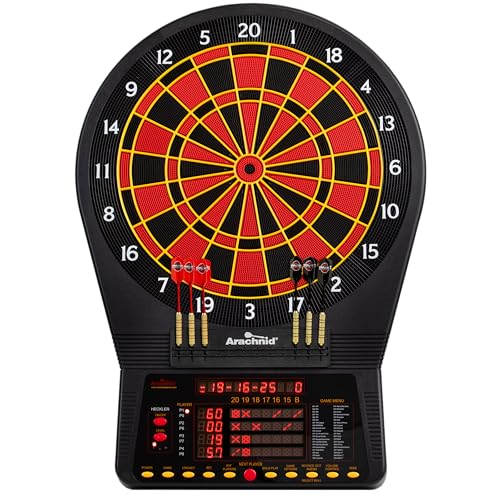
Arachnid Cricket Pro 800
- 15.5-inch regulation target
- 40 games, up to 8 players
$249.99 at Amazon, as of Nov 22, 2026 13:07 UTC
Check price on Amazon
Target Luke Littler 80% Tungsten Darts
- Steel-tip, 21, 22 or 23 g
- Pro Grip shafts and flights included
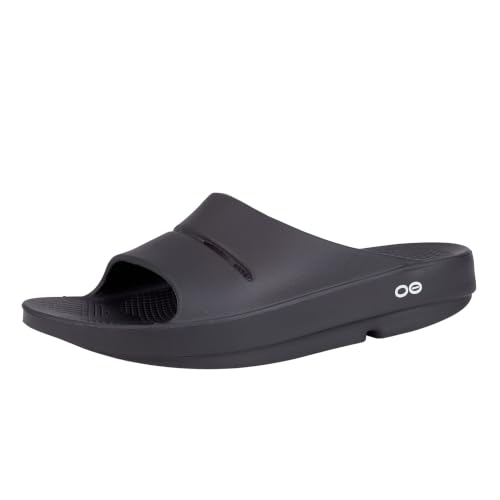
OOFOS OOahh Slide
- OOfoam slide
- APMA Seal of Acceptance
- Machine washable
Darts FAQs
How high should a dartboard be?
The center of the bull should be 5 ft 8 in (1.73 m) above the floor. That’s the same for steel-tip (WDF and PDC/DRA rules) and soft-tip (NDA rules).
How far do you stand from a dartboard?
For steel-tip, 7 ft 9¼ in (2.37 m) from the face of the board to the back of the oche. For soft-tip under NDA rules, 8 ft (96 in) from the face of the target to the front edge of the foul line.
Should a beginner start with steel-tip or soft-tip darts?
Either works. Soft-tip is friendlier for families, walls and kids, and the board keeps score. Steel-tip is what you see on TV and in ADO and WDF events. Many people start with whatever their local league plays.
Why do you have to finish on a double in darts?
It’s the rule in 501 under WDF and PDC/DRA rules: your last dart must land in the double (or the bull) that brings you to exactly zero. Many soft-tip league games are “open out” instead, so check your league’s format.
Is darts good exercise?
It’s light activity: you stand, walk to the board and back, and do mental math. It isn’t a workout on its own, so pair it with other exercise. Its strengths are skill, focus and a sport you can play for life.
Is darts an Olympic sport?
No. The top levels are the PDC professional tour and the WDF’s international events, including the WDF World Cup and the Lakeside World Championships.
Darts rewards a steady routine, a calm head and a board set up right. Keep exploring: darts rules, darts gear, our massage gun guide, sleep trackers for athletes, and every other sport on our sports hub.