This article contains affiliate links: if you buy through them we may earn a commission, at no extra cost to you. Learn more.
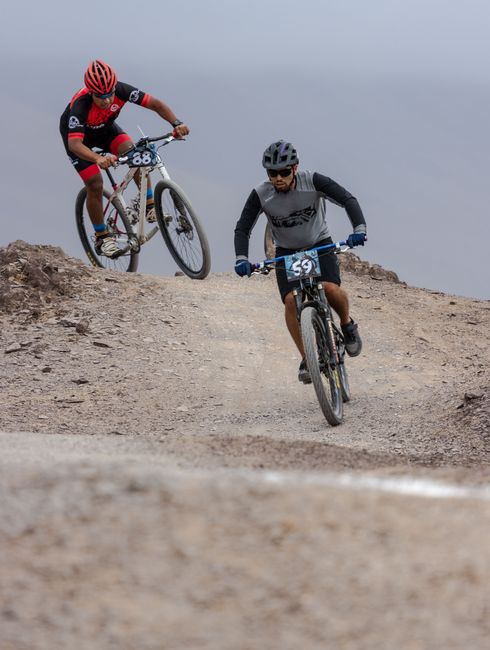
First light at the trailhead, tires crunching on gravel, a friend already rolling toward the first climb. A Sunday high school race where a team tent full of parents cheers every lap. A 13-year-old on a pump track, finally linking every roller without pedaling. A crowd lining the Whistler Mountain Bike Park as World Cup downhill racers drop in. Mountain biking is fitness, freedom and a little bit of fear in the best way, and it keeps growing: a study of US emergency-department data estimated about 109,558 mountain biking injuries treated from 2013 to 2022, with a 64% jump from 2019 to 2020 as more people headed outdoors.
Mountain Biking, page by page
- Rules: how the game works at every level
- Leagues & associations: pro, college, high school and youth
- Youth & high school: ages, safety and recruiting, for players and parents
- Injuries & sports health: prevention, concussion, when to see a pro
- Training & conditioning: before: off-season to in-season
- Game day: during: fueling, hydration, heat
- Recovery: after: games, tournaments, sleep
- Nutrition & supplements: what to eat, tested supplements
- Best wearables: trackers and watches for the sport
- Gear: the complete equipment list
Buying guide · Our Mountain Biking buying guide compares the gear we'd pick, with prices and sizing:
This page is mountain biking for riders and the people who look after them: cross-country, trail riding, enduro and downhill; how the sport works from kids’ skills parks to the Olympics; and, most of all, how to ride for years without getting hurt. Mountain bike injuries are mostly crash injuries, to the shoulder, wrist and head, so sports health here means the right helmet, smart progression, concussion awareness, heat and hydration, and knowing when to see a professional. Riding on the road too? Our cycling hub covers road, gravel and track; this section sticks to dirt.
Mountain biking at a glance
| Main styles | Cross-country (XC): climbing and descending, fitness first. Trail riding: the everyday mix most riders do. Enduro: timed descents, untimed climbs. Downhill (DH): one fast, steep run, usually with a lift or shuttle to the top. |
|---|---|
| Race length (top UCI events) | Cross-country Olympic (XCO): 1:20–1:40 for elite men and women. Short track (XCC): 20–30 minutes on a course of 2 km or less. Downhill: a 1.5–3.5 km course that takes 2–5 minutes. Enduro: several timed stages added together. |
| Governing bodies | UCI worldwide; USA Cycling in the US; NICA for middle and high school leagues; IMBA and local trail associations for trails and access. |
| Olympics | Cross-country since Atlanta 1996. At LA28: men’s race July 17 and women’s race July 18, 2028, at the Industry Hills MTB Course. |
| Main physical demands | Long climbs and repeated hard efforts, plus balance, grip strength and quick reactions on rough, technical descents. |
| Most common injuries | Shoulder and collarbone, wrist and hand, head and face (including concussion), mostly from falls; fractures are common in bike parks. |
How mountain biking works
Most mountain biking isn’t racing at all. It’s a ride on singletrack with friends, on trails rated for difficulty much like ski runs. The International Mountain Bicycling Association (IMBA) trail rating system uses five levels, from the white circle (easiest) through green circle, blue square and black diamond to the double black diamond, and it rates technical challenge, not length or climbing. Start a level lower than you think at a new trail system.
On shared trails, IMBA’s “yield triangle” sets right of way: mountain bikers yield to horses and to people on foot, and riders going downhill yield to riders climbing. Ride open, legal trails, stay in control, skip muddy trails, and plan ahead. The full list is on our trail rules and racing page.
Racing comes in several formats under the UCI rules. In cross-country Olympic (XCO), everyone starts together and races laps of a varied course; first across the line wins. Short track (XCC) is a fast 20–30 minute version. Marathon (XCM) runs 60–160 km. In downhill, riders go one at a time against the clock; the final is a single run, and the fastest time wins. In enduro, riders pedal or take a lift up “liaison” stages and race the mostly downhill timed stages, and the stage times are added up. There are also four cross, pump track and e-mountain bike events.
Mountain biking at every level
Kids
Many riders start on a balance bike, then move to a bike park, a pump track or a green-circle trail. IMBA points to pump tracks and skills areas as places where kids build skills and confidence, and to beginner trails without big climbs or descents for a first time on dirt. A bike that fits (not one to “grow into”) and a helmet on every ride come first. Our youth mountain biking guide has the details for parents.
Middle and high school
The National Interscholastic Cycling Association (NICA), founded in Berkeley, California in 2009, runs the school-age path: as of 2026 it lists 33 leagues (including NICA Australia), more than 25,000 student-athletes, 1,055 teams and 15,000 coaches. Riders race cross-country by grade and gender (for example freshman, sophomore, junior varsity and varsity), earn points for their team and can qualify for their state championship. NICA’s rule is “no selections and no sidelines”: everyone rides. More on the leagues and associations page.
College
College mountain biking runs through USA Cycling’s collegiate program, with club and varsity teams. The 2026 USA Cycling Collegiate Mountain Bike National Championships run October 7–11 at Powderhorn Mountain Resort in Grand Junction, Colorado, with cross-country, short track, downhill, dual slalom and team relay.
Pro, World Cup and Olympics
The top level is the WHOOP UCI Mountain Bike World Series, which brings the XCO, XCC, downhill and enduro World Cups under one roof. The 2026 season has 14 race weekends from May to October in nine countries, including cross-country at Soldier Hollow, Utah, the first downhill World Cup at Whistler, and a finale at Lake Placid, New York. The 2026 world championships were held in Val di Sole, Italy, August 26–30. Cross-country is the Olympic event, on the program since 1996.
Adult riders and racers
Most adults ride for fun and fitness, often with a local trail club. Want to race? USA Cycling has three mountain bike categories: Category 3 (beginner, often called novice), Category 2 and Category 1, and a one-day license lets you try a race without a yearly membership. Masters age groups mean you race people your age. Joining your IMBA chapter or local trail association, and showing up for a trail work day, is how most riders give back.
Sports health for mountain bikers
Mountain biking is mostly about crashes, not overuse. A 2025 review found the head and upper body are still the most common injury sites, with concussions and fractures among the serious injuries. Here’s what studies at every level show:
- All riders (US emergency rooms): falling off the bike caused 62.6% of injuries, and the upper body was the most injured region. Male riders had more shoulder injuries; the authors suggested better front-brake coaching for young riders and more focus on concussion protocols for female riders.
- High school (NICA, 2018–2022): about 2.2% of student-athletes had an injury in a season. Wrist and hand (23.2%), head and brain (23.0%) and shoulder and collarbone (15.9%) led the list, and the injury rate fell 27% over the five years.
- Bike parks (Austria, 2023–2024): over 90% of injuries happened riding downhill, 15% on the first run of the day; 77% came from rider error and 21% from jump landings. Shoulder and collarbone (33.7%) were most often hurt, and about half the injuries were fractures.
- Enduro World Series (2017–2018): 8.9% of 2,010 riders were injured; concussion was the most frequent diagnosis, and shoulder and collarbone fractures cost the most days off. Worryingly, 28.6% of riders with a concussion kept racing.
Concussion: recognize it, remove the rider. The CDC’s HEADS UP program says anyone with a possible concussion should stop riding right away and not return the same day; a health care provider decides when it’s safe. NICA requires any student-athlete or coach with a concussion to stay off the bike until a physician clears them in writing. Call 911 for danger signs such as a headache that gets worse, repeated vomiting, slurred speech, unusual drowsiness, seizures or one pupil larger than the other. Replace a helmet after any crash that hits it.
Helmets. Every bike helmet sold in the US since 1999 must meet the Consumer Product Safety Commission (CPSC) standard. For downhill racing, the CPSC points to helmets certified to ASTM F1952, and UCI rules require a full-face helmet in downhill and enduro races. Fit matters: snug, level and buckled.
Heat, water and weather. Long climbs on hot days add up. The National Athletic Trainers’ Association (NATA) suggests drinking enough to limit weight loss to about 2% of body weight, but not so much that you gain weight. Many trail riders carry a hydration pack and an electrolyte mix. Far from shelter, thunder means get off the mountain: NATA’s rule is “When thunder roars, go indoors.”
When to see a pro. A shoulder that drops or won’t lift after a fall, wrist pain at the base of the thumb that doesn’t ease within a day (AAOS notes a scaphoid fracture can feel like a sprain), numbness, or any head injury symptoms need a sports medicine doctor, physical therapist or athletic trainer, not another lap. Our mountain bike injuries page covers prevention and return to riding.
Training and conditioning
Two things make a mountain biker faster and safer: fitness and skills. Fitness means an aerobic base from steady rides, plus harder intervals for cross-country and short track. Skills mean braking, cornering, body position and looking ahead, which is why the most useful “training” for many riders is a coached skills clinic and plenty of laps on trails they know. Strength work for legs, hips, core, upper back and grip helps you hold a strong position on rough descents. Build up gradually, especially at a bike park: the Austrian study found many injuries on the first run of the day, so warm up with an easy lap. More in mountain bike training, plus our VO2 max training explainer.
Ride day and recovery
On a long ride or race day, eat a familiar, carbohydrate-based meal 1–4 hours before you start (the ACSM’s guidance), carry water and fuel, and bring what you need to fix a flat. After the ride: refuel, rehydrate and sleep. The American Academy of Sleep Medicine recommends 7 or more hours for adults and 8–10 for teens. Sore after a big day of descending? Many riders use a foam roller, a massage gun or compression boots for comfort; they’re tools, not treatment. See ride day and race day, mountain bike recovery and our recovery tools guide.
Gear for mountain biking
Prices change often. The prices below are what we saw at the maker or a major retailer in October 2026; check the current price before you buy.
Beyond a bike that fits, the basics are a helmet, gloves, eye protection, a way to carry water and a small repair kit. Knee pads are common for trail and enduro, and full-face helmets for downhill and bike parks. The Bell Nomad 2 MIPS is an affordable trail helmet with a MIPS liner and a visor (about $76). For lift-served days and enduro, the Fox Proframe RS is a lightweight full-face certified to ASTM F1952 for downhill (lists at $399.95, often on sale). The Fox Launch D3O knee guards (about $53) are a value pick, and the CamelBak M.U.L.E. 12 carries a 100 oz reservoir and tools (about $85). After the ride, the Hypervolt Go 3 massage gun (about $149) is light enough for a road trip. Full list on our mountain bike gear page.
Bell Nomad 2 MIPS Helmet
- Integrated MIPS
- Adjustable visor
- S/M 52-57 cm, M/L 53-60 cm
Fox Proframe RS Full-Face Helmet
- ASTM F1952 DH certified
- MIPS Integra Split, BOA fit
- About 820 g (size M)
Fox Launch D3O Knee Guards
- CE-certified D3O insert
- Slip-on, hook-and-loop strap
- Maker: order one size up
CamelBak M.U.L.E. 12 Hydration Pack
- 100 oz (3 L) Crux reservoir
- 12 L of storage
- Tool organizer, helmet carry
Mountain biking FAQs
What are the most common mountain bike injuries?
Crash injuries to the shoulder and collarbone, wrist and hand, and head, including concussions. In US emergency-room data, falling off the bike caused most injuries; in bike parks, about half of injuries were fractures. Cuts and bruises are common too. See a professional for any injury that doesn’t settle.
Do I need a full-face helmet for mountain biking?
For downhill, bike parks and enduro racing, yes: UCI rules require one in downhill and enduro races, and the CPSC points to ASTM F1952 helmets for downhill racing. For cross-country and most trail riding, a well-fitting half-shell helmet that meets the CPSC standard is the norm.
Who has the right of way on a mountain bike trail?
Under IMBA’s yield triangle, mountain bikers yield to hikers and horses, and downhill riders yield to riders climbing. Slow down, say hi or ring a bell, and take extra care around horses. Directional bike-only trails can have their own rules, so check the signs.
How old do you have to be for high school mountain biking?
NICA leagues are built for high school riders, and many leagues also welcome middle schoolers (grades 6–8). Younger kids can ride with local clubs, skills parks and youth races. Check your state’s NICA league for its exact rules.
What should I do after a crash where I hit my head?
Stop riding for the day, even if you feel OK, and get checked by a health care provider before riding again. Call 911 for danger signs such as a worsening headache, repeated vomiting or confusion. Replace your helmet: it’s built for one impact.
Mountain biking rewards patience: ride trails that match your skills, wear the right protection, fuel and hydrate, and give your body time to recover. Keep exploring with our mountain bike gear, the electrolyte powder and massage gun guides, and the other sports on our sports hub.