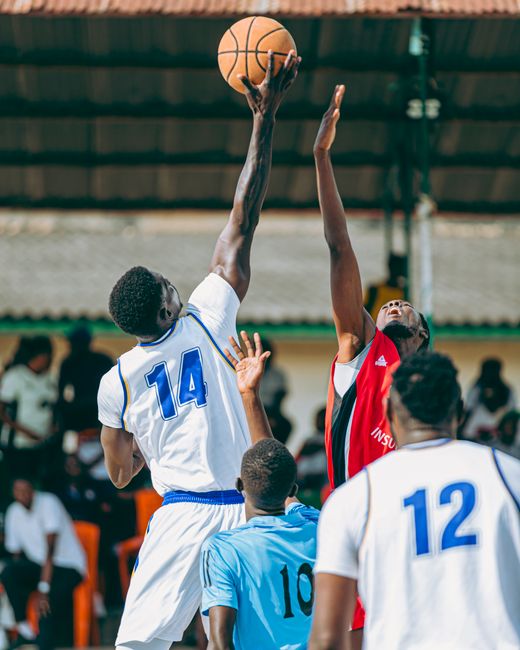
Down one, two seconds left, you’re at the line with two shots. The gym is loud, your hands feel a little strange, and the ball you’ve shot ten thousand times suddenly feels new. Every player knows that moment, from a middle-school rec game to a college arena. Basketball mental training means practicing the skills between your ears (focus, confidence, routines, handling pressure) the same way you practice a jumper. This page covers those skills for players and coaches. It is about mental performance, which is different from mental health; there is a clear section on that difference below.
Quick answer: Mental skills are trainable habits: a short routine before every free throw, simple imagery, small goals you control, and a plan for what you do after a miss. Research on these tools is promising but mixed, and none of them guarantees better results. If worry, low mood, or trouble eating or sleeping lasts more than a couple of weeks or gets in the way of daily life, see a doctor, licensed psychologist or other qualified professional, and in a crisis call or text 988 (US).
Confidence: built from reps, not hype
Confidence in sport psychology is usually called self-efficacy: your belief that you can do a specific thing, such as make a catch-and-shoot three. It grows mostly from evidence you can point to. That means honest practice reps, game-like drills you succeed at, and film of your own good plays. A 2026 systematic review and Bayesian meta-analysis of imagery practice in basketball (Shan and colleagues, Frontiers in Psychology) pooled 14 studies and found self-efficacy tended to favor imagery, though that finding rested on fewer studies. Treat it as a hint, not a promise.
A practical habit: keep a short “what went well” list after every game, even bad ones. It gives your confidence something real to stand on the next time you miss three in a row.
Focus and attention: one thing at a time
Basketball asks you to switch attention constantly: wide to read the floor, narrow to finish at the rim, then wide again on defense. Many coaches teach a simple reset cue (a breath, a hand clap, a word like “next”) that tells your head the last play is over. A cue only works if you practice it in scrimmages, so it’s there when it counts. In a study of 16 elite and 16 non-elite players, elite shooters showed higher overall brain activity during free throws (Keshvari and colleagues, Journal of Motor Behavior, 2024). That is a lab finding about differences between groups, not a recipe for how to focus.
Motivation and goal setting
Players stay motivated when goals feel like theirs. A common approach is to split goals into three kinds: outcome (win the league), performance (shoot 70% from the line in practice) and process (use my routine every time, box out every rebound). Process goals are fully in your control, so they hold up on a night when the shots don’t fall. Write down one process goal per practice and check it off afterward.
Visualization and imagery
Imagery means rehearsing a skill in your mind, with as many senses as you can: the squeak of the floor, the feel of the seams, the arc of the ball. The 2026 basketball meta-analysis above (14 studies, 39 effect sizes) found a positive overall effect on basketball skills, with the clearest benefit for free-throw performance. Results for time-pressured free throws and three-point shooting were less certain. The researchers describe it as a useful add-on to real practice. It does not replace shooting.
- Try 3 to 5 minutes before bed or on the bus: see yourself, from your own eyes, running your free-throw routine and the ball dropping.
- Also rehearse the hard version: a loud gym, a tight game, and you staying calm.
- Keep it short and regular. Sessions that feel like a chore won’t last.
Pre-shot and pre-game routines
Watch almost any good free-throw shooter: the same dribbles, the same breath, the same eyes on the same spot. A pre-performance routine is a short, fixed sequence that gets you ready and shuts out noise. A 2026 position statement from Exercise and Sports Science Australia on performance under pressure (Schweickle and colleagues, Sports Medicine) lists pre-performance routines among the evidence-based strategies, along with psychological skills training and mindfulness-based approaches.
- Free throw routine: two or three steps you can repeat in about ten seconds, for example spot, bounce, breath, shoot. Use it in every practice, not just games.
- Game routine: the same warm-up order and the same music or quiet time. For food, hydration and tournament-day logistics, see our basketball game day guide.
- Between possessions: a reset cue (see Focus above).
Handling pressure and nerves
Nerves are normal. The same ESSA position statement says pressure can have both helpful and harmful effects on performance, and that training environments which add some pressure can help prepare athletes. In practice that means adding stakes to drills: the team runs if you miss, a free-throw contest with teammates watching, or scrimmage score that carries consequences. Start small and keep it safe and fair, so it builds readiness rather than fear.
Breathing and mindfulness are popular tools. In a 2026 randomized trial of an 8-week mindfulness program with 63 basketball players who completed it (Wu and Du, Frontiers in Psychology), elite players improved on anxiety, resilience and an obstacle dribbling test, and recreational players improved on more outcomes, including shooting. A 2026 network meta-analysis of competitive-anxiety interventions across 46 trials (Li and colleagues, Sports Medicine – Open) reported large uncertainty in its estimates. Both studies suggest these tools may help some players, and neither shows they work for everyone.
After a miss, a turnover or a loss
Everyone misses; the useful skill is how fast you come back. Many coaches teach three steps: acknowledge it (a quick breath), learn one thing (“I rushed that”), and move to the next job (get back on defense). Talk to yourself the way you’d talk to a teammate. After the game, review film for lessons rather than punishment. Stress also builds up over a long season, and sleep matters: in a small Stanford study of basketball players, longer sleep went with faster sprints and better shooting, including free throws (see our basketball recovery guide). A 2025 cross-sectional study of 145 college players (Chan and colleagues, PeerJ) linked better sleep with better three-point shooting. That design cannot show cause and effect.
Decisions, tactics and teamwork
Basketball is played at speed, so good decisions come from pattern recognition: seeing the help defender early, knowing when to swing the ball. Small-sided games, film sessions and “read and react” drills build this. Teamwork has a mental side too: clear roles, a shared language on defense, and calling out screens. Teammates who encourage each other after mistakes give everyone more room to play freely. For the rules these decisions depend on, see our basketball rules guide.
Preparing for competition
Put the mental pieces into the week: one or two imagery sessions, a practice free-throw routine under mild pressure, and a clear game plan with one or two process goals. Physical preparation sits in our basketball training guide, and meals, fluids and tournament logistics in the game day guide. If an injury is part of why you feel anxious about playing, read our basketball injuries guide, and talk to a sports medicine doctor, physical therapist or athletic trainer before returning.
Young players
Keep it light for kids: fun routines, effort goals and praise for trying. In one study of 40 boys aged 9 to 12 learning free throws (Moradi and colleagues, Journal of Motor Behavior, 2026), letting players choose when to watch a demonstration beat having the instructor decide. Adolescent athletes are among the groups the 2026 IOC consensus statement notes as less studied, so adults should watch for signs of struggle rather than assume mental skills drills are enough. See our youth basketball guide for age-based guidance.
Mental performance is not mental health care
Routines and imagery are performance tools. Anxiety disorders, depression, disordered eating and burnout are health matters, and they need a qualified professional such as a doctor, licensed psychologist or counselor. The 2026 International Olympic Committee consensus statement on mental health in elite athletes (Reardon and colleagues, British Journal of Sports Medicine) says mental health symptoms and disorders are common in elite athletes, can affect performance, and can be treated, and that with support many athletes keep training and competing. Signs worth raising with a professional: weeks of low mood, constant dread, changes in eating, sleep or weight, pulling away from teammates, or losing interest in a sport you love.
If you or someone you know is thinking about self-harm, call or text 988 or chat at 988lifeline.org (US, free, 24/7, confidential). In immediate danger, call 911. Outside the US, use your local emergency number or crisis line. College athletes can also ask their athletics department about campus counseling and sports medicine staff.
FAQs
How do I stay calm shooting free throws in a close game?
Use the same short routine you use in practice, and practice it under mild pressure. Routines are one of the strategies the 2026 ESSA position statement lists as evidence-based, though nothing guarantees a make.
Does visualization really help basketball players?
A 2026 meta-analysis of 14 basketball studies found a positive overall effect, clearest for free throws, with less certainty for time-pressured and three-point shots. It works best alongside real practice.
How do I stop dwelling on a mistake?
Pick a reset cue, such as a breath or a one-word phrase, and rehearse it in scrimmages. Then give the mistake one lesson and go back to your next job.
Is pre-game anxiety normal?
Some nerves are common and can even help, according to the ESSA statement. If worry is constant, causes panic, or disrupts sleep or eating, talk to a doctor or licensed mental health professional.
Should my young player see a sport psychologist?
Most kids need fun, supportive coaching, not a specialist. If a child shows lasting distress, start with their pediatrician or a licensed mental health professional.
Sources
- Shan Z, Yang W, Wang P. Effects of imagery practice on basketball-related skills and psychological outcomes (systematic review and Bayesian meta-analysis). Frontiers in Psychology, 2026. PMID 42601963
- Schweickle MJ et al. Performance Under Pressure in Sport: A Position Statement from Exercise and Sports Science Australia. Sports Medicine, 2026. PMID 42271117
- Reardon CL et al. Mental health in elite athletes: International Olympic Committee consensus statement (2026). British Journal of Sports Medicine. PMID 42580854
- Wu QF, Du JQ. 8-week mindfulness intervention in elite and recreational basketball players. Frontiers in Psychology, 2026. PMID 42099737
- Li L et al. Psychological interventions and competitive anxiety: Bayesian network meta-analysis. Sports Medicine – Open, 2026. PMID 41866642
- Keshvari F, Farsi A, Abdoli B. EEG profile of elite and non-elite players in the basketball free throw. Journal of Motor Behavior, 2024. PMID 37927235
- Moradi J et al. Self-controlled demonstration and basketball free throw learning in children. Journal of Motor Behavior, 2026. PMID 41601299
- Chan SY et al. Sleep quality, athletic mental energy and basketball three-point shooting. PeerJ, 2025. PMID 41282980
- Mah CD et al. Extended sleep and basketball performance. Sleep, 2011. PMID 21731144
- 988 Suicide & Crisis Lifeline
General information for education only, not medical advice. It does not replace a doctor, psychologist or other qualified professional. See how we work in our editorial policy. Back to the basketball hub.