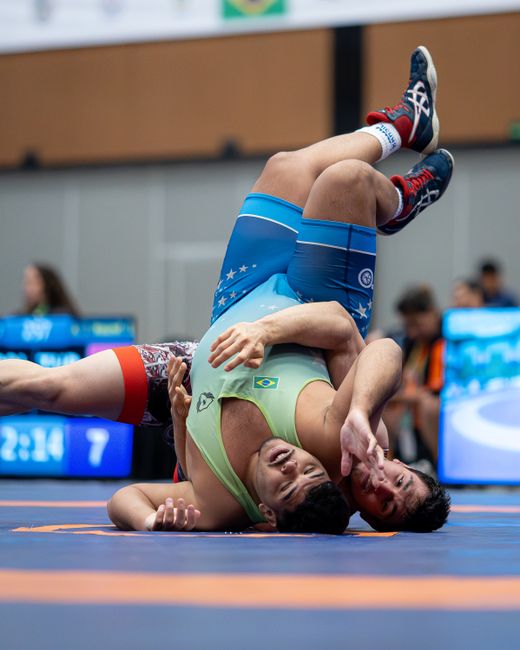
Third period, tied, ten seconds on the clock, and the whistle is about to go. Nobody can sub in for you and there is no teammate to pass to: it is you, one opponent and a mat. Wrestling is one of the most mentally exposed sports there is, which is why wrestling mental training matters to kids’ club wrestlers, high school and college athletes and international competitors alike. It means practicing the skills between your ears (nerves, focus, routines, bouncing back from a loss) the way you drill a single-leg. This page is about mental performance. Weight cutting and eating habits can affect your health, not just your wrestling, so they get their own careful section further down.
Quick answer: Build a short routine for the minutes before you step on the mat and the seconds between periods, and practice it in every practice. Keep your attention on the next position, not the scoreboard. After a loss, review it once, take one lesson, and let the rest go. Studies on these skills in wrestlers are small, and none can promise a win. Weight cutting, skipping meals, constant thoughts about food or weight, panic, low mood or loss of enjoyment are health matters: see a doctor, athletic trainer or licensed professional.
Why wrestling puts so much on the mind
A bout is short, physical and personal. Every mistake is visible, and in a tournament you may have only a few minutes between matches to reset. Weigh-ins add a second pressure that most sports don’t have: the scale comes before the match. A 2026 randomized study of 36 professional female wrestlers (aged 18 to 25) found that eight weeks of structured psychological skills training alongside regular practice improved scores for confidence, control and persistence compared with practice alone (Tutal and colleagues, Frontiers in Psychology). It is a small study from one group of athletes, so treat it as encouraging, not as proof that these skills win matches. For the logistics of the day itself, see our meet and tournament day page.
Match-day nerves
Nerves before a match are normal and are not a sign that you are not ready. The Exercise and Sports Science Australia (ESSA) position statement on performance under pressure (Sports Medicine, 2026) says pressure can help or hurt performance, and lists pre-performance routines, attentional strategies, psychological skills training and mindfulness-based approaches among the strategies with supporting evidence. It is not wrestling-specific, so the steps below are a common coaching template, not a tested formula:
- Name it: “I’m nervous because this matters.” Naming the feeling is often easier to work with than fighting it.
- Slow your breathing: a long breath out before you step to the line settles most people’s shoulders and hands.
- Keep your usual warm-up: do the same warm-up, in the same order, at every meet. A familiar sequence leaves less room for worry.
- Choose one job: “hand fight first” or “move my feet.” One simple instruction beats a long list.
A small Iranian trial found something similar for wrestlers who already had anxiety: 33 wrestlers were randomly assigned to eight weeks of Acceptance and Commitment Therapy (ACT) or a waiting list, and the ACT group had lower anxiety and better self-efficacy and sleep (Norouzi and colleagues, Acta Psychologica, 2026). ACT is delivered by trained practitioners, so that finding points toward getting help for strong anxiety, not toward a do-it-yourself fix.
Focus: one position at a time
Focus in wrestling means staying with what your body is doing right now: your hips, your hands, your opponent’s weight. Coaches often describe it as playing the position, not the score. These are coaching ideas rather than results from a wrestling study:
- Use one or two short cue words in practice, such as “hips” or “head up,” so they are automatic by match day.
- Pick a reset trigger for the moment a takedown is scored on you: a breath, a hand on the thigh, then back to your stance.
- Practice with distractions: a loud room, a coach shouting, a crowd. Pressure drills in the room are the closest thing to a meet.
Our wrestling training page covers what to drill, and the rules page covers the scoring you need in your head to make decisions fast.
Routines, imagery and goals
A pre-match routine is a short sequence you repeat every time, from your last drink to your stance. Imagery is rehearsing a skill in your mind: see and feel the setup, the shot, the finish. Neither has been shown to guarantee a result. Try them for a few weeks and keep what feels useful.
- Process goals: “get to my hips on every shot” is in your control. “Win the tournament” is not. Many coaches use all three, but lean on process goals during the match.
- Imagery: a few minutes the night before, picturing one or two situations you expect, such as your opening hand fight or wrestling from the bottom.
- A written note: after each match, one line on what worked and one thing to fix. It keeps a loss from turning into a vague feeling about yourself.
Bouncing back after a loss
Every wrestler loses, and many lose a lot while they are learning. A 2026 study of 30 sedentary boys aged 12 to 15 found that a six-week wrestling program improved well-being and reduced sport anxiety compared with a control group (Özkan and colleagues). It looked at wrestling practice itself, not at tournament losses, so it only suggests the room can be a good place to build resilience. A simple after-loss plan, again a common coaching approach rather than a tested protocol:
- Cool off first. Watch the film a day later, not in the bleachers.
- Find one lesson, such as a position you lost, a habit when tired, or a plan you dropped. Write it down.
- Wrestle the next match. Between matches, use your reset routine, eat and drink what you planned and keep warm. See the recovery page for refueling and rest.
- Talk to your coach or a teammate, not only to your phone. Losing alone is harder.
Weight-cutting pressure and disordered eating: a health matter
This section is separate on purpose. Making weight is a mental pressure, but when it drives food restriction, fasting, dehydration or bingeing it becomes a health matter, not a mindset problem. Please do not treat it with visualization or toughness.
- A 2025 survey of 256 combat sport athletes, including wrestlers, found wrestlers had higher rates of skipping meals or fasting than other combat sports, and that certain high-risk weight-loss methods were linked with more disordered eating behaviors (Barley and Harms, Translational Sports Medicine).
- A 2025 mini review of the psychology of weight cutting in combat sports (Levy and Boyd, Frontiers in Sports and Active Living) discusses athletes’ relationship with food, body image expectations and disordered eating as risk factors.
- In a 2025 study of 243 senior wrestlers, higher percentages of body weight lost before competition went with higher perceived stress and psychological effects (Okudan and colleagues, Frontiers in Psychology). A 2024 study of 37 elite male wrestlers found state and trait anxiety scores rose during rapid weight loss (Sarıakçalı and colleagues, Frontiers in Psychology).
- A 2023 qualitative study of 22 elite Spanish female wrestlers who had experienced eating disorders linked moving down weight categories and unsafe weight-loss methods to eating disorders (Rueda Flores and colleagues, International Journal of Environmental Research and Public Health).
- The 2023 International Olympic Committee consensus statement on Relative Energy Deficiency in Sport (REDs) describes health and performance problems from low energy availability and notes the interplay with mental health. A 2026 pediatric review names wrestling among weight-class sports where REDs is recognized in young athletes (Woolridge and Campbell-Potter, Pediatric Annals).
Warning signs include constant thoughts about food or weight, fear of eating, secret fasting or purging, binge eating after weigh-ins, missed periods, dizziness or fainting, and losing interest in training. If you notice them in yourself or a teammate, tell a parent, coach you trust, athletic trainer or doctor, and ask for a sports medicine doctor or registered dietitian. The weight-certification rules, safe rates and banned practices are covered on our wrestling nutrition page. Youth wrestlers are covered on the youth page, where the American Academy of Pediatrics clinical report on weight control in young athletes notes that wrestlers may try to lose weight to compete in a lower class and asks pediatricians to steer them toward healthy methods.
Mental performance vs. mental health
Mental training is for sharpening skills in people who are otherwise well. It is not a treatment. Anxiety that stays after the match, depression, panic, trouble sleeping or eating, burnout, thoughts of self-harm or loss of enjoyment are health matters to take to a doctor, psychologist or other licensed professional. The 2026 International Olympic Committee consensus statement on mental health in elite athletes says mental health symptoms and disorders are common among elite athletes, may have sport-related causes and can affect performance. In the United States you can call or text 988 (the 988 Suicide & Crisis Lifeline) any time, free and confidential. If you are in immediate danger, call your local emergency number. A coach or athletic trainer can help you find the next step.
Competition preparation
Mental preparation sits on top of the basics: sleep, a safe weight plan, food and fluids you trust, a packed bag. Logistics for weigh-ins, refueling and the hours between matches are on the meet and tournament day page, so we won’t repeat them. Mentally, the best use of the night before is simple: pack, picture one situation, and go to bed.
Youth wrestlers
For young wrestlers, the basics matter more than technique. Let kids enjoy the sport, praise effort and learning, keep weight talk out of it, and ask a pediatrician about concerns. Our youth wrestling page covers the rest. We did not find a wrestling-specific study of youth mental training that we could cite, so we offer no tested youth program here.
Wrestling mental training questions
How do I calm down before a wrestling match?
Use the same warm-up every time, slow your breathing, and give yourself one simple job for the first exchange. Nerves are normal. If anxiety feels overwhelming or constant, talk to a doctor or licensed professional.
How do I recover mentally from a loss?
Wait until you have cooled off, then take one lesson from the match and write it down. Then go back to practice. A coach can help you sort which parts to fix and which to let go. If a loss leaves you low or anxious for weeks, see a professional.
Does visualization help wrestlers?
Many coaches use it, and imagery research exists in other sports, but we found no wrestling-specific study to cite. Try a few minutes a day for a few weeks. It cannot promise a result.
Is stress from cutting weight a mental performance problem?
No. Stress from weight cutting can overlap with disordered eating, which is a health matter. A doctor, athletic trainer or registered dietitian should help you, and your weight should follow your state or NCAA weight program.
What are warning signs of an eating disorder in wrestlers?
Constant thoughts about food or weight, secret fasting or purging, bingeing after weigh-ins, dizziness, missed periods and withdrawing from teammates. These deserve a doctor’s visit. They are not a sign of weakness.
Where can I get help right now?
In the United States, call or text 988 for the Suicide & Crisis Lifeline. For eating or weight concerns, start with your doctor or athletic trainer.
Sources
- Tutal V et al. Effects of psychological skills training on self-control, perceived physical self-defense capacity, and mental toughness in elite female wrestlers: a randomized controlled trial. Frontiers in Psychology, 2026. PMID 42876484
- Schweickle MJ et al. Performance Under Pressure in Sport: A Position Statement from Exercise and Sports Science Australia. Sports Medicine, 2026. PMID 42271117
- Norouzi E et al. Acceptance and commitment therapy can reduce anxiety and enhance self-efficacy, mental toughness, and sleep quality in wrestlers with anxiety. Acta Psychologica, 2026. PMID 42208217
- Özkan R et al. Effects of wrestling training on psychological well-being, anxiety, and resilience in adolescent boys. 2026. PMID 41578413
- Barley OR, Harms CA. Rapid Weight Loss Across Combat Sports and the Relationships Between Methods and Magnitude. Translational Sports Medicine, 2025. PMID 40177332
- Levy JJ, Boyd C. Getting small to feel big: the psychology of weight cutting in combat sports. Frontiers in Sports and Active Living, 2025. PMID 39911474
- Okudan B et al. Physiological and psychological effects of weight loss-induced stress before a competition in senior wrestlers. Frontiers in Psychology, 2025. PMID 40242746
- Sarıakçalı B et al. The dual impact: physiological and psychological effects of rapid weight loss in wrestling. Frontiers in Psychology, 2024. PMID 39834765
- Rueda Flores M et al. Training Conditions and Psychological Health: Eating Behavior Disorders in Spanish High-Performance Women’s Olympic Wrestling Athletes. Int J Environ Res Public Health, 2023. PMID 36767811
- Mountjoy M et al. 2023 International Olympic Committee consensus statement on Relative Energy Deficiency in Sport (REDs). PMID 37752011
- Woolridge TS, Campbell-Potter M. Understanding Relative Energy Deficiency in Sport. Pediatric Annals, 2026. PMID 43001829
- Reardon CL et al. Mental health in elite athletes: International Olympic Committee consensus statement (2026). British Journal of Sports Medicine. PMID 42580854
- 988 Suicide & Crisis Lifeline
- Carl RL et al. Promotion of Healthy Weight-Control Practices in Young Athletes. American Academy of Pediatrics clinical report, Pediatrics, 2017. PMID 28827381
General information for education only, not medical advice. It does not replace a doctor, psychologist, registered dietitian or other qualified professional. See how we work in our editorial policy. Back to the wrestling hub.