This article contains affiliate links: if you buy through them we may earn a commission, at no extra cost to you. Read our affiliate disclosure.
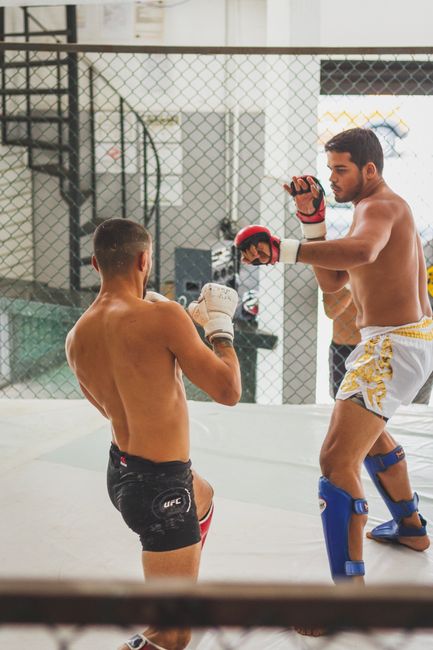
It is a Tuesday night in a gym with the garage door rolled up, and the coach calls the last round of sparring. Before the bell, two fighters touch gloves and one says, “Fifty percent, working takedowns.” Afterward they tap shoulders, shower, and one of them sits out the next round because his head feels foggy. None of that shows up in a highlight reel, but it is MMA injury prevention: the habits around fighters, from how hard they spar and how fast they tap to how they make weight and keep the mats clean, that aim to lower the chance of getting hurt or sick. They can lower the odds. They cannot promise anything, and hitting people is allowed in this sport.
Quick answer: The best-supported steps for MMA fighters are limiting hard head contact in sparring, taking a fighter out of the round at once for any concussion sign, tapping early, keeping skin and mats clean, and losing weight slowly instead of by dehydration. Headgear and mouthguards help with cuts, ears and teeth, not concussion. See a sports medicine doctor, physical therapist or athletic trainer for a suspected concussion, a rash, a joint that stays swollen, or dizziness while cutting weight.
General information, not medical advice. This page is about lowering risk. For what each injury looks like and the return-to-sparring rules, see our MMA injuries guide.
Warm-up and getting ready to train
We found no MMA-specific warm-up program, such as the FIFA 11+ in soccer, in the sources we use, so we do not name one. Most gyms warm up with easy movement, shadow work and drills before anyone goes live, and a coach or athletic trainer can shape that to your level. What the research does show is that fighters are rarely fresh: in a six-week camp of professional MMA athletes, Peacock et al. (2018) found that sleep latency, how long it took to fall asleep, was linked with endurance, heart-rate recovery, power and missed practices. Sleep is not a warm-up, but it is part of arriving ready to train.
Head impacts and sparring limits
Head contact cannot be designed out of a sport where strikes to the head are legal. A 2014 meta-analysis (Lystad et al.) found the head was the most injured area in competition (66.8 to 78% of injuries). The Association of Ringside Physicians (ARP) consensus statement on concussion in combat sports notes that more sparring exposure has been linked to problems with thinking and balance, while a 2023 study of 94 professional MMA fighters found no link between weekly sparring rounds and smaller brain volumes, and its authors call for more research. Our reading: the science is unsettled, so treat hard head contact as something to ration. Our MMA training page covers how sparring fits into a week.
There is no official sparring limit in MMA. Many gyms keep full-power rounds rare, match partners by size and experience, and agree on intensity before the bell, but we found no published study that sets a number, so treat these as common coaching habits, not rules. The part with a source is the response to a hit:
- Recognize and remove. The CDC’s HEADS UP signs include looking dazed, slow answers, clumsiness, headache, dizziness, nausea, blurry vision or just “not feeling right” after a hit. A fighter with any of them is out of the round and out of the day. Call 911 for danger signs such as one pupil larger than the other, a worsening headache, repeated vomiting, slurred speech, seizures or loss of consciousness.
- No sparring with symptoms. The ARP consensus says no fighter should spar or compete with concussion symptoms, and recommends at least 30 days without competition or sparring after a technical knockout from head blows, and longer after a knockout.
- The gym has to enforce it. The ARP points out that commission medical suspensions cover competition only, so time off from sparring is up to fighters and coaches.
- Neck strength is not a fix. A 2026 review (Postula et al.) found the evidence on neck strengthening and concussion risk inconclusive.
Technique, joint locks and tap culture
Submissions ended 18.7% of UFC fights from 2000 to 2021, according to a 2025 study of 2,488 bouts. The rear-naked choke made up 68.6% of submissions and arm and hand attacks such as the armbar another 27.1%, so chokes and joint locks are a normal part of the sport and load the elbows, shoulders and neck. A 2026 survey of 112 fighters found sprained joints and strained ligaments the most common training injuries, at 1.4 injuries per 1,000 hours.
We found no study of tapping itself, so what follows is general gym practice, not research. Good rooms treat the tap as a normal part of training: tap early, tap with a hand or foot on your partner or the mat, and release the moment your partner taps, even if you think it was early. Go slower with leg locks and neck cranks than you would in a match, and keep sparring partners honest about what is allowed. A pop, fast swelling or a knee that gives way needs a doctor (the American Academy of Orthopaedic Surgeons lists these as typical ACL tear signs), and so does an elbow that will not straighten or neck pain with tingling in an arm.
Skin infections and mat hygiene
Shared mats and skin-to-skin grappling spread ringworm, bacterial infections and herpes gladiatorum, and doctors have published MMA case reports of tinea, molluscum and herpes gladiatorum that reached a fighter’s eye. The National Athletic Trainers’ Association (NATA) position statement advises showering after every practice, not sharing towels, bar soap or gear, and washing training clothes and towels every day. Mats should be cleaned before each session; the UWW wrestling rules set that as the standard in a mat sport, and we found no MMA rule that says the same, so ask your gym what its routine is.
Any new rash, cluster of blisters, red ring or warm, draining sore means off the mats and to a doctor. NFHS sports physicians say active herpes cannot be covered to keep training, and other infections need a set period of treatment before return. A cut stops the round until it is cleaned, covered and the bleeding controlled; the ARP recommends that all fighters be tested for HIV, hepatitis B and hepatitis C before competing.
Safe weight management
Making weight is part of the sport: a survey of 314 MMA athletes (Hillier et al., 2019) found 97.2% of men and 100% of women reduce body weight before a bout, and many use water loading, fluid restriction or sweat suits, with coaches the main influence. The 2025 International Society of Sports Nutrition (ISSN) position stand says long-term effects of frequent cuts are unknown and favors staying around 12 to 15% above the division weight off camp and using planned calorie reductions. NATA’s weight-loss statement gives a safe pace for athletes of 1 to 2 pounds (0.5 to 0.9 kg) a week, no more than 1.5% of body weight a week.
Our position: do not rely on dehydration to make weight. In 1997, three college wrestlers died after using rubber suits, hot environments and food and fluid restriction (CDC MMWR). ONE Championship banned weight cutting by dehydration in 2015 after a fighter’s death, and in a Calgary review of bouts from 2010 to 2016, 5.4% were cancelled at the pre-bout exam, 4% of the cancellations for dehydration. Dizziness, confusion, a racing heart, cramping or not passing urine are signs to stop and get medical help. California rules say fighters may only rehydrate by mouth. The how-to is on our MMA nutrition page and weigh-in logistics on fight day.
Protective gear and fit
What is verified: the Association of Boxing Commissions’ Unified Rules of MMA (August 2025 edition) require a mouthpiece, set limits on hand wraps (gauze and tape, not over the knuckles) and allow only neoprene knee and ankle sleeves. California adds a custom-fitted mouthpiece in the fight costume. What research says about equipment: the American Academy of Pediatrics (AAP) 2016 martial arts report says mouthguards reduce dental injuries in boxing but there is no solid evidence for concussion, and the ARP headguard position says headguards are very effective against facial cuts and protect the ears but should not be relied on to reduce concussion, and fighters may take more risks wearing them. We found no safety standard for MMA shin guards or sparring headgear, so any “approved” claim is the maker’s.
Fit matters more than price: a mouthguard that rattles or a wrap that slips will not do its job, so try gear on and check it before sparring. A boil-and-bite guard such as the Shock Doctor Gel Max is a common training choice, and no-rinse wipes like Defense Soap Body Wipes help when a shower is not close. More in our MMA gear page.

Shock Doctor Gel Max Mouthguard
- Boil-and-bite fit
- Gel-fit liner
- Adult and youth sizes
$11.99 at Amazon, as of Nov 17, 2026 01:07 UTC
Check price on Amazon
Defense Soap Body Wipes (2 x 40)
- Tea tree and eucalyptus oils
- No-rinse, extra-wet cloths
- 80 wipes
$26.99 at Amazon, as of Nov 17, 2026 01:07 UTC
Check price on AmazonYounger fighters and beginners
The AAP 2016 report on youth in martial arts advises delaying contact until a child has maturity and competency in non-contact skills and says MMA bouts with slams and chokeholds should be strongly discouraged for young athletes. IMMAF youth rules ban striking to the head and face and several holds in its youngest division. The AAP also warns against unhealthy weight-control practices in young athletes. See our youth MMA page.
What prevention cannot do
No headgear, mouthguard, neck routine or sparring plan is proven to prevent concussion in MMA, and no habit on this page guarantees you will stay healthy. Fighters who lose have been found to have about three times as many injuries as winners (Lystad et al.), which is a reminder that some of the risk comes from the opponent. The aim is fewer avoidable injuries, caught earlier.
When to see a professional
- Right away (emergency): any concussion danger sign, loss of consciousness, neck pain with numbness or weakness, a joint that looks out of place, or sudden flashes, new floaters or a shadow in vision after an eye hit.
- Within a day or two: a suspected concussion, a sunken knuckle, a knee that popped and swelled, or a new rash or sore.
- Soon: concussion symptoms beyond 10 days, pain that keeps coming back, or dizziness and fatigue while cutting weight.
A sports medicine physician diagnoses and orders imaging; a physical therapist runs rehab and the return to sparring. Details by injury are on our MMA injuries page, and rest between sessions on our recovery page.
MMA injury prevention: FAQs
Does headgear prevent concussions in MMA sparring?
No. The ARP says headguards are very effective against cuts and protect the ears but should not be relied on to reduce concussion risk, and the AAP says there is no evidence headgear prevents concussion.
How much hard sparring is safe?
No source we use gives a safe number. The research on sparring and the brain is mixed, so many gyms keep full-power rounds rare and led by a coach. Ask a doctor who knows combat sports if you have concerns.
When should I tap?
Early. In training there is no prize for holding out, and a hard-hit joint or a choke that cuts off blood flow can hurt you before you realize it. Tap clearly and release the moment your partner taps. This is gym practice, not a researched rule.
How do I avoid skin infections from training?
NATA advises showering after every practice, not sharing towels or gear and washing clothes daily. See a doctor for any new rash before your next session.
Is it safe to cut weight before a fight?
Dehydration cuts carry real danger, and the ISSN says the long-term effects of frequent cuts are unknown. Slow planned loss with a dietitian, and a division you can reach mostly in camp, is the safer route.
Sources
- Lystad et al., injuries in MMA competition meta-analysis, 2014
- ARP consensus statement on concussion in combat sports (Neidecker et al., 2019)
- Sparring and brain volumes in professional MMA fighters, 2023
- ARP headguard position statement, 2024
- AAP, youth participation and injury risk in martial arts (2016)
- UFC submissions 2000 to 2021, J Clin Med 2025
- Injury survey of 112 MMA athletes, 2026
- Postula et al., neck strength and concussion, 2026
- Peacock et al., sleep and training in professional MMA athletes, 2018
- CDC HEADS UP, signs and symptoms
- AAOS OrthoInfo, ACL injuries
- NATA position statement on skin diseases
- NFHS statement on sports-related skin infections, 2022
- ARP blood-borne infection position statement, 2026
- Hillier et al., rapid weight loss in MMA athletes, 2019
- ISSN position stand on weight cut strategies for MMA, 2025
- NATA, safe weight loss for athletes (Turocy et al., 2011)
- CDC MMWR, weight loss among collegiate wrestlers, 1998
- Calgary pre-bout examinations 2010 to 2016, Sports Med Open 2018
- AAP, healthy weight-control practices in young athletes (2017)
- ABC Unified Rules of MMA, August 2025
- California State Athletic Commission laws and regulations
- IMMAF amateur and youth rules (2025)
- UWW wrestling rules (mat cleaning standard)
Keep going with our rules, best wearables and leagues and associations pages, or return to the MMA hub.
General information for education only, not medical advice. It does not replace a visit with a doctor, physical therapist or athletic trainer. See how we write and check our pages in our editorial policy.